BUTCHERING A TURKEY
* * * * * * * * * * * * * * * * * * * * * * * * * * * * * *
* * * * * * * * * * * * * * * * * * * * * * * * * * * * * *
to slaughter A TURKEY
The chore list was posted every Monday morning. It ran the gamut of things to do in our small sustainable community in the woods of Maine. There were cabin chores, such as cleaning toilets and stacking wood for the wood burning stoves that kept us warm. There were kitchen chores prepping and cooking meals, cleaning dishes in the dish pit, mopping floors of the dining room and stacking chairs. There were farm chores which included morning compost stirring, mucking stalls, feeding the pigs and sheep, milking the cows. There was chopping wood and harvesting vegetables. Planting and clearing garden beds and waste removal. Finally, there were the odd chores. These were chores that came around only a few times, perhaps only once.
My name appeared along side one other student Monday morning under the heading “Discarding of parts: To be discussed”.
The Chewonki Foundation was an environmental and sustainable living program in the woods of Wiscassett, Maine. The Maine Coast Semester at Chewonki was a semester long rigorous academic program serving high school juniors. It was a residential program where all students lived in cabins and explored the “concepts behind human ecology and the intersection between humans and their natural, social and built environments.” Core high school classes were taught through a natural lens. English class based on the literature of Emerson, Thoreau, Muir, Whitman, Annie Dillard and Mary Oliver. Science held outside of classrooms, Darwinian talks, learning birds calls, plotting case studies of tree and forest growth, doing bog studies or coastal experiments in the salt marsh. Math was building boats or doing wood working projects. History was the study of organisms, such as animals, plants and fungi in their natural environments. Most of these studies were discussed and projects implemented at the farm, in the fields, in the kitchen or workshops. The philosophy of the growing and nurturing of the community, especially through farm work, was under the umbrella of Rudolph Steiner’s biodynamic practices; treating the farm and the surrounding ecological area as a self contained, living system.
My chore partner and I walked to the farm after lunch. We met with the Farmer who informed us that there had been an outbreak of mad cow disease in the area. Our one sheep and a handful of lambs had been sent off to slaughter and as per regulations at the slaughter house, along with the processed meat, all of the waste parts were returned to the owners to be discarded safely as to not spread the disease. This was called the abattoir waste.
We were led over to two large wheel barrels. I looked inside to find hooves of different sizes, numerous little lambs heads and a large sheep head all piled in a mess of flesh and blood. The flies were swarming a cloud despite the cold autumn temperatures as the body parts were fresh and needing an immediate disposal. The farmer pointed in the direction of a small dirt path into the woods by the far end of the vegetable plot. He handed us two shovels. He said, walk a few miles, find a good spot in the woods, dig a large hole and bury it all.
By the time we found our burial plot we were deeper in the woods than I had anticipated. The light dimming shown though the trees like stainless glass windows, an orange glow of low autumn light just before the set. The pine needles made soft the ground, a bedding my feet sunk into and as I moved across they would hush each step like whispers. We took our shovels and plunged them into the ground.
I have always compared the Maine woods to a horror show. It is not that it isn’t beautiful, because it truly is. With that strange beauty also comes a feeling of darkness and loneliness. It is confined and closed. Without the light through the trees it quickly becomes cold and desperate. It feels of Hansel and Gretel. Bread crumbs and witches.
An hour into digging we had finally decided it was deep enough. I took a wheel barrel and edged it up the the side of the hole. Pushing up hard on the handles I tipped the barrel over and the body parts slid a smear of blood into the hole. A heavy weighted sound smacked the ground as it landed. Then the second barrel. My chore partner and I stood over the grave and looked down. In a strange occurrence, the one large sheep head had landed right in the middle surrounded by an aura of little hooves and tiny sweet lambs heads. The image was a surrealist painting by Dali or Bacon. I couldn’t stop looking as the many eyes looked back at me. I thought for a moment. At least they were being given a proper burial. They were loved while alive, they were sacrificed unwillingly, but swiftly. We would eat them for dinner. I, despite the discomfort of the event, was one of the fortunate ones that got to bid them farewell and thank them for their sacrifice. We buried them and walked back to the farm.
I think about this story today as I stumble into a hot bed of a turkey slaughter a few days before thanksgiving. An unexpected observer, I sometimes find myself in the midst of food narratives I know nothing about. I found this experience to be eye opening and educational.
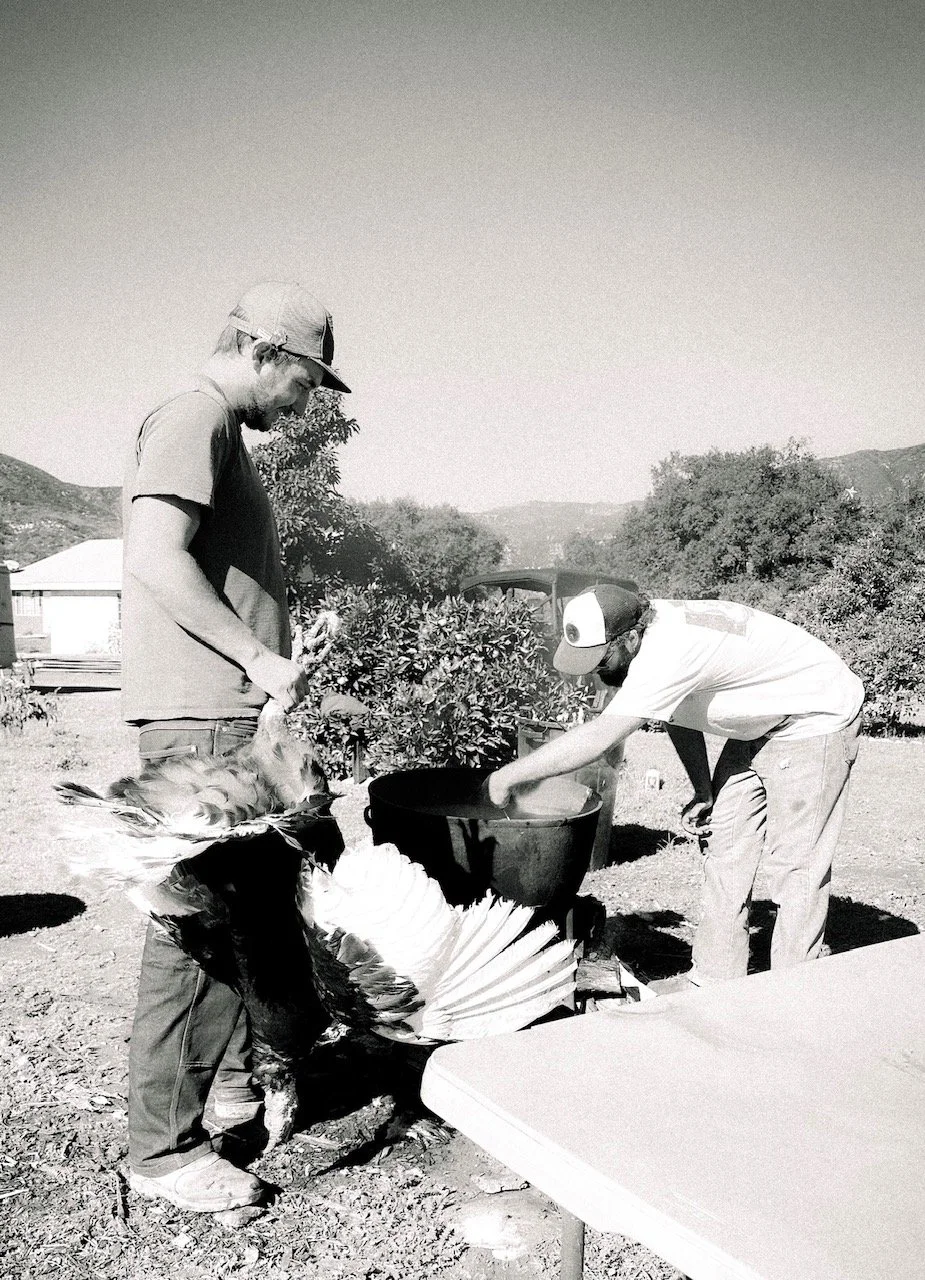
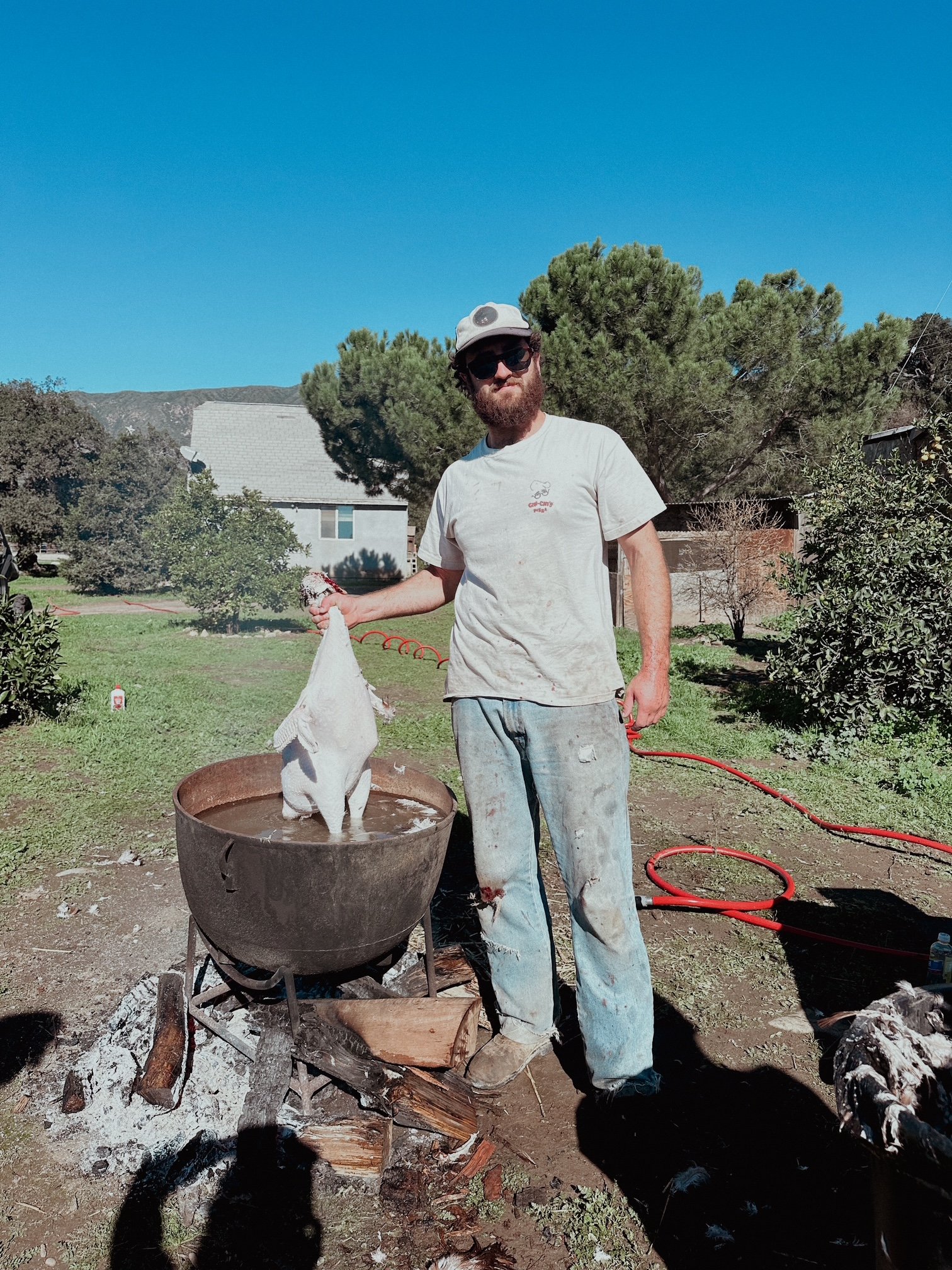
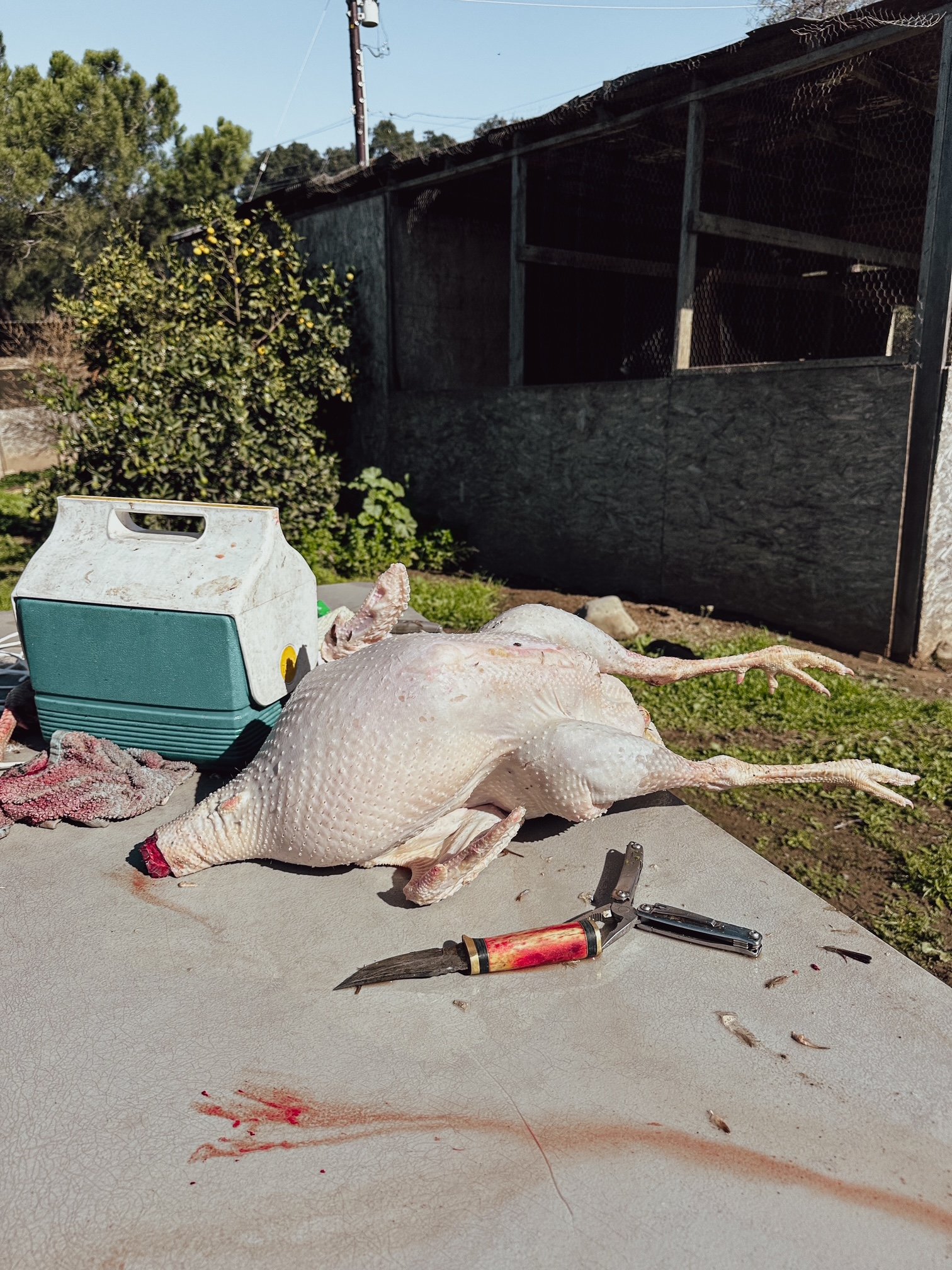
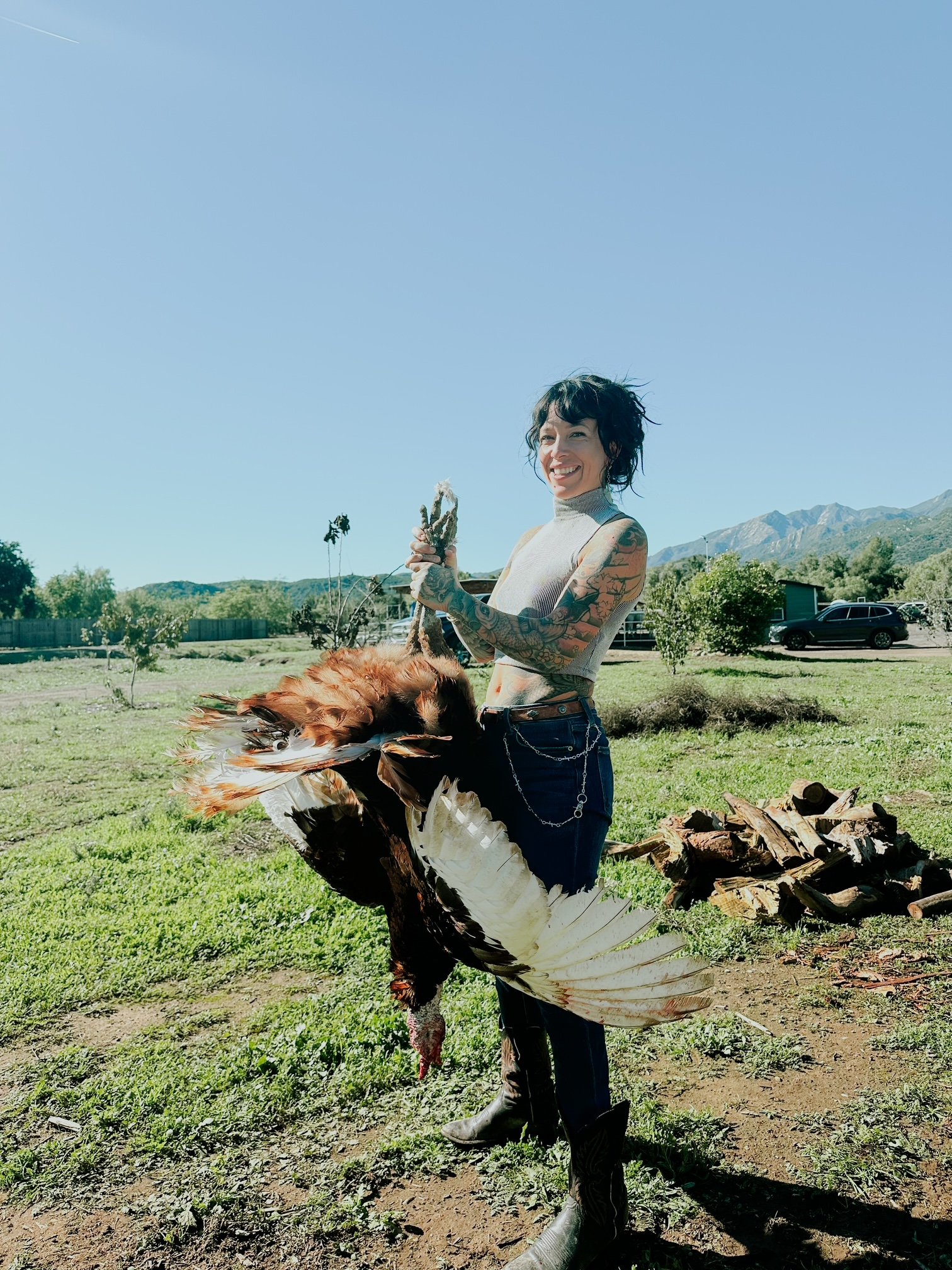
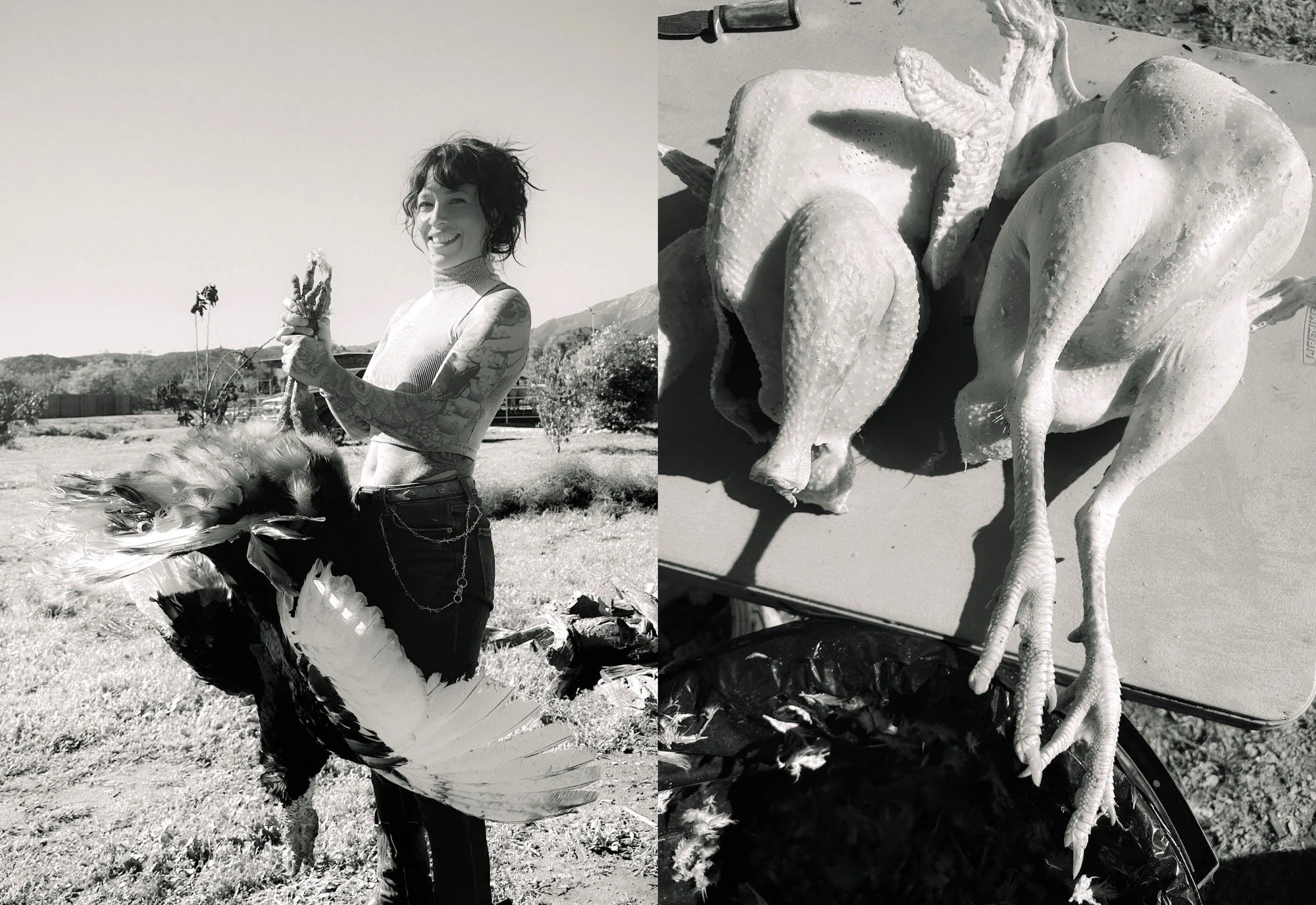
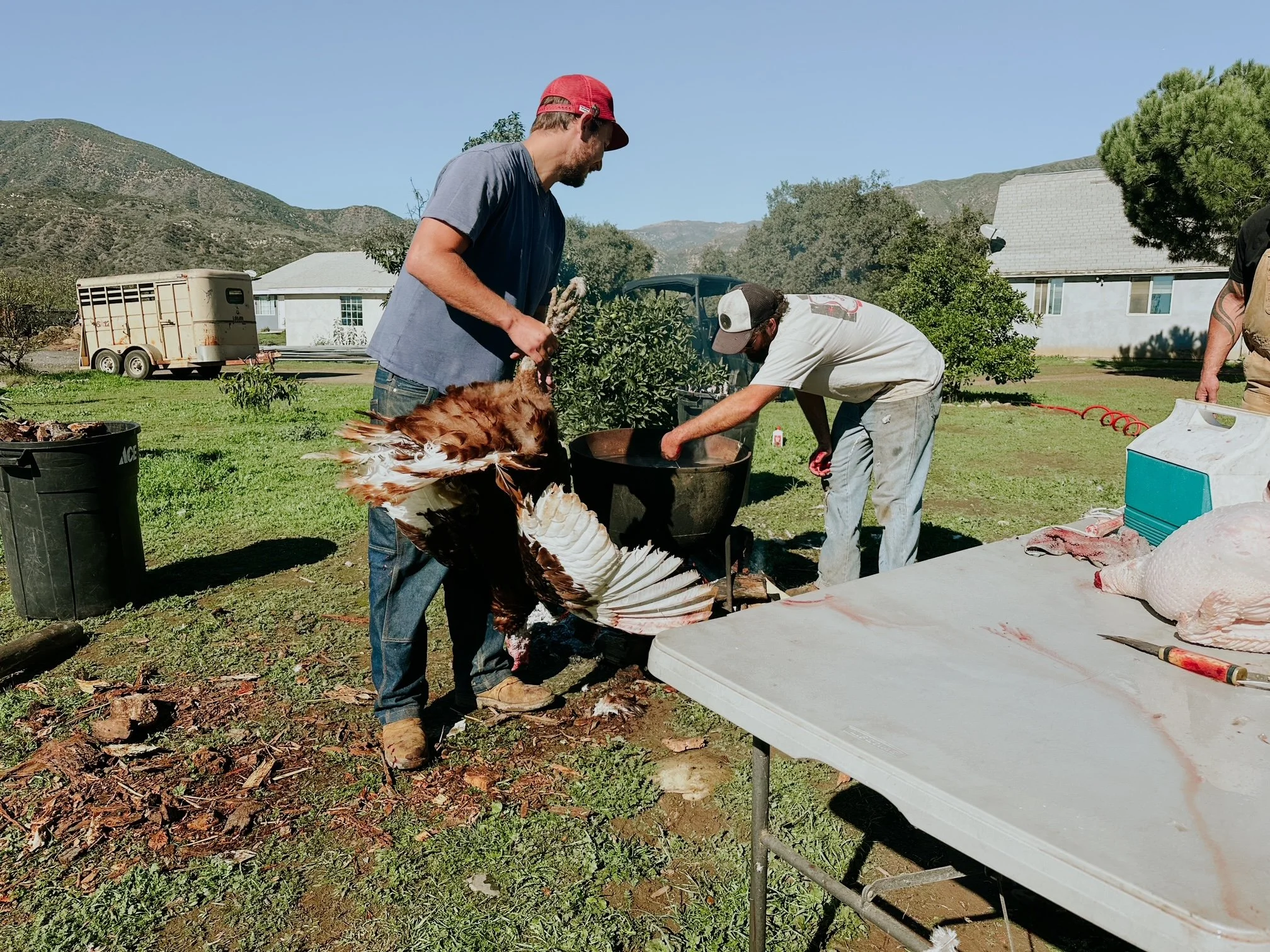
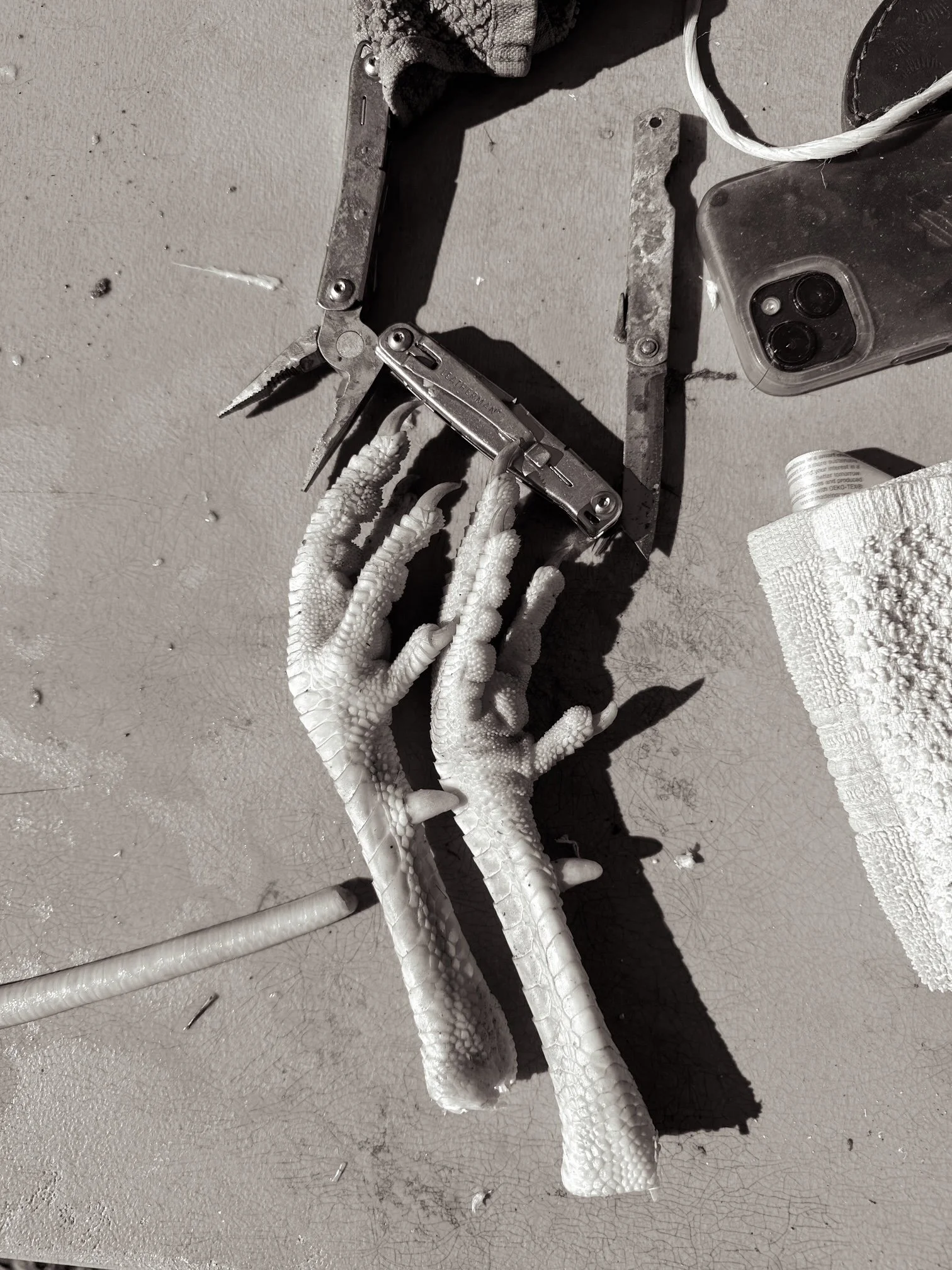
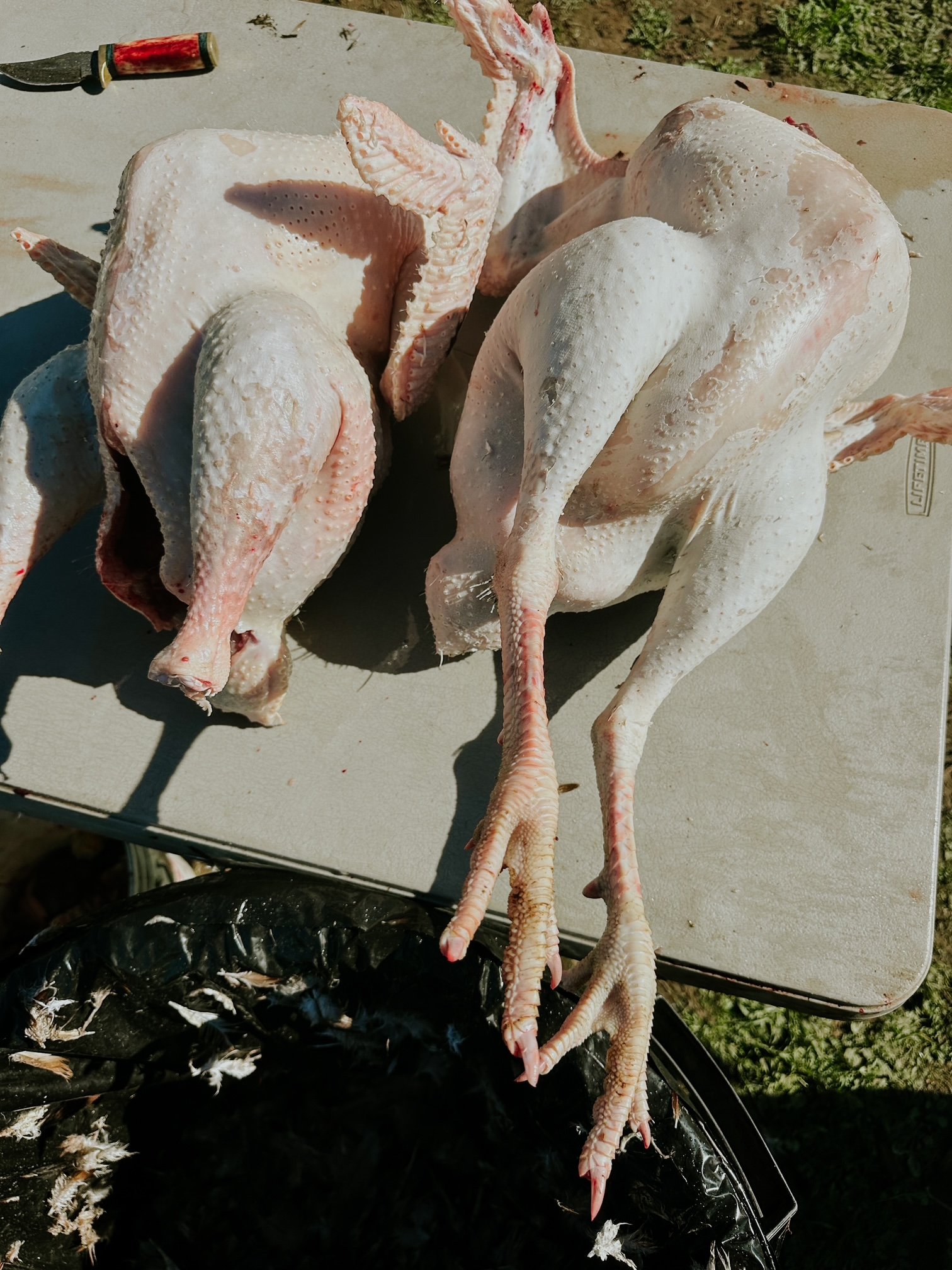
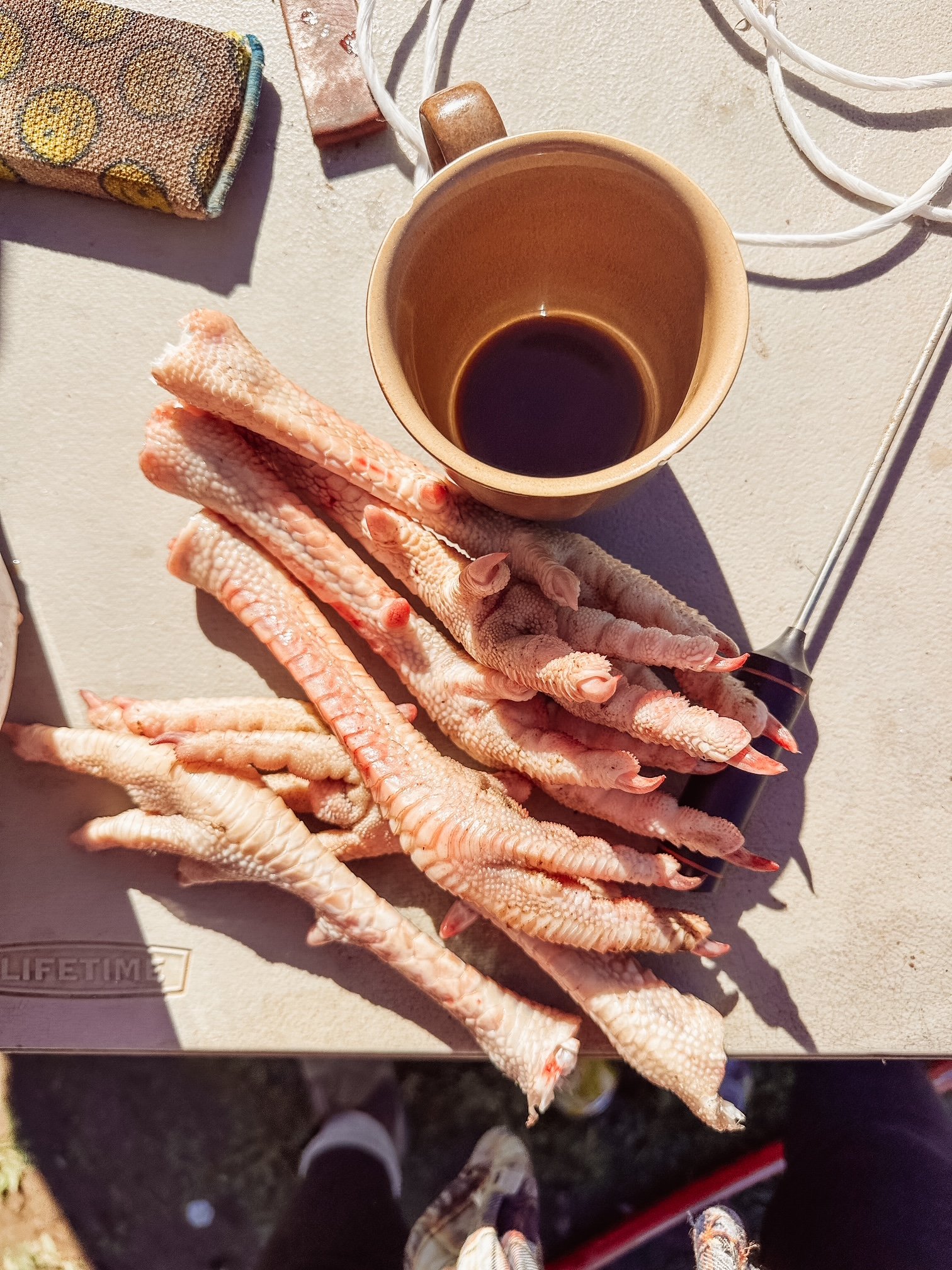
They were prepping to slaughter thirteen turkeys. I watched number four. It took seconds to slit it’s throat, less then a minute to drain the blood, a quick blanch in a pot of boiling water over an outside fire pit to make plucking the feathers fast and effective. The head was cut off, the legs and feet were stripped of skin and cut off at the knee. Their legs and talons look like dragons. They have a dirty outside sock layer that when stripped back is iridescent like scales and their talons have a second claw underneath when clipped. The power of theses birds is astonishing. The feet are often used in broth and contain a large amount of collagen.
A skilled person will remove the innards whole. The bird must remain clean and the goal is not to spill any excess blood or make a mess in the bird. You first cut at the neck to remove the feed tube next to the trachea and ultimately disconnect the crop. Then you approach the back side of the bird and cut a triangle around the anus to pull out the organs. If all goes well, the whole organ system is removed and the body cavity is empty and ready for a rinse of water. The liver is separated, along with the gizzard. These are two organs that can also be eaten, so they are cleaned and put aside in a cooler. The rest is put in the gut bucket for compost. The turkey is weighed and weighs in at nineteen pounds.
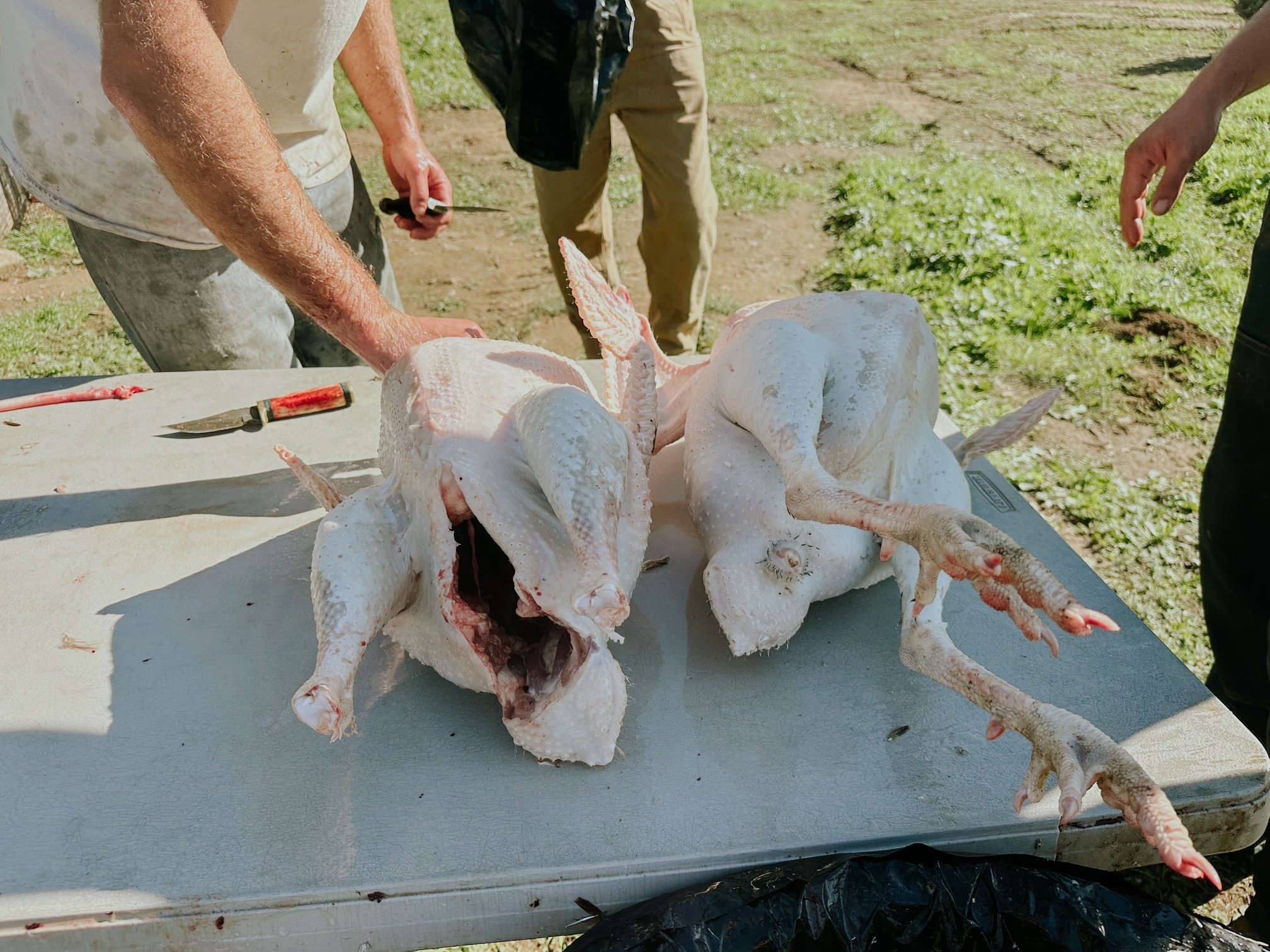
Once the bird is cleaned it is put on ice until it is ready to be brined and then roasted for the Thanksgiving feast. In all, this process took thirty minutes from live bird to processed turkey ready for eating. These turkeys are the freshest you will get for roasting.
As I walked away from the event, I ran into a woman leaving the barn for the day. She rolled down her car window and she was crying. She sobbed, “I am The Bird Lady!” Christy drives around the barn with her rooster in the car. She went down Ojai Avenue in the Fourth of July Parade with a golf cart full of chickens. She said she had raised these turkeys and she could’t bare to be around for such an awful day. She also assured me she wasn’t a vegetarian. I found this an interesting statement in the midst of such upset. She asked if I was going to come join in on the Thanksgiving festivities Thursday afternoon with the grand old roasting of thirteen turkeys. I said we wouldn’t be able to make it, and that I was sorry for her heavy heart but that she had raised some beautiful birds.
Processing animals for food is not for the faint of heart. Some can stomach it and others simply cannot. I appreciate Christy’s vulnerability around the process. We should all be so vulnerable and compassionate for the animals that give their lives to us for our own sustenance. I have said it before and I will say it again, we should be grateful for what the world offers us for our survival. Food should not be taken for granted. This story is hard to read, or perhaps the images hard to see, but they are important. To understand the process of food is to understand why we are here, why we are alive and how we continue to survive.
A few weeks before I left Chewonki we invited our families to visit for Thanksgiving. We had harvested the roots from the garden; carrots and potatoes. We had made bread rolls and churned butter. We also had twenty chickens to slaughter. The chore list went up on the board the Monday before Thanksgiving. A handful of students were chosen to slaughter the birds. Five of them were hardcore vegetarians. They had requested to be part of the process. They had been part of months of feeding and caring for the hens and now they wanted to be there at the end. It was not easy for them. They took the hatchets and went to work. On Thursday, when the roast chicken graced the table for Thanksgiving, all five vegetarians took a slice to their plates and took a bite. No one talked about it. Everyone just enjoyed a lovely meal with their families.
We gain perspective through our experiences. From that perspective we get to make choices that form our values. Taking initiative to understand our food narratives instead of just blindly buying from the super market or ordering out from restaurants is a step in understanding your own beliefs and how you want to show up in the world. No one way is right, but without the knowledge you will never get to understand and ultimately choose what is right for you.
* * * * * * * * * * * * * * * * * * * * * * * * * * * * * * * * * * * * *
* * * * * * * * * * * * * * * * * * * * * * * * * * * * * * * * * * * * *
BUTCHERING A TURKEY: A SHORT:
The following video comes with a warning. This is the full process of slaughtering a turkey. With this comes images of blood, death, and internal organs. If this is something you cannot stomach please refrain from watching. I will say, that with that said, this process was enlightening and beautiful in it’s own right, if experienced through the lens of food and our processing of it. It is estimated, that roughly 46 million turkeys are slaughtered for the Thanksgiving holidays in the United States each year. Imagine if all were done as humanely and with the energy of gratitude and thanks that was practiced in this video. A big thanks to Remington for walking me through his process.