WILD BEE HONEY
* * * * * * * * * * * * * * * * * * * * * * * * * * * * * *
* * * * * * * * * * * * * * * * * * * * * * * * * * * * * *
WILD BEE HONEY
RYAN ODELL: BEEKEEPER AND OWNER OF SUNSHINE HONEY AND BEE REMOVAL IN OJAI CALIFORNIA
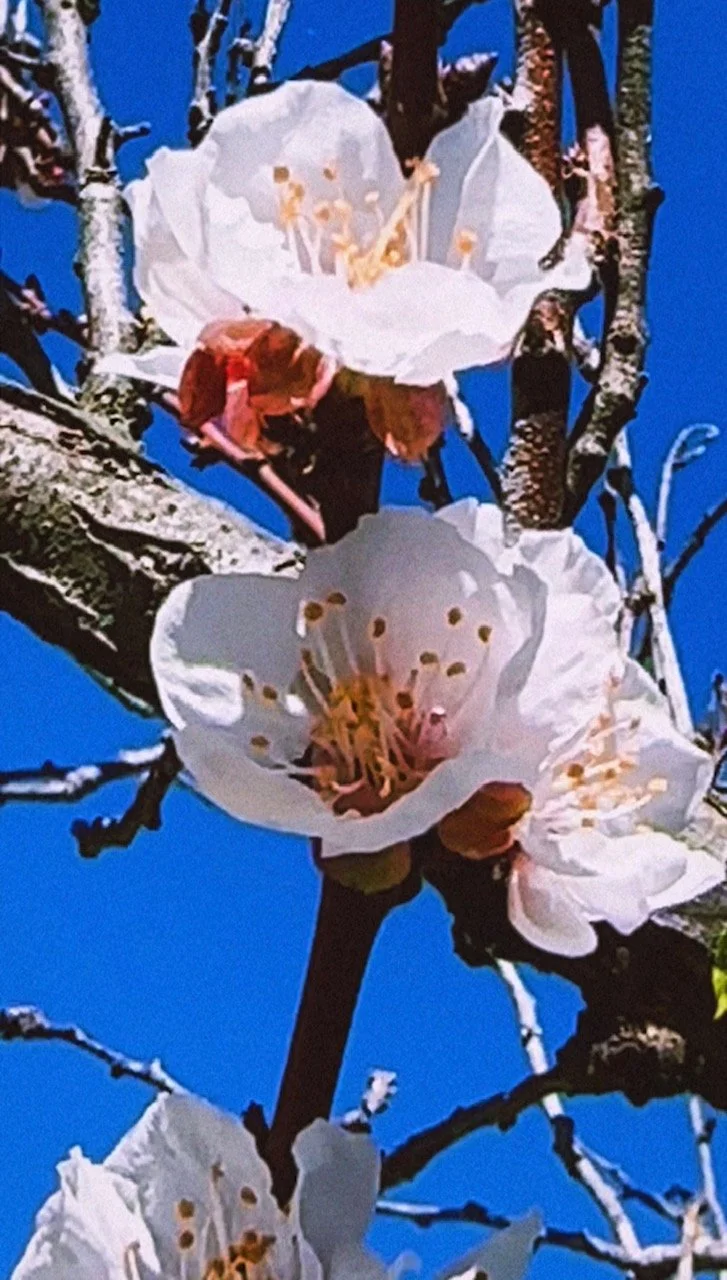
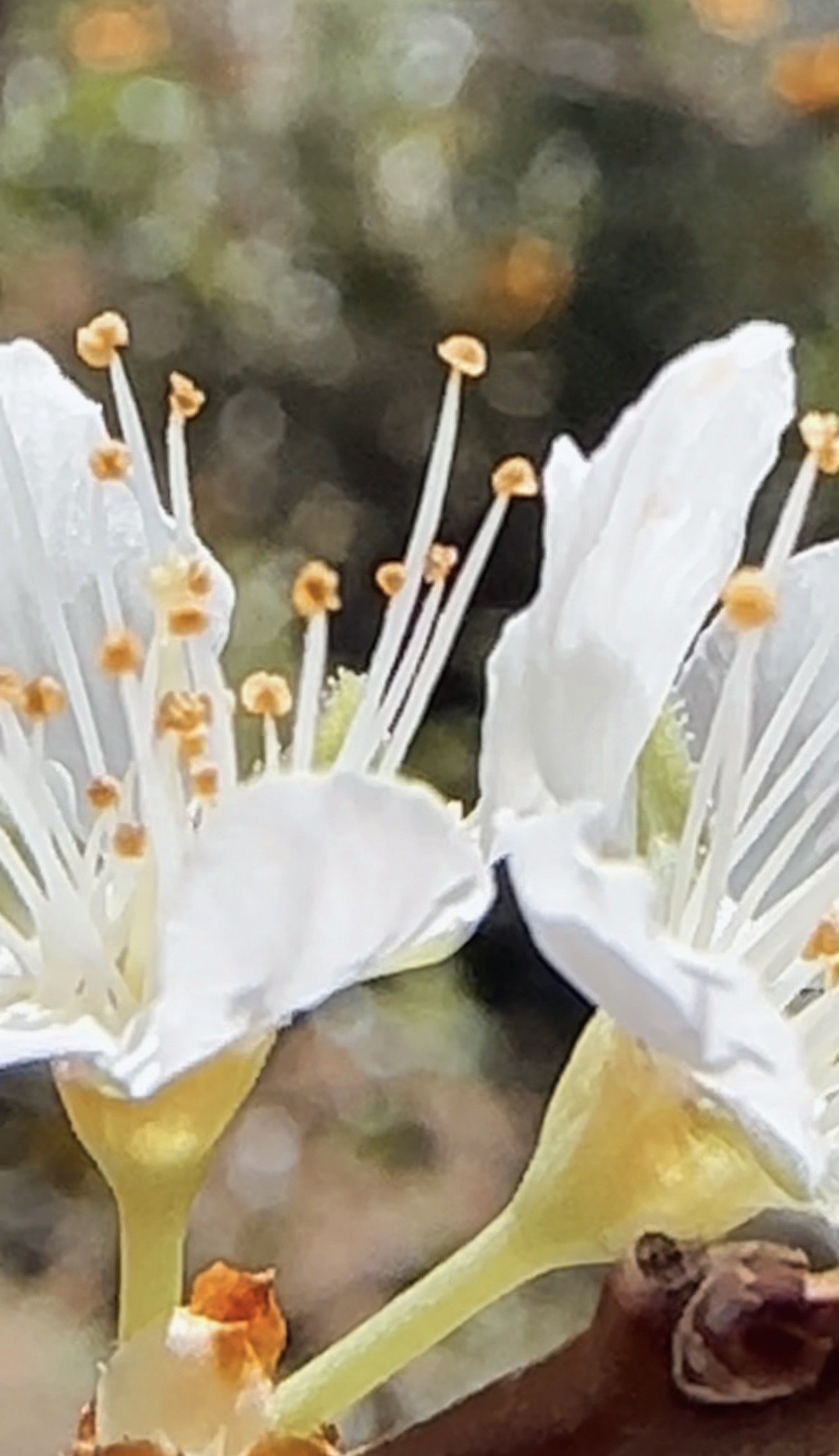
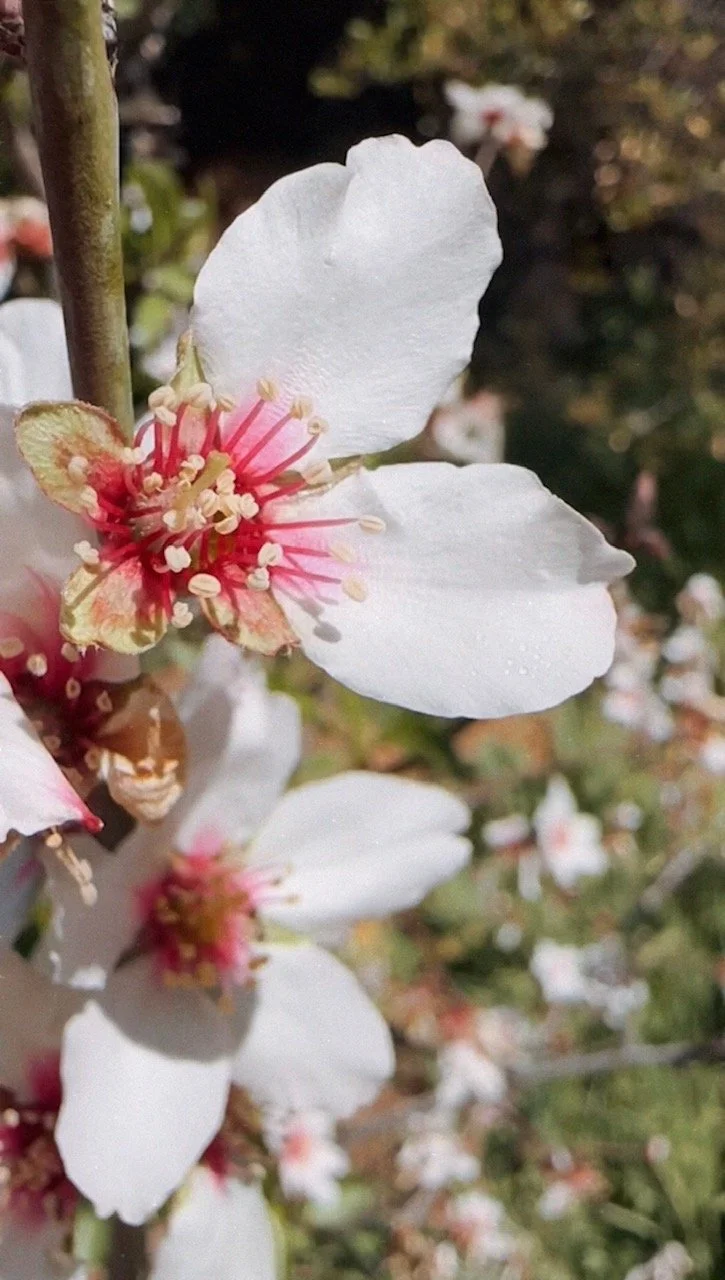
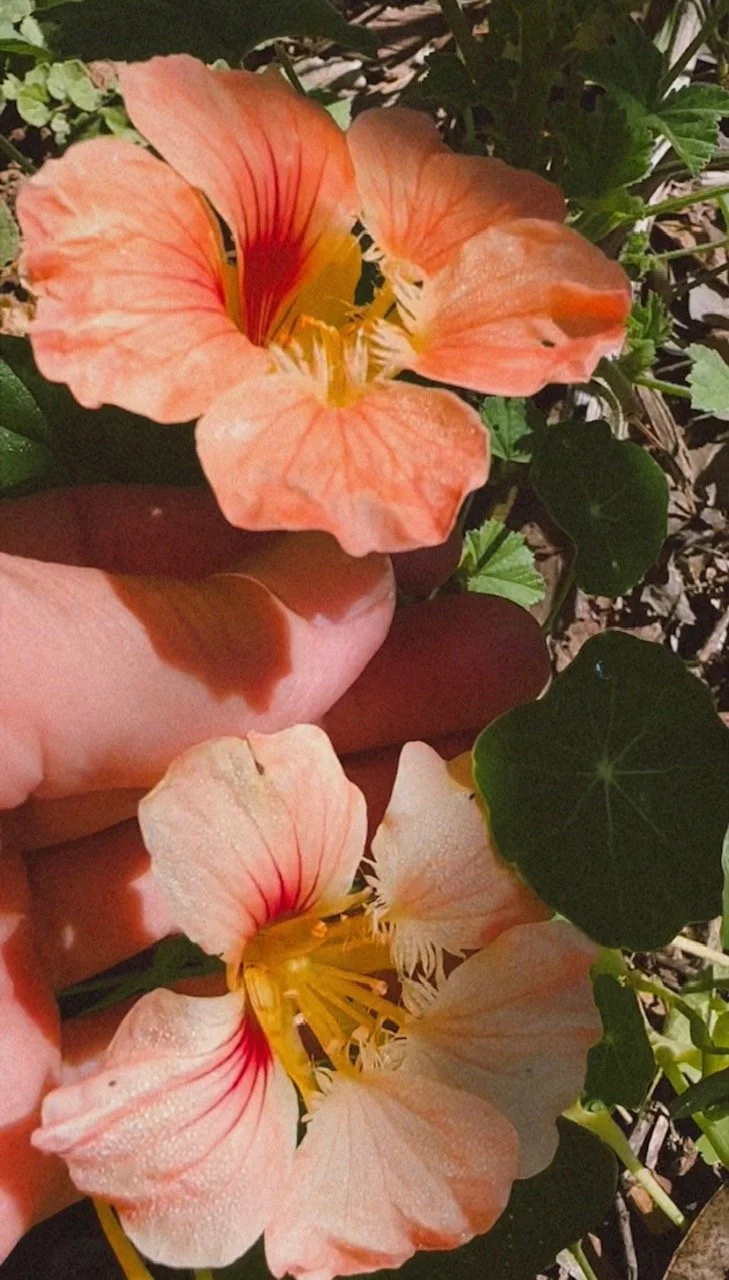
He asked me if I had ever opened a hive before. I said no and he seemed surprised. Ojai might be one of those places where the opportunity to experience bee keeping just happens to present itself more regularly. It might be the weather, or the sun. Maybe it is all the orchards. Of course the blossoms in spring that soak us in fragrance, la perfume des flours. All call to mind bees and the busy bustle of nectar to be drunk and pollen to be spread.
When I think of bees I think of little wings. I think of fuzz and pollen. I think of the drone sound of a swarm in the mountains when you least expect it. I think of the buzzing in trees that makes you look closer to find hundreds at work. I don’t often think of the sting and in fact I welcome one if perchance I get in their way or they are having a bad day. I have only ever been stung exactly where I needed it and the medicinal healing is miraculous.
Bees come from the tears of the Sun God Ra, in ancient Egyptian folklore. They are messengers between our world and the spirit world, carrying souls across veils, so say Celtic stories. Sacred to Demeter, the goddess of harvest, in Greek mythology, they represent the healing forces of nature and a nurturing of the fields. If a bee touched a baby’s lips they would become a great poet.
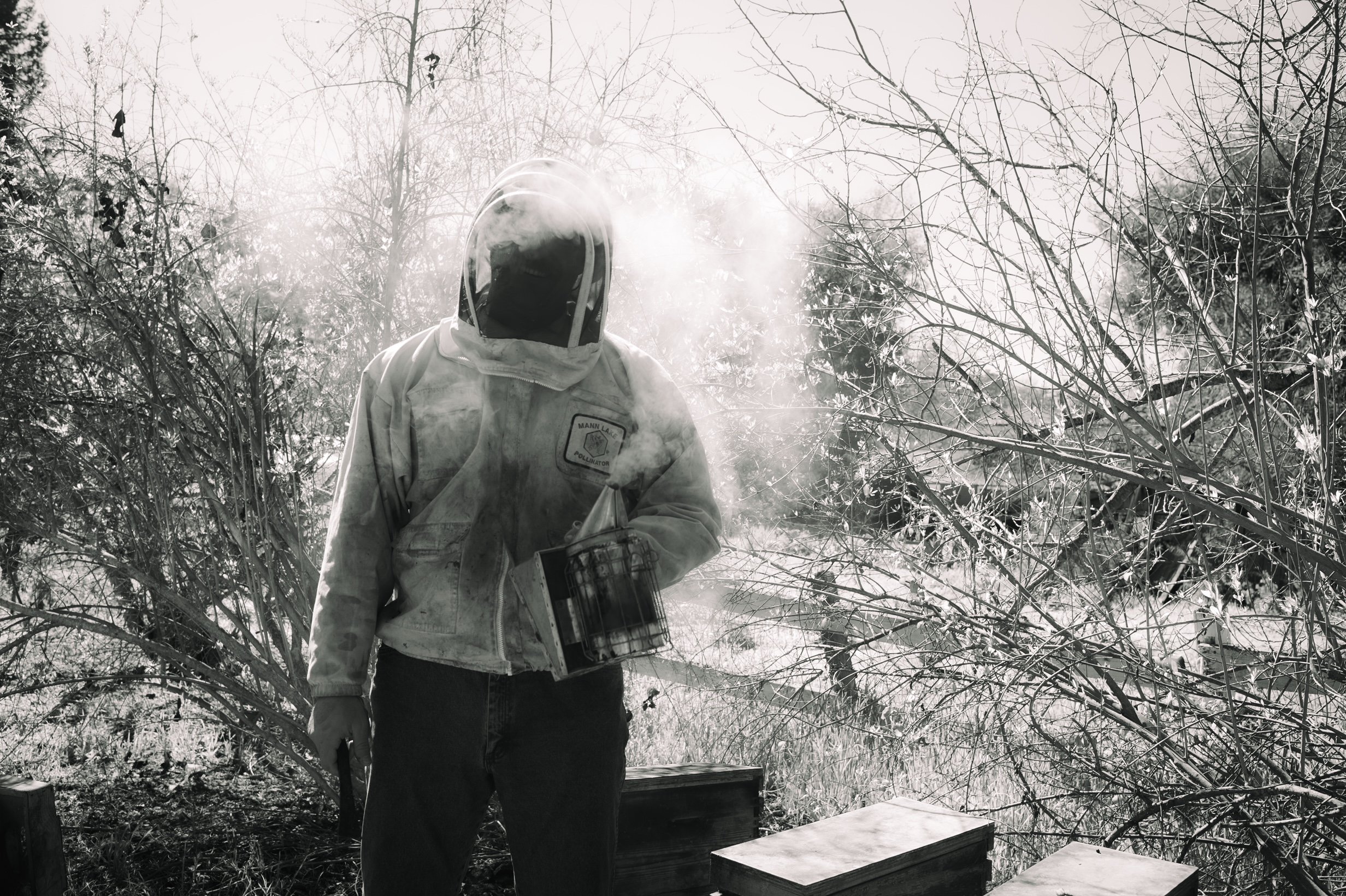
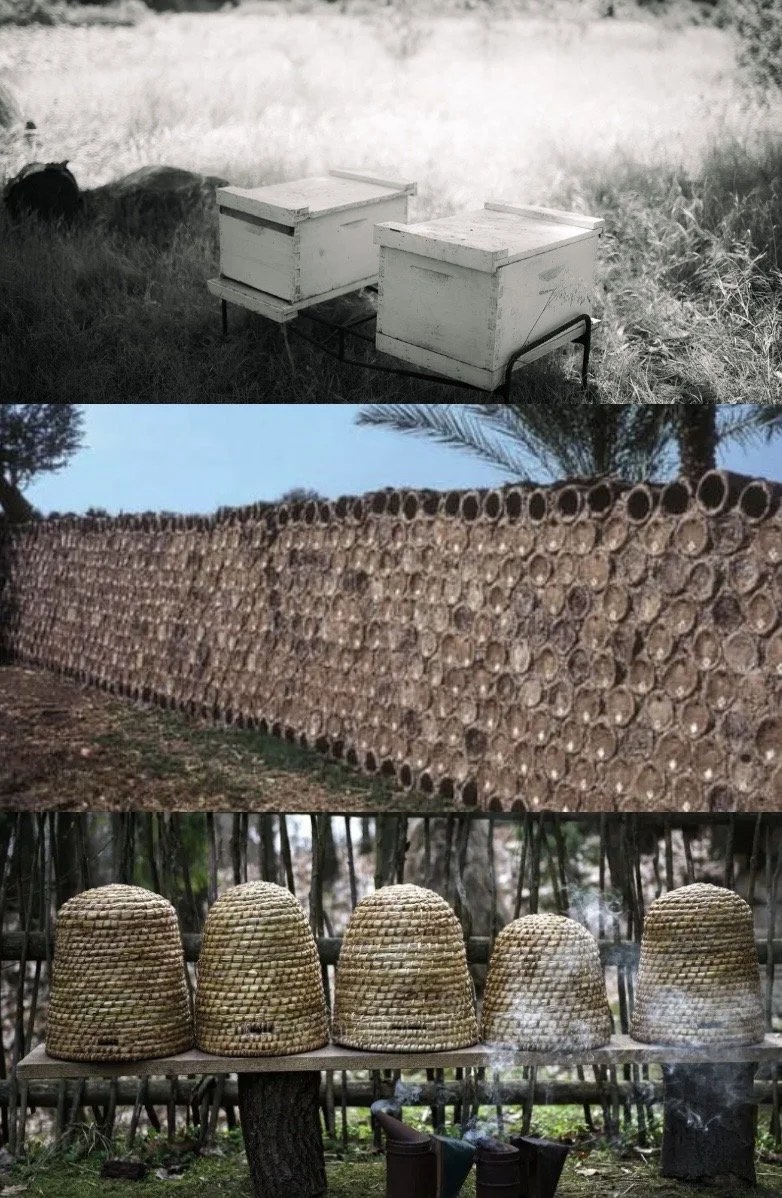
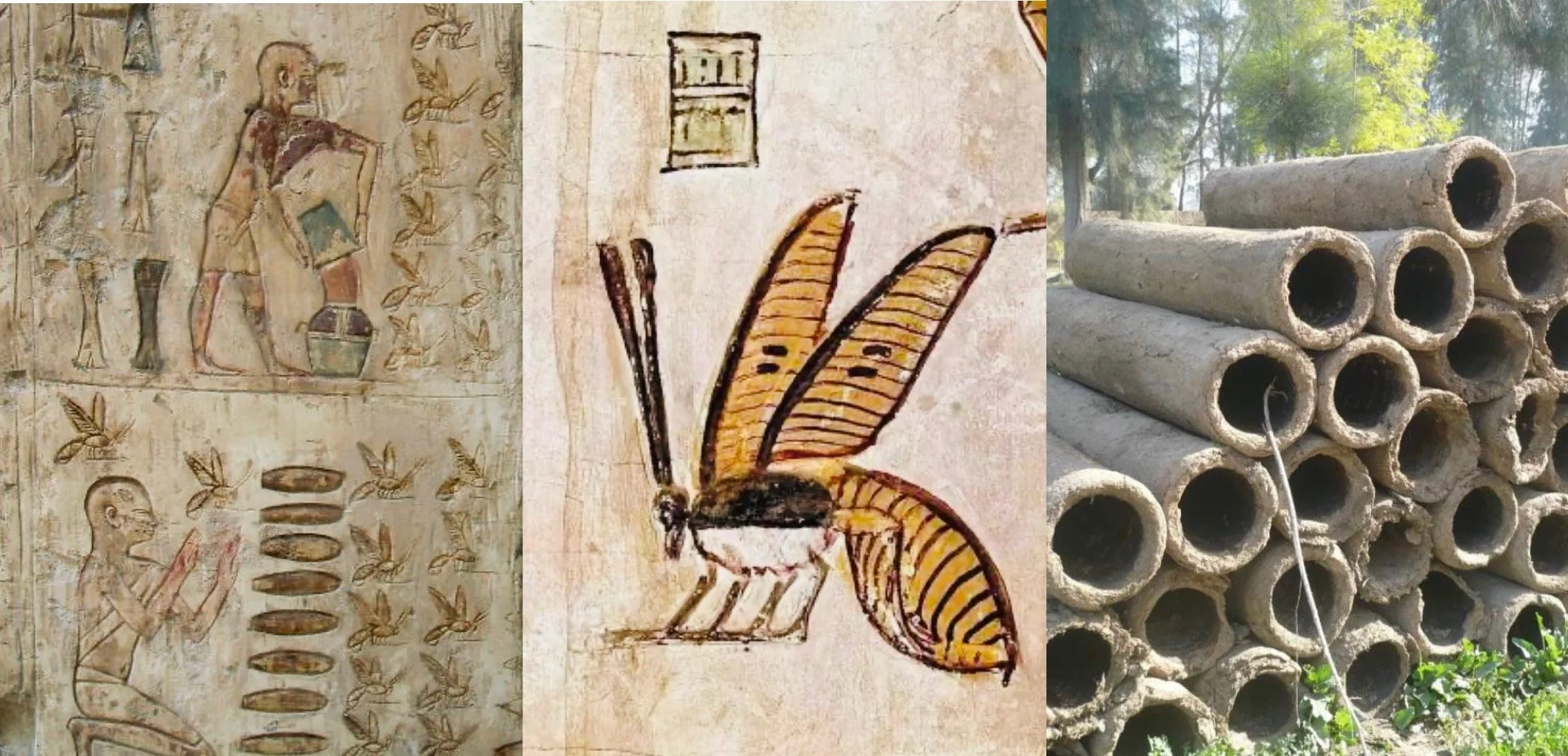
Ancient Egyptians were the first to formalize apiculture ( the science and practice of raising bee colonies in managed hives to produce honey, beeswax, pollen, propolis and royal jelly ), around 2400 BC. Prior to that, cultures would often rob honey from wild nests. The development of keeping bees was a huge milestone in the history of agriculture. The Egyptians would use cylindrical hives often made of clay or mud or wound reeds from the river. They were easy to stack and move along the Nile river on boats during the blooming seasons. They developed the smoking technique to calm the bees that we still use today and images of these practices can be found in ancient Egyptian murals.
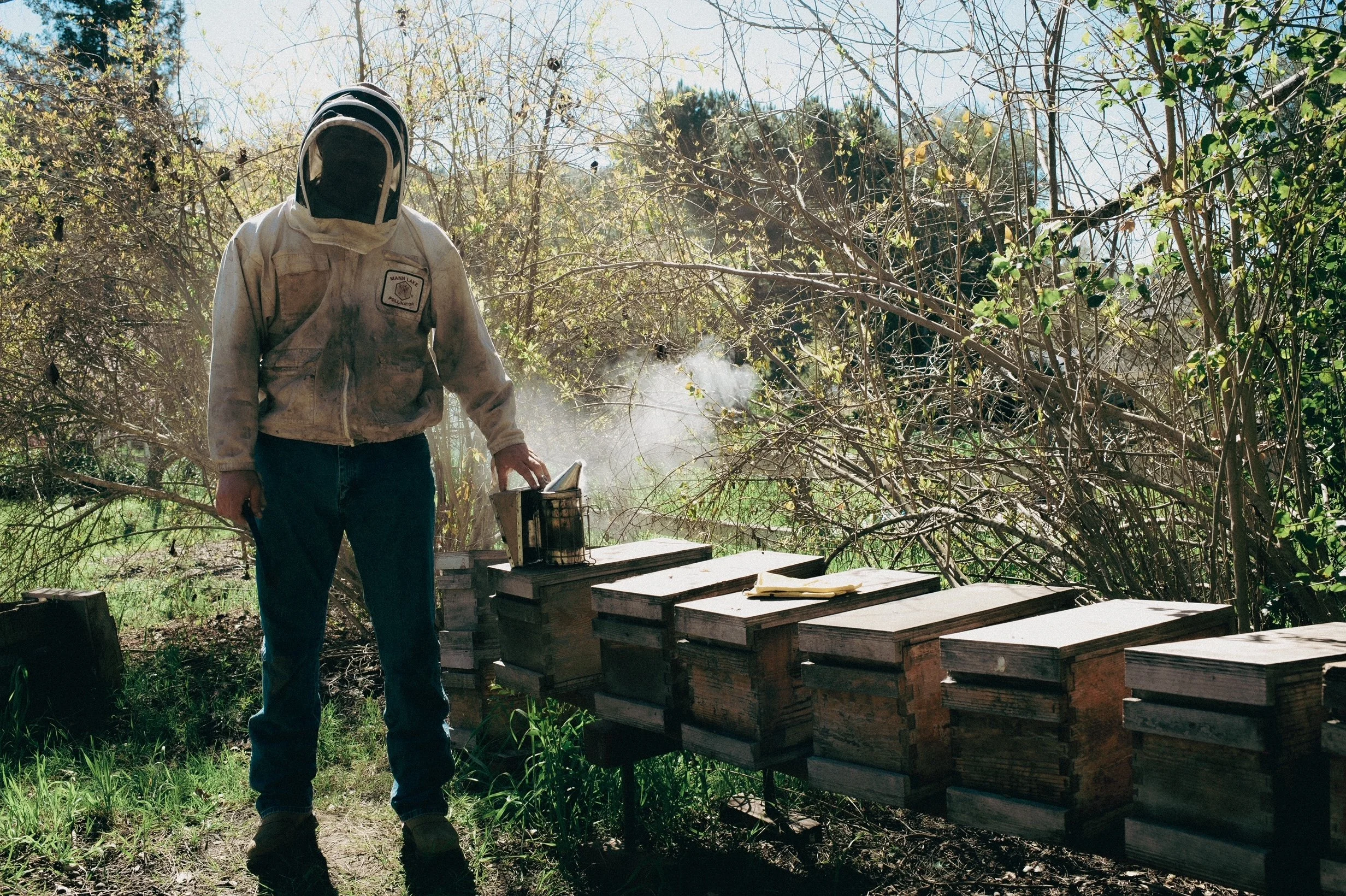
Ryan Odell owns Sunshine Honey and Bee Removal. I asked him if he would talk to me about his bees and honey on a whim, as I was prepping a post on toast. I figure with toast it is either butter, jam or honey, so honey became a curiosity.
“My mission is simple: protect pollinators, remove colonies safely, and help neighbors live alongside bees.” This statement on the about page of Ryan’s website says a lot about his practice as a bee keeper. He began his career in bees as a hobby on the weekends to unwind from the unsatisfying work of the week. It was calm and peaceful, outdoors, in orchards and in nature. His lessons were learned via hands on learning from old bee keepers in the area, all of which had their own particular take on what bee keeping meant.
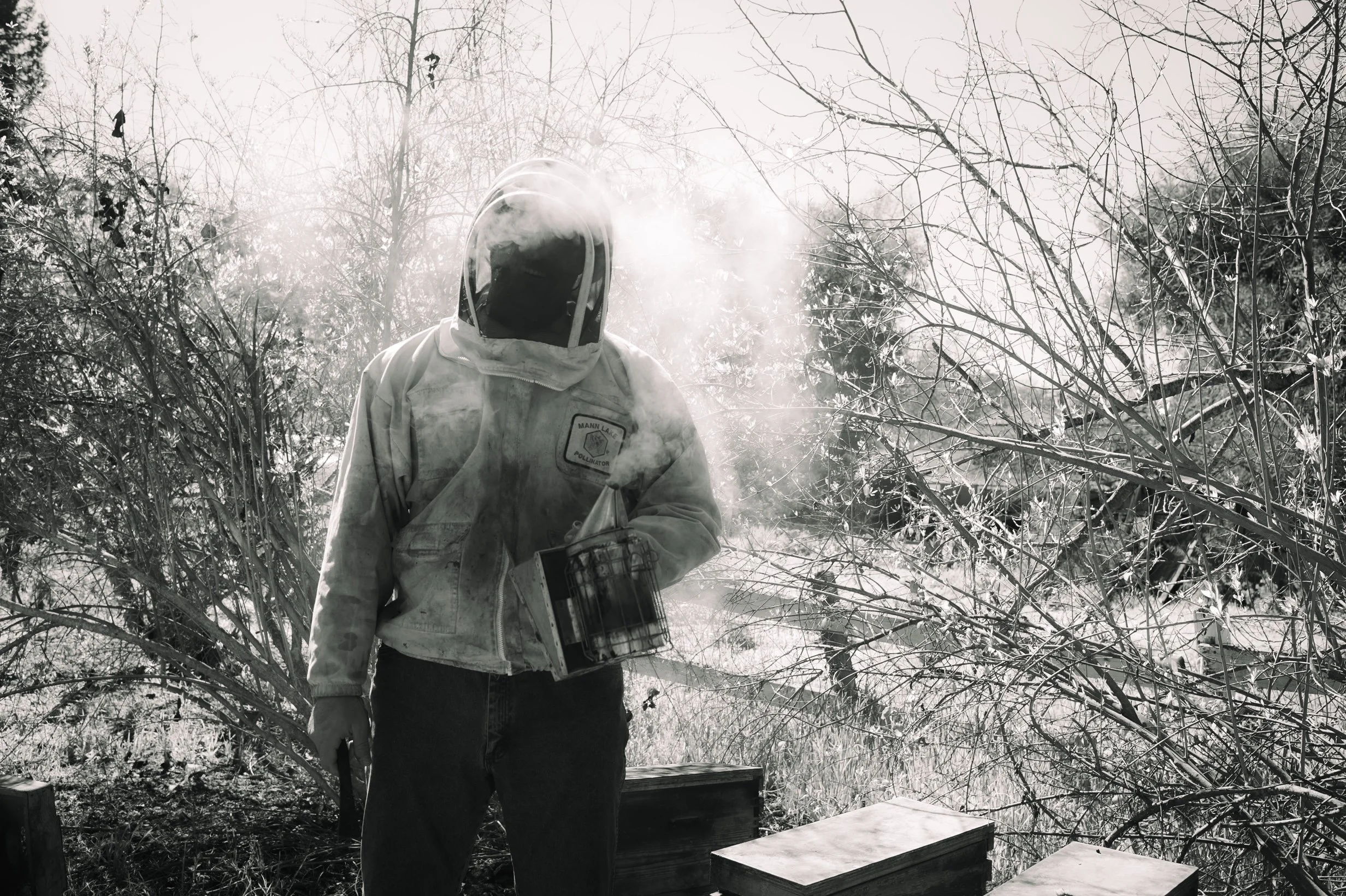
It seems there are quite a lot of opinions in the bee world about how to manage bees, keep hives and grow colonies. The bees have a natural system for making honey and reproducing and maintaining their colonies but it is the bee keepers job to make sure the environment in organized and healthy for the bees to do their work. There is an ebb and flow of the bee colonies which follows the seasons and a lot of work to be done by the bees. If they survive the winter, the bees will keep going and can be a perennial source of honey, but often, through the practice of managed hives, there can be an annual loss of up to 50 percent of the bee population of a hive and it might only last a single season, with only the queen to continue on to build a new colony. Poor nutrient, disease and mites become the major factors of this loss. These complications contribute to the varying beliefs and practices of many bee keepers and ultimately the question of nature verses nurture comes into play. To the extreme it can be looked at as the “bee keepers” and the “bee havers”. One actively manages hives to ensure bee health, focusing on disease prevention and sustainable practices and the other lets nature do what it does and only interacts with the hive to collect the honey. I would say that Ryan falls somewhere in the middle. He created his own practice that fulfills his passion for bees and runs squarely in line with his mission statement. I would call his honey, Wild Bee Honey. Because he loves his wild bees, but he takes good care of them as well.
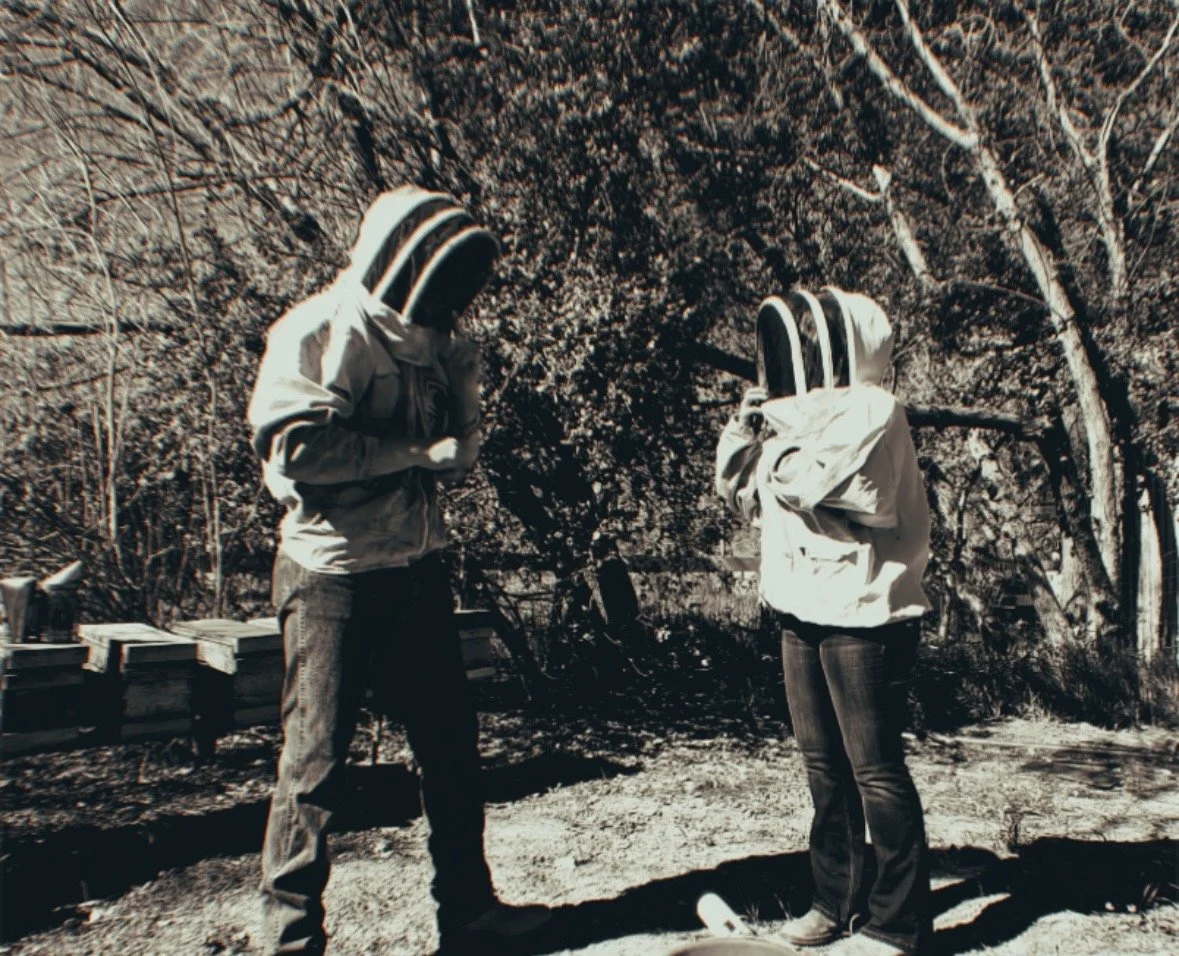
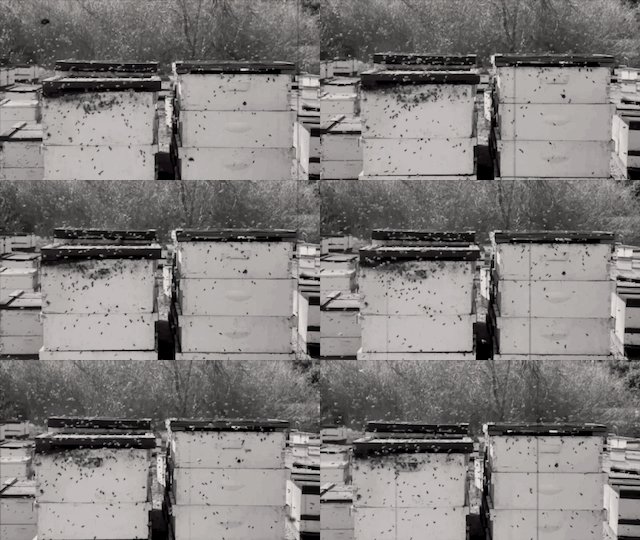
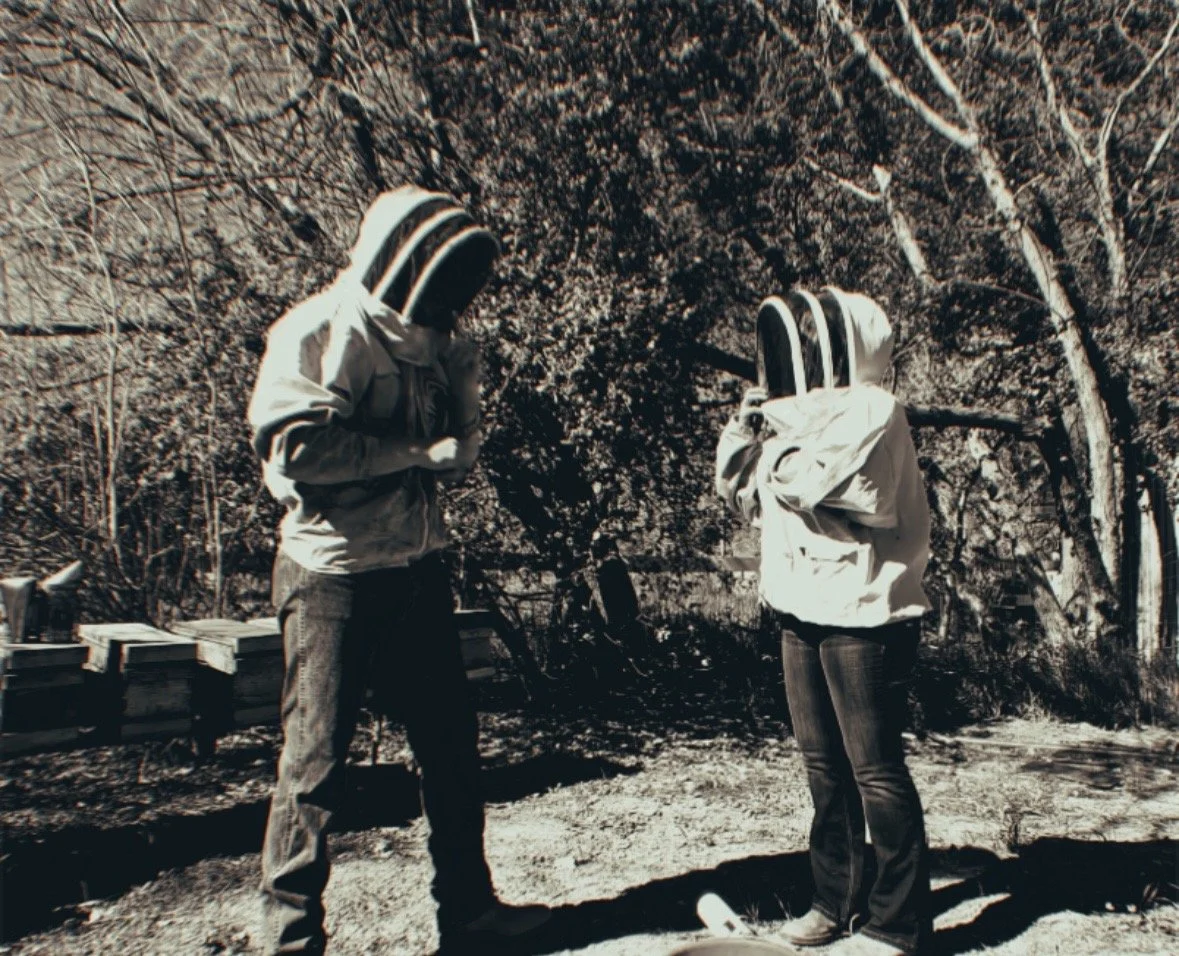
Honey bees are not native to the Americas. They are European and perhaps act as such. They sort of bobble around. Not quite like our native and absolutely crazy yellow jackets who are a wild bunch that might kill you if you let them. Wild West vibes with a shot gun and some hootin and hollerin. The honey bees aren’t like that. I find they are mannerly to a degree. Lovely is the word that kept coming to mind as I stood dead center the bustling cloud of worker bees by the hive. They didn’t touch me apart from the wind from their wings stirring up an energy I had never felt before. Vibrations skimmed my cheeks and the back of my shoulders. The air like kisses and whispers. It was a combination of movement and sound, a buzzing in unison that drowned out thoughts outside of the moment we were in. They had no intention of stinging if we had no intention of bothering their work. We were guests in their world and it was important to respect them.
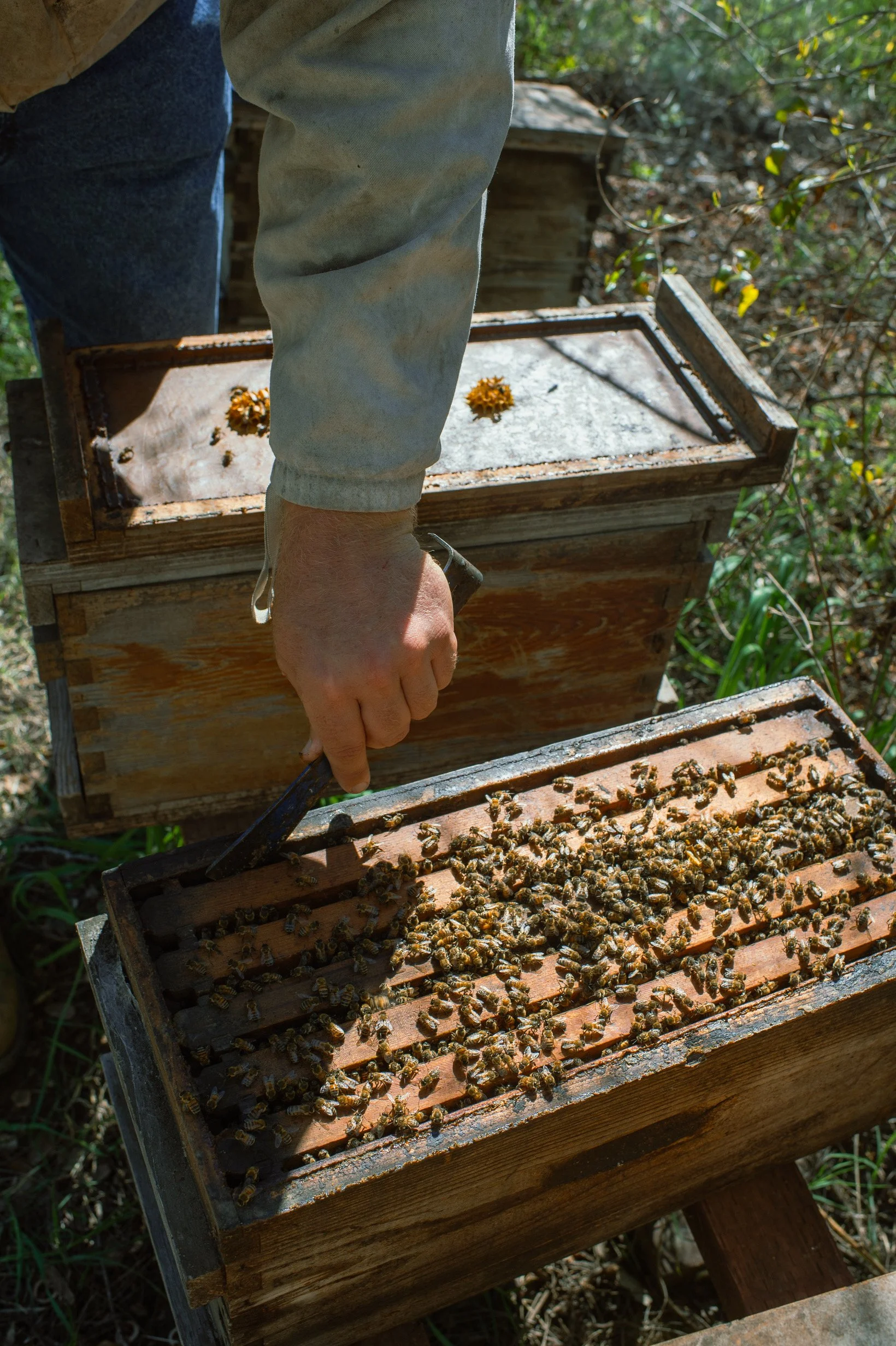
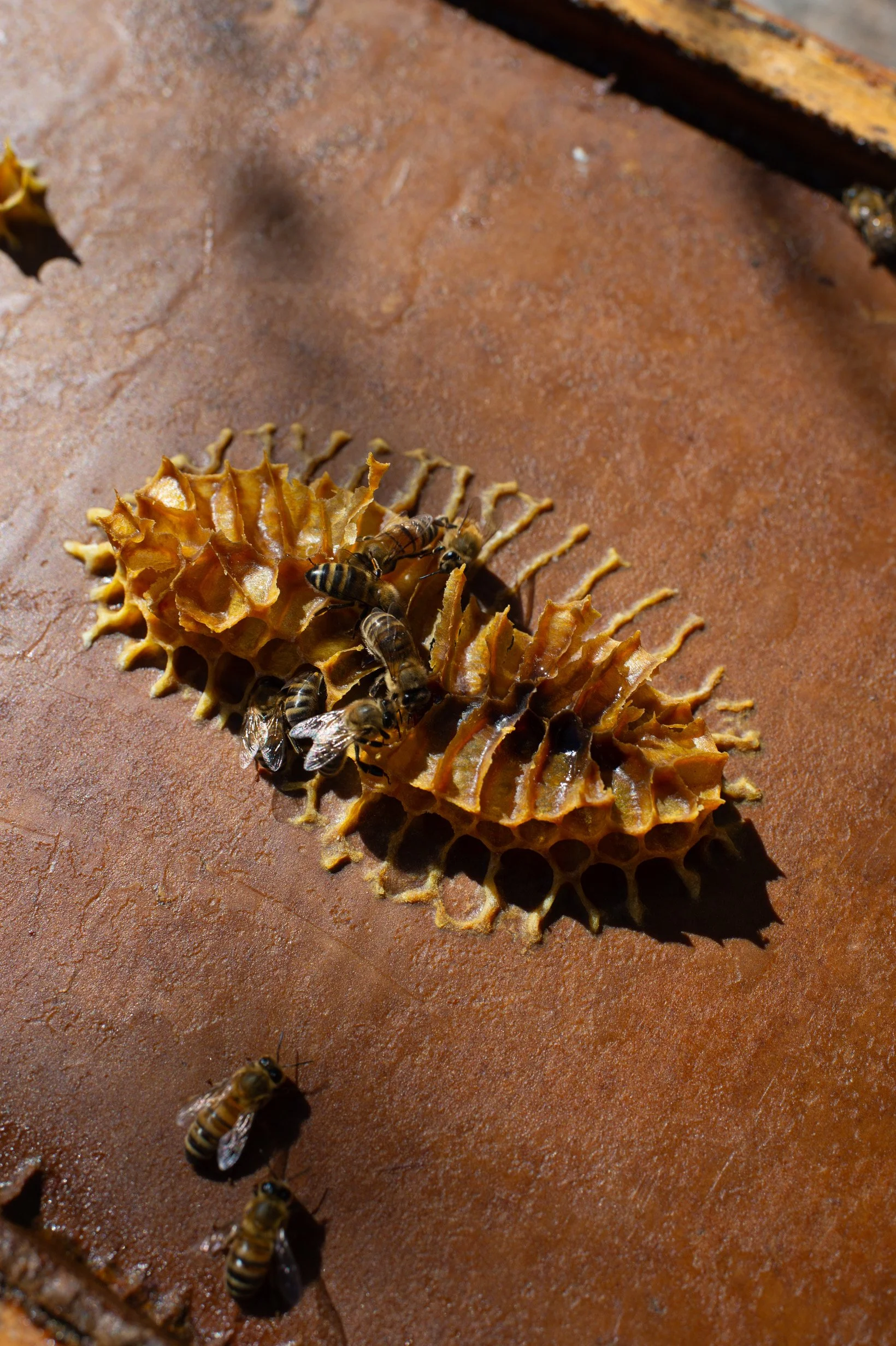
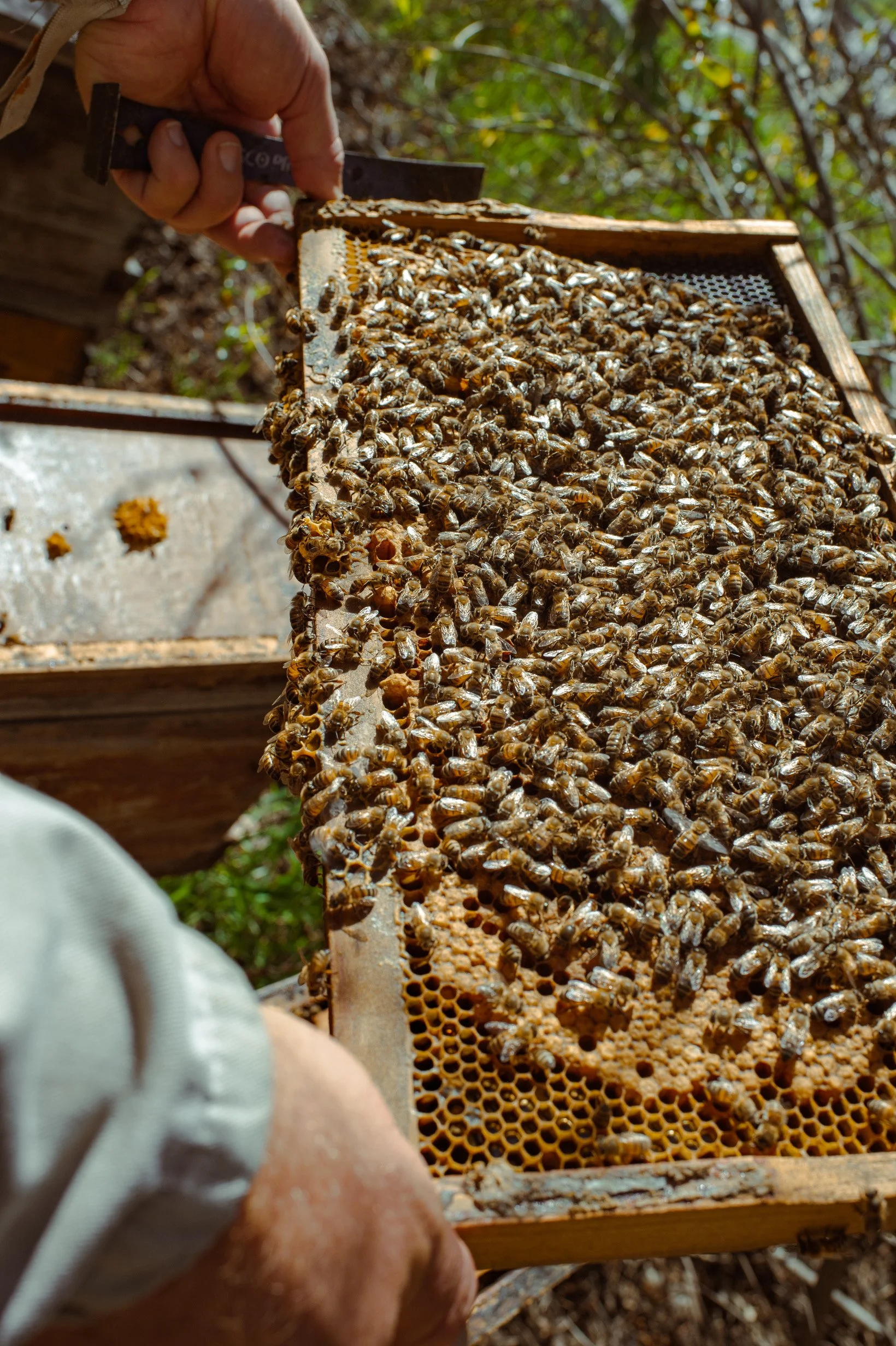
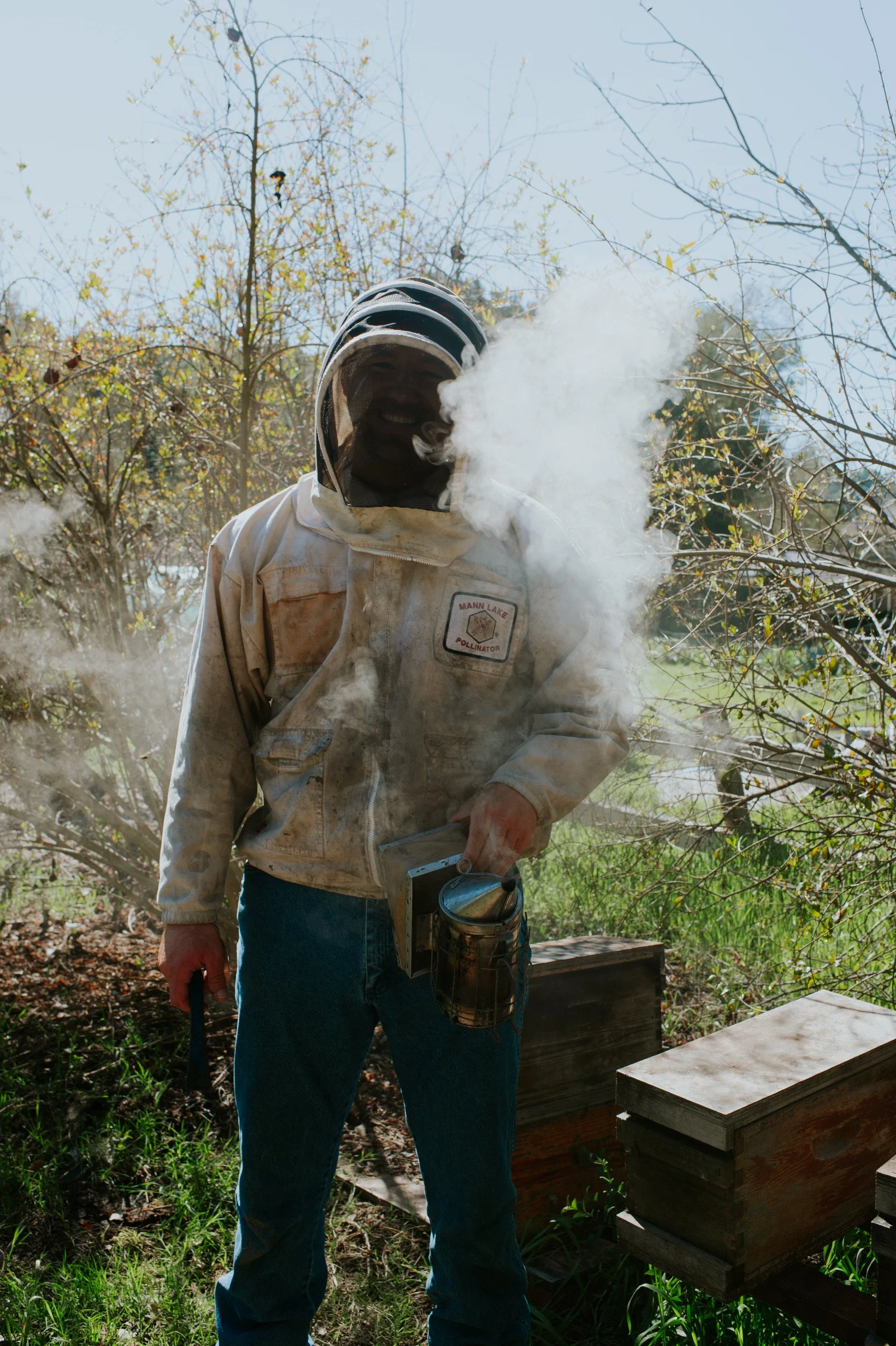
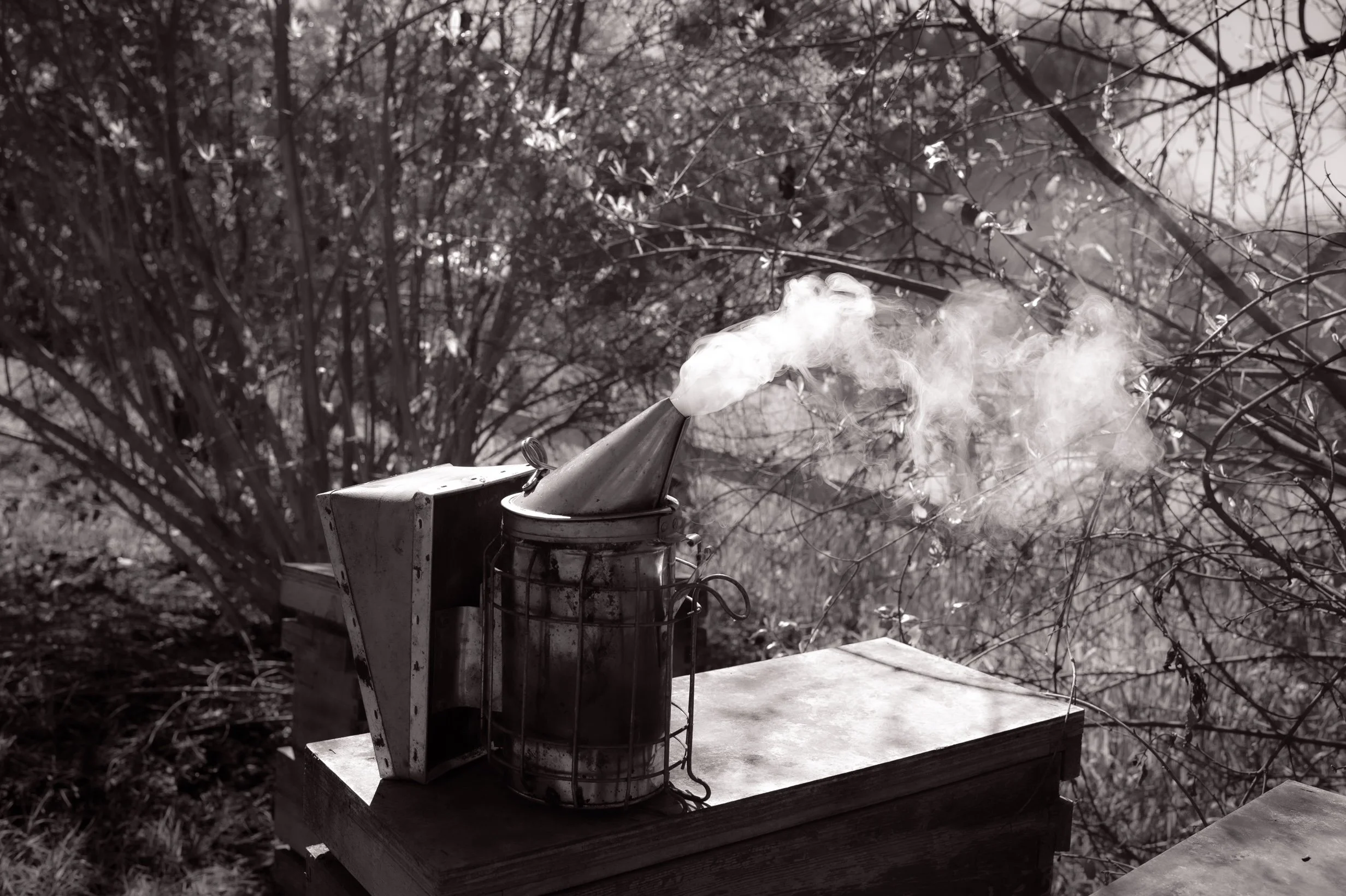
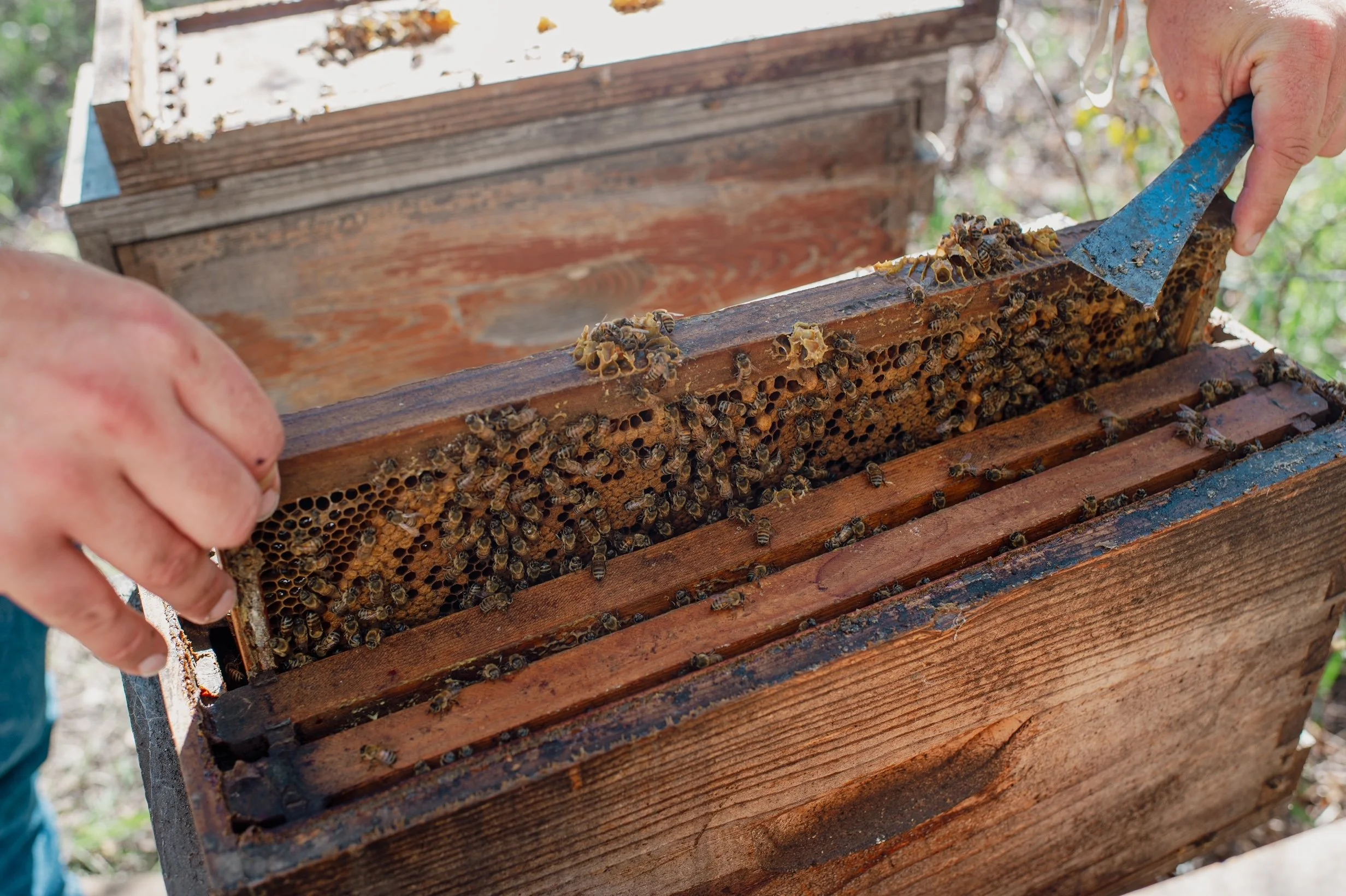
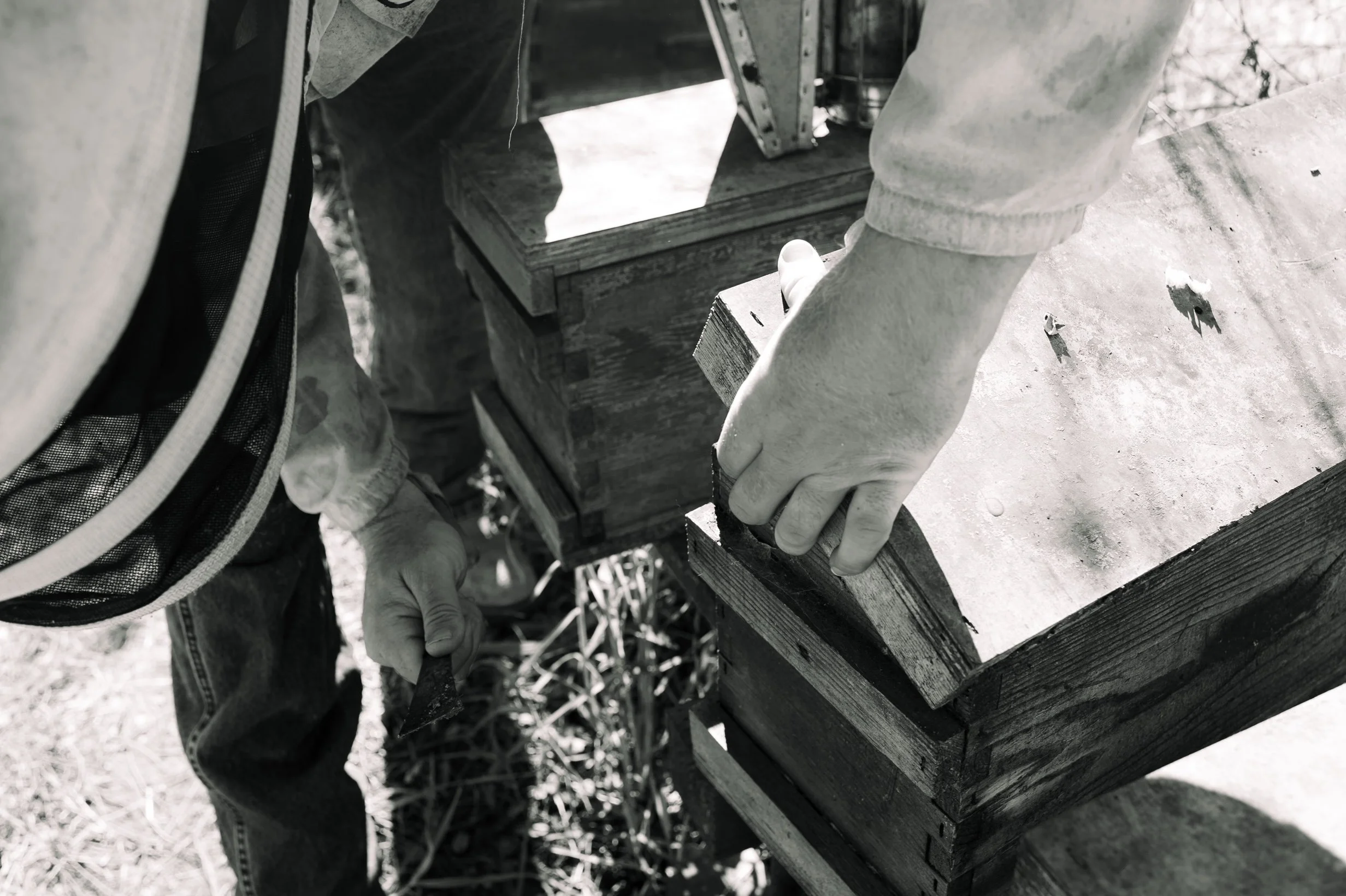
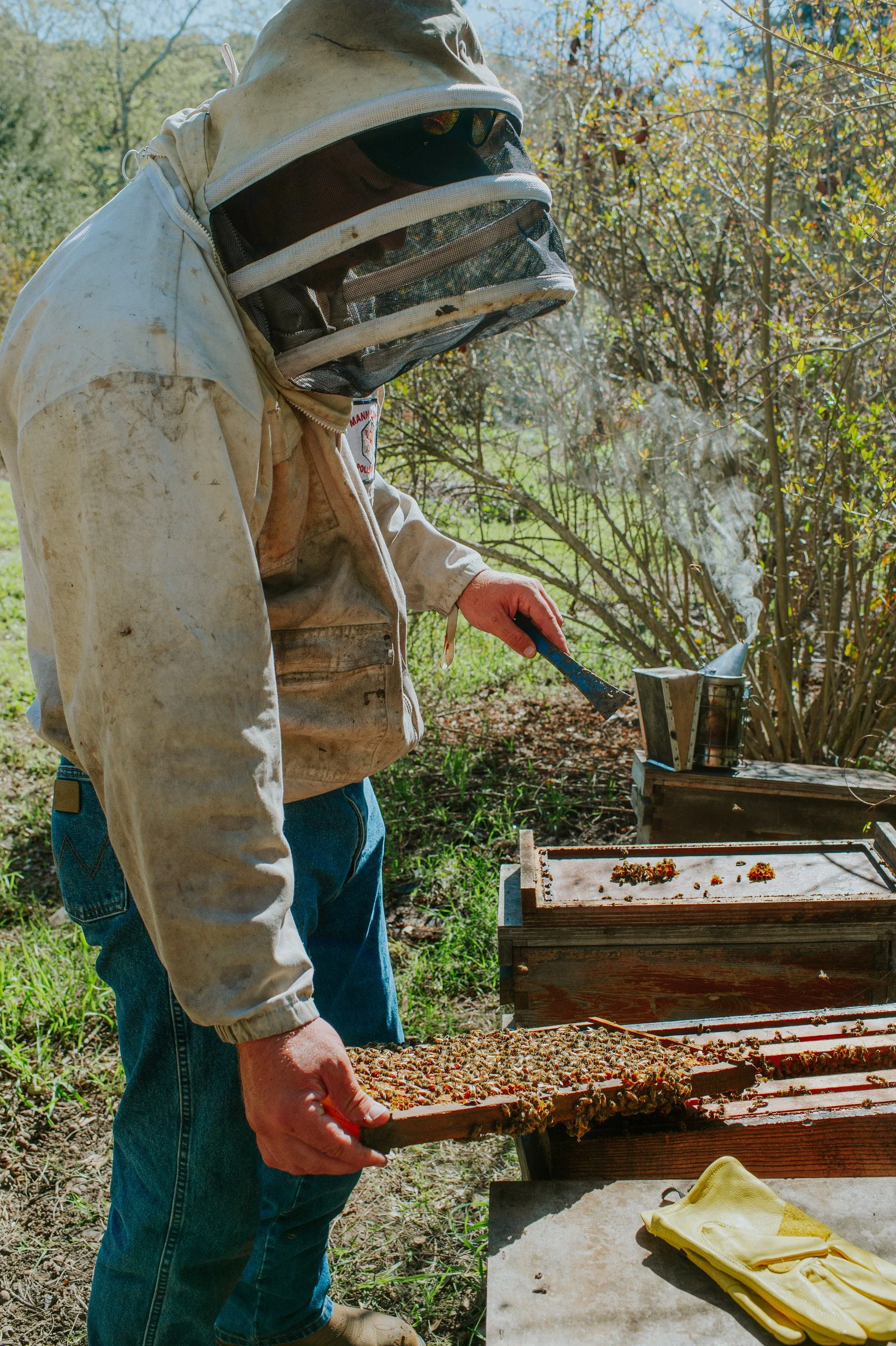
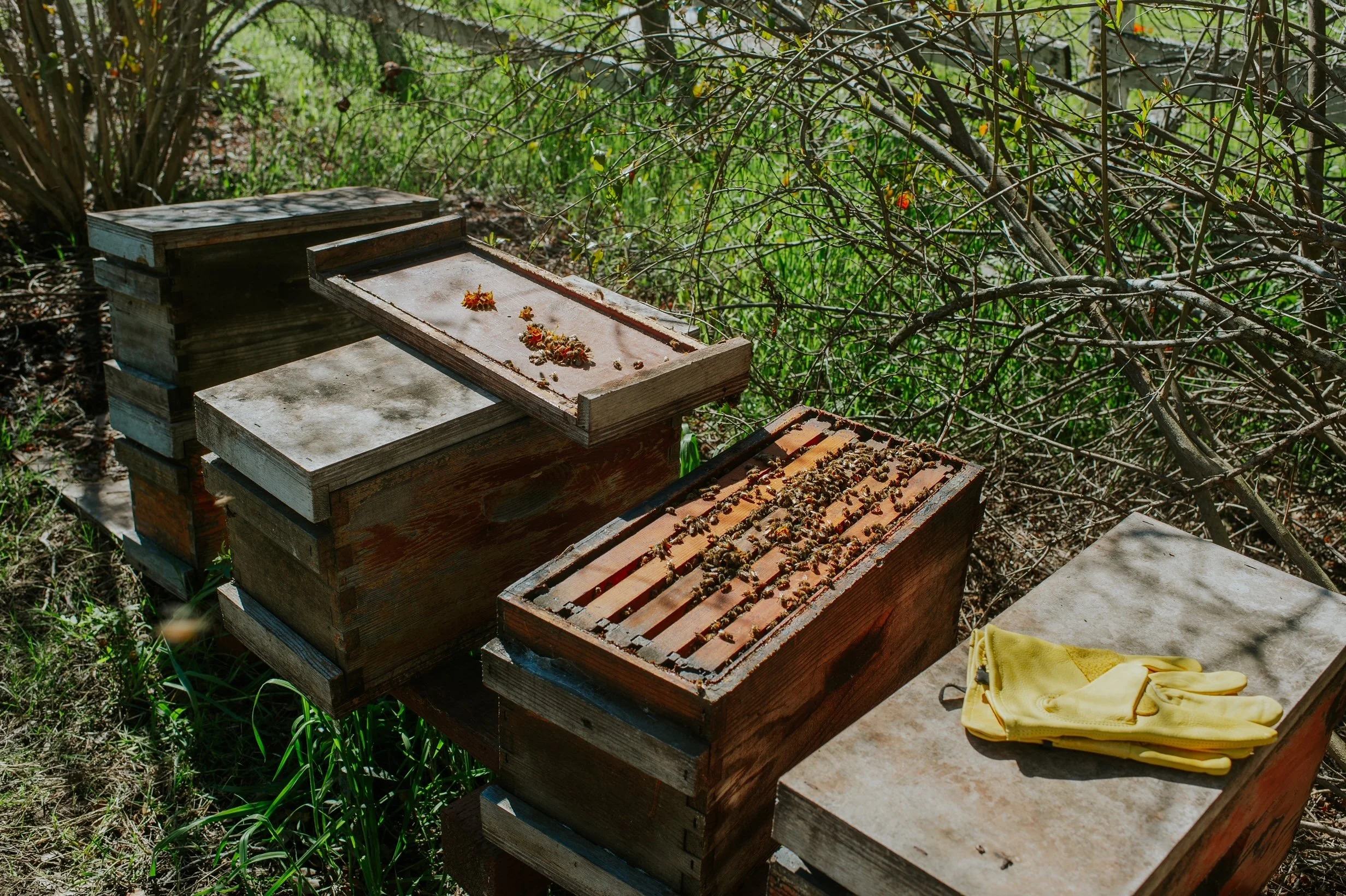
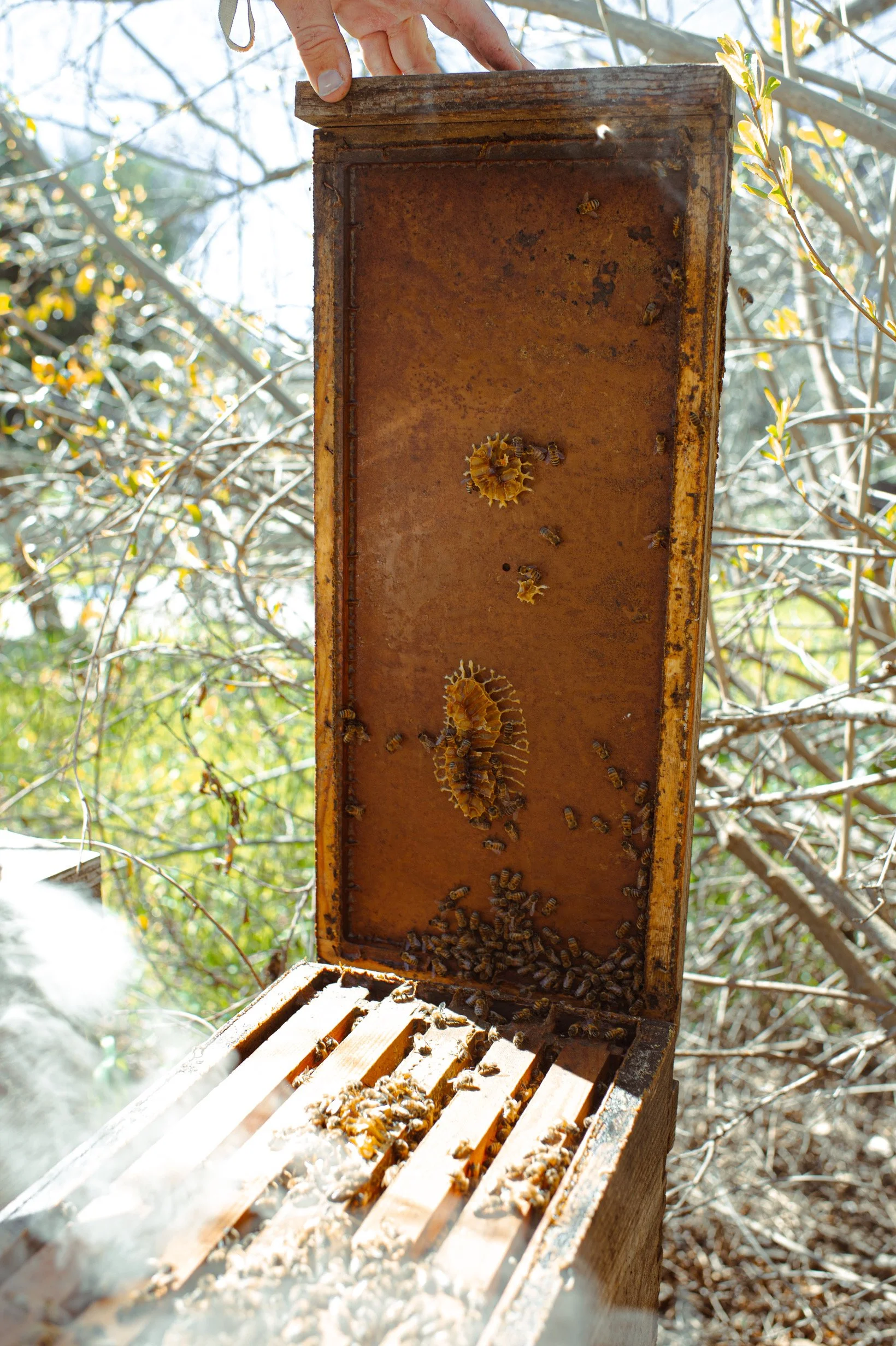
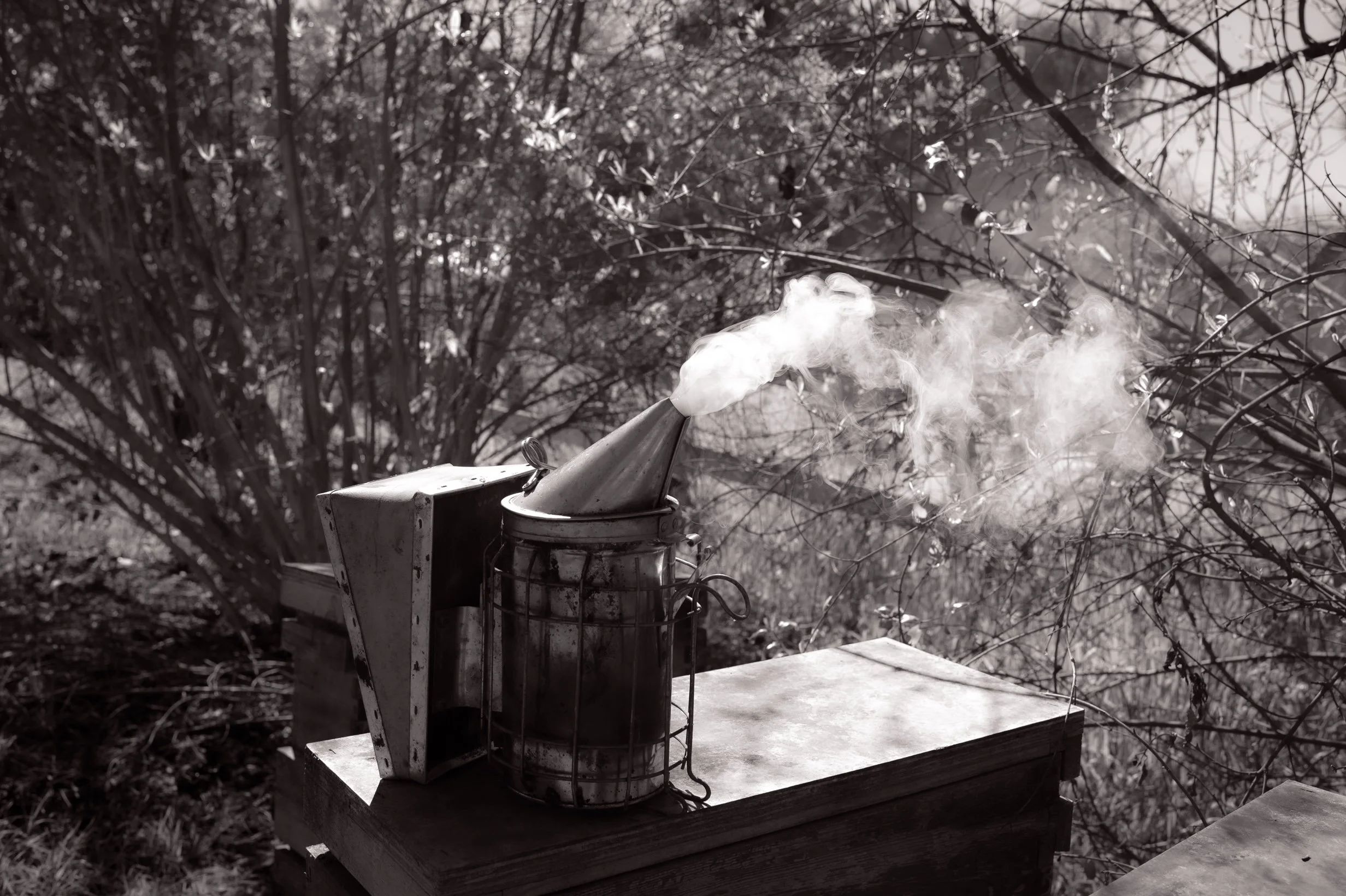
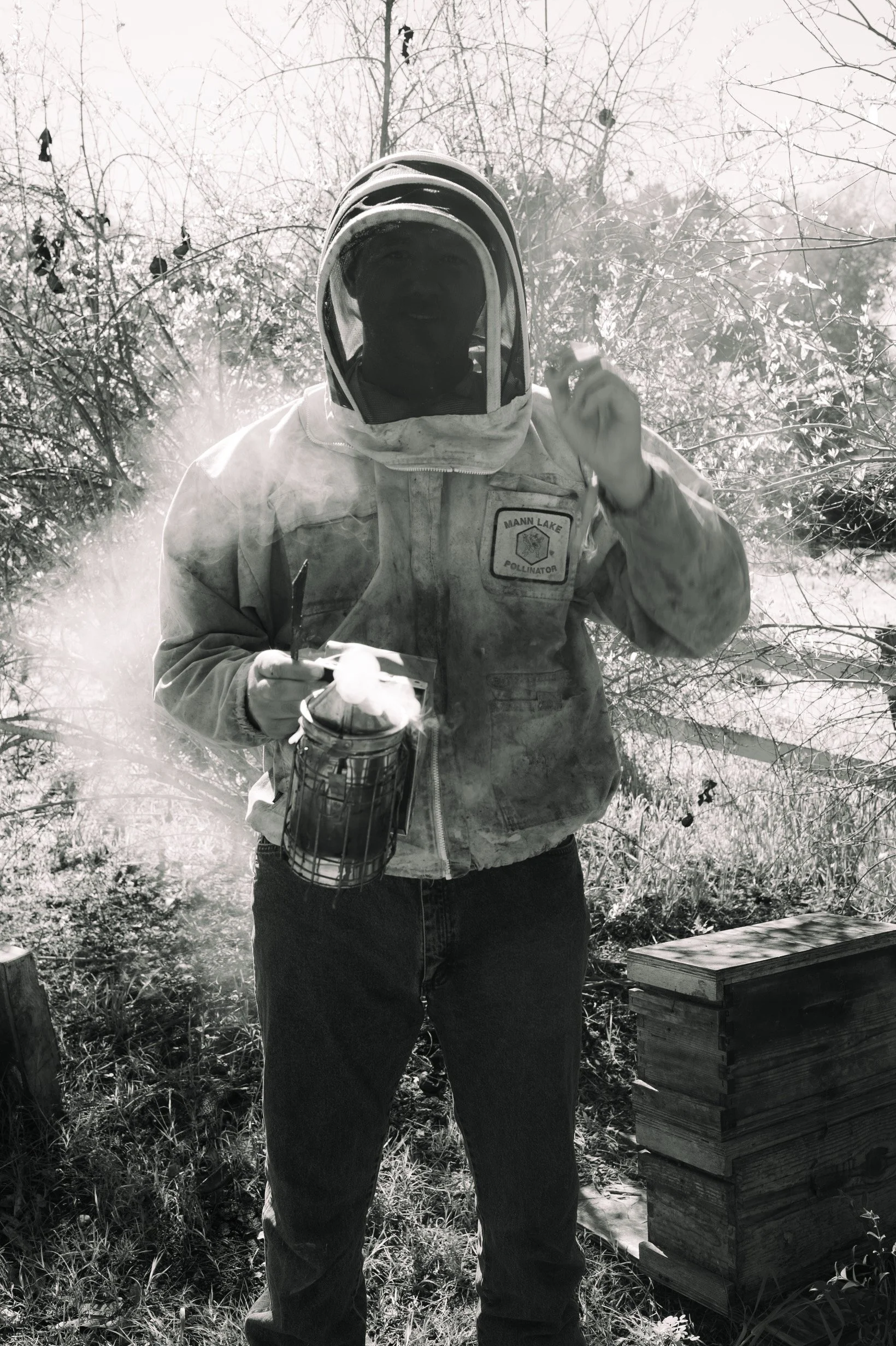
Ryan took the smoker and puffed a plume over the top of the first hive. He took a tool and gently popped open the lid. He called it a gamble. They were either going to be busy and unperturbed by our quiet intrusion or they were going to be pissed off. He said that it could be anything at all that could set the tone; a bad night with an annoying insect, a windy day, the weather too cold or too hot. Basically they just have moods like the rest of us and like the rest of us, you just don’t know what could set them off. Today, was a beautiful warm spring day. Today they were happy.
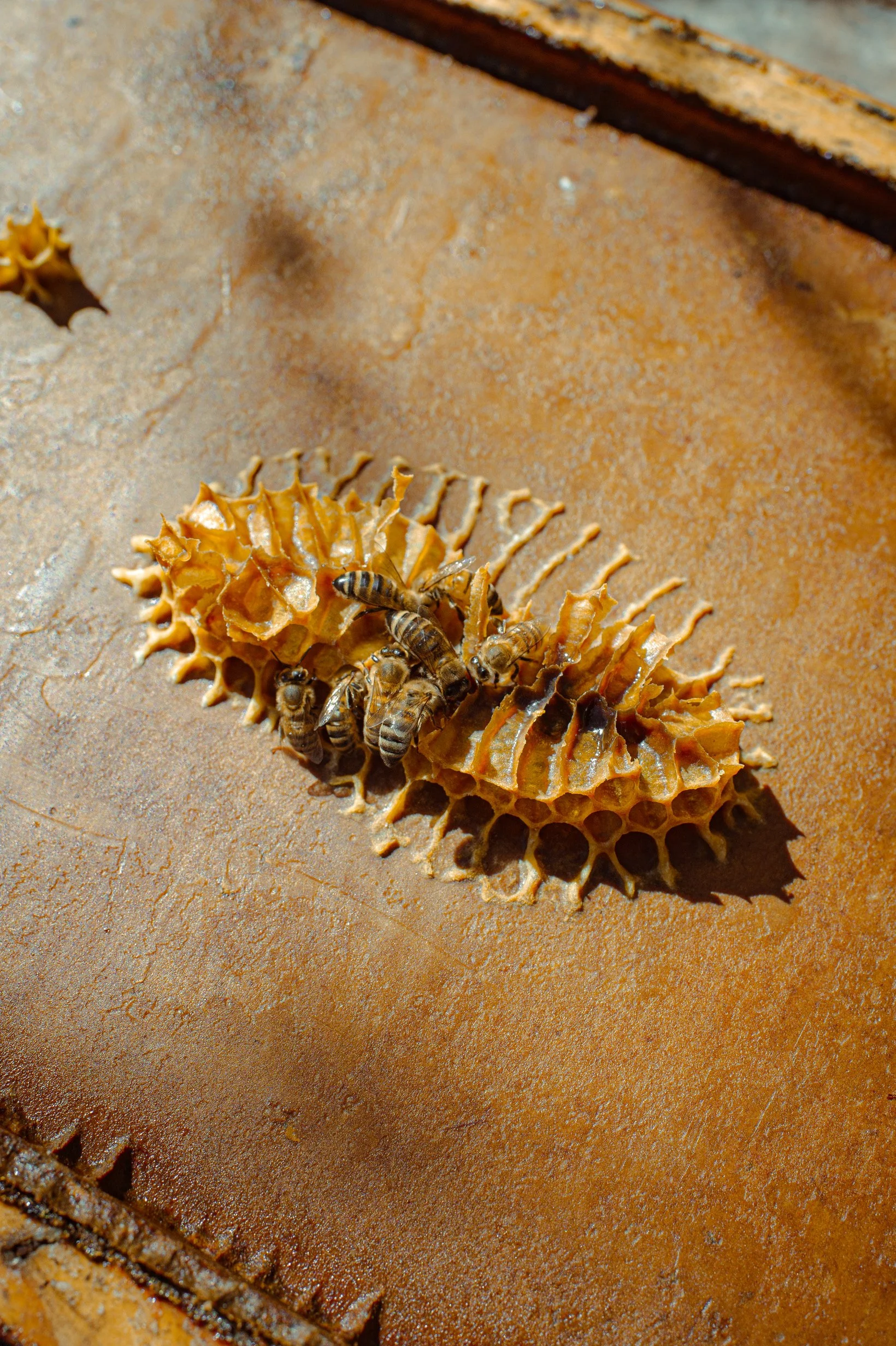
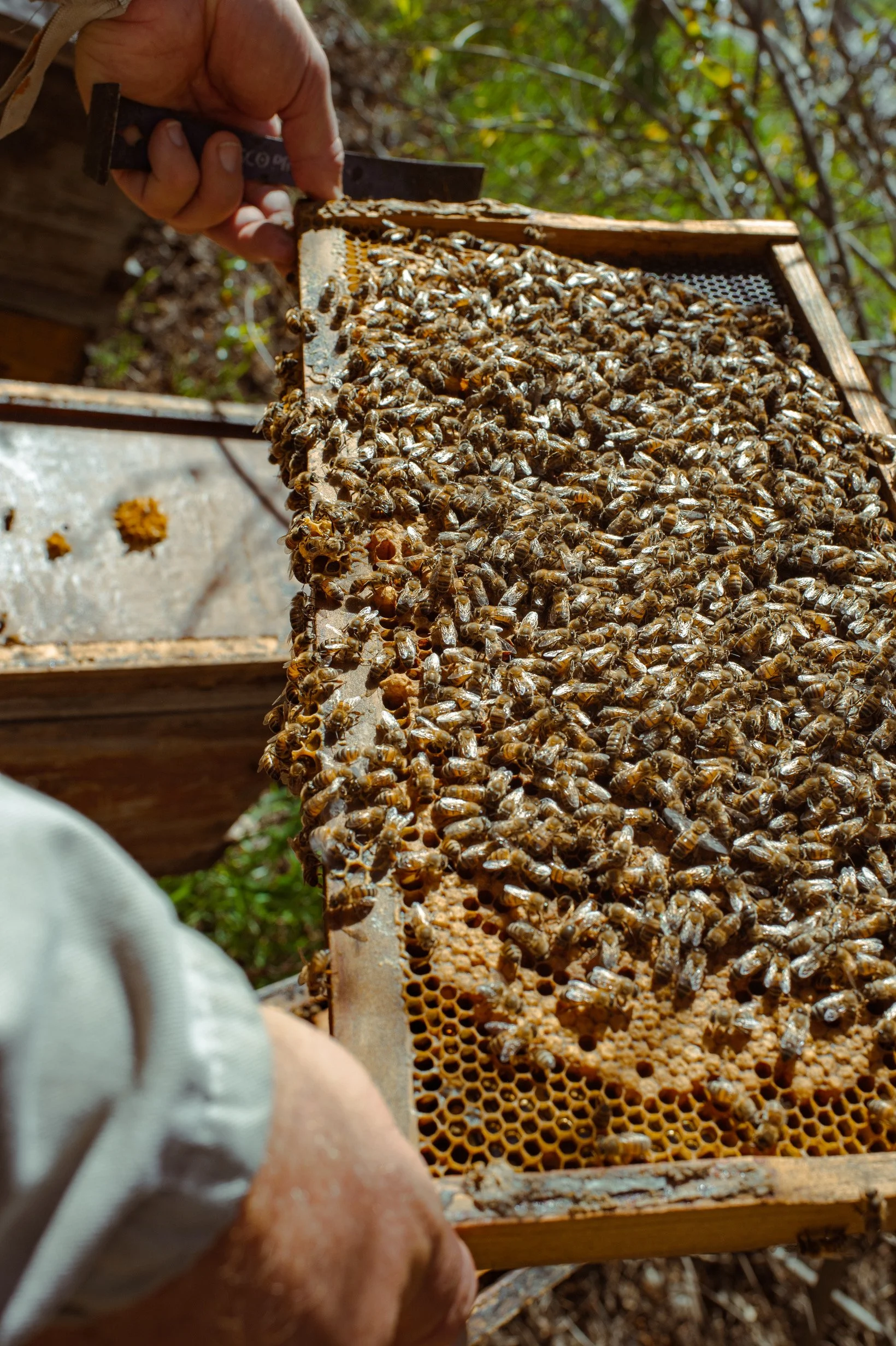
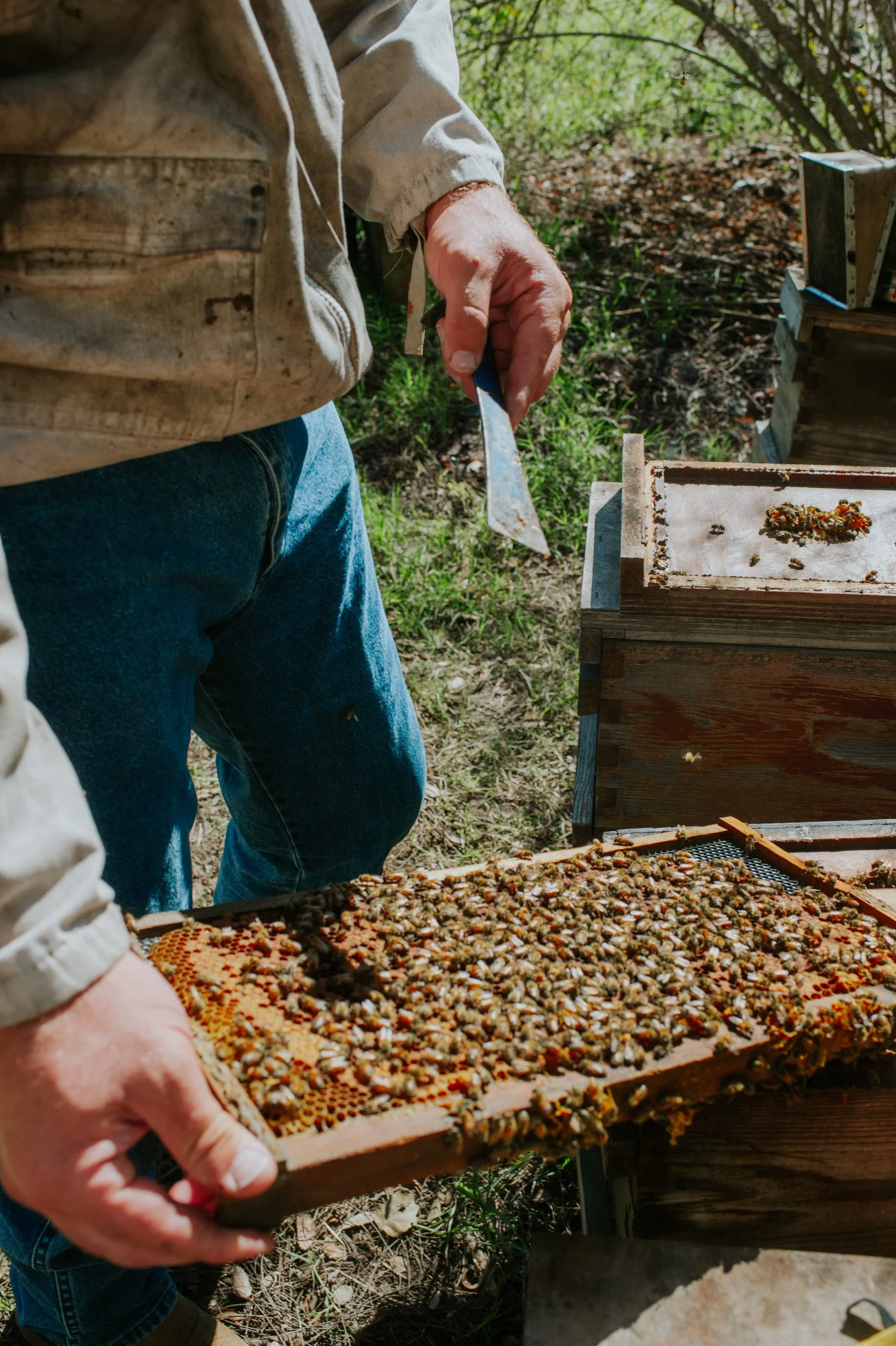
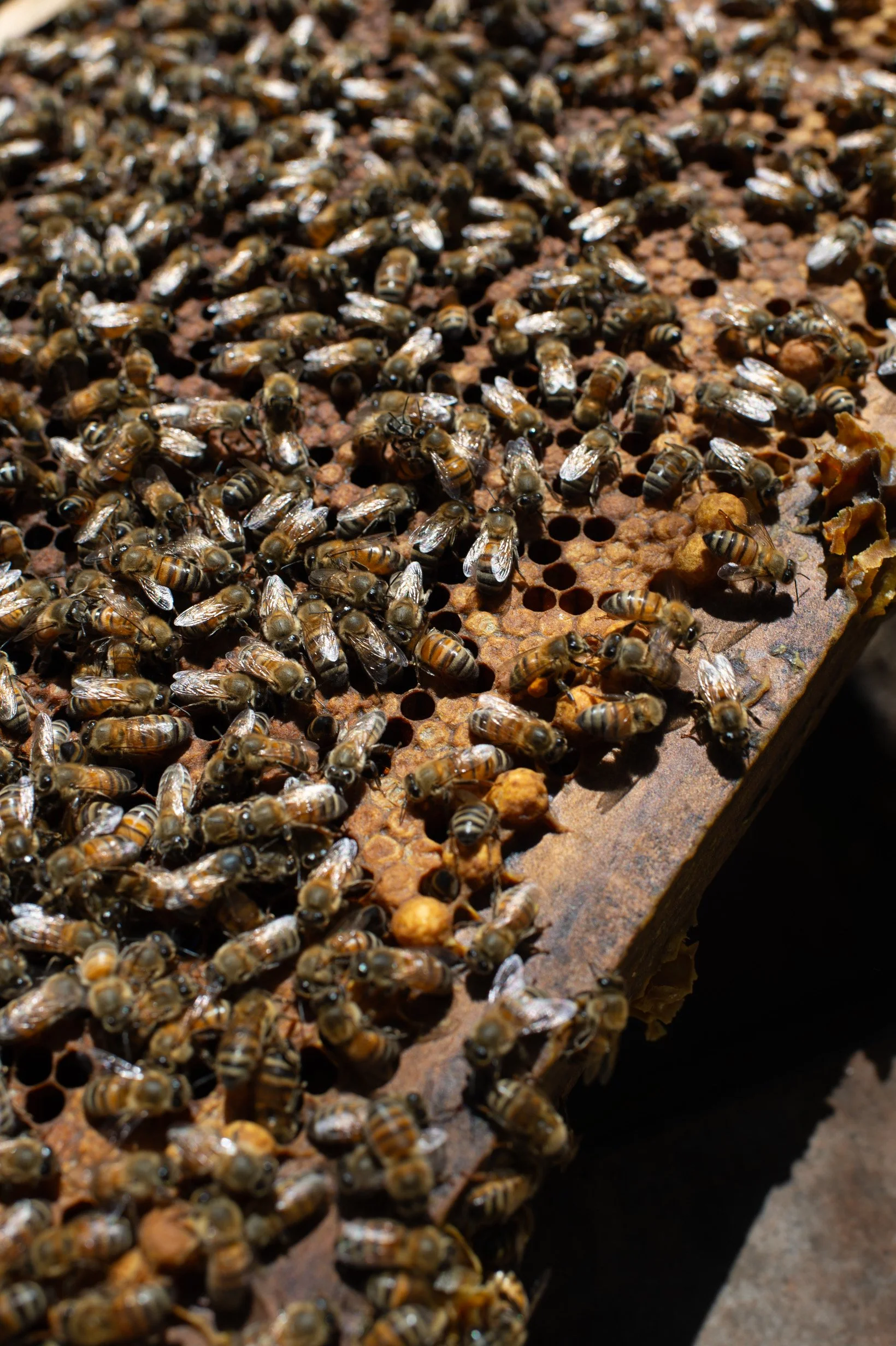
As he pulled out the trays slowly it reminded me of pulling a baby from a crib. With gentle hands he lifted it in slow motion, smiling and examining all the little pieces of movement and light that glimmered at the catch of the sun. A fuzzy carpet of bees coated the tray, focused and determined. As clear as day we were able to see the bustling system laid out before us. An efficient and elaborate dance of survival. Every bee, every piece of the picture, an important contribution to the whole.
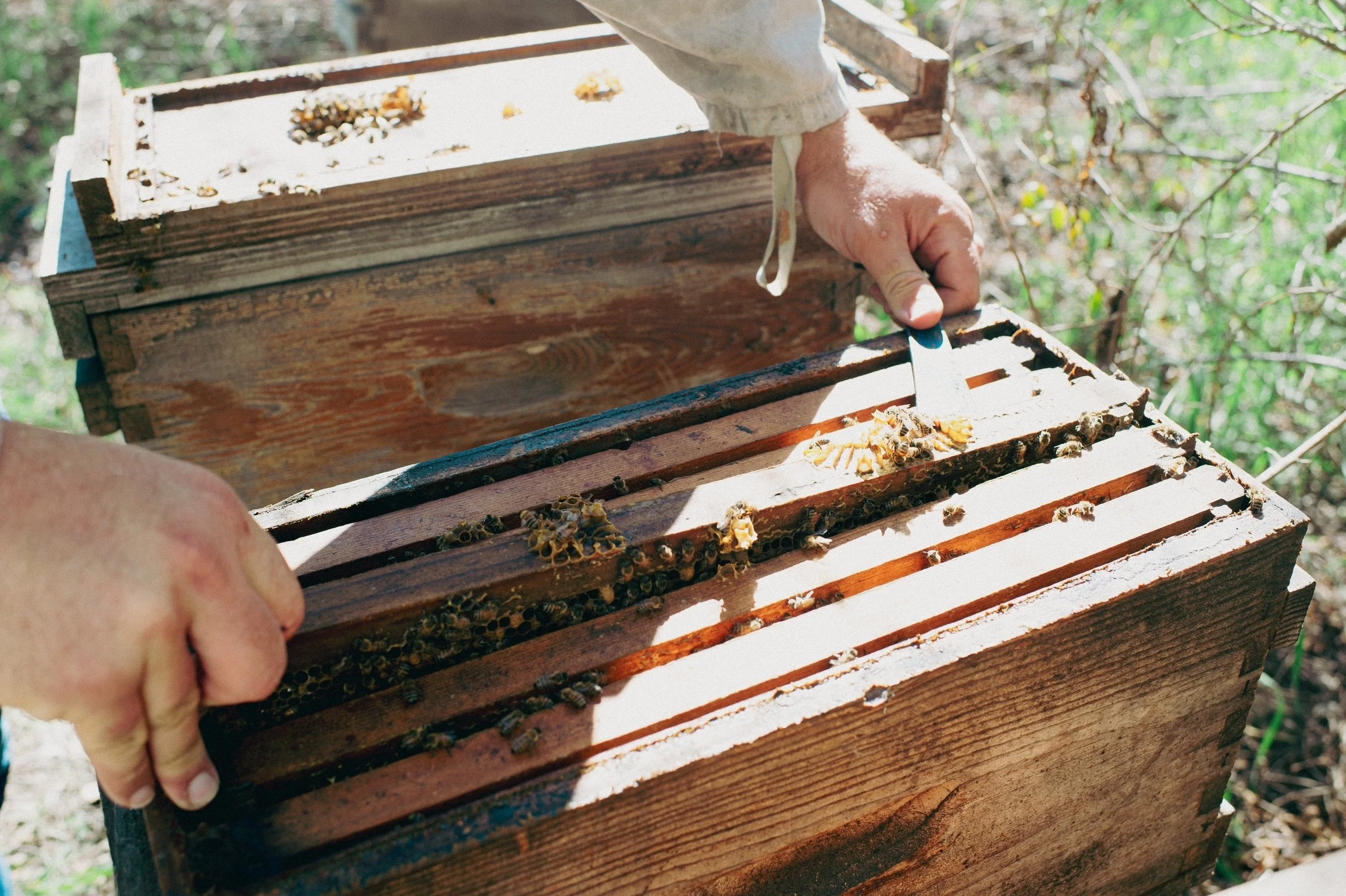
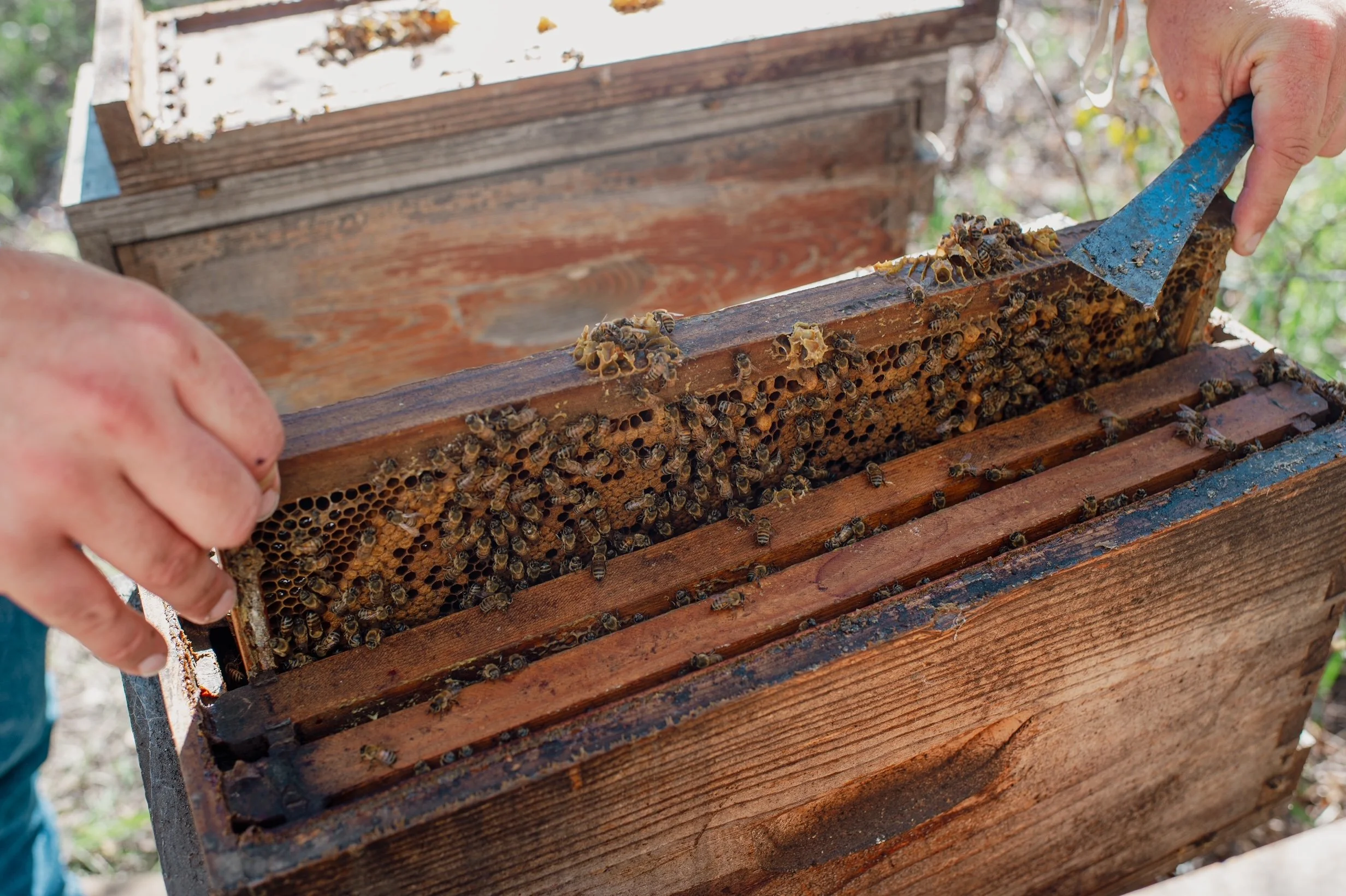
“Do you see the queen?” I didn’t. I had no idea what I was looking for. She is different. Longer. Bigger. Refined. Yes, regal. Finally, I spot her. Ryan tells me there are three distinct types of bees in a hive: a single reproductive queen, thousands of worker bees which are all female and a few hundred male bees called drones. The queen lays thousands of eggs a day. The worker bees perform all of the labor and tasks to keep the system running. The drones mate with the new queens. The worker bees perform tasks such as cleaning, nursing the brood, building comb, producing wax, guarding the hive and foraging for nectar and pollen. Due to long hard work in the summer they may only live a month or so. In the winter they will live longer. The drones sole purpose is to mate with a virgin queen. They don’t do anything else. They don’t forage and can’t even sting. They are often forced out of the hive in the winter. Ryan and I laugh at this.
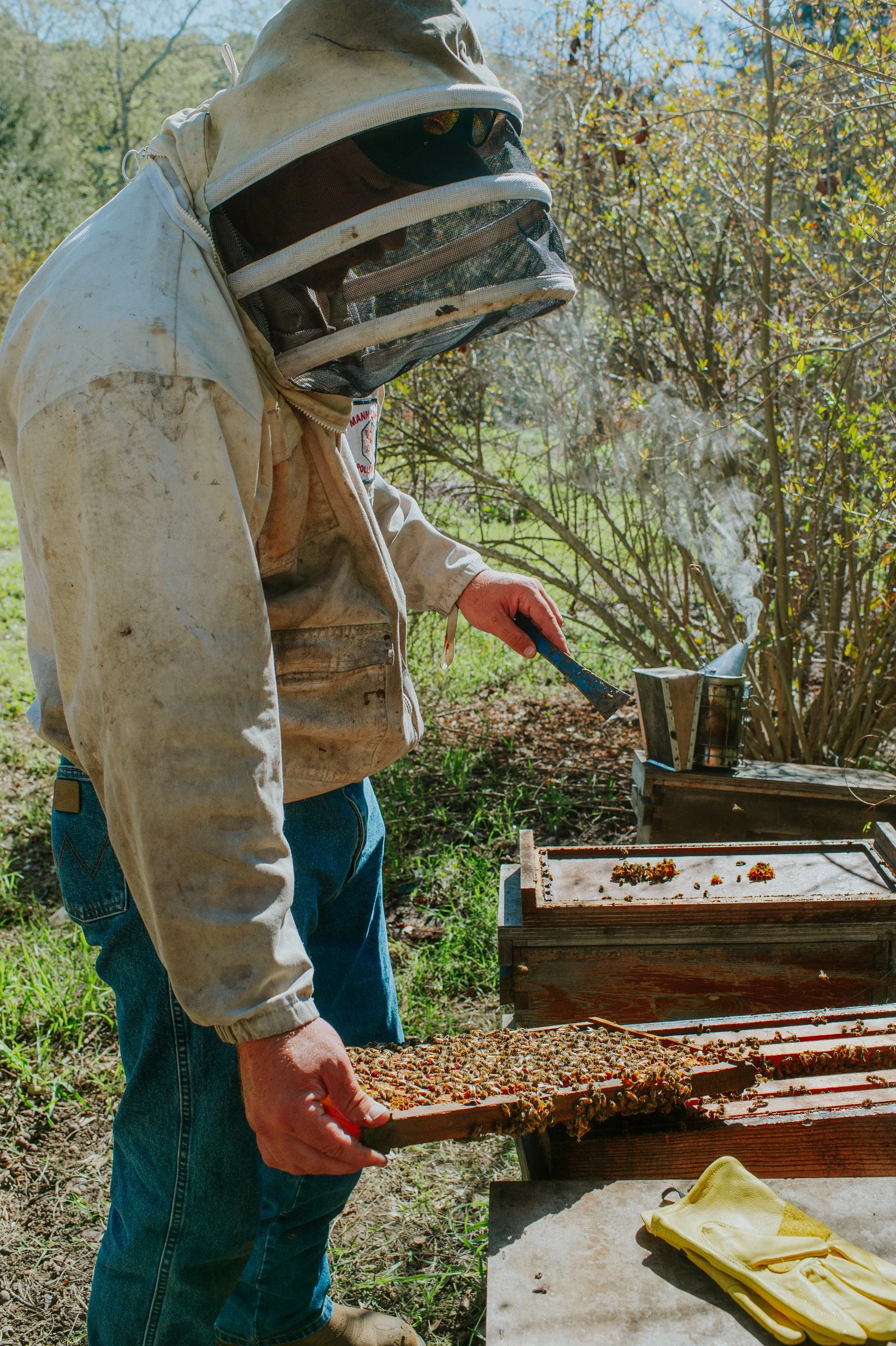
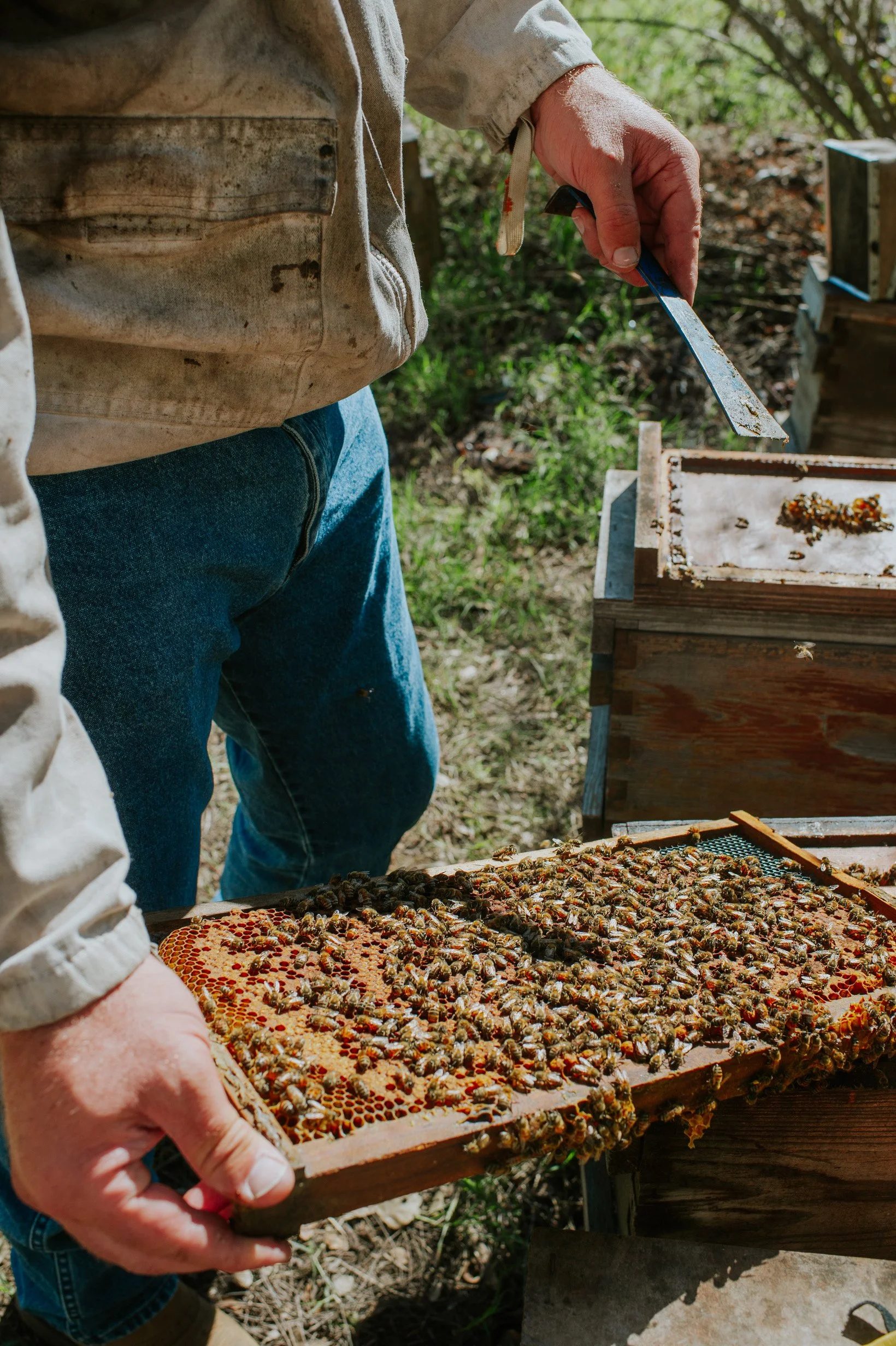
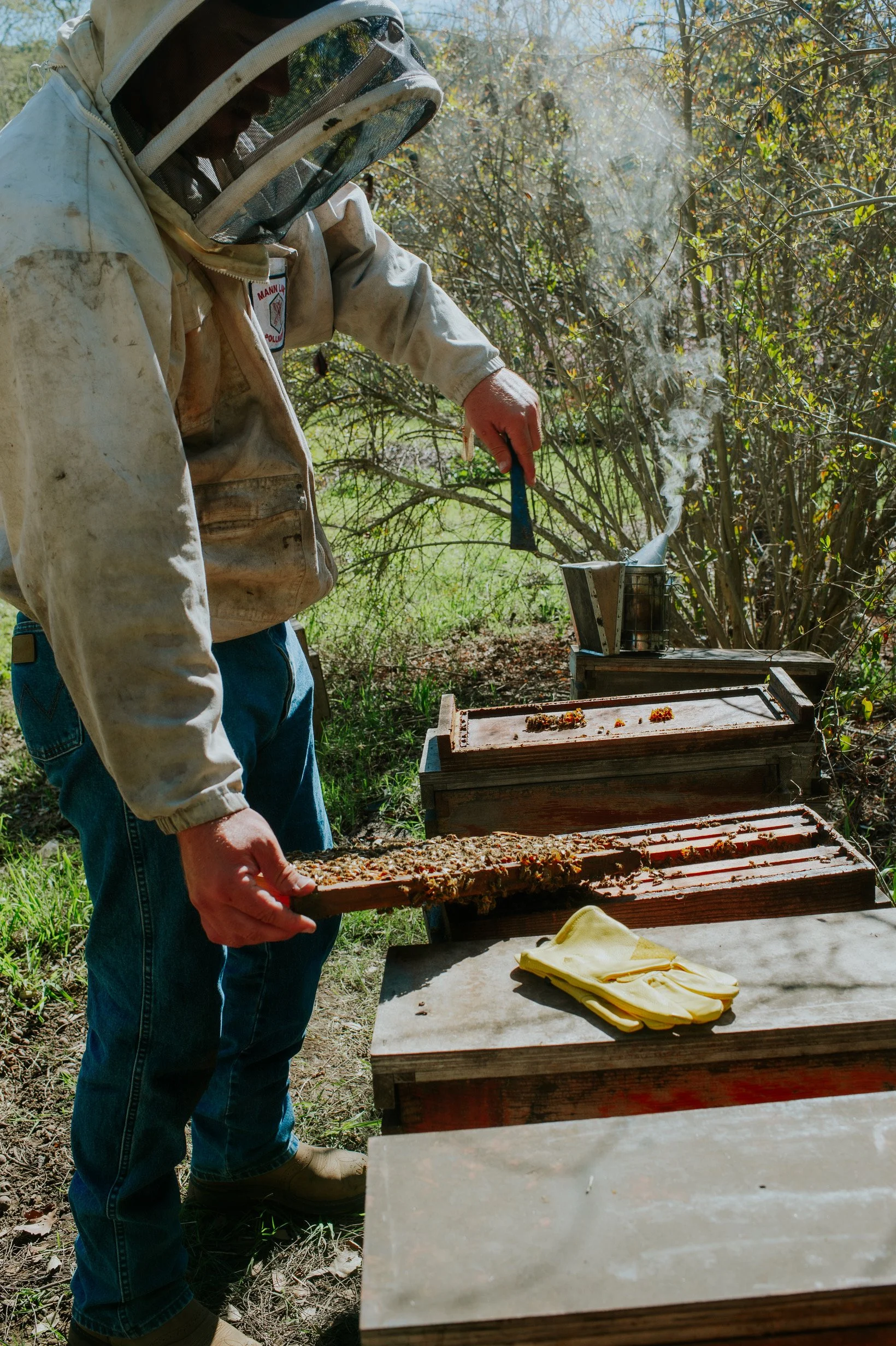
I am sure I learned all about bees in school as a child. Did I forget? I stood there looking at this complex system and found myself confused about the honey. Where is the honey coming from and are the bees making it or just collecting it? It all comes down to honey tummies and pollen pants. It makes me giggle just to say it. Doing foraging they collect the pollen and shove it into pockets on their legs. The pollen is a vital source of protein, fat, vitamins and minerals to feed the larvae (brood) and the young adult bees. The nectar provides the energy and is a carbohydrate source to fuel flight, activities and to convert into honey as a long term food source. Honey is absolutely essential for sustaining the colony. Honey is also just dehydrated nectar. Honey has no water content which is why it has a stable and long shelf life.
All of this is important when it comes to understanding honey, because we often think in terms of our own food production and the benefits we receive from collecting this sugary gold. It is important to note that honey is not made for us. In a high producing hive and in it’s excess we are gifted this nutritious, natural food source but we must not take it all. Ryan makes clear in his practice that enough honey is always left for the health, growth and continuation of the bee colony.
During the Thomas fire in 2017, Ryan lost all of his hives. He had a busy and productive business that was wiped out in a very quick period of time. His hives were dispersed around the valley, but unfortunately nothing was spared. This made him rethink his business model. Prior to the fire his business was equal parts honey and pollination. As much as bee hives are used to produce honey they are also hired on as pollination units by agriculturalists to ensure high yield crop pollination. This is big business for bee keepers and fees can range between $45 to $200 per hive. In order to make money, there needs to be a lot of bees and a lot of hives. In the bee keeping world, bees are often purchased. It is a fast way to build hives. Ryan chooses not to do that.
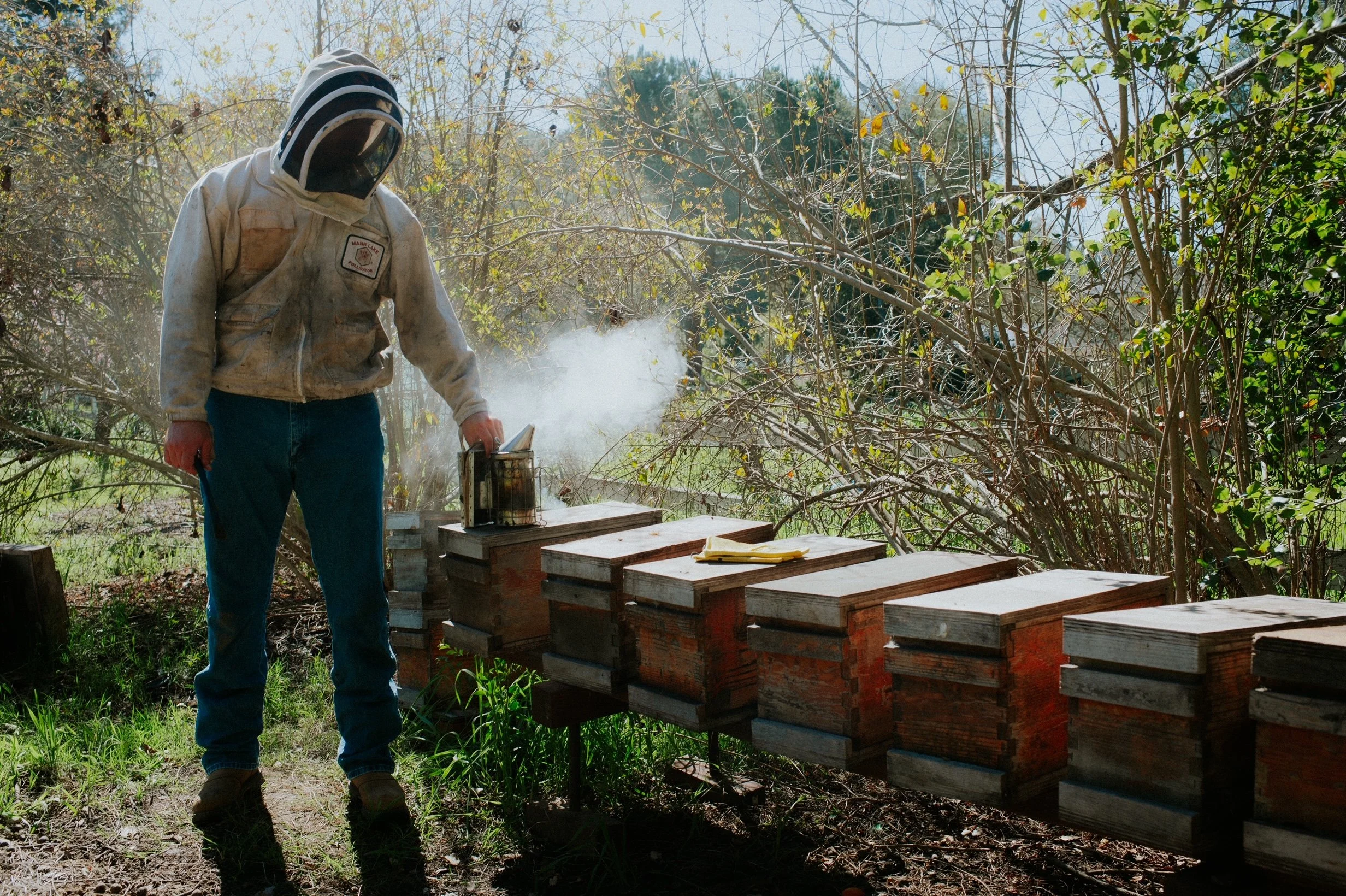
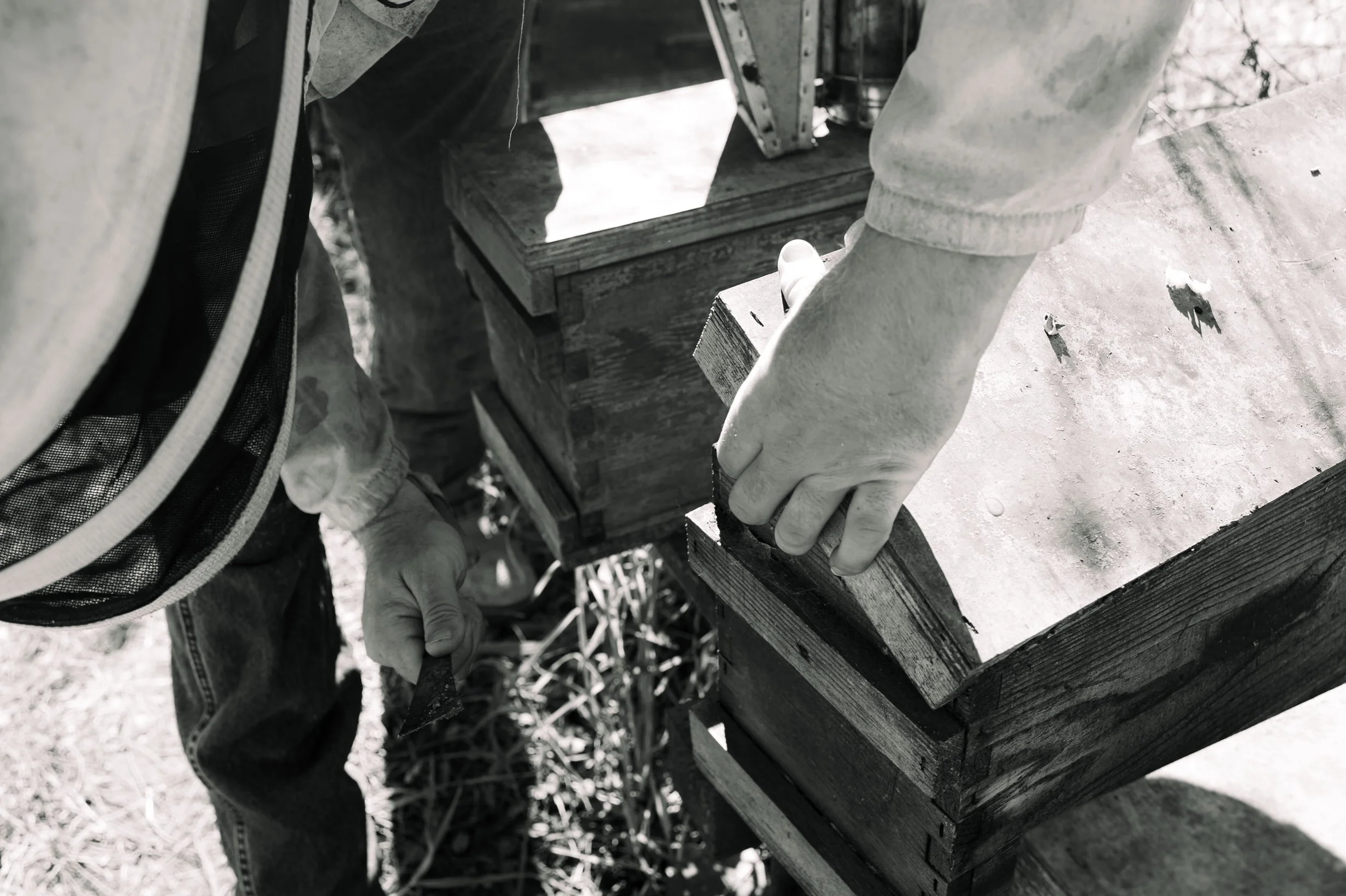
Since, the fire, Ryan has rebuilt his bee business to reflect his values regarding bee keeping. He doesn’t buy bees but instead rescues wild bees in the form of a bee removal service. When people find bee swarms in the houses or on their properties, Ryan comes and removes them. He then rehouses them in his hives. He allows his bees their wild nature and manages the hives enough to keep them healthy and productive. His bee removal business can be dangerous but as a bee keeper, the upsides are monumental.
I find Ryan’s philosophy behind bee keeping to be admirable. He obviously has a passion for these creatures that goes beyond just honey. It is a curiosity and fascination that shows through years of time spent with a hive mentality that values work, survival and growth on a level that we may never comprehend. It is nature at peak production.
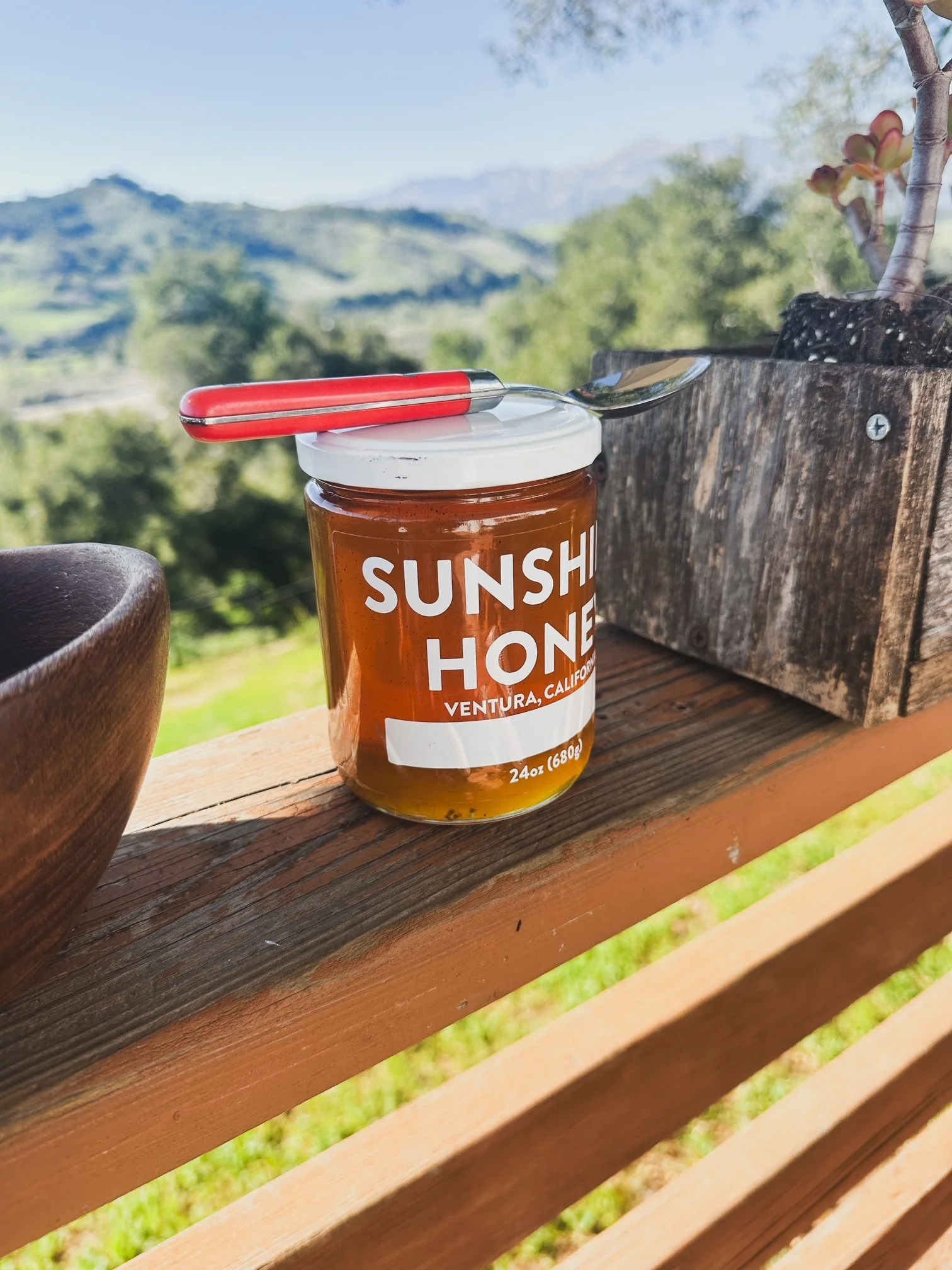
We later went and ate honey on sourdough bread. It was golden and tasted like sunshine. I call it wild bee honey because it tastes like something special and spirited. I have never had honey quite like it. I will never take honey for granted again. And I will savor every bite of it on my toast with butter knowing this is the good stuff. I am eating flowers and light and heaven all mixed together in the belly of bees and reduced down to pure gold in the home of a thousand little miracle workers just doing a hard days work.
A SHORT FILM ABOUT BEES
〰️
A SHORT FILM ABOUT BEES 〰️
BELOW ARE A COUPLE VIDEO POSTS FROM RYAN’S INSTAGRAM ACCOUNT BEEING: EXAMPLES OF SOME OF THE BEE RESCUE WORK HE DOES IN VENTURA COUNTY.
A big old thank you to Ryan for showing me the bees. You can find information about Sunshine Honey and Bee Removal on his website at www.sunshinehoney.com