BOLINAS
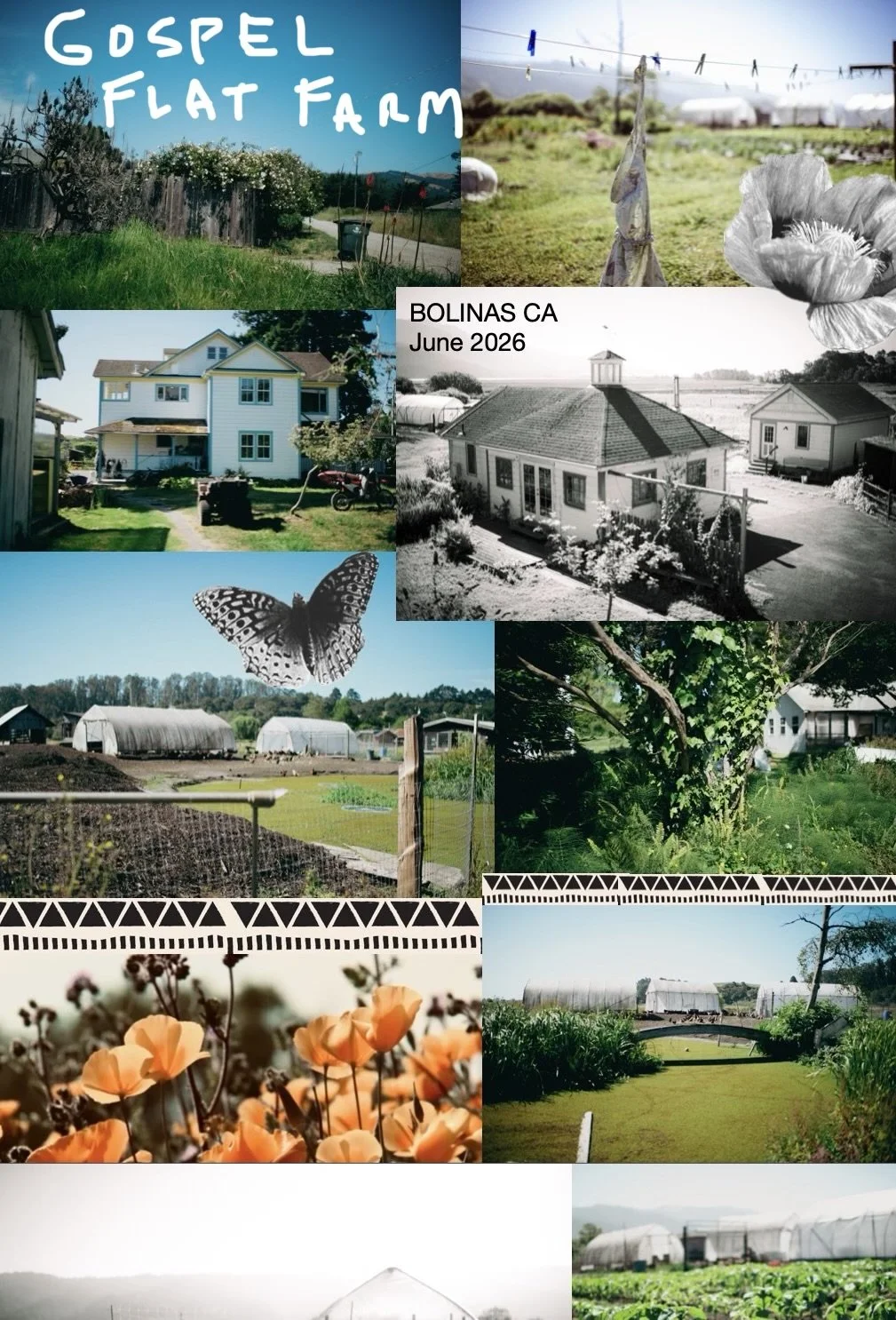
GOSPEL FLAT FARM
A TRIP TO BOLINAS, CA
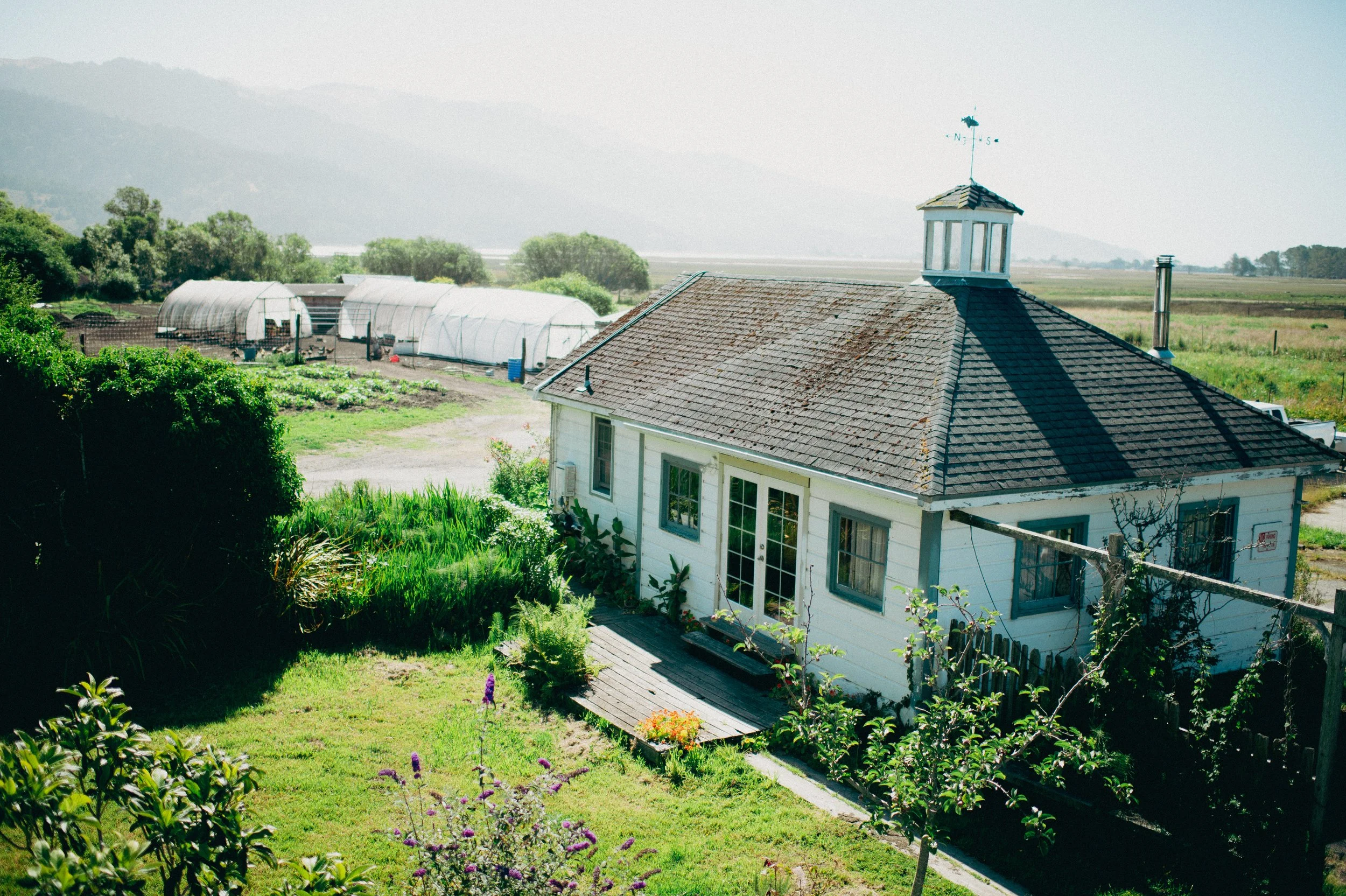
He said there were two dogs worth of chickens. In the morning, with the sun warm through the glass doors of the studio, I rolled off the mattress on the floor and crawled to my feet. It was early. I wondered if anyone was awake. I pushed the glass sliding doors open a crack and peeked outside to a glare and brisk morning chill, damp from dawn. They both sat staring at me. One from the meadow to the right. A space of tall grasses and marsh mud stretched beyond it’s white fur, only visible in silhouette against the morning light and slight breeze. The hair on it’s ears fluttered gently. It sat stoic and guarded with it’s eyes fixed on my movement from the door to the wooden slatted porch. The other lay like a lion directly in front of me but at a distance that begged I move closer. It had set up it’s morning sentinel in front of the hooped shade cloth coop. I stepped into the dewy grass, barefoot. The shade of the structure dimmed the light over the ground and I tip toed a few feet in front of me to say hello. I had not anticipated the scene, as the light games on such an early and vibrant morning set a mood of trickery and my eyes had yet to adapt. I reached the fence and peeked between the rungs of the piped gate. The big white dog sat quietly in the middle of a gaggle of chickens all huddled around it’s fur keeping comfort away from the chill. There were too many to count and not enough time to try as the other big dog trotted in my direction with a barreling bark that rolled from its chest a slow bellow. It was asking me to stop and so I did.
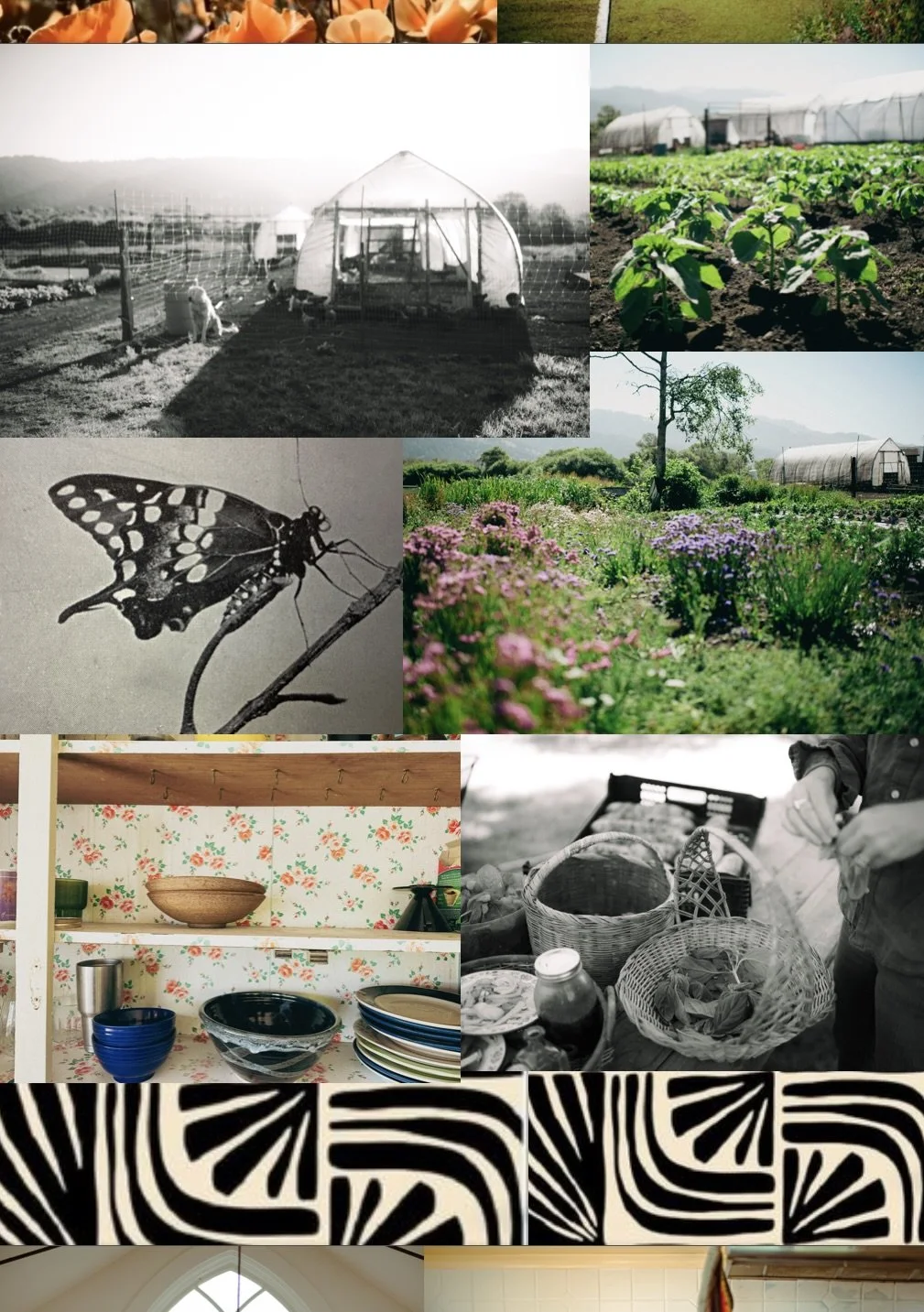
These dogs live with the chickens. They do not live anywhere else. This isn’t just a day job. It is a lifestyle of sorts. They are guardians. These big creatures were bred to guard the herds high in the hills. They were left alone and developed an independent spirit that defines their character and job title. They have a job and they do it well, often on their own terms. They do just fine in their herds of sheep, goats and, in the is case, chickens, without the interference of humans. They watch and protect.
It is easy to proclaim the need for free range chickens but it is not as easy to keep them alive when they are left to wander and forage the green grasses of freedom. The predators are many; raccoons, owls, hawks, coyotes, cats of all sorts. Mickey mentioned a bobcat had been in the coop not too long ago. So, hence the dogs.
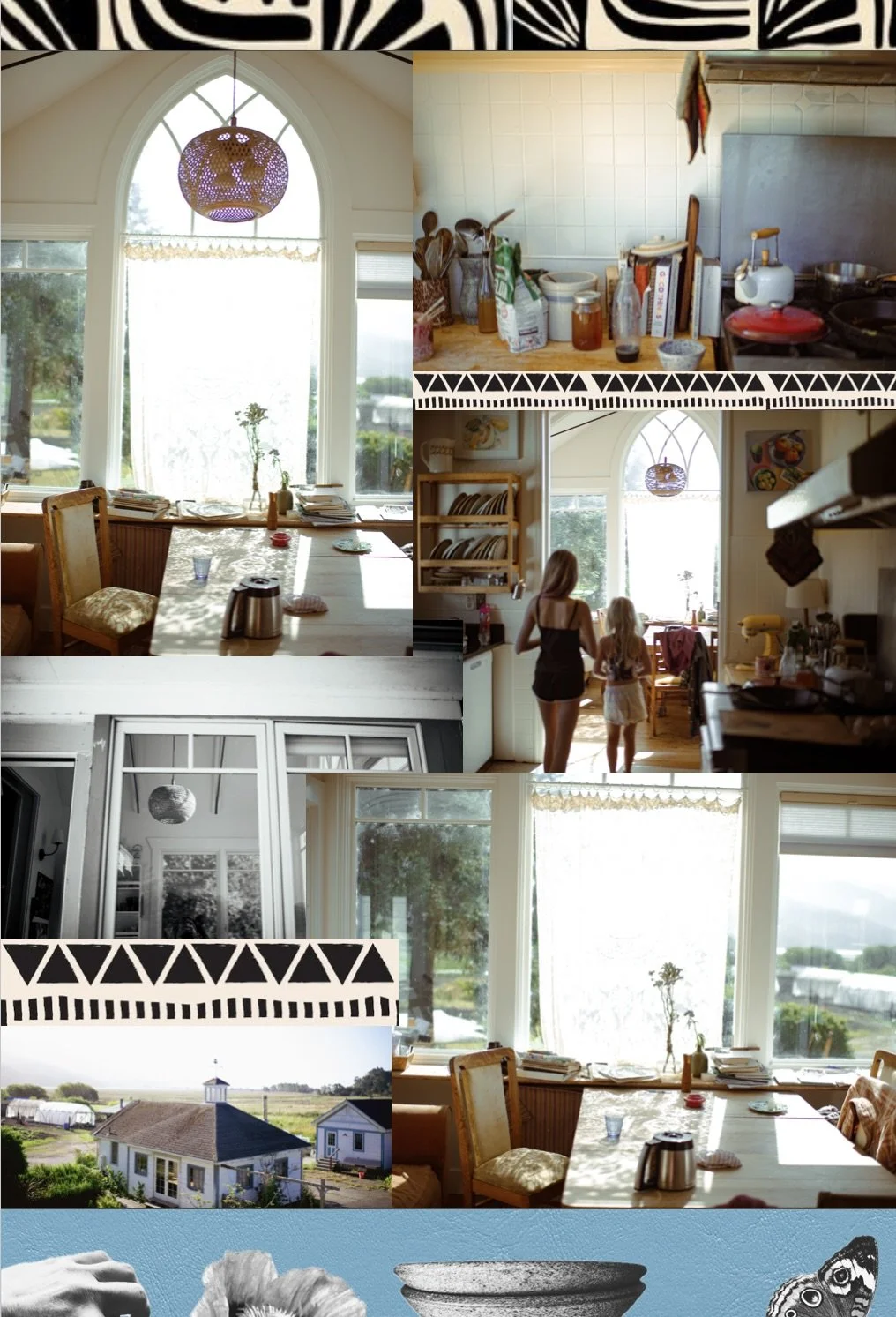
I went up to the farmhouse. It was quiet. Bronwen sat in the chapel nook on the far end of the kitchen, lit up with sunlight from the ministry of windows. She sat in her robe and striped cotton nighty with a cup of coffee. Mickey set a plate of toast and eggs in front of her, a side of avocado and dollop of pico de Gallo, colorful like an early summer mood. I was lucky enough to sidle up to his plate of eggs, as he generously offered it up to me and slid back to the stove. Mickey’s kitchen presence was as family cook, a complimentary role to his other more prominent role of farmer. I asked him how many chickens there were in the coop. Two dogs worth of chickens. Mickey had made a vending machine for the dozens of eggs at the farm stand. Something to entertain the customers, which now resides in a container house on a leased plot of land a few minutes drive away. He took the cheeky inventiveness a step further and tried to set up a crab vending machine too. Fresh crab if you feed the machine some dollars and cents. These ideas come from a man selling his goods from a honor system farm stand on the road into town.
My friend Kelley and I decided to take a quick road trip up to Bolinas to visit Bronwen. We decided on two nights and a brilliant plan to take her parents electric car to bypass high gas prices along the way. As road trips go, we got as far as Nordhoff High school, a few minutes from departure, when the car stopped working. Battery shutdown and the doomed red light that warns of system failure deterred us from attempting anything further, so we got the car towed and took my truck instead, a seven hour drive to a small town forty-five minutes outside of San Fransisco. Anyone who knows of Bolinas has heard the tales of the sign. The townsfolk take the town road sign down so tourists and visitors can’t find it. It isn’t that they aren’t welcoming when you come, it’s just that they’d rather you didn’t. Beautiful towns by the sea have a tendency to become over run and distressed. Bolinas will have none of that.
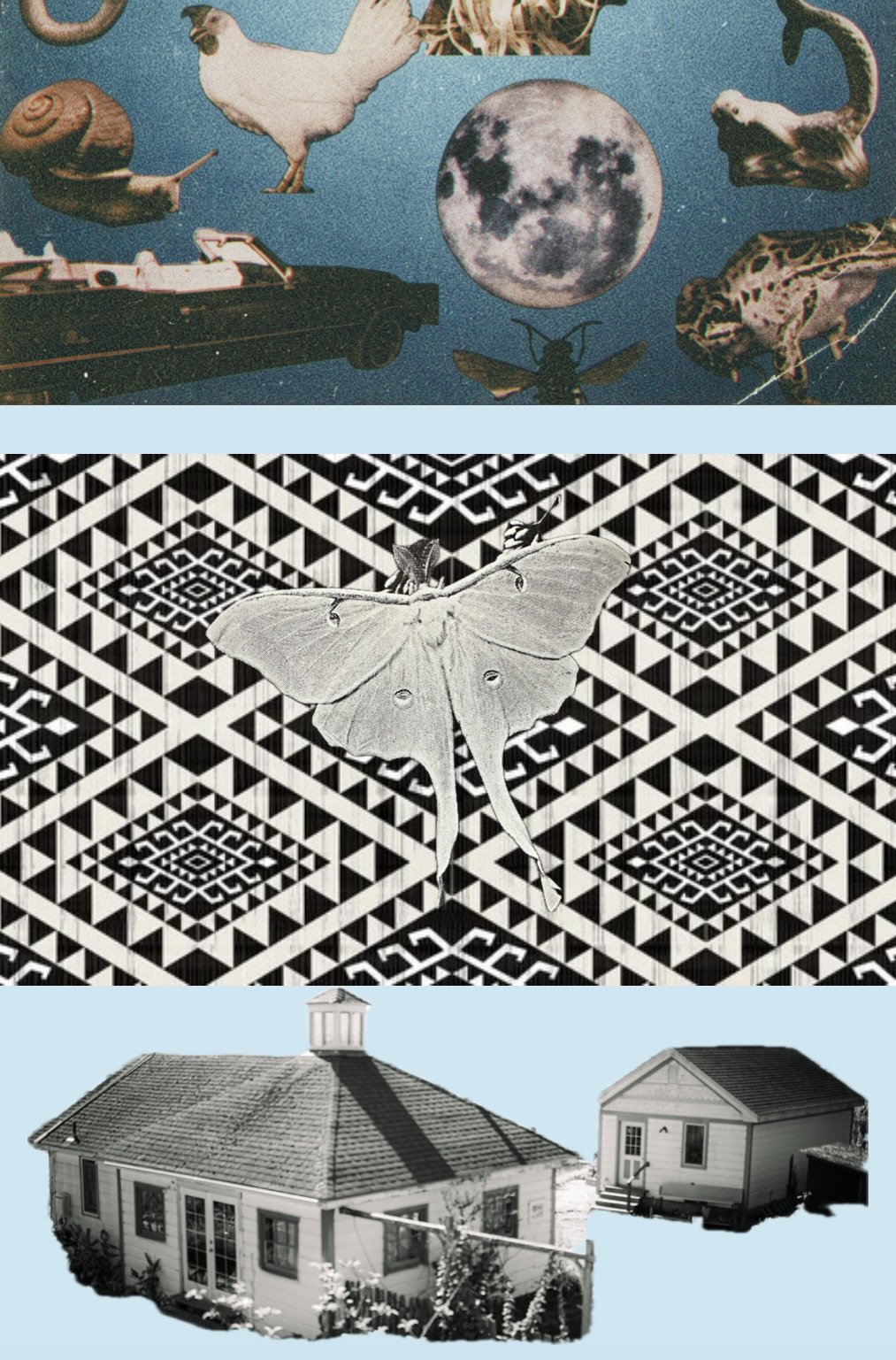
Bronwen lives with her husband and children on an old family farm property affectionally named Gospel Flat. The farm was named for four churches that once occupied a plot on the ten or so acres of land that is now home to rows of veggie beds and cover crops. Mickey’s parents bought the property as an overgrown project of mismanagement and gave a lifetime to it of love and attention. Today, it is a peaceful enclave of sustainable practices and edible diversity. It reads as a local family farm but it’s soul speaks more to a lifestyle of healthy creative living, generations of family, and life choices that go beyond the preaching of organic farming and instead exemplify the practice of living conscientiously and fully within a system of mutual affection. Nature and family as one.
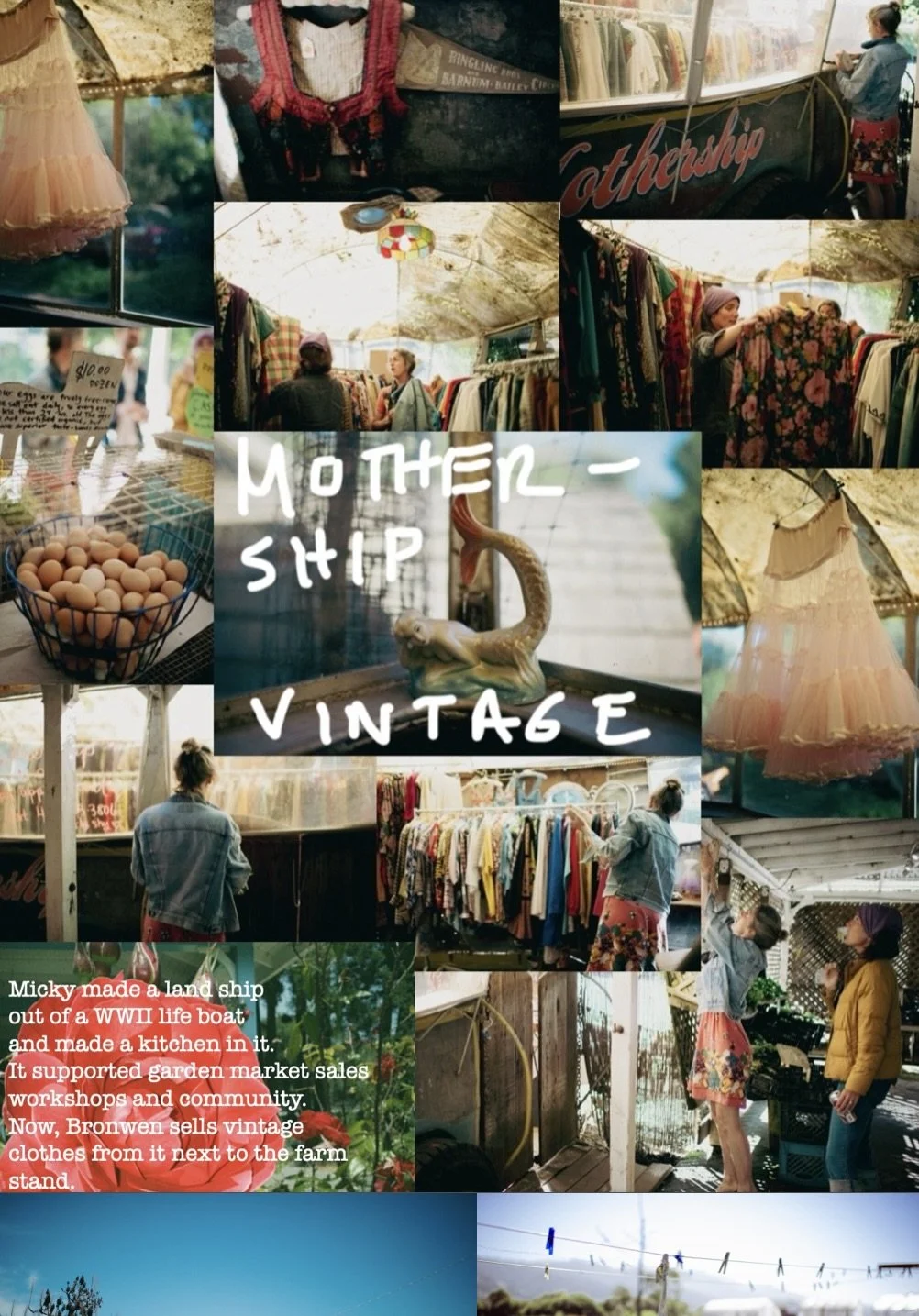
The Gospel Flat Farm Stand is celebrity of sorts. It is old school. It is trusted. It is worth an out of the way drive if you find yourself in this northern part of California. It has been written about and talked about by the likes of Alice Waters from the famed Ches Panisse. It is run by the honor system and stocked daily by Mickey and the farm workers. Bronwen runs a gallery space from the garden stand and hosts openings regularly with art work from local or visiting artists. She also runs a small vintage clothing store, Mothership Vintage, from an old WWII life boat on wheels docked adjacent the farm stand. The creativity knows no bounds here at Gospel Flat.
I have had the good fortune in my life to know some farmers. There is a commonality to them; a personality type that is attracted to hard work, dirty hands, creative solutions, tortured outcomes, desperation and over abundance. It is work that is not for the faint of heart, but instead the passionate few that see the world through a lens of cycles and regeneration. They see life through life and it’s natural ebbs and flows. They are often artists, philosophers, inventors and poets as the time spent in the fields yields a lot of time to think. They know their land and their food at a level very few people will ever understand. There is farm to table cooking and then there is farmer cooking. I have decided these are two very different things.
We got to Gospel Flat around six thirty in the evening. With hugs and hellos we were ushered up the stairs of the farmhouse to the second floor living space and kitchen. Micky was already at work lighting the pilot of the oven. On hands and knees, he was threading a small piece of paper aflame through a tiny hole in the floor cavity of the oven. I have a fondness for this kind of kitchen mayhem as it embodies a feeling of connection through the joined frustration of malfunctioning kitchen appliances. If you cook in a “real” kitchen, with “real” food, then you are accustomed to these trials and tribulations. You are a kitchen survivalist and part of a club of culinary explorers willing to work outside the comforts of expensive kitchen tools and award winning appliances. You are a scrappy cook.
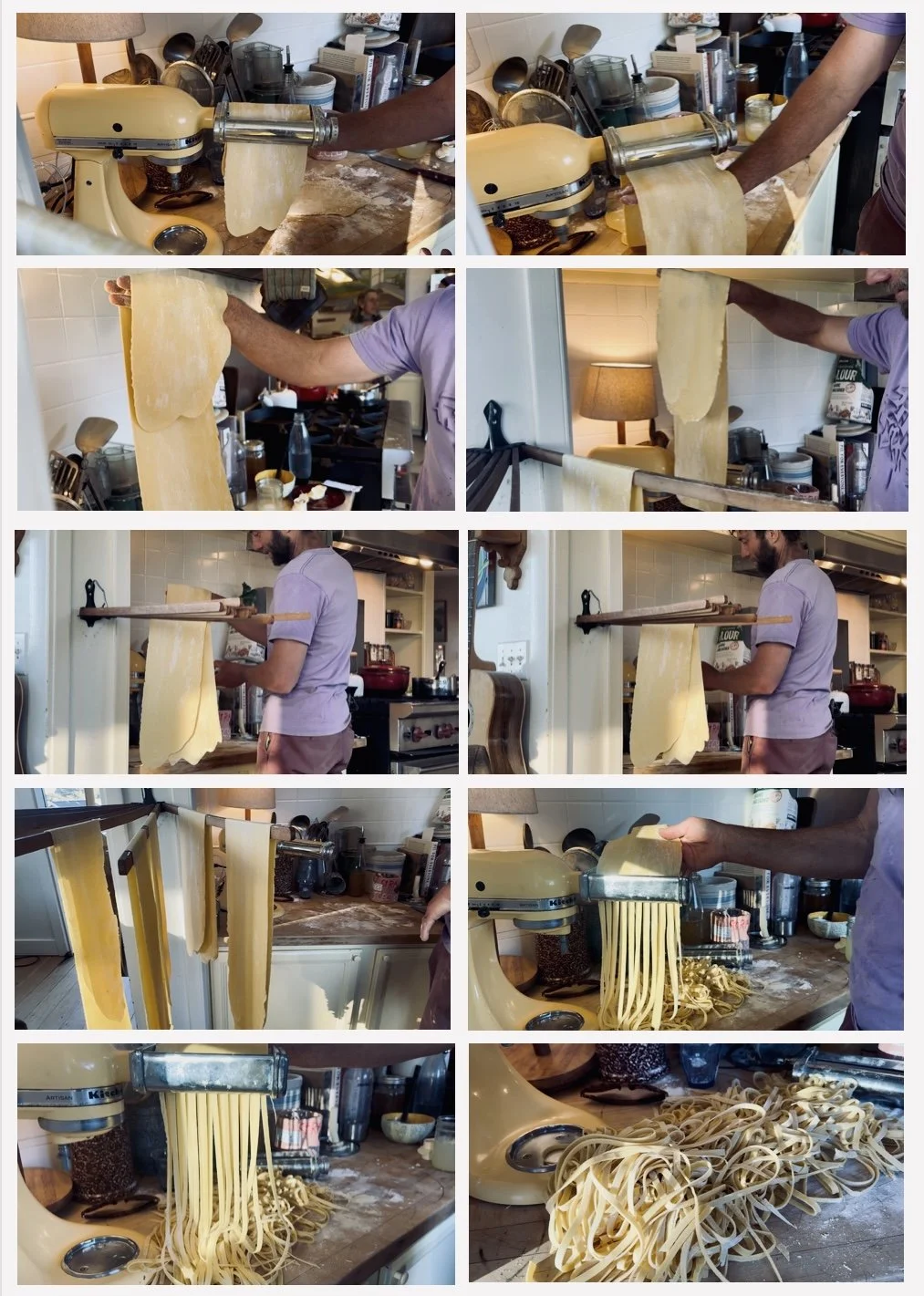
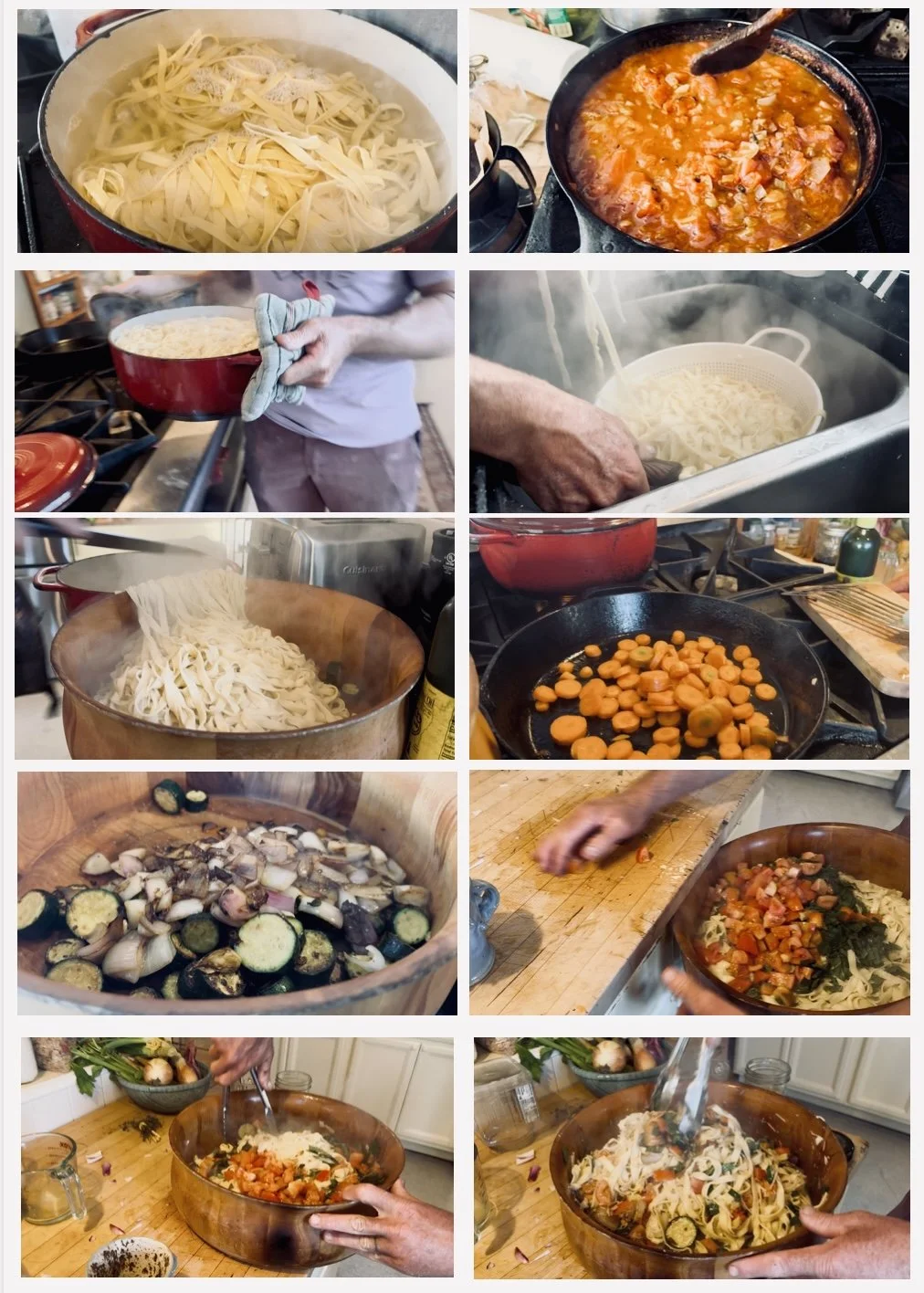
On the counter next to the burner was a ball of neatly worked pasta dough, a pasta machine and an antique dry rack probably used to dry women’s stockings in the past. The red dutch oven was on the stove filled with water ready for a hard boil. A box of garden veggies sat by the sink in front of the compost bin brimming with cuttings and skins of onions and zucchini, egg shells and carrot scraps. Mickey started sheeting out the pasta dough, draping it across the wooden rack to dry slightly before sending it through the machine a second time for the traditional pasta cut of long thin strips. Into piles and into the pot, the pasta simmered and we chopped veggies.
Bronwen says that Mickey is the cook in the family. She is happy he is willing as she is just as willing to clean up the mess that his culinary activities leave behind. This is an ideal partnership and a beautiful dance in the kitchen. We all chit chat as the steaks come off the grill and the pasta gets strained and mixed with sautéed veggies and the whole container of parmesan cheese. A procession of people and platters of food head down the stairs to the family table on the main floor. Parents, grandparents, friends, teenagers, kids all gather around the table and we eat.
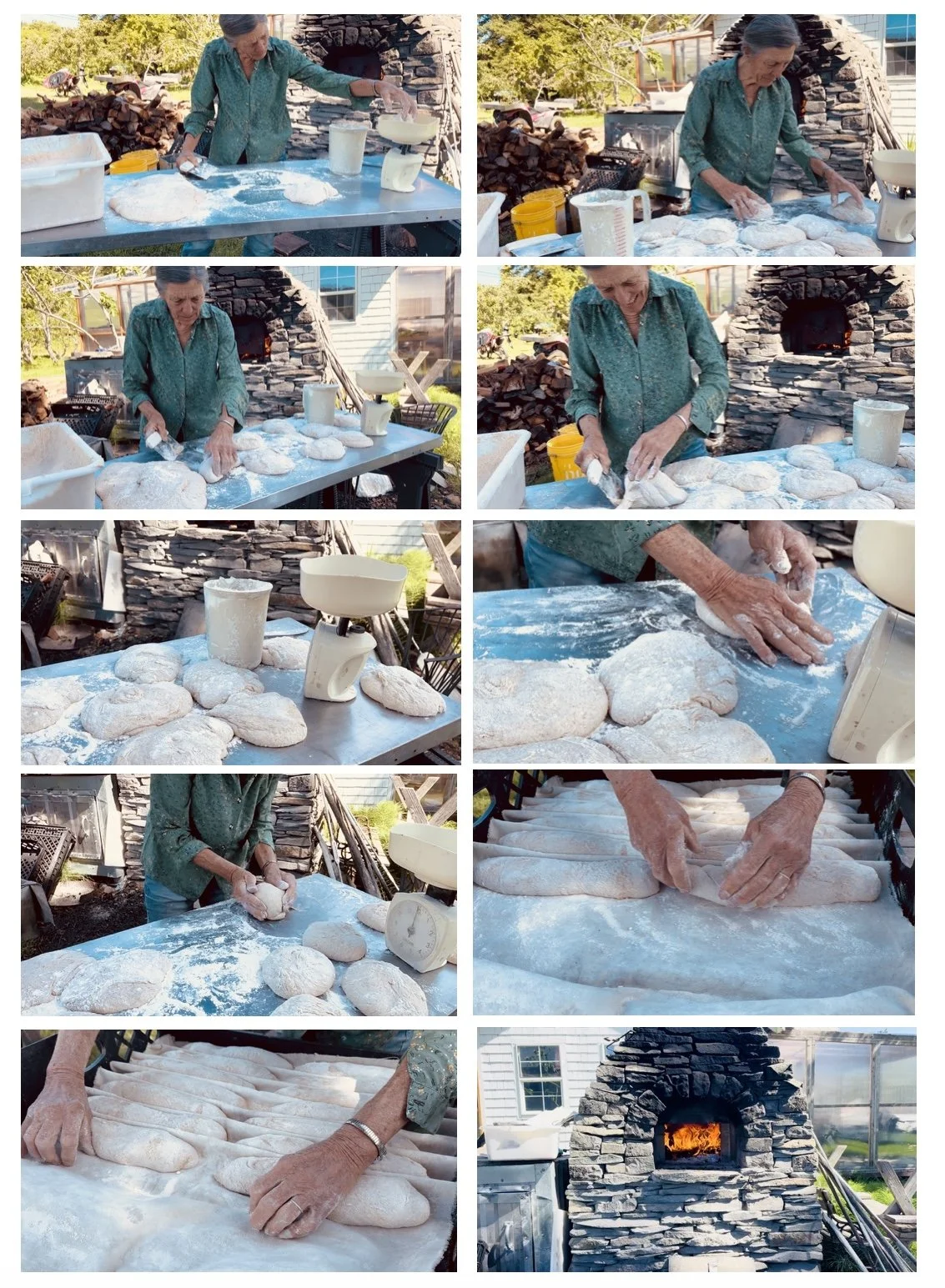
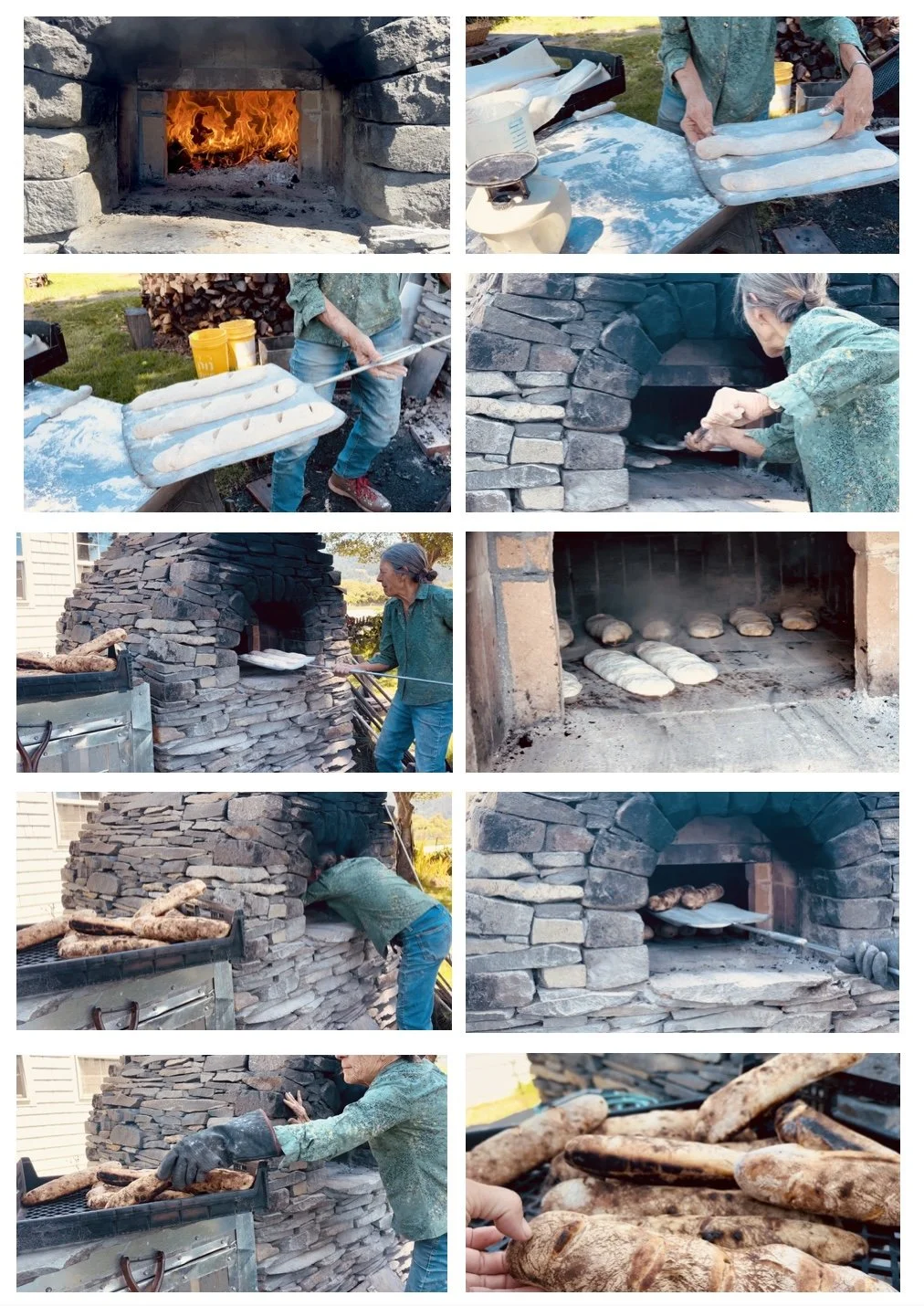
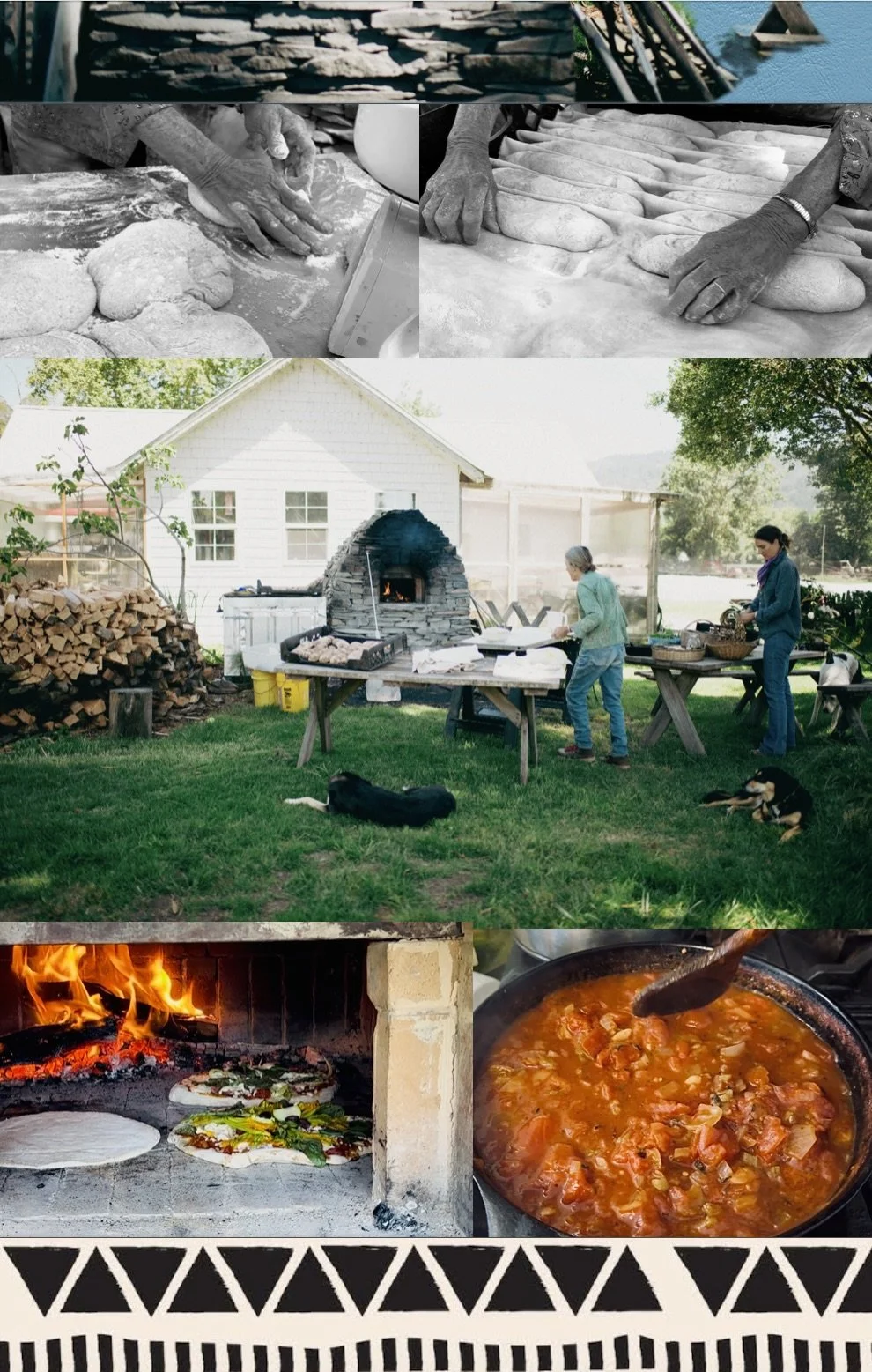
The next morning I smell the wood burning oven by the big house puffing off a plume of smoke. Mickey’s mother is planning a bread bake and pizza lunch. I ask if I can watch her work and film some of the process. She says yes, but asks that I don’t get her in too many of the pictures. I find it kismet that she is baking while I am there. Bread is basic and sourdough is a simple formula, but process varies depending on who is baking it. It is a beautiful opportunity to watch someone work in their own space, shape in their own style and bake in their own oven. As she scales out the dough and shapes loose boules with dusted hands, she asks me to check on the red sauce on the stove in the kitchen. It is on a low simmer in a cast iron pot. I stir with the wooden spoon resting on the rim and run back out to the oven. Her husband drops off a couple loads of chopped wood with the tractor and I start to stack the logs in a semi circle of sorts as she scores the loaves and shimmies them into the oven. She talks to me about the house and property. She says she used to be a professor at Berkley. She tells me that her children and her grandchildren were all born in the same downstairs room in the farm house. She seems proud of her family and of the daily chores on the farm.
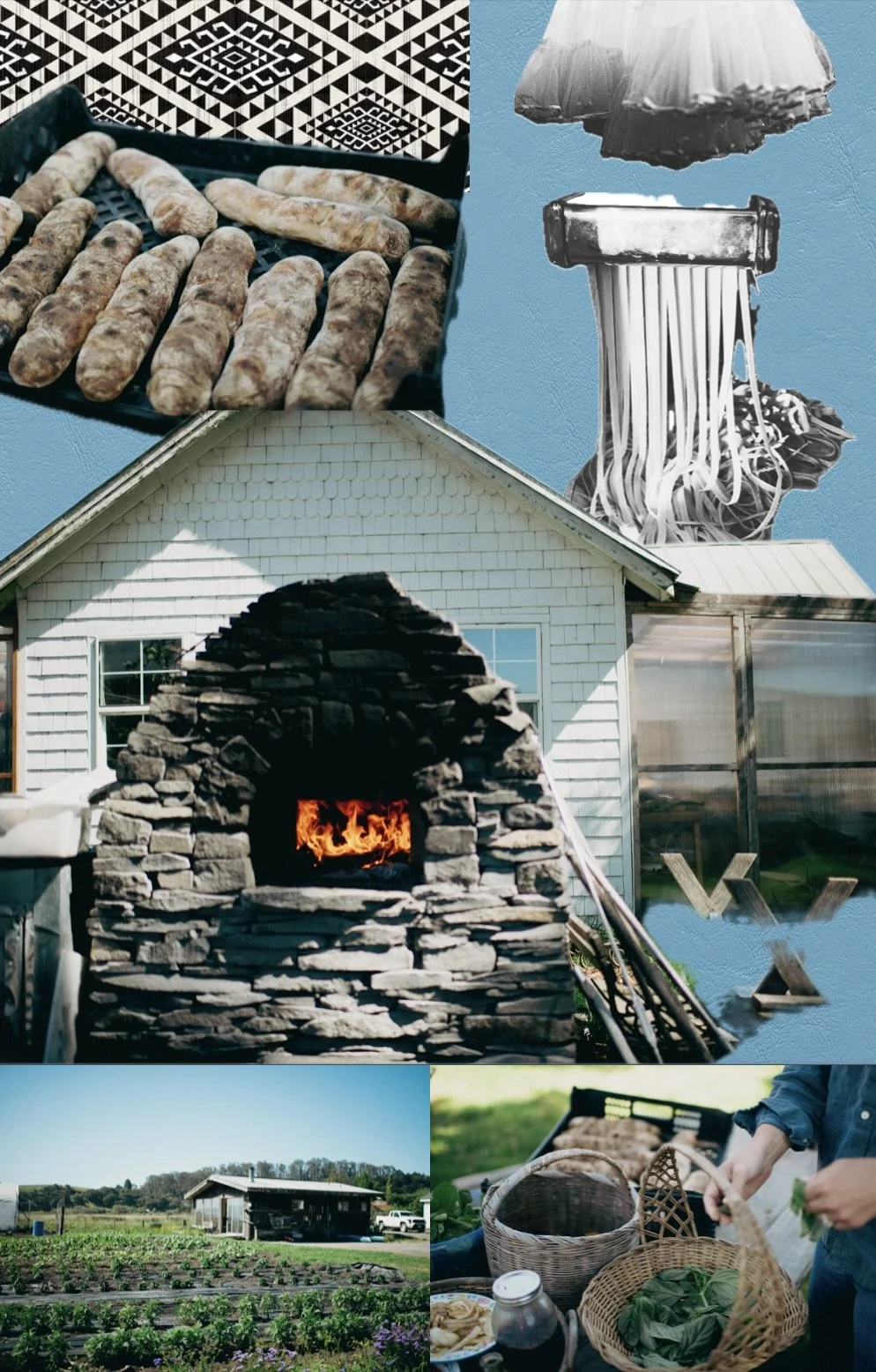
Every so often I see someone in the family heading off by bike to the farmstead. There is a basket hanging off the handle bars and upon return there is a handful of basil and some squash flowers. The basil is summer in it’s smell and we prep to make pizza. The loaves are pulled from the oven, the tomato sauce from the kitchen is brought to the outside table and a small bin of dough left over from bread shaping is stretched into pizza pies for a quick par bake blitz by the fire before we top and bake a second time to melt the cheese. Not a lot of fuss makes for flavorful pies when you are getting direct from the garden. A lesson in less in more.
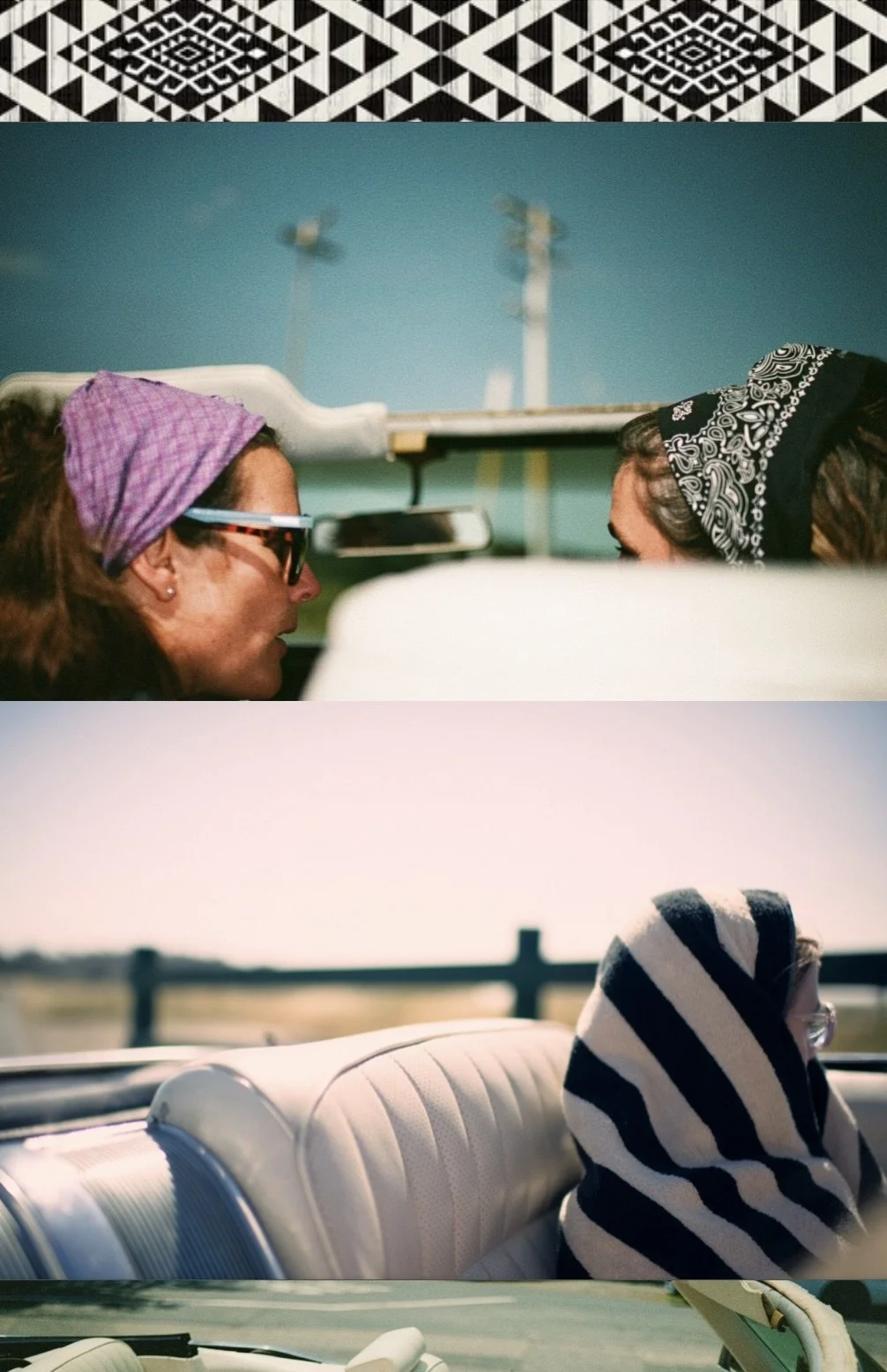
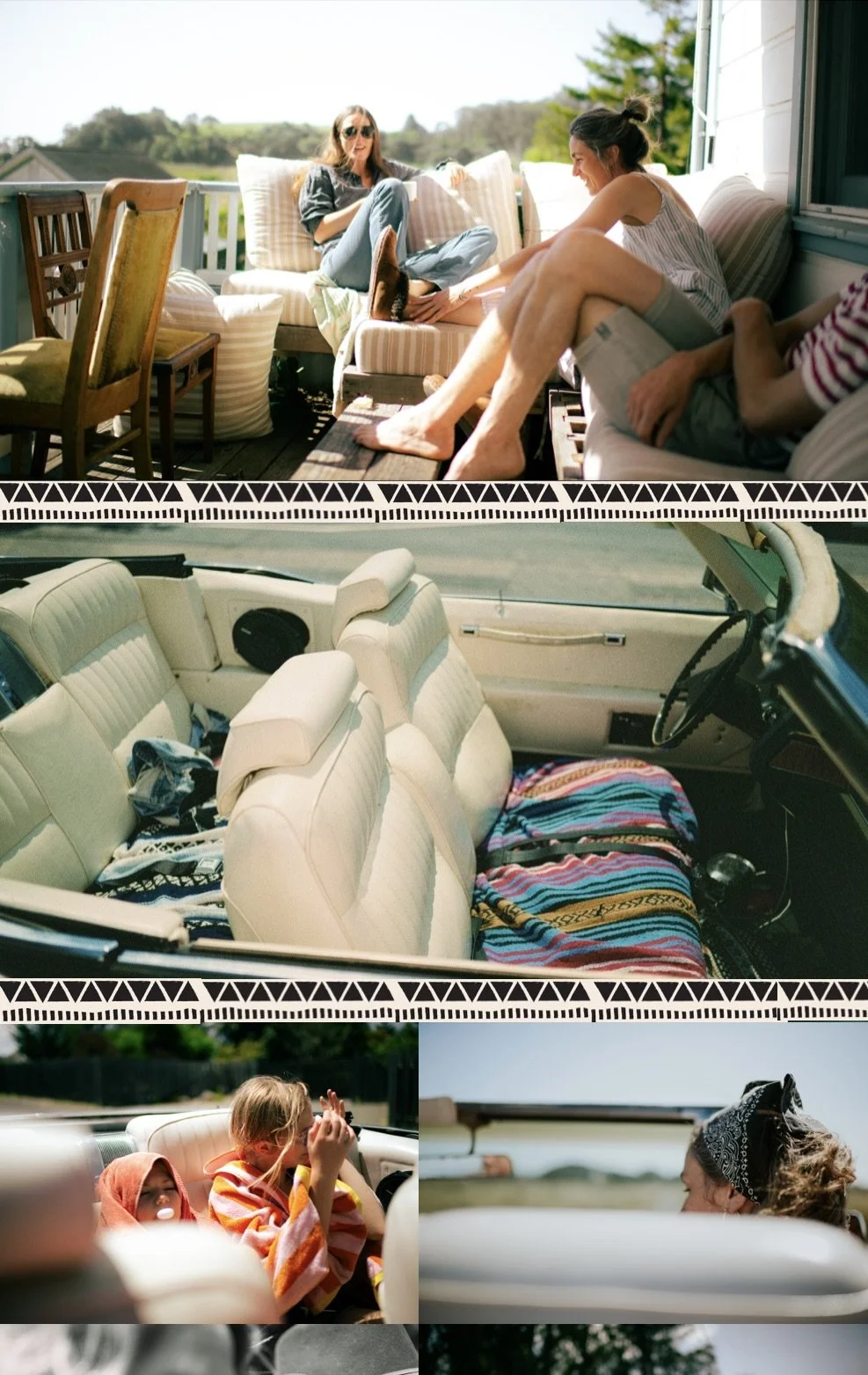
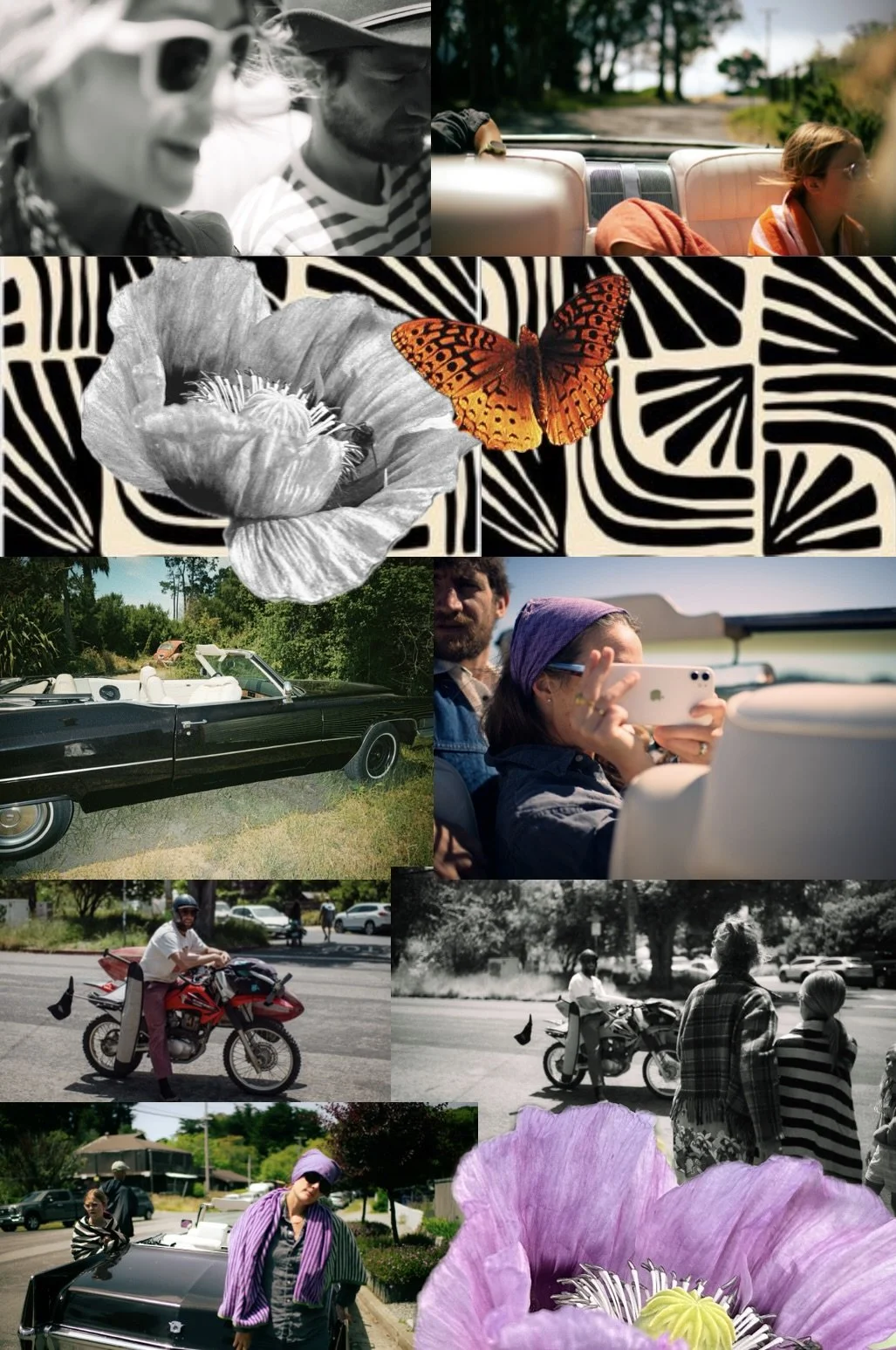
The afternoon became epic in the back of a 1970’s black Cadillac convertible cruising the bluffs of windswept grass. Sea salt and Cadillac wind as we bounced off the white leather bench seats down the dirt roads that seem impassible with such a low riding boat of a car. Sometimes I wonder why it all works out. Maybe it works out when you don’t mind if it doesn’t. The worry of things goes by the wayside and sure enough we make it home.
Mickey decides to cook all the veggies for dinner, with a grill of chicken. The potatoes are a purple fingerling variety that make the cooking water a striking blue. He said someone gave them to him so he planted the potato knowing very little about it. We questioned whether the texture was dry but with a boil and a sear in butter they panned out tasty. I made a Caprese salad of cherry tomatoes, mozzarella and basil. A quick blanch of green beans and carrots too. An aioli to dip it all into. For dessert, fresh berries and a soft whipped cream with honey and vanilla. This is how a farmer cooks. A farmer knows that their veggies can stand on their own. They will use olive oil, and butter, salt and pepper and a squeeze of lemon juice and plate you meal of veggies that outshines any top tier fine dining experience you can get. It’s just what happens when your food is your life and your life is your food.
We left the next morning, stopping by our friend Jeff’s for a spontaneous and magical dutch baby from his toaster oven. Egyptian jazz played from the record player as he poured the hot water over the coffee grinds from a Turkish tea pot. He waxed poetic about small town politics and the existential question of whether we are all here at all. He works for the town radio station and town newspaper and plays in multiple town bands. He also seems to have a knack for the toaster oven which is a skill that is probably undervalued. He said he wasn’t going to cut the peaches but then cut the peaches and piled them on top of the blueberries piled on top of the dutch baby and dusted with powdered sugar. We hit the road with full hearts and bluff winds from the Bolinas mesa.
a video short that is long
〰️
a video short that is long 〰️
Micky made pasta the first day. His mother made wood fired bread the second day. Below are stills of these processes. Farmer’s kitchen doughs they run on repeat. The sourdough is also used for pizza dough after the bread bake.
HOMEMADE PASTA AND SAUCE
WOOD FIRED BREAD