DANISH RYE
DANISH EATS
SCANDINAVIAN RYE BREAD, RYE CRISP, AND SMORREBROD (THE OPEN FACED DANISH SANDWICH)
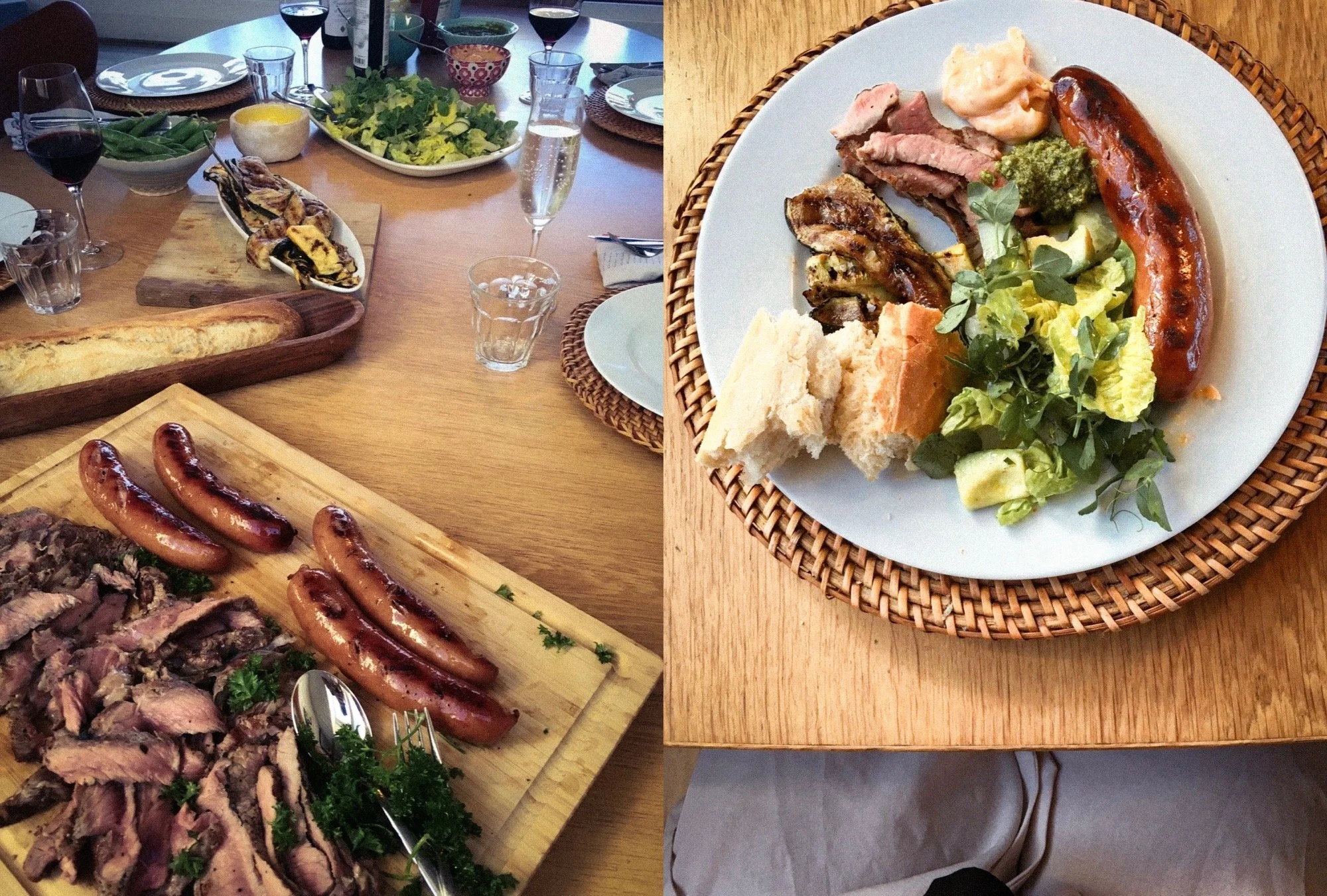
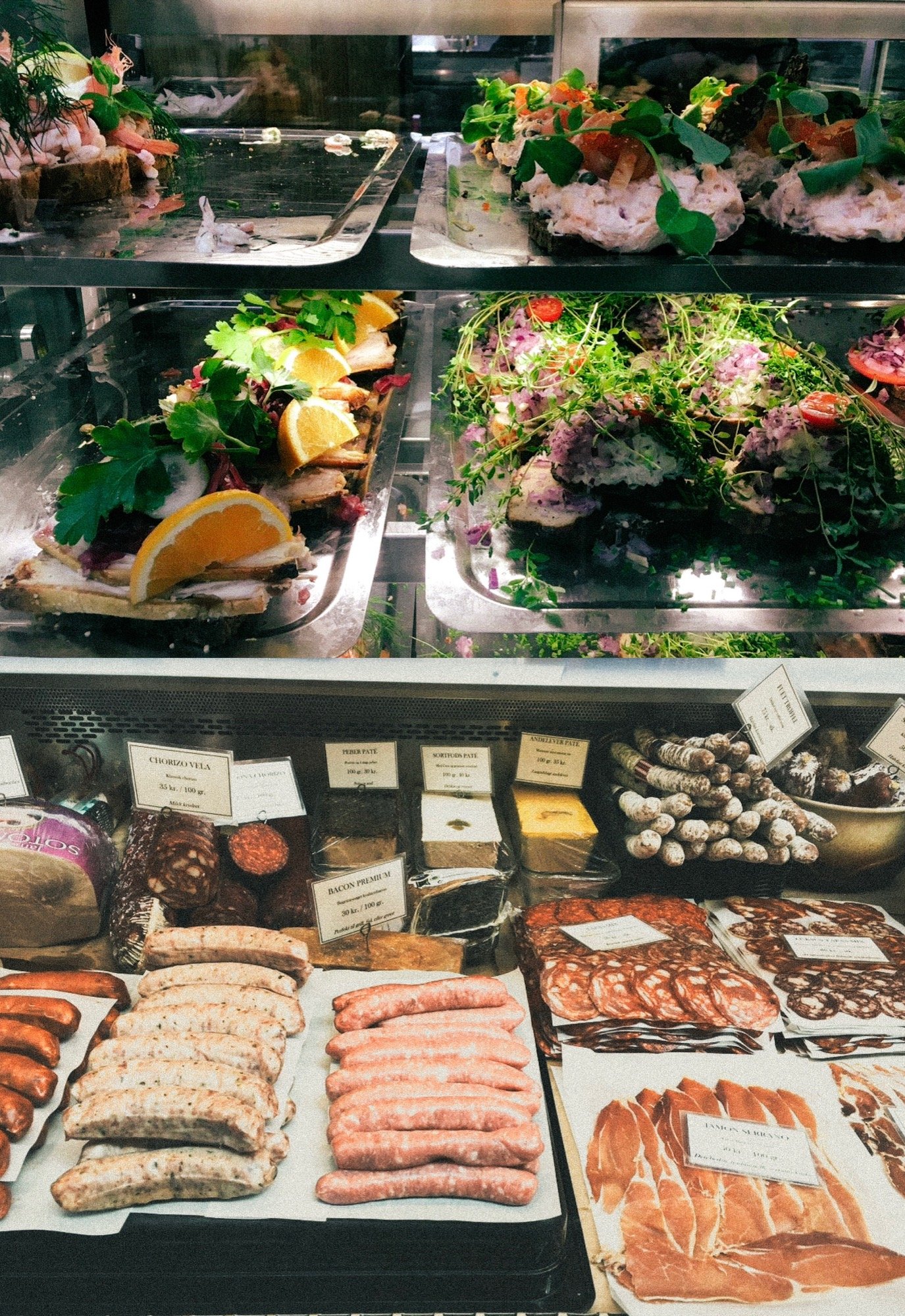
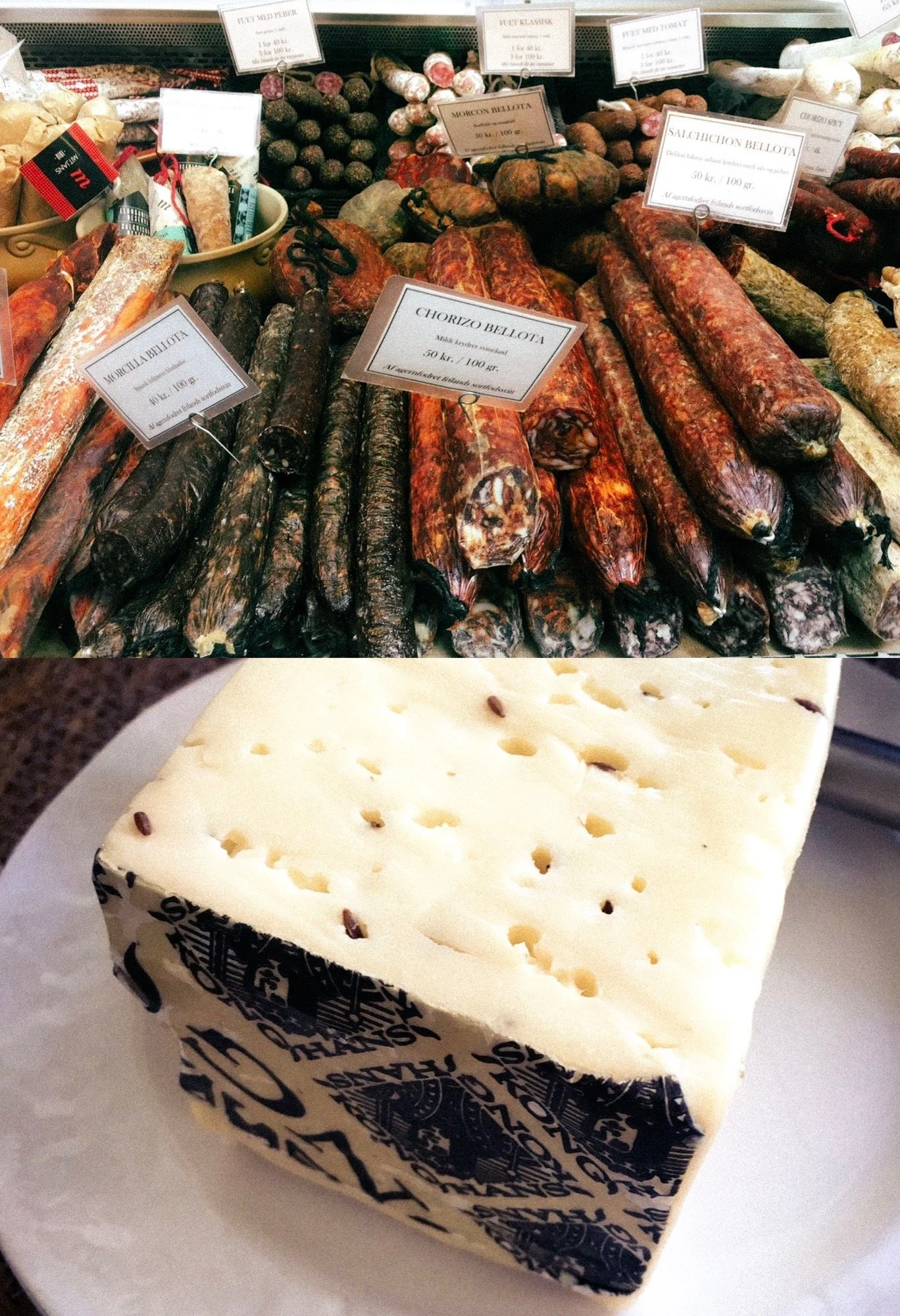
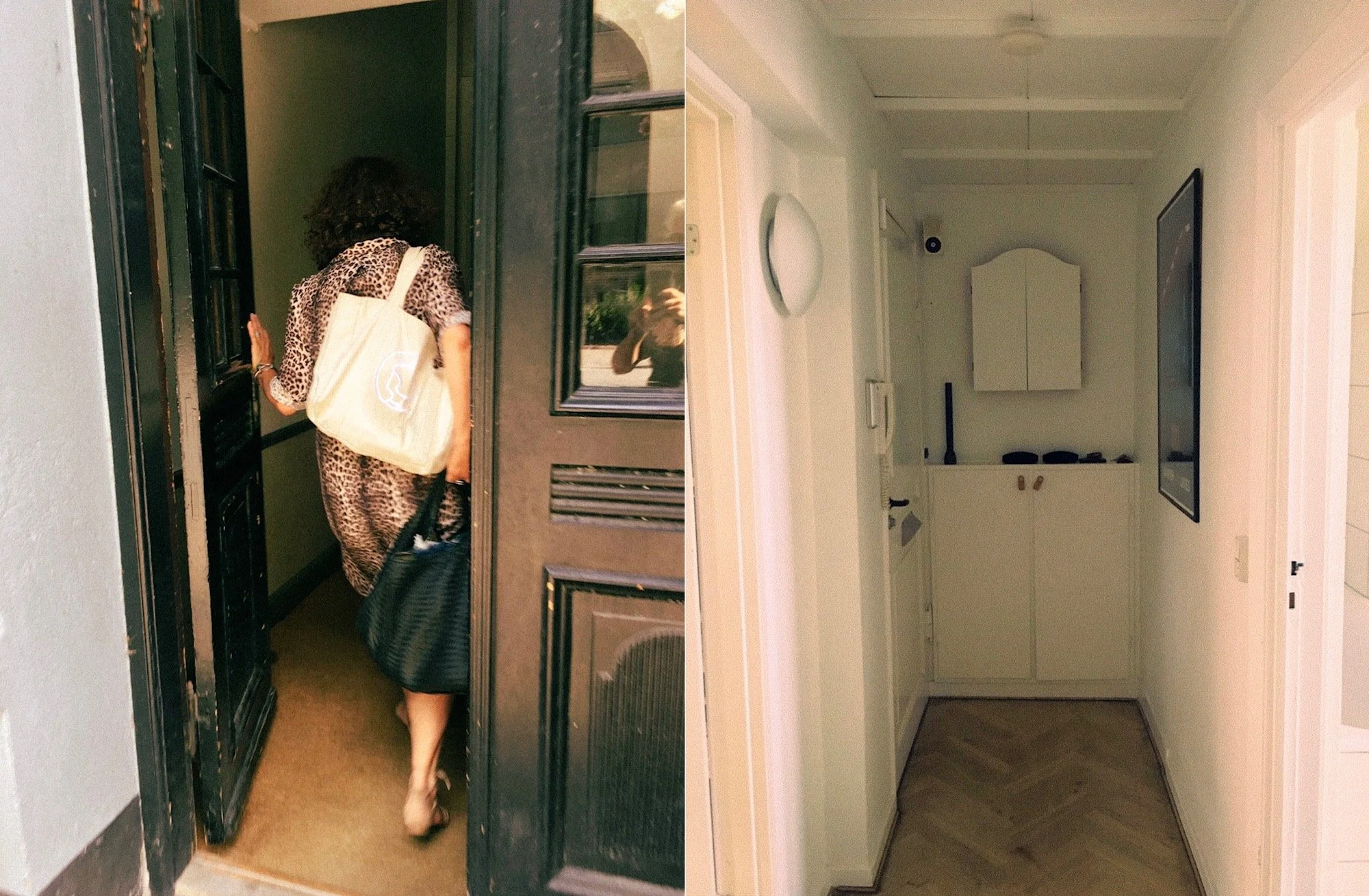
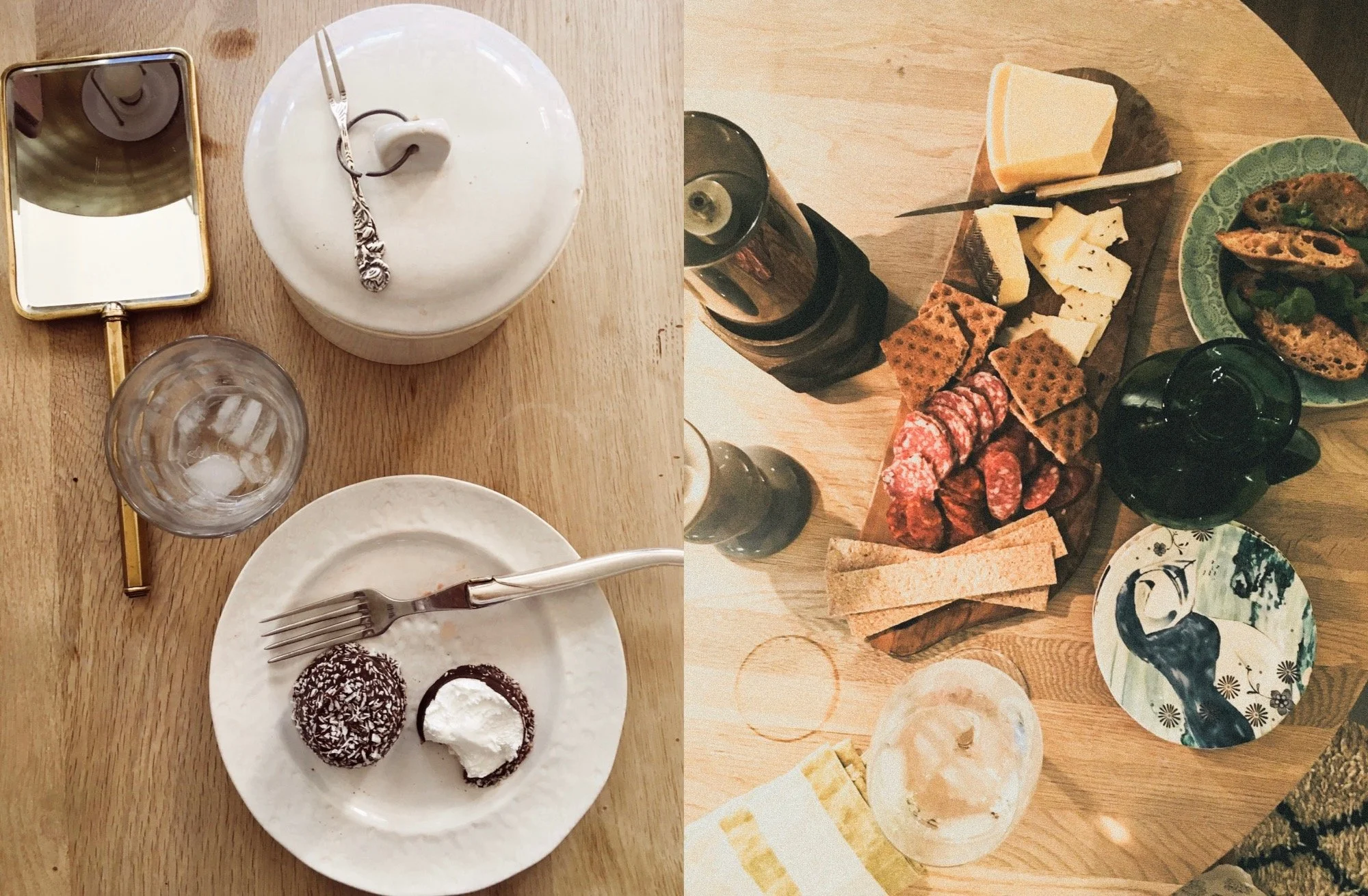
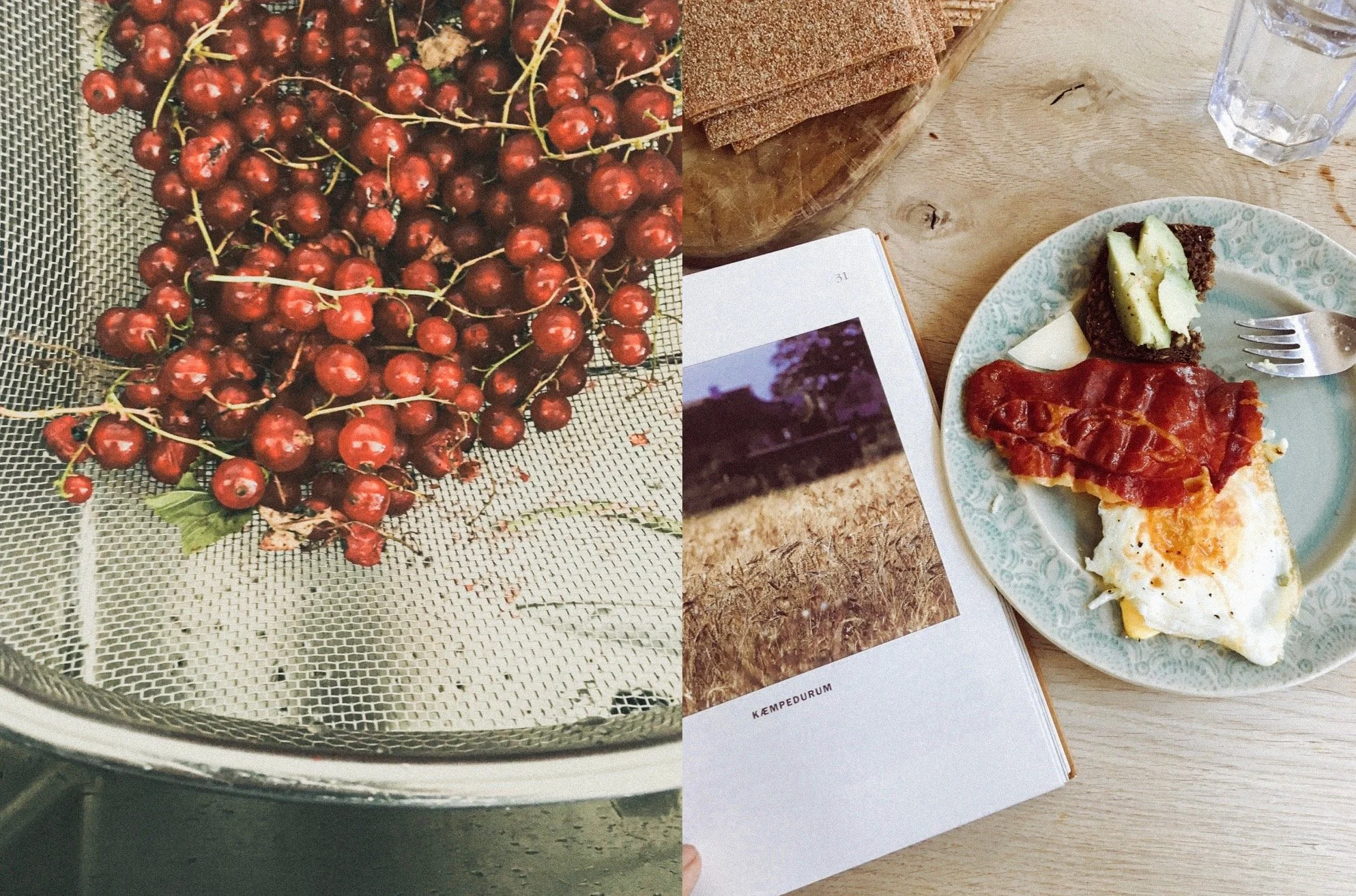
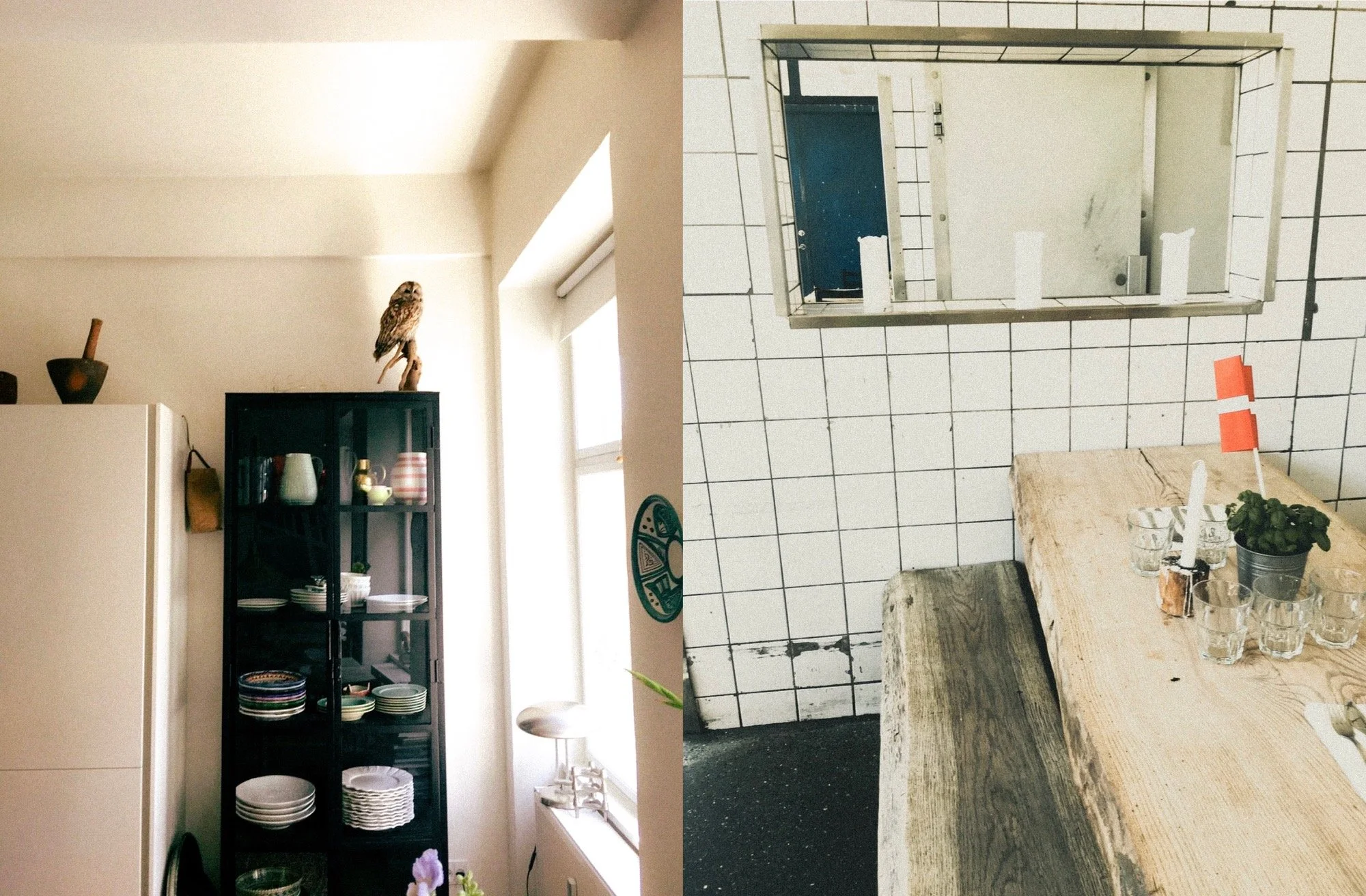
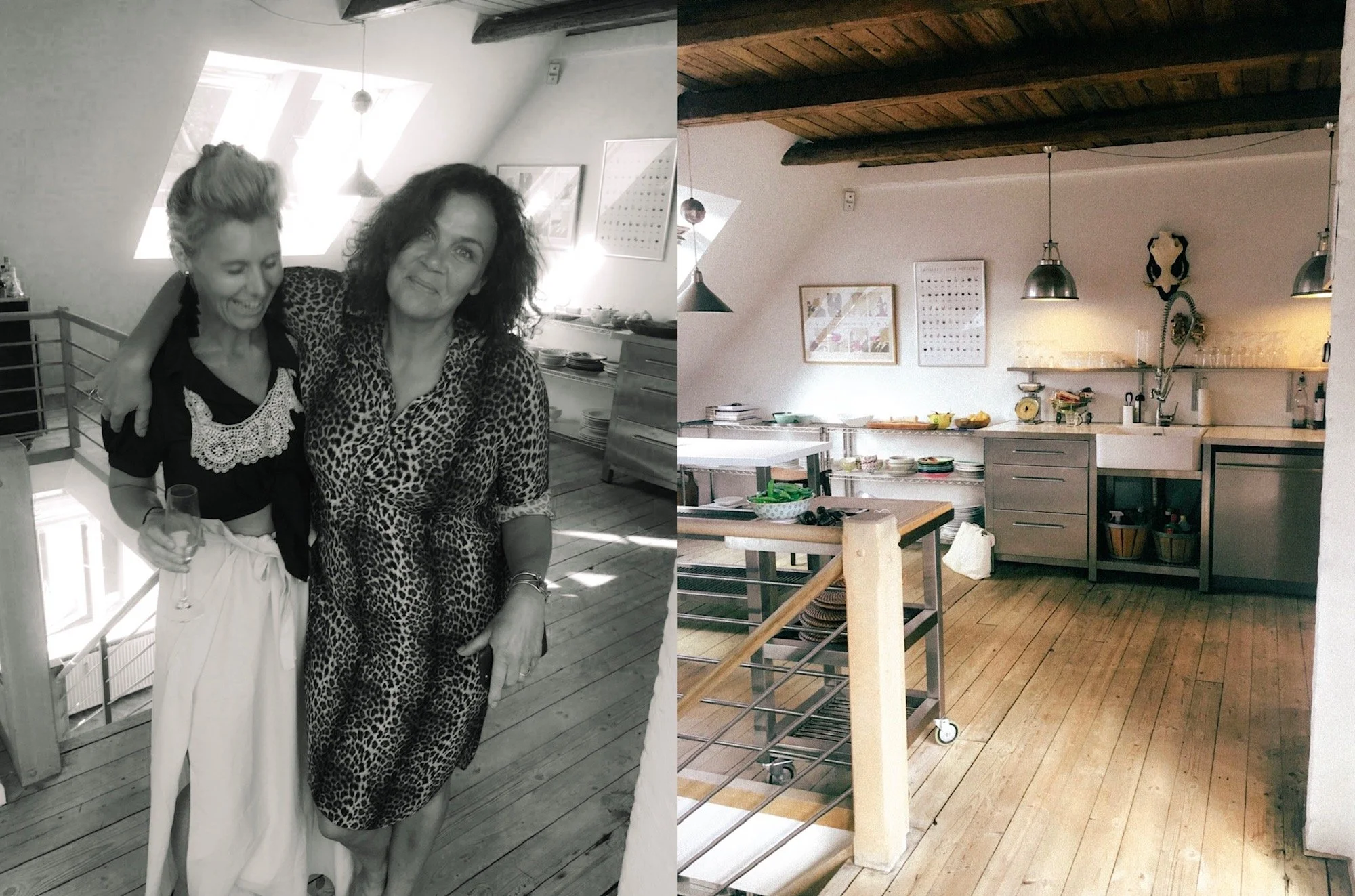
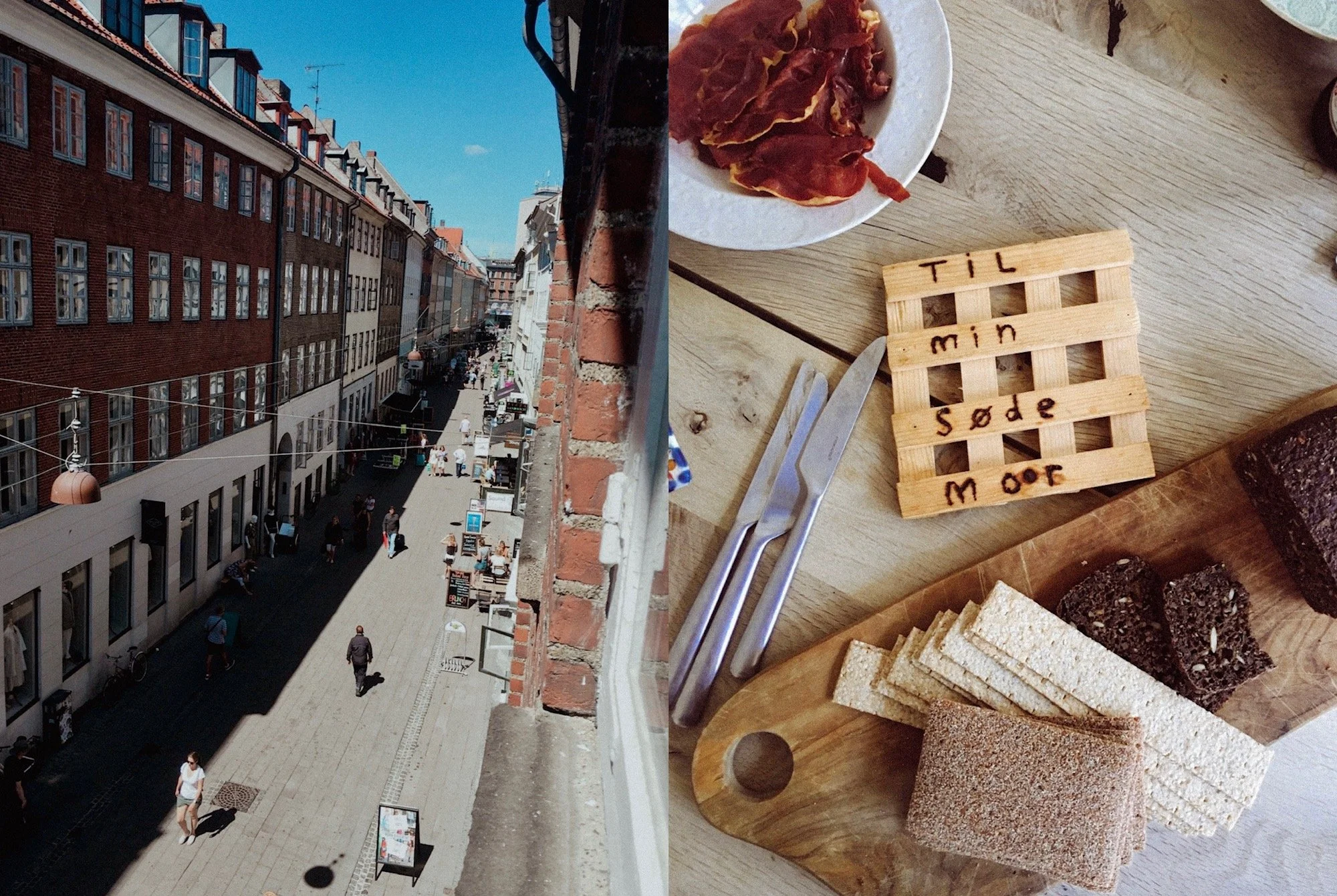
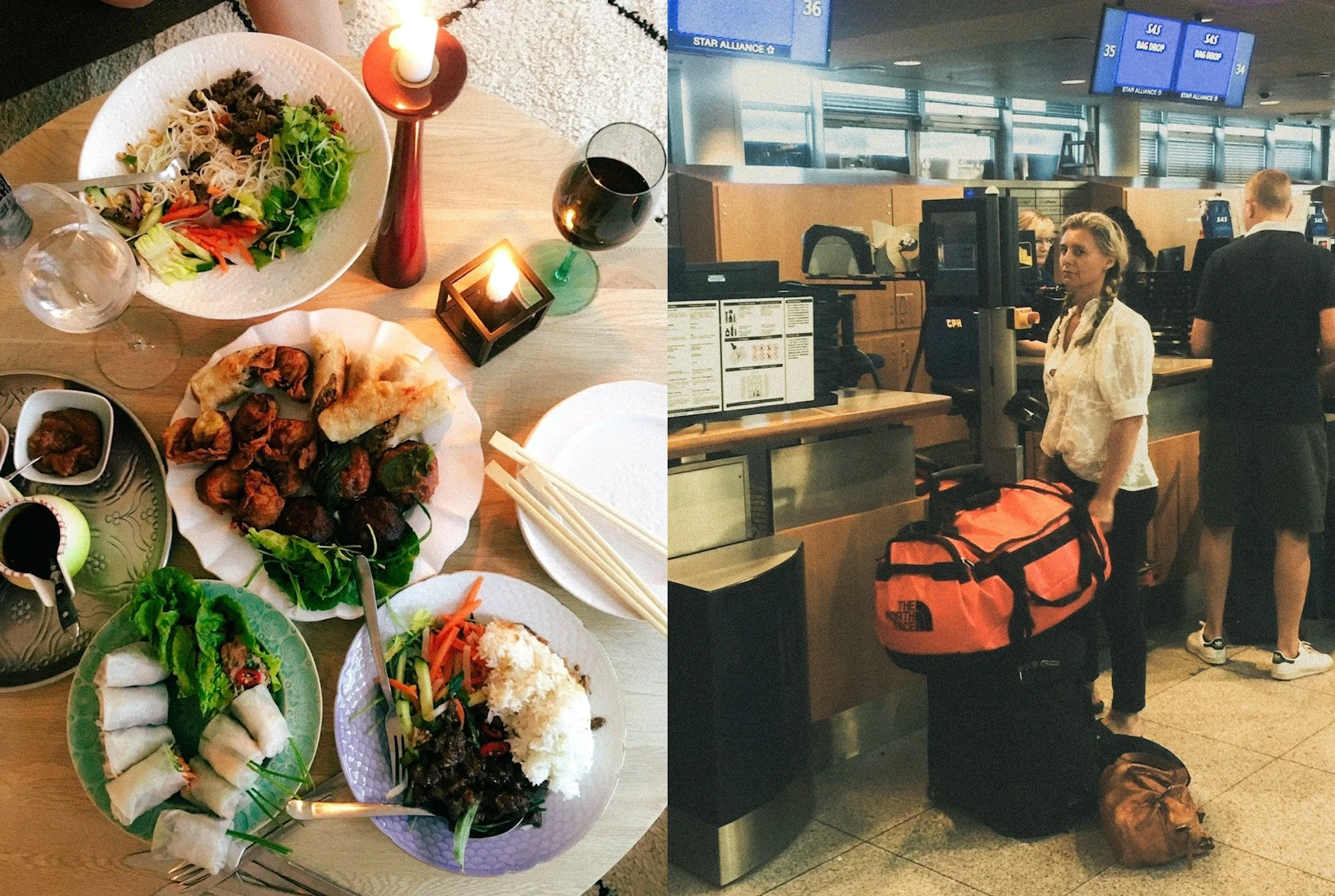
Annette quickly became part of our family. I feel like I have memories of the day we met her but when I try to pull the story from my head everything seems jumbled up. The houses in Colorado and West Virginia get mix matched. I am sure I was five or six when she first came to stay with us and I seem to remember being very timid to say hello. Annette was our Danish au pair. She was eighteen when she came to live with us. She didn’t speak any english and had taken the job to help my mother with her four young children and learn the language along the way. She taught us how to count to ten in danish and say I love you.
For years after she left, she would come visit. She showed up one time with her boyfriend Stein, leather jackets and packs of cigarettes in their suitcases from duty free. We would hear about her through my mother who kept in touch as we all got older. Annette married Stein and had two lovely daughters. They would come visit us in california with the huge black baby stroller that I would characterize more appropriately as an old Victorian baby carriage with four giant wheels and a half awning top. Annette would push it through the sand at the beach and with the wind blowing her about she looked like an old film. She taught us about cheese on rye crisps and the danish toasting tradition of beating your chest as you raised your glass and said SKOHL.
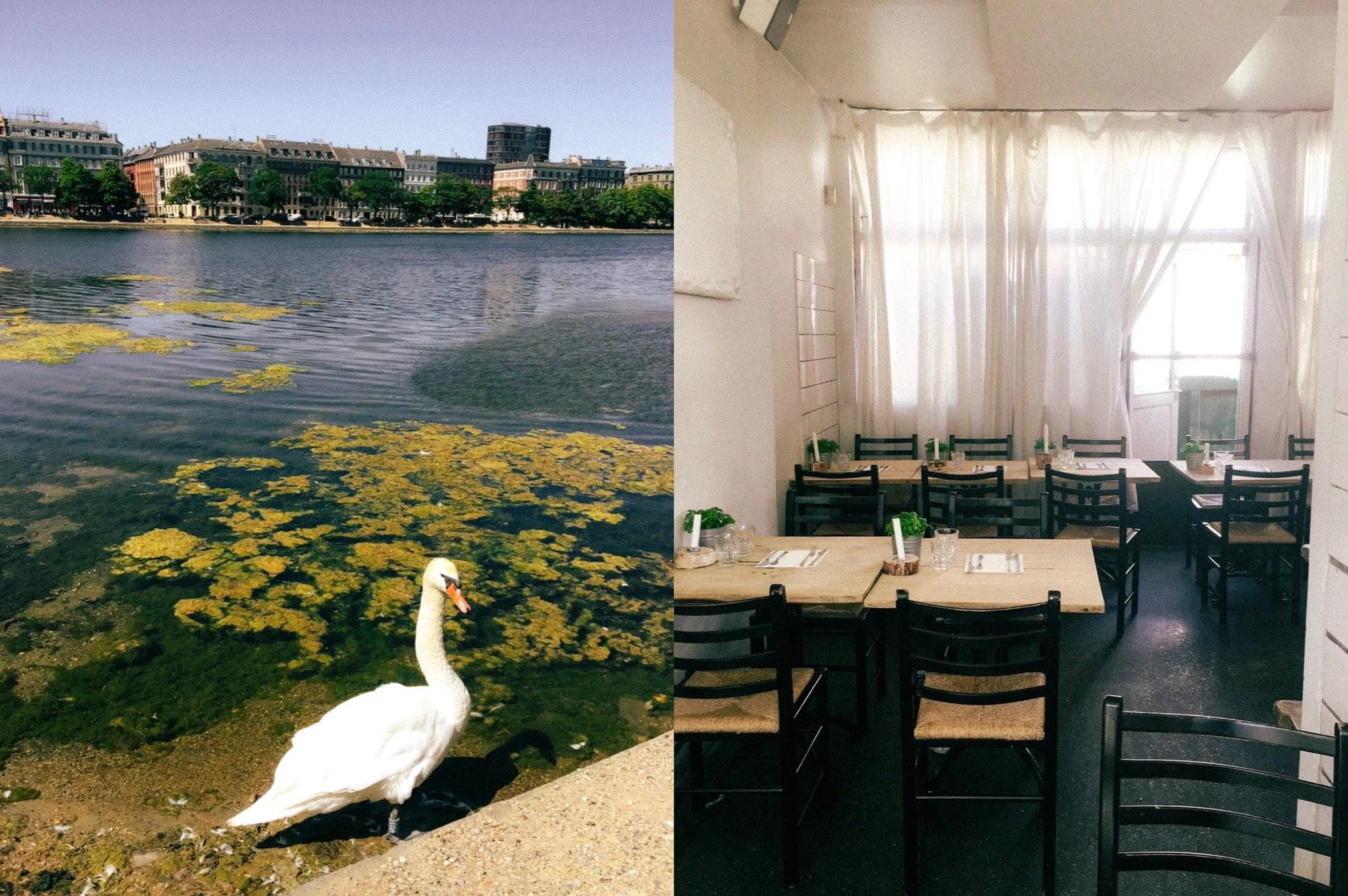
A few years back, on a whim, I bought a ticket to Copenhagen. I had never been and decided it was time. Annette opened her doors and welcomed me with all the love of family. I went from home in California to home in Denmark without skipping a beat. She gave me the full Danish experience and I fell in love with it instantly.
This month I decided I would dabble in some ryes. The way the Danes do it.
Below are two videos of my Danish rye bread slicer. The first is in Denmark when I was first gifted the tool and the second is from a few days ago in my shop. It is beautiful.
Around 1000 AD rye grains had migrated to the nordic countries from Russia. Rye has incredible hardiness and is able to withstand very harsh conditions, not like the softer wheats that were championed by the Greeks and Romans. Rye actually thrives in rocky, cold, thin soils, therefore does really well in the harsh winters. Due to this, rye became a staple for survival in these harsh climates and became the nordic regions dominant grain up until the 1930’s. More delicate wheats were not ruled out but often didn’t sprout in the colder northern regions so rye became an “agricultural safety net” of sorts that kept communities from starving and proved to be highly nutritional for the vikings and medieval peasants.
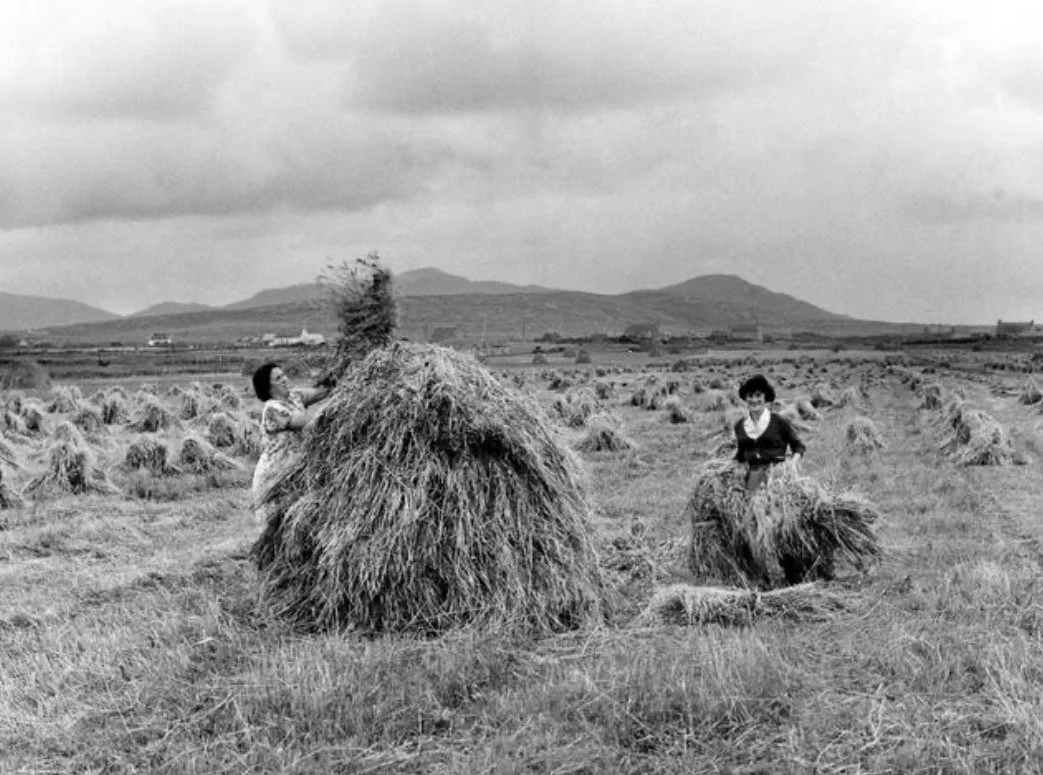
Rye was origionally used in porridge. It wasn’t until the practice of longer fermentation processes and the use of sourdough that rye became popular as a dense and hardy bread. Scandinavia is known for a very famous sourdough culture although it is different then what we perceive as sourdough bread in America. Our airy, primarily white sourdough loaf is the complete opposite of a Scandinavian loaf of sourdough bread.
The nordic ryes can be separated into two main forms: “Knackebrod” or Crispbread and “Rugbrod” which is the dense sourdough loaf.
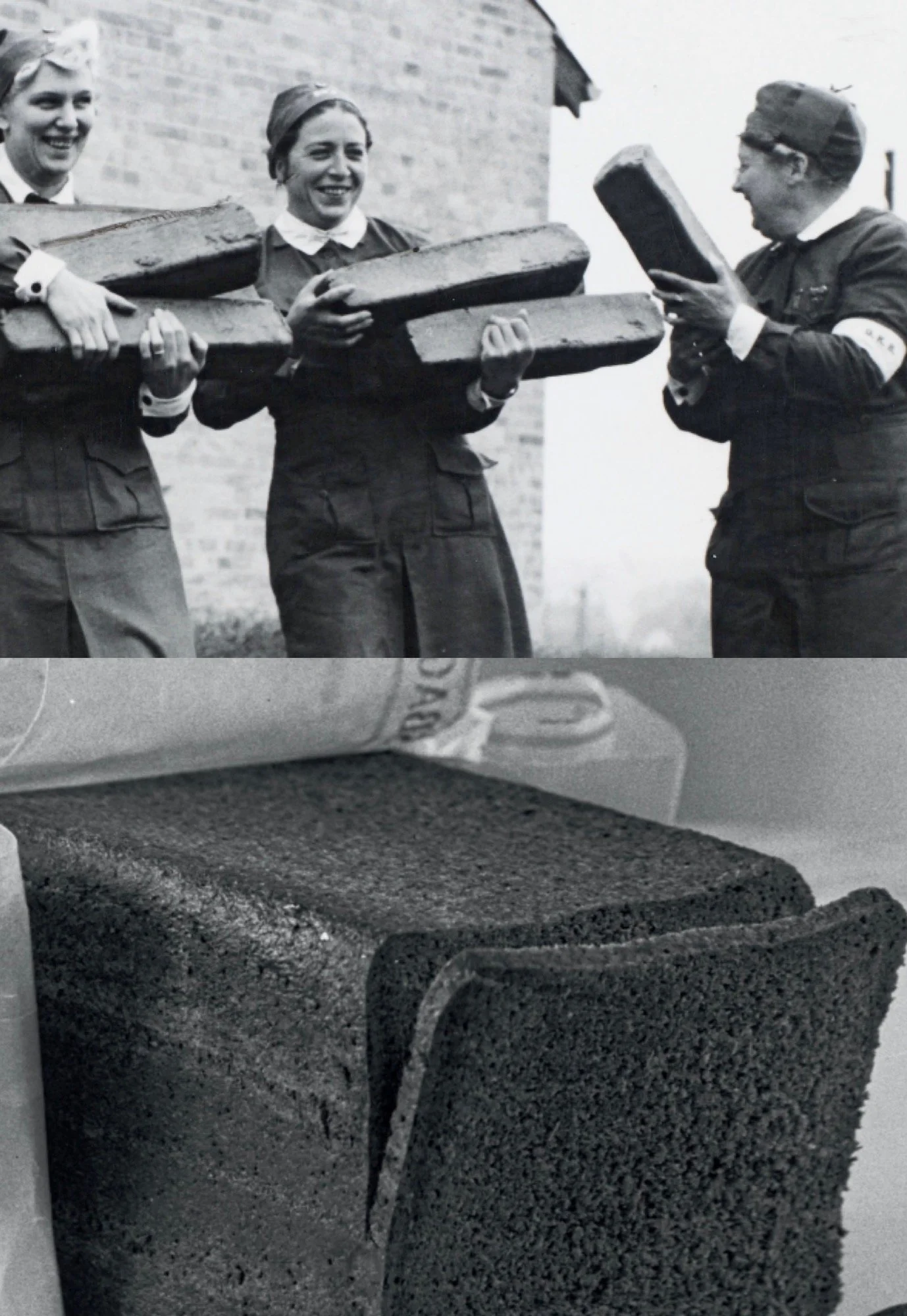
Rugbrod is a very dense pan loaf. It is made with dark rye flour, sourdough, salt wholegrain and seeds. It can be packed with any variation of grains and seeds you would like, often cracked ryes, cracked wheats, sunflower seed, pumpkin seed, flax seed. The wholegrain and seeds are often mixed with the sourdough and water to make a soaker the night prior to mixing the dough. The rye is added in the morning and mixed into a thick batter like dough. This bread is baked in a long rectangular pan, a loaf pan, also known as a pullman loaf pan.
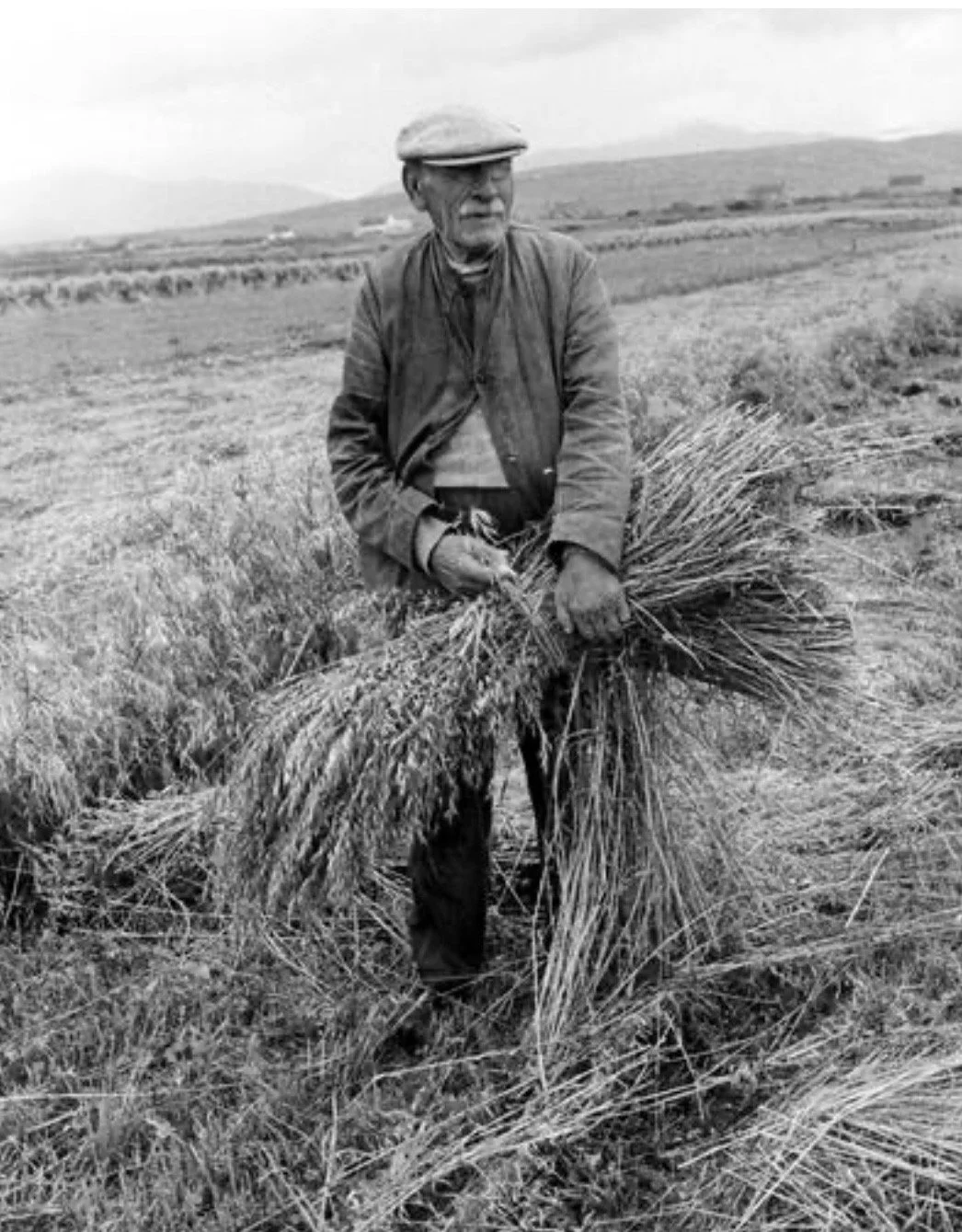
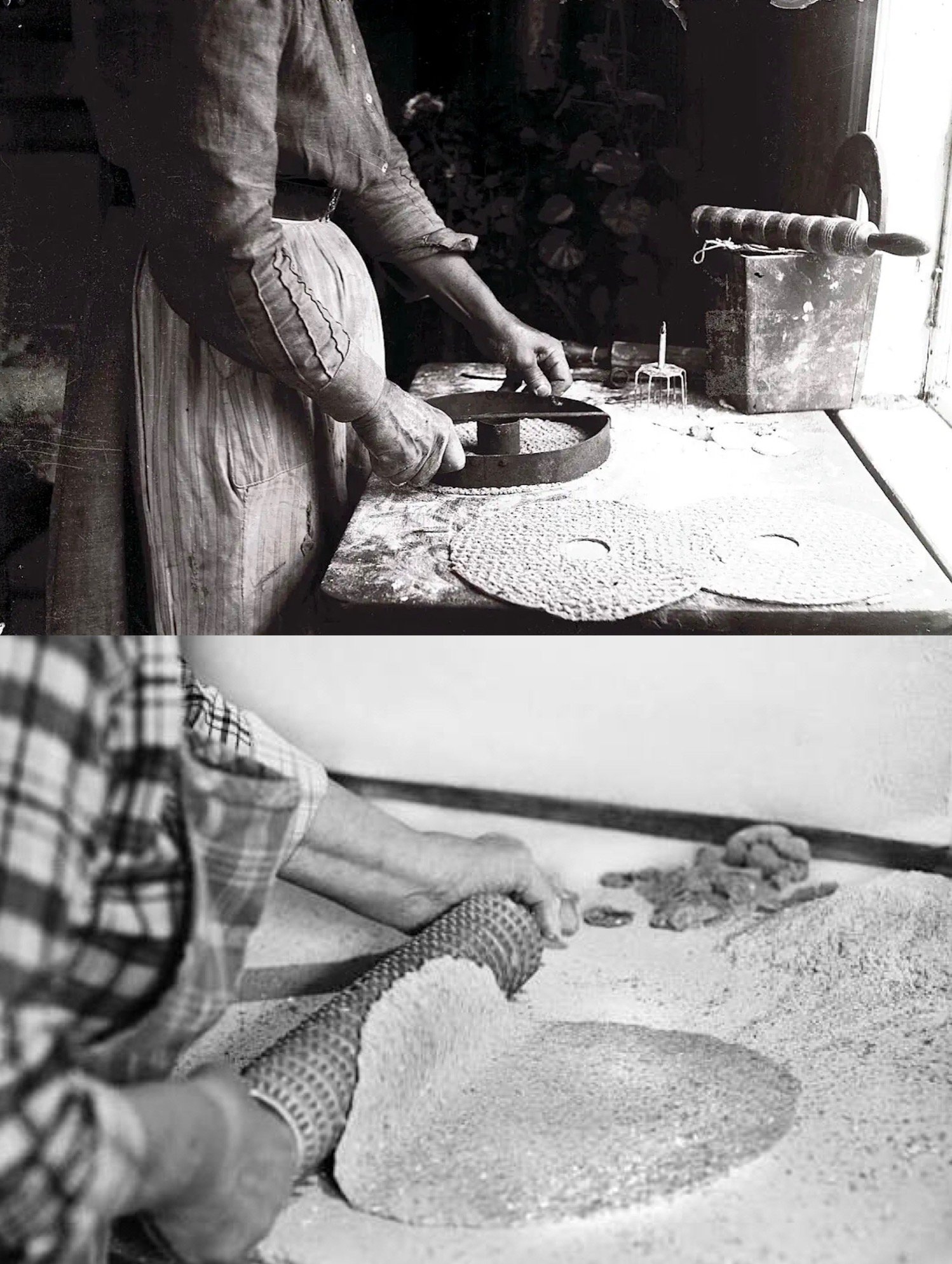
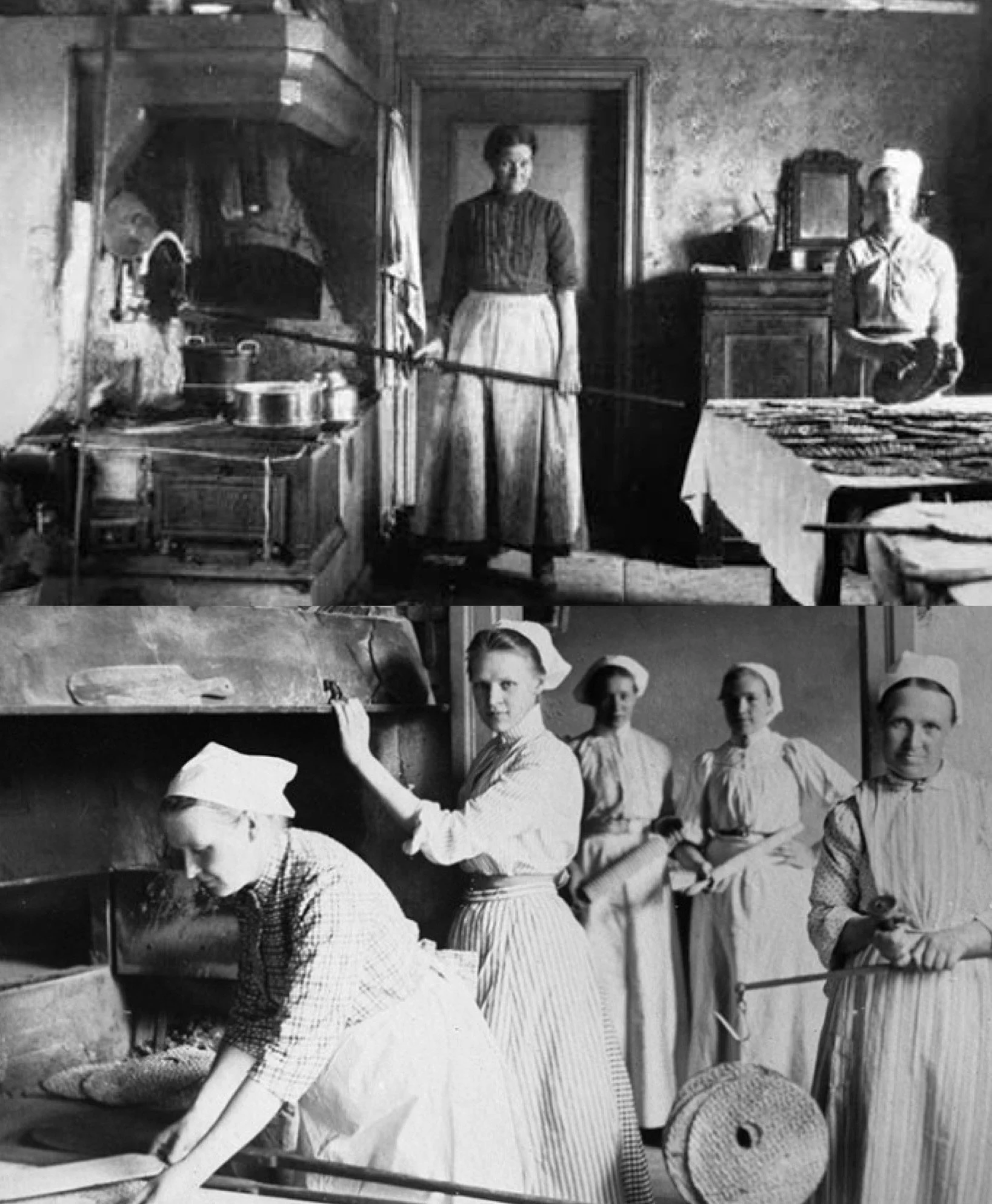
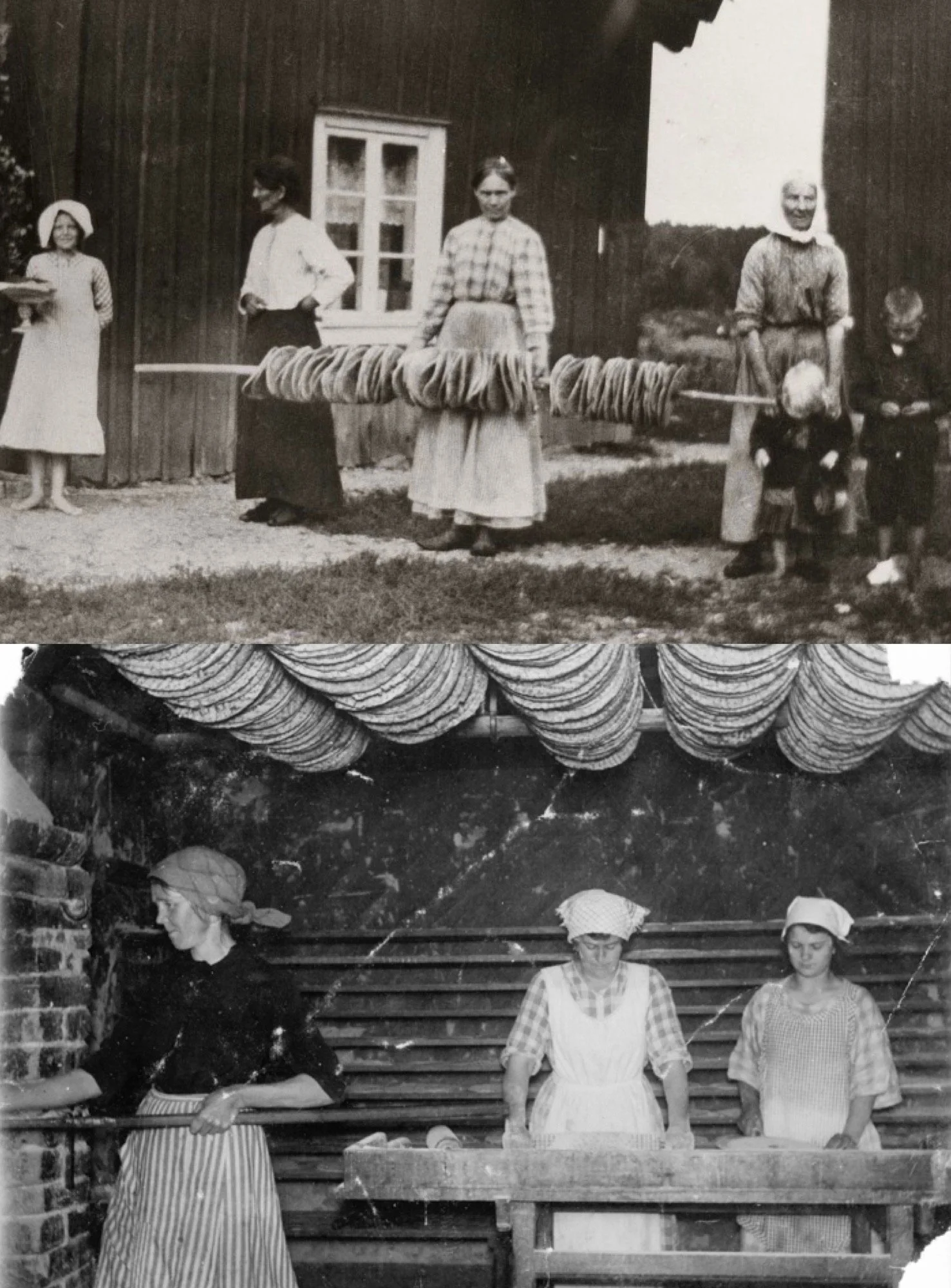
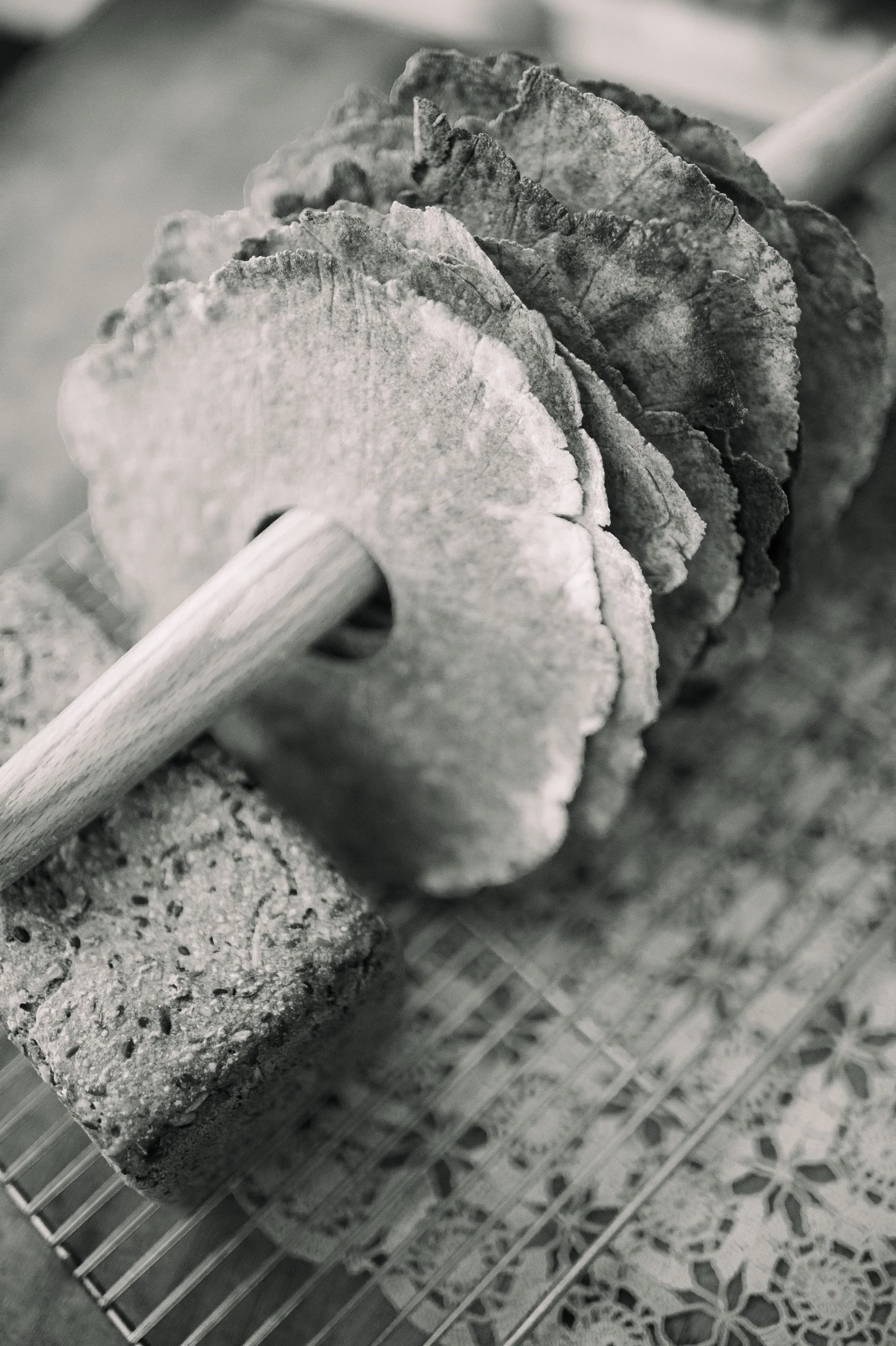
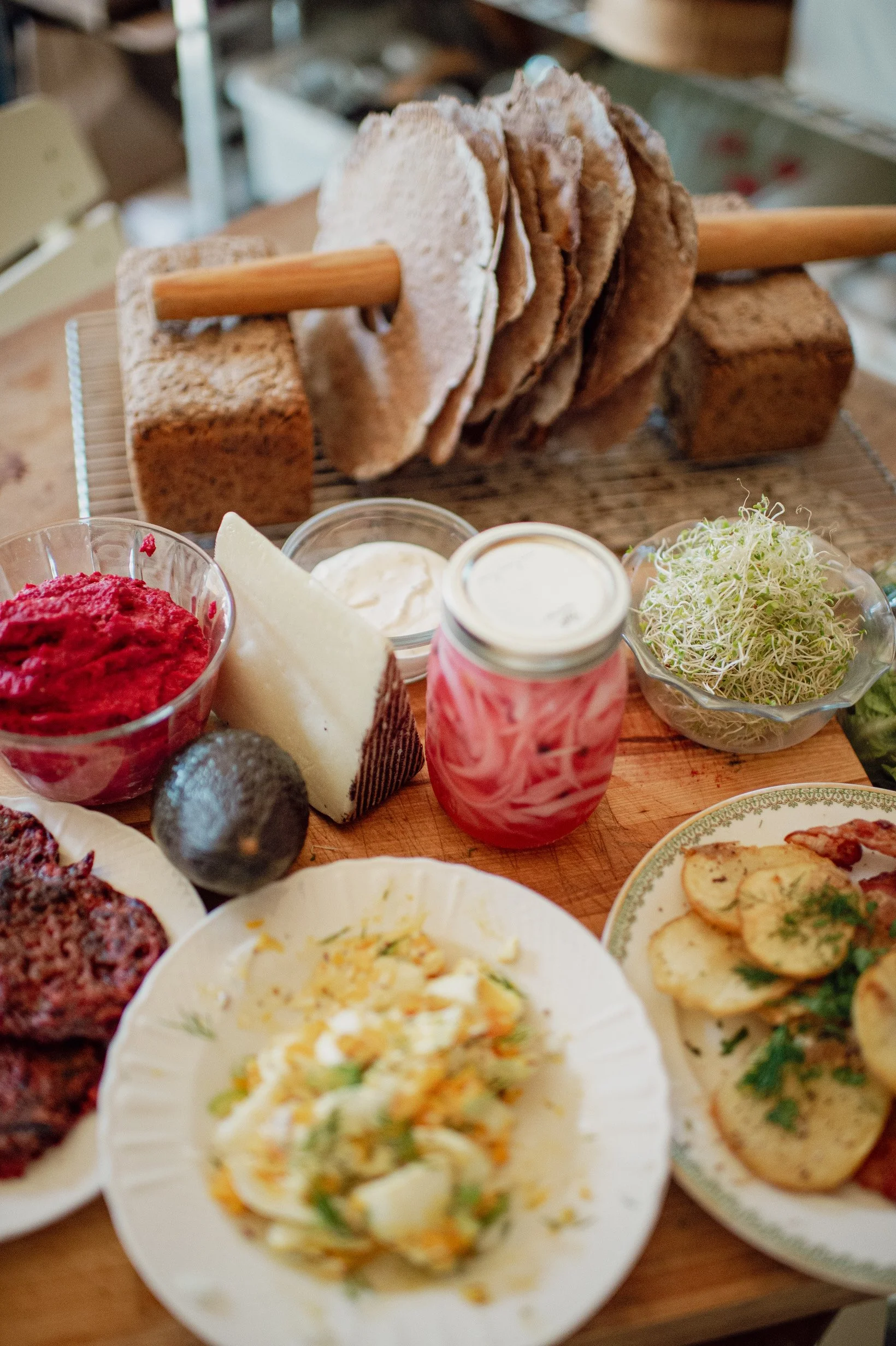
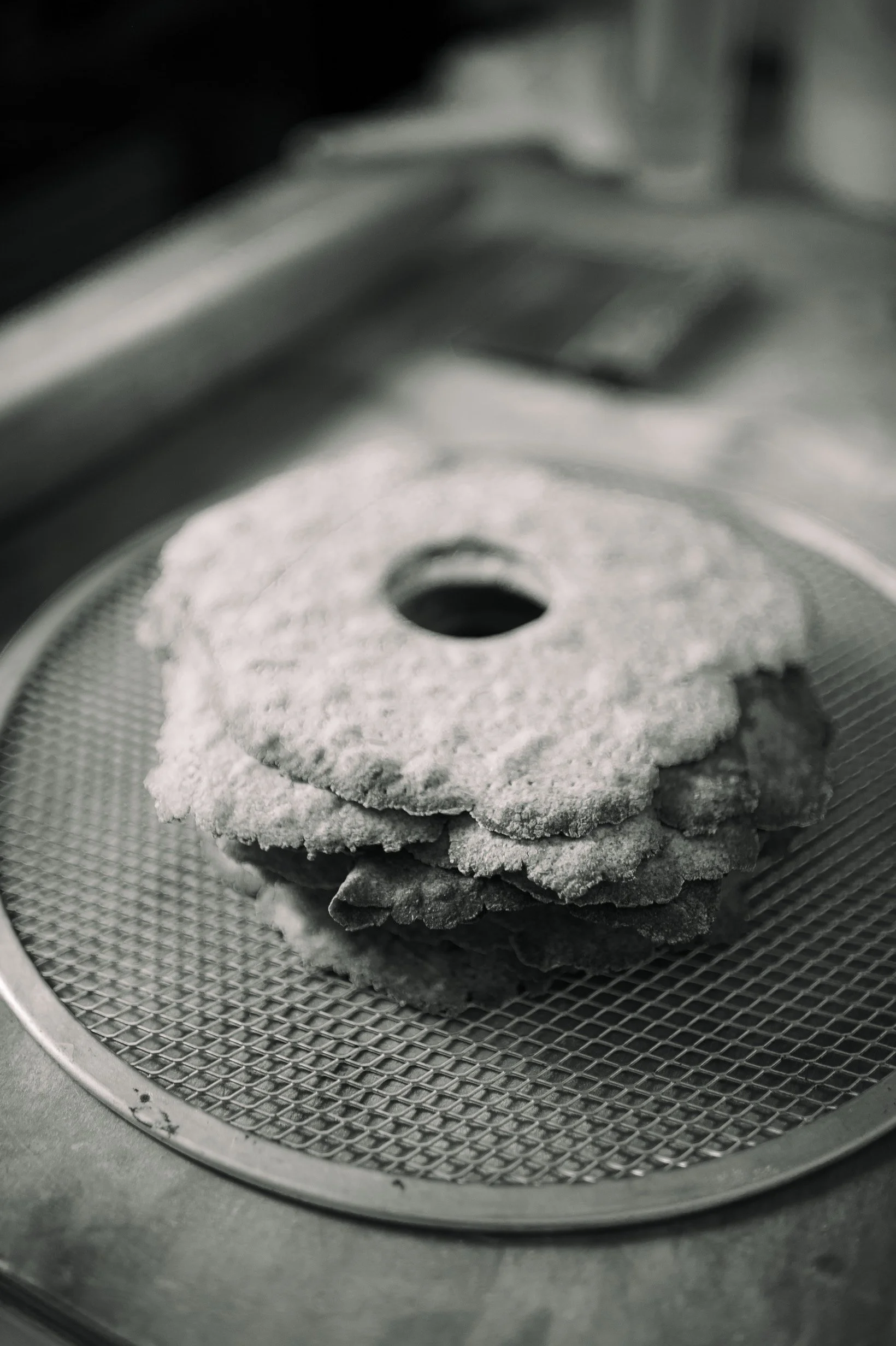
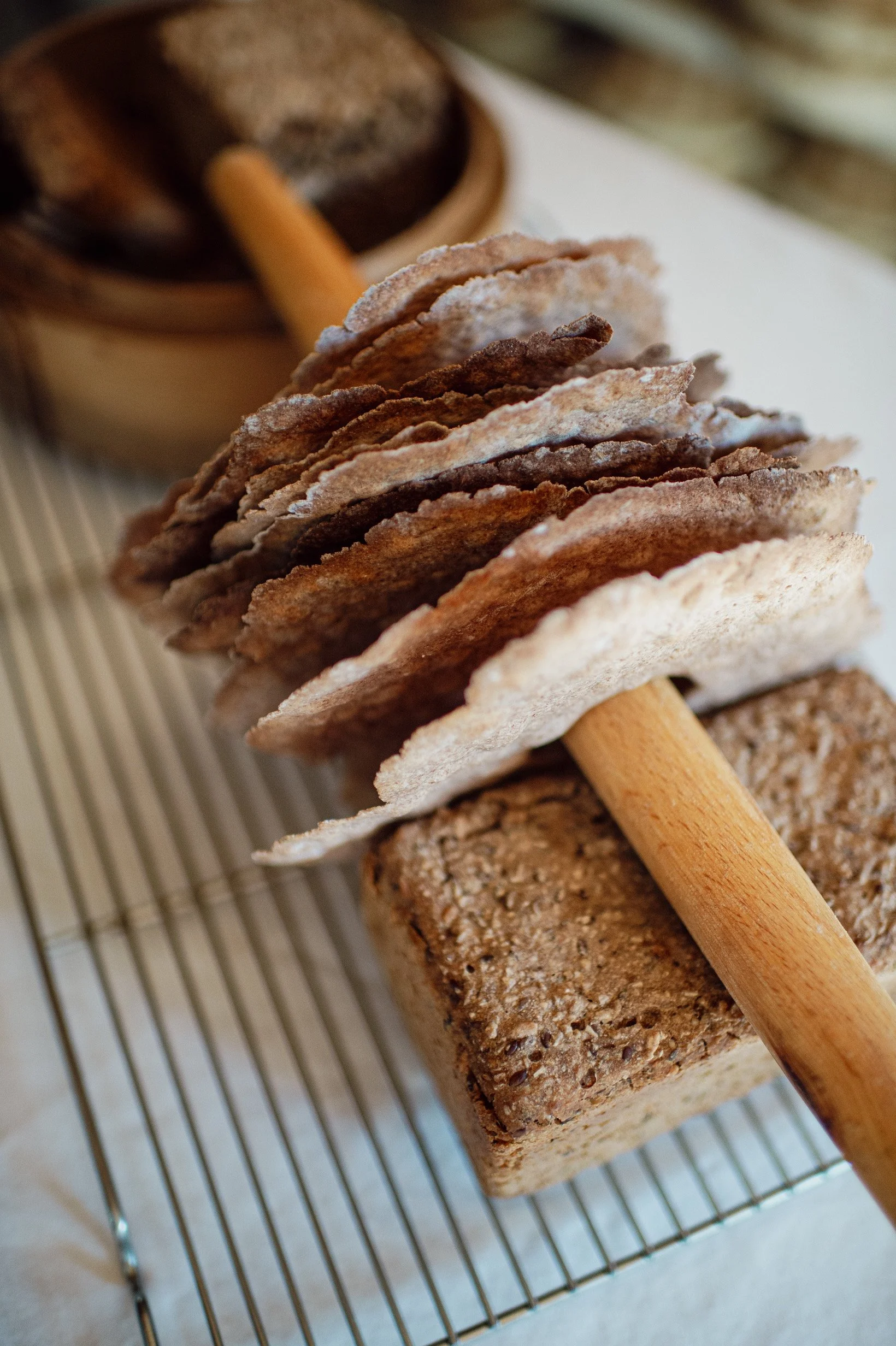
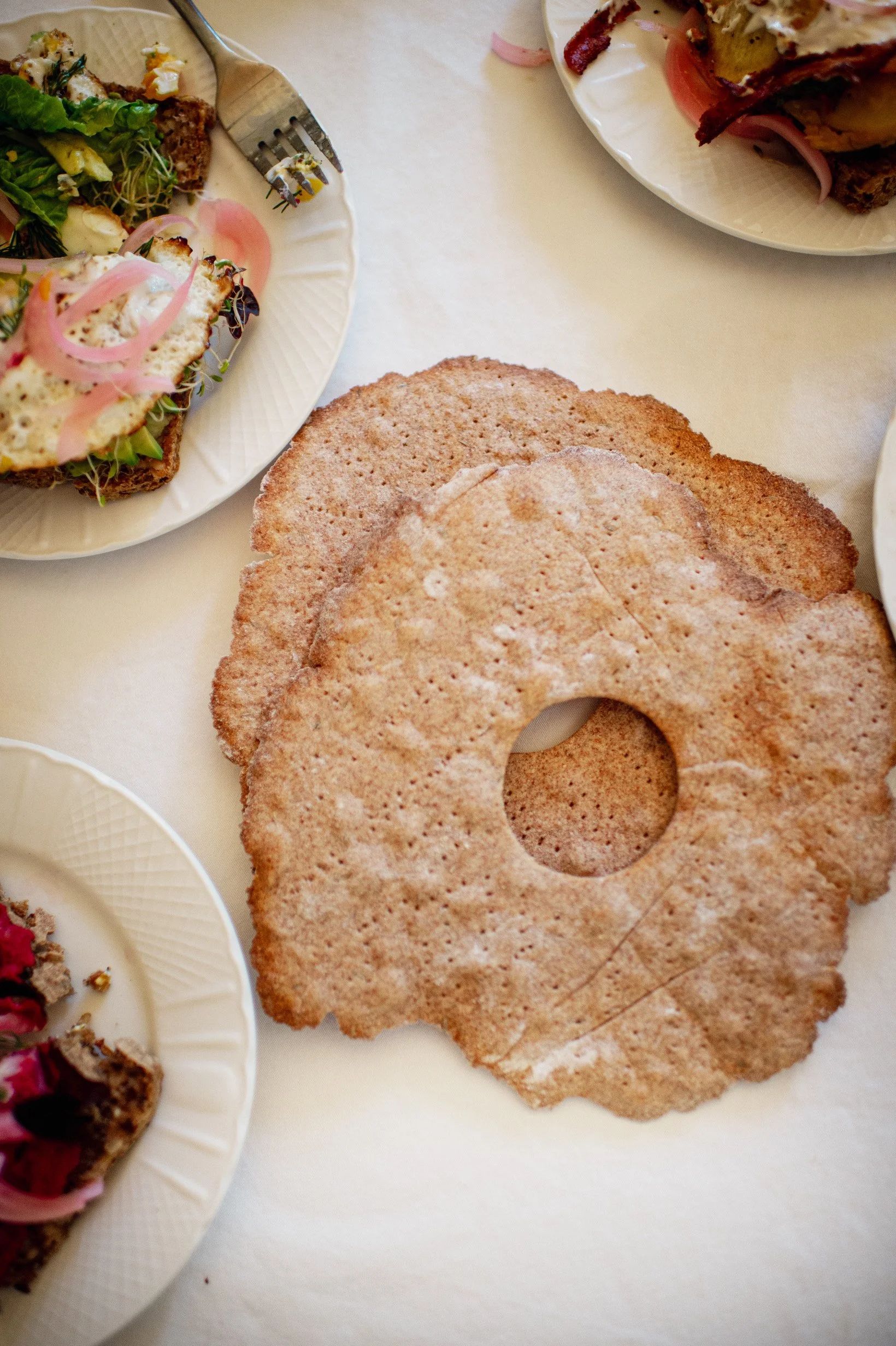
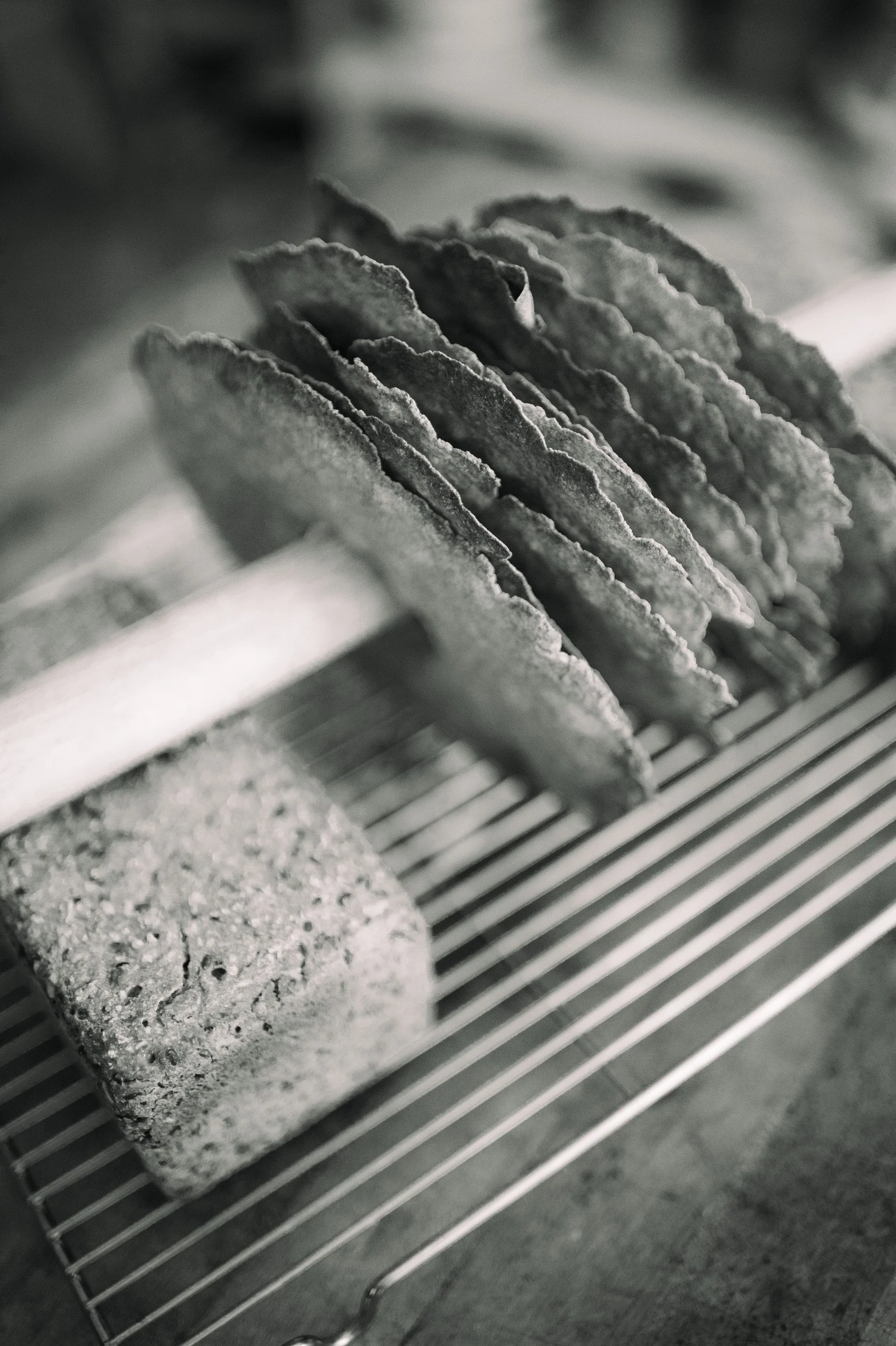
Knackebrod is more like a cracker, hence the name crispbread. It has it’s origin dated back to the 16th century and was used by Nordic farmers as a durable, yeast free staple that could last through the long harsh winters. It had an incredible shelf life because of the lack of yeast and moisture. It was traditionally made in a round disk shape with a hole in it’s center so they could be stacked and dried from the ceiling poles of the old farmhouses. The origin of the bread comes from a similar but thicker kind of bread called Spisbrod or “stove bread”. Knacka is Swedish for “to crack” or “to break”, but the actual name Knackebrod comes from the word kruseknacke, which was the specific tool used to roll out the crispbread dough. The rolling pin was knotted and created dimples throughout the dough when rolled. This prevented the flatbread from puffing up in the oven, ensuring a crispy flat cracker instead of something like a pita bread.
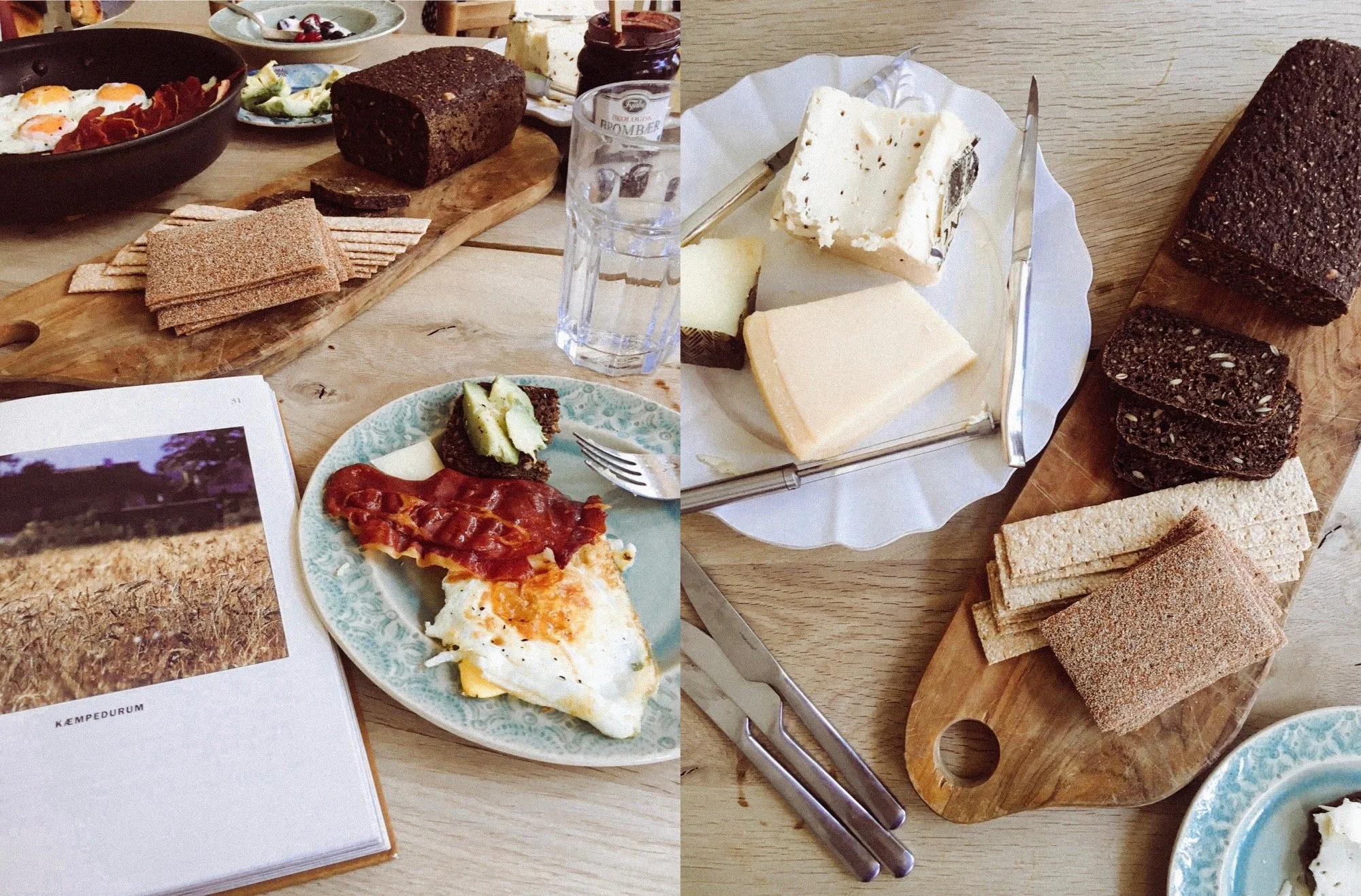
This month I experimented with both the Rugbord and Knackebrod for our exploratory purposes. I found a great love for these rye breads. The smell and flavor was so delightfully rich and deep that I found myself commenting out loud over and over about how good it all smelled. The flavors were multifaceted and danced between sweet, and earthy, to sour and tart, all the while knowing that each bite was hardy and healthy. I took it a few steps further by creatively playing with toppings to make the famous smorrebrod, which is a popular Danish open faced sandwich.
Dive in and give this breads and toppings a try. It is a lot easier than it appears to be. I think a dense rye can sometimes be daunting but it might be an easier bread to make then our typical sourdough and with a lot more bang for your buck!
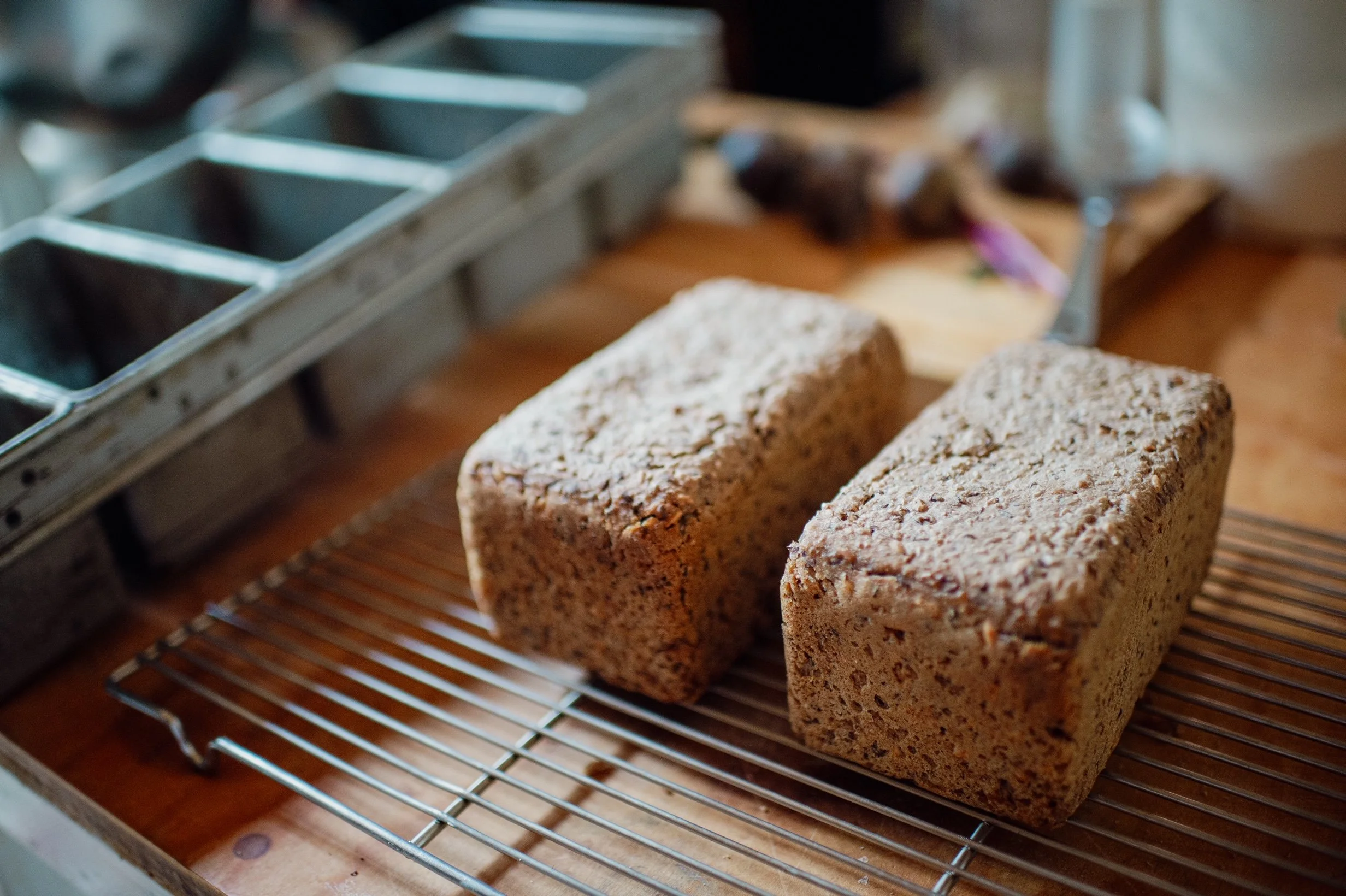
MAKING RUGBROD: SCANDINAVIAN RYE
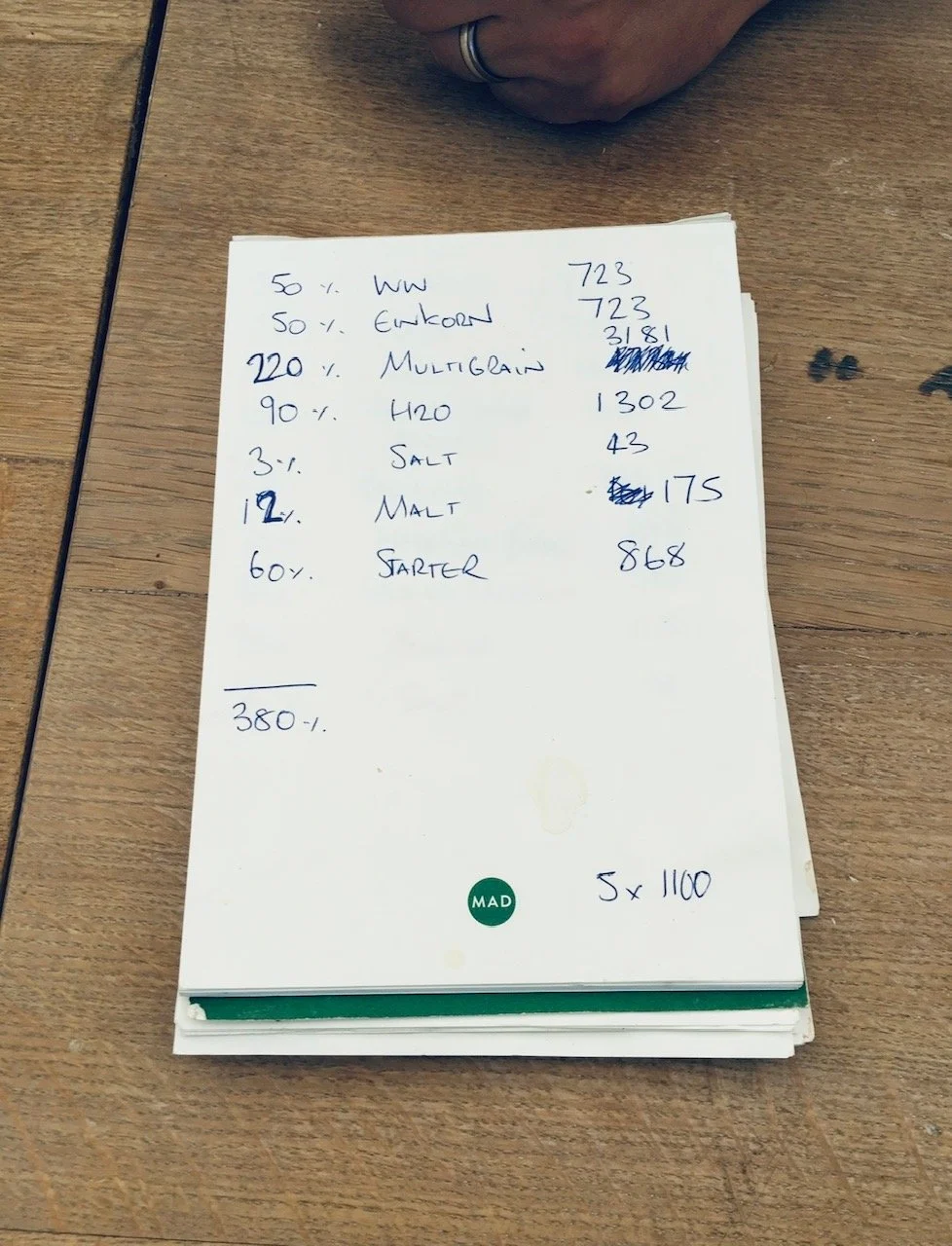
I discovered this recipe on a basic nordic cooking site. After running through it and going over some formulas I have used in the past, they are all basically the same. Like I said earlier, Rugbrod is made with water, sourdough, rye, salt and a mix of multigrains and seeds. You can sprout some of the grains too, which I have done with rye berries for a formula from the Tartine Bread book, number 3, I believe. My friend Richard Hart also wrote out a formula on a piece of paper for me years ago, which was basic and cryptic at the same time. I will post it below if anyone is interested.
INGEDIENTS AND FORMULA: makes 2 loaves
100g cracked rye, 100g cracked wheat, 100 g flax seed, 100g sunflower seeds, 1 tablespoon malt syrup or molasses, 400 g sourdough, 800 g water, 200 g rye flour, 200g artisan bread flour, 1 tablespoon salt
Mix the water, sourdough, malt syrup, cracked rye, cracked wheat, flax seed, sunflower seed in a bowl and let soak covered over night. This is your soaker.
The next morning, mix in your rye flour, white flour and salt. Stir into a thick batter dough. Let rest for 1 1/2 hours covered.
Oil your loaf pans. Scoop the rye dough into your pans. Cover and let rest for another 1-2 hours.
Bake at 350 degrees F for one hour. Cool completely before slicing. Best second day.
RYE BREAD TUTORIAL
〰️
RYE BREAD TUTORIAL 〰️
SMORREBROD
〰️
SMORREBROD 〰️
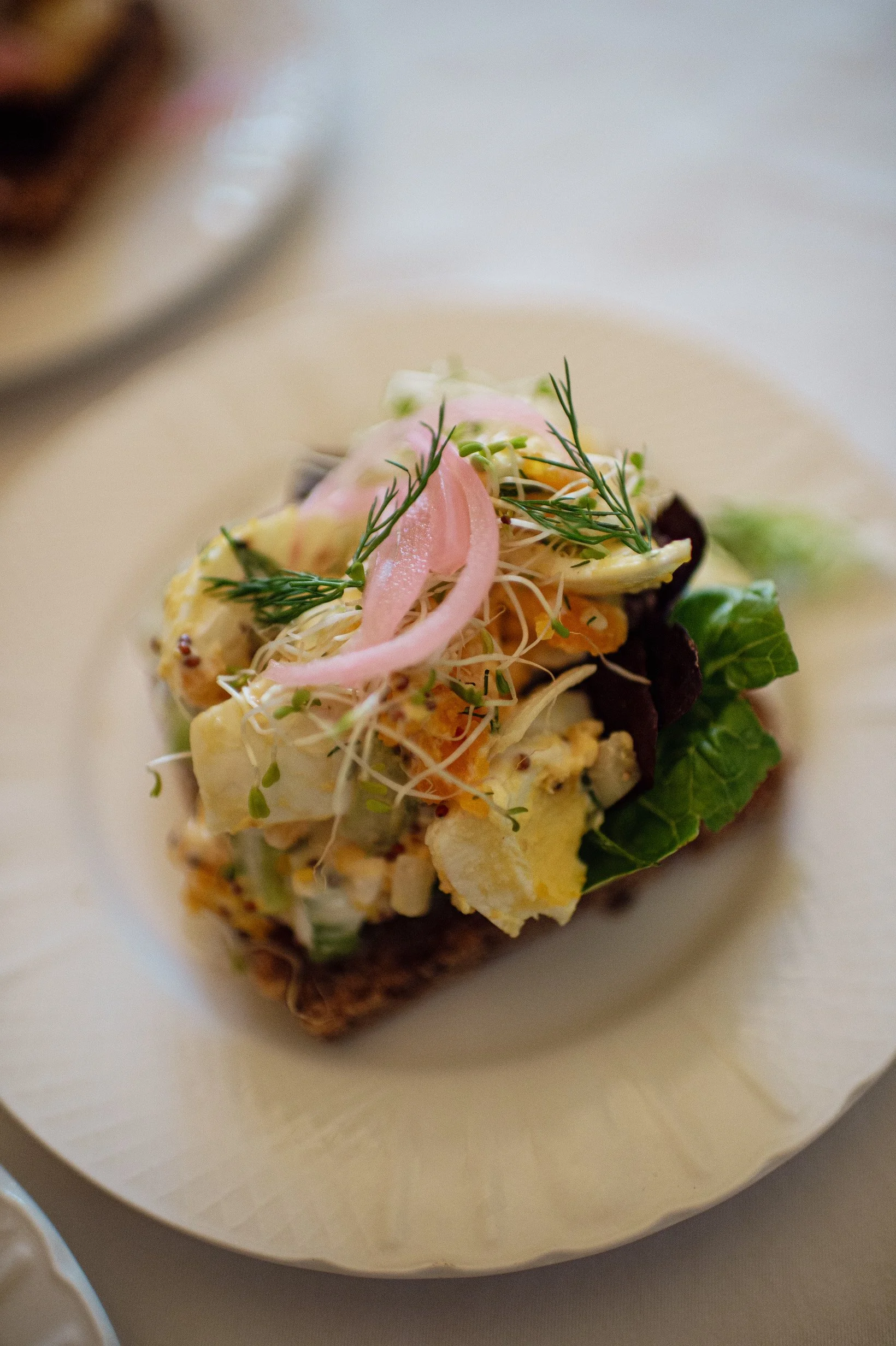
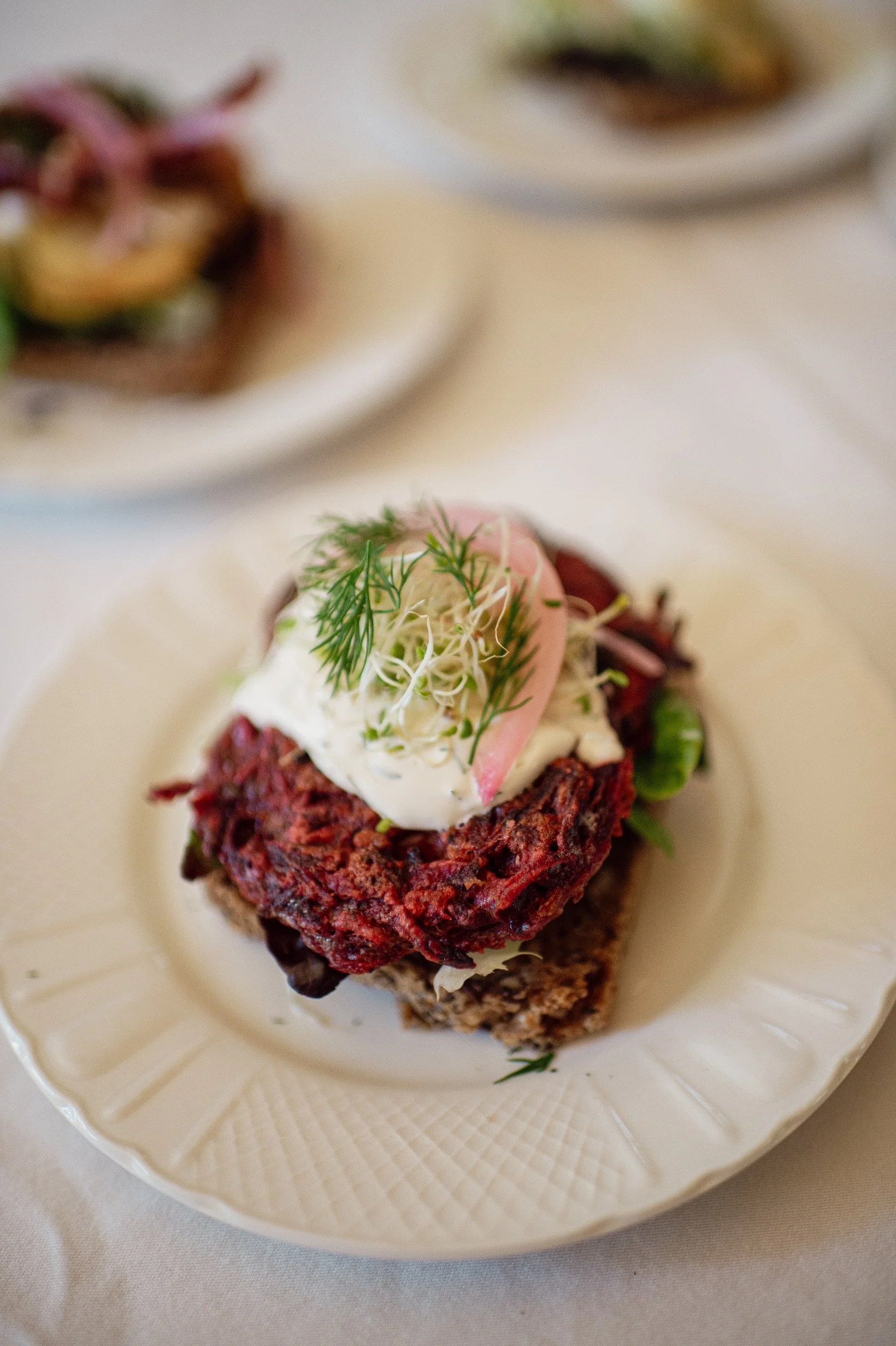
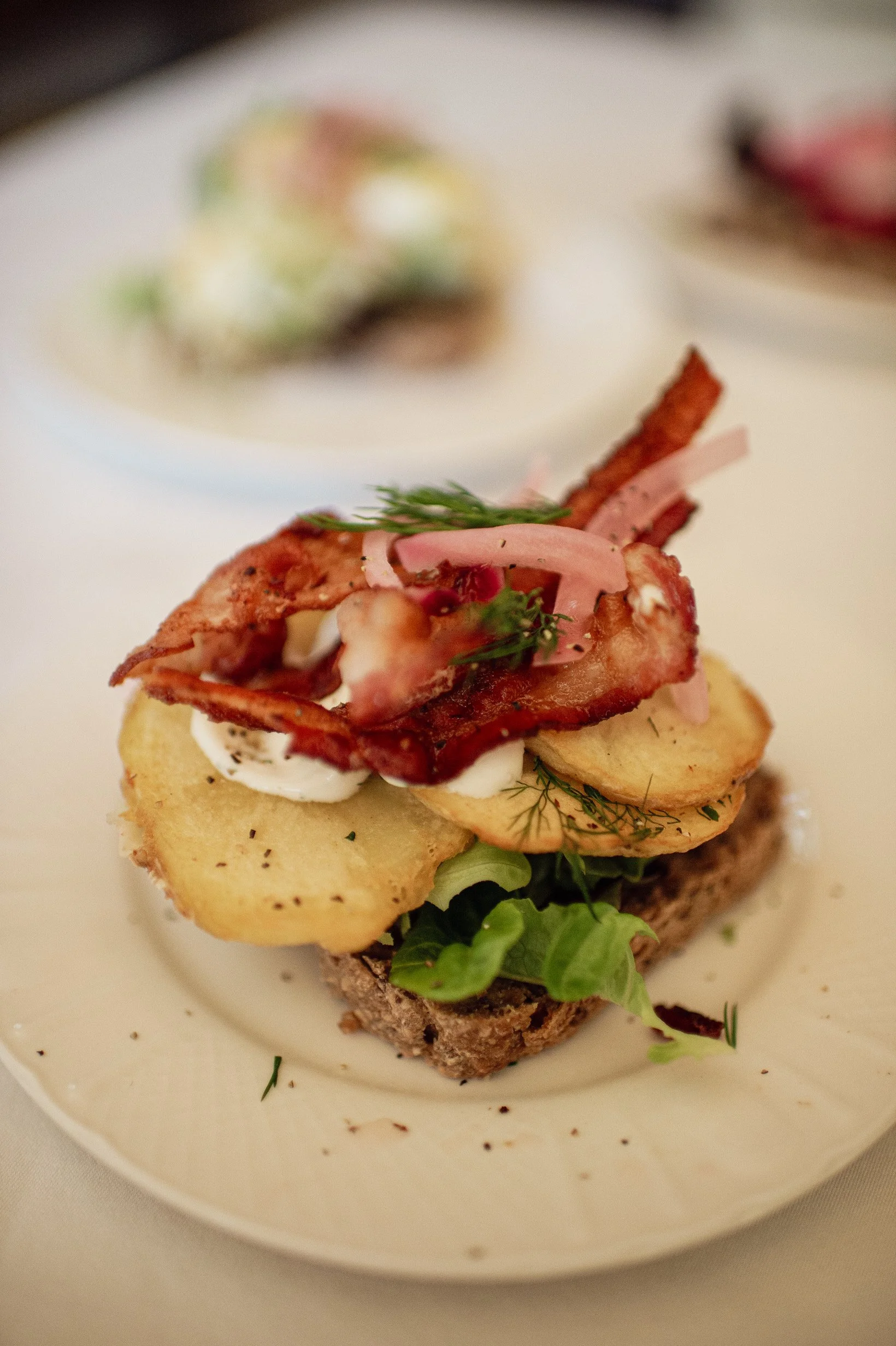
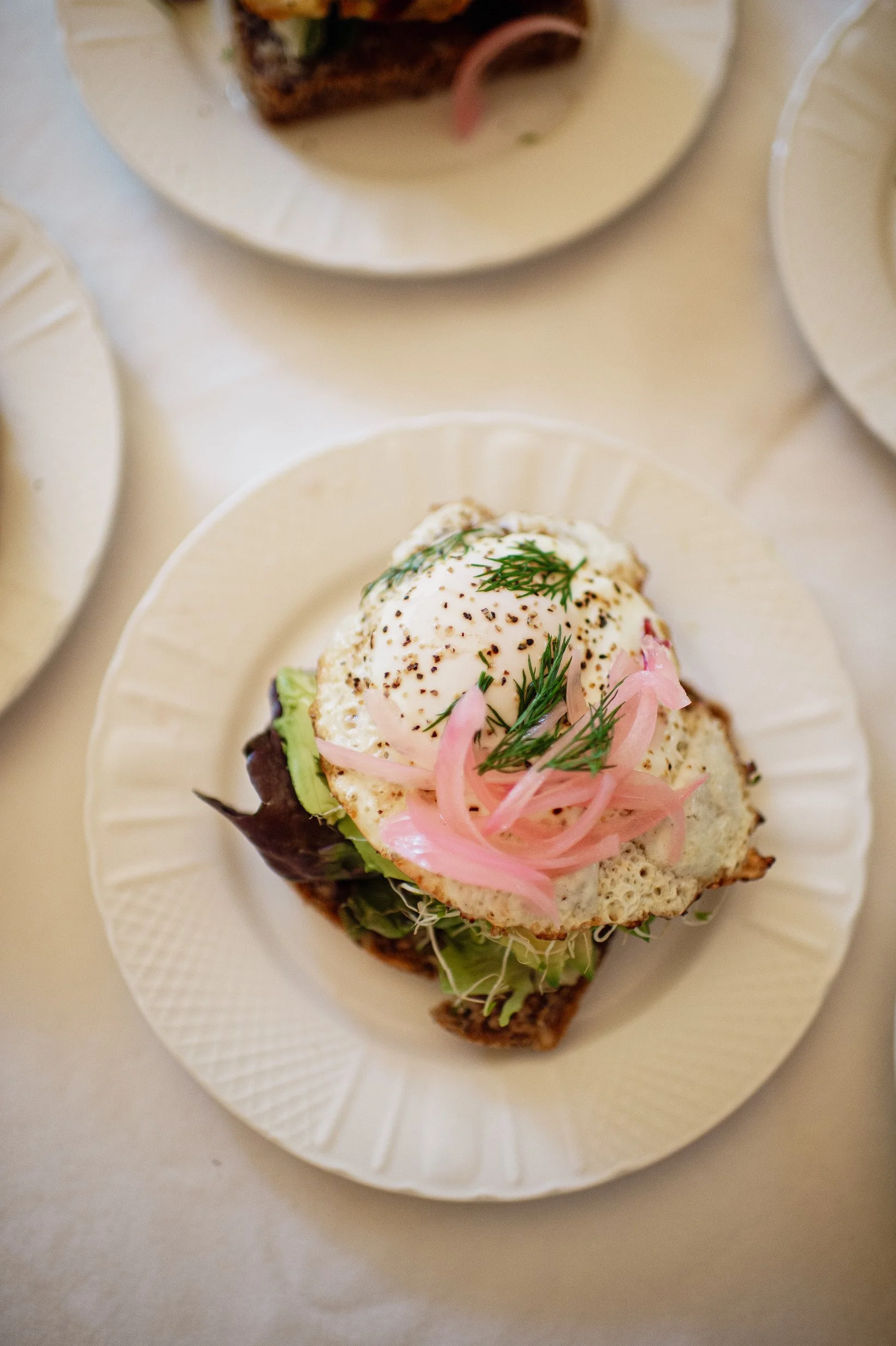
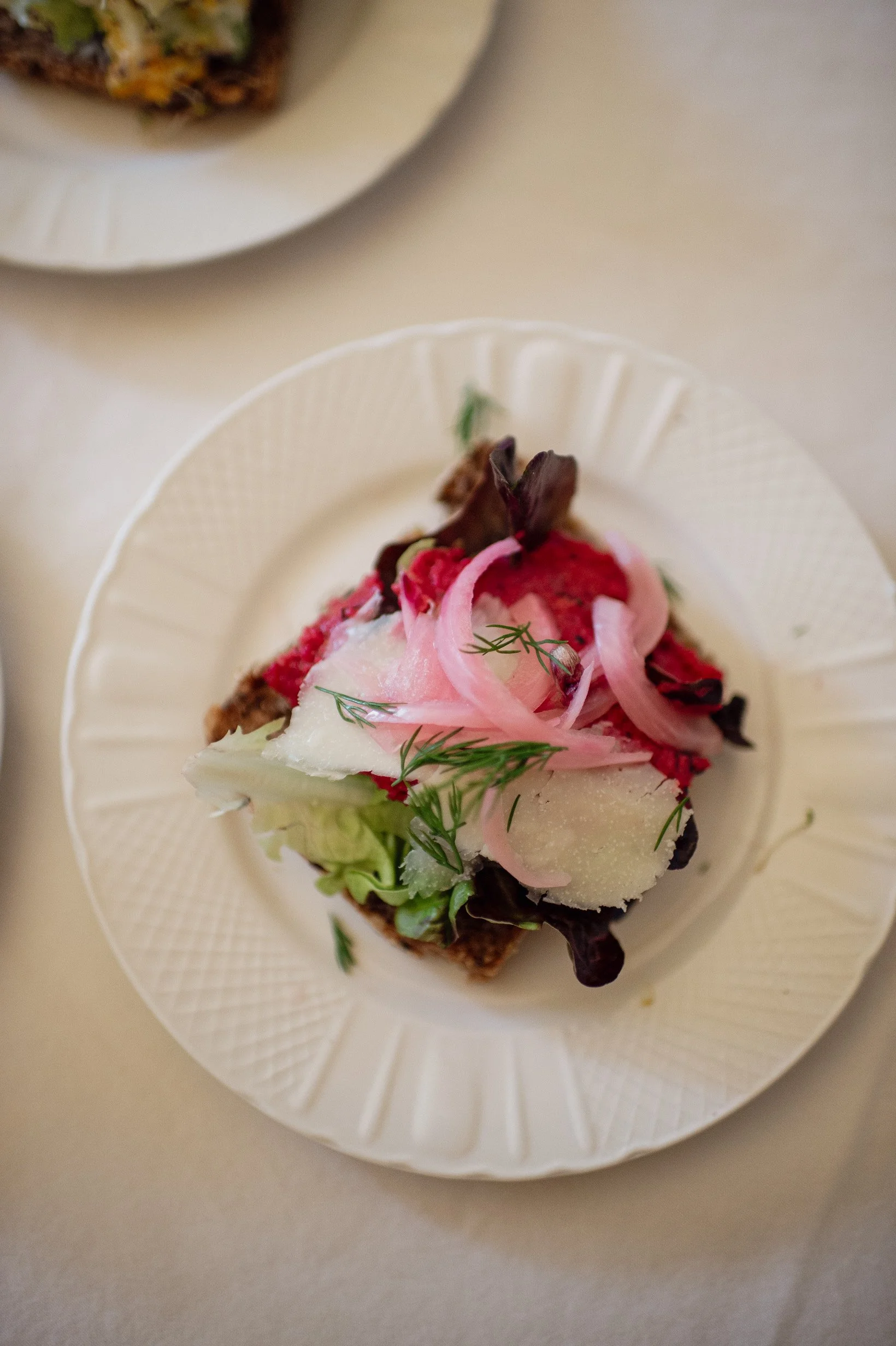
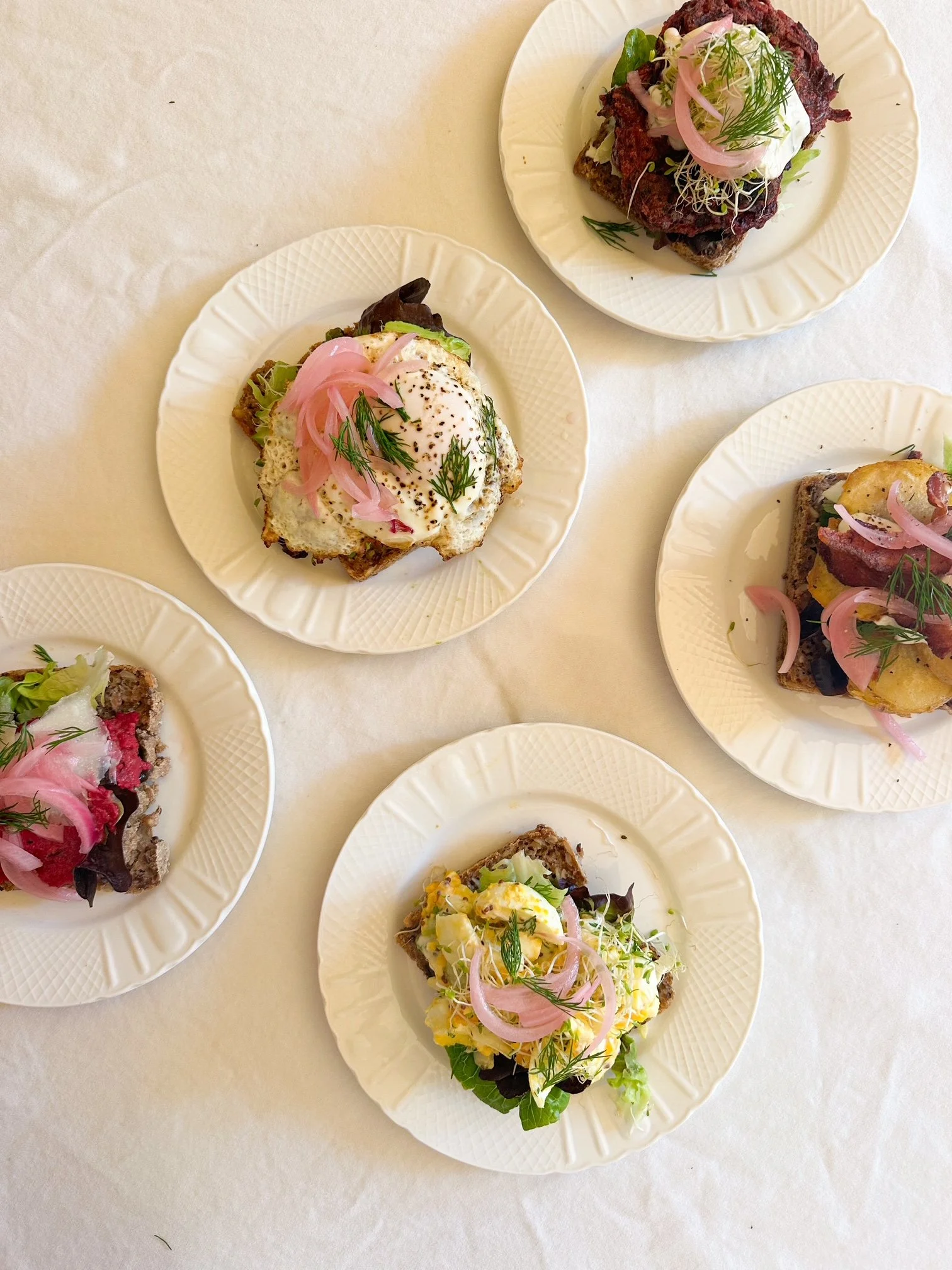
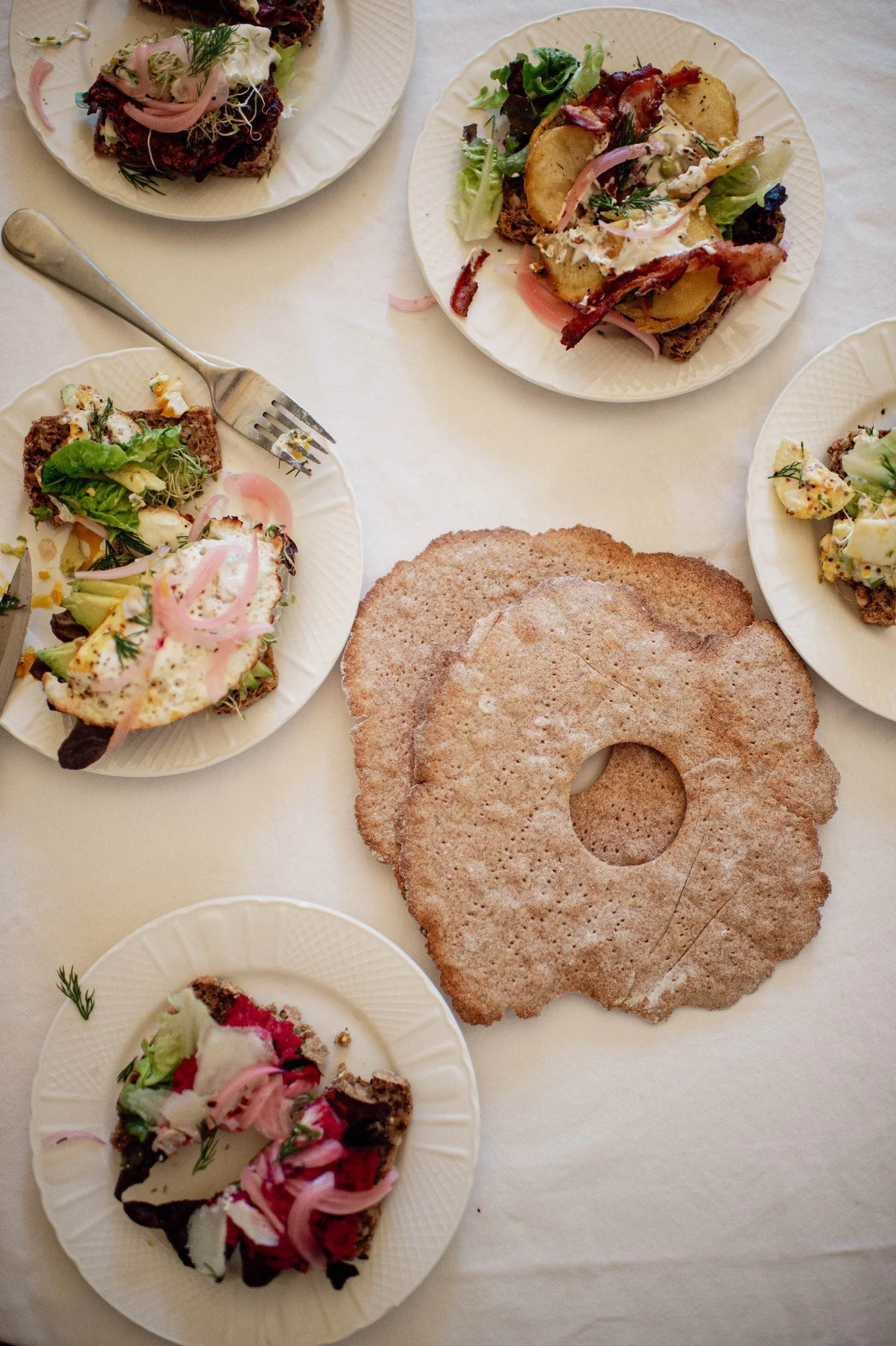
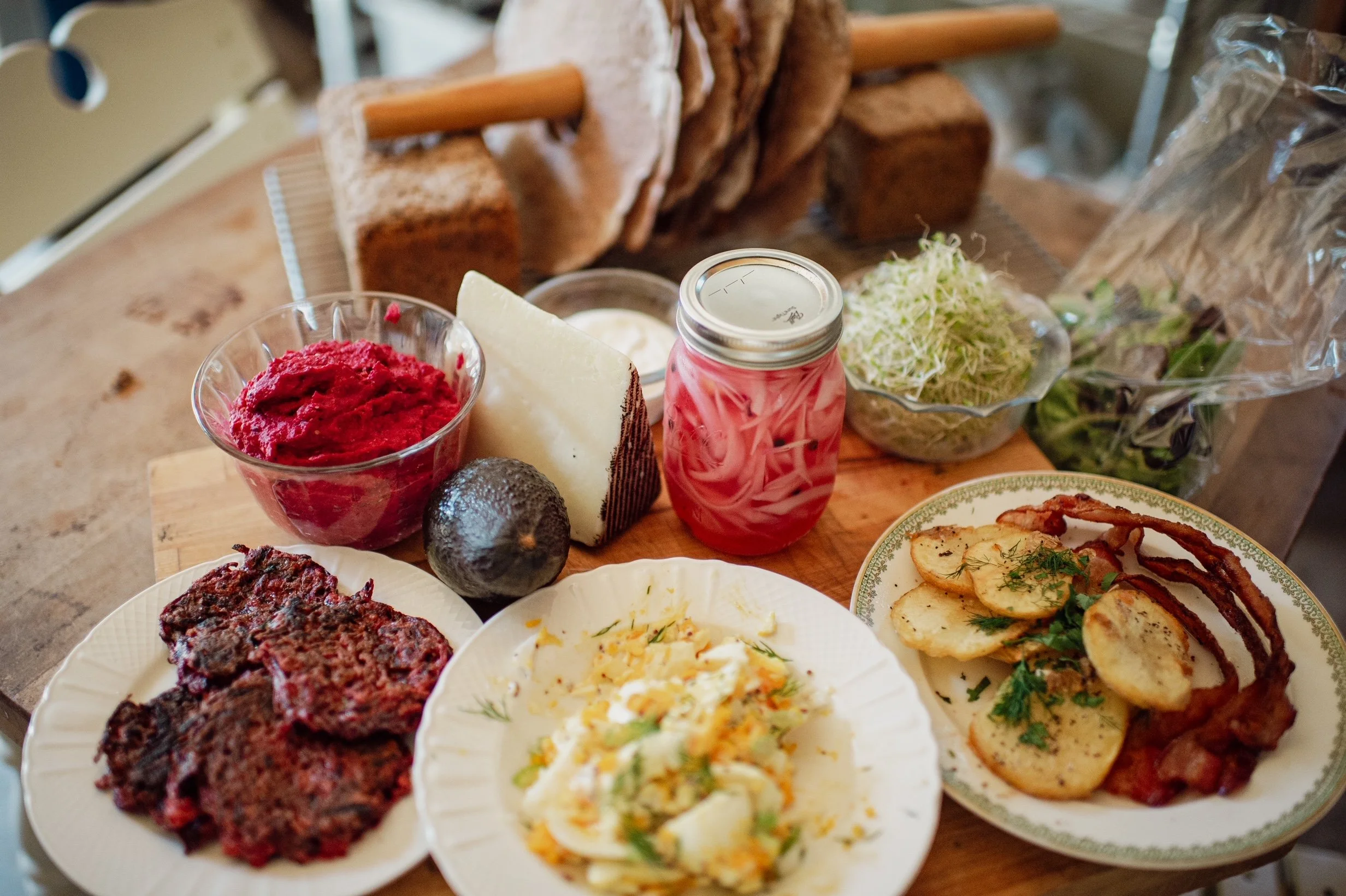
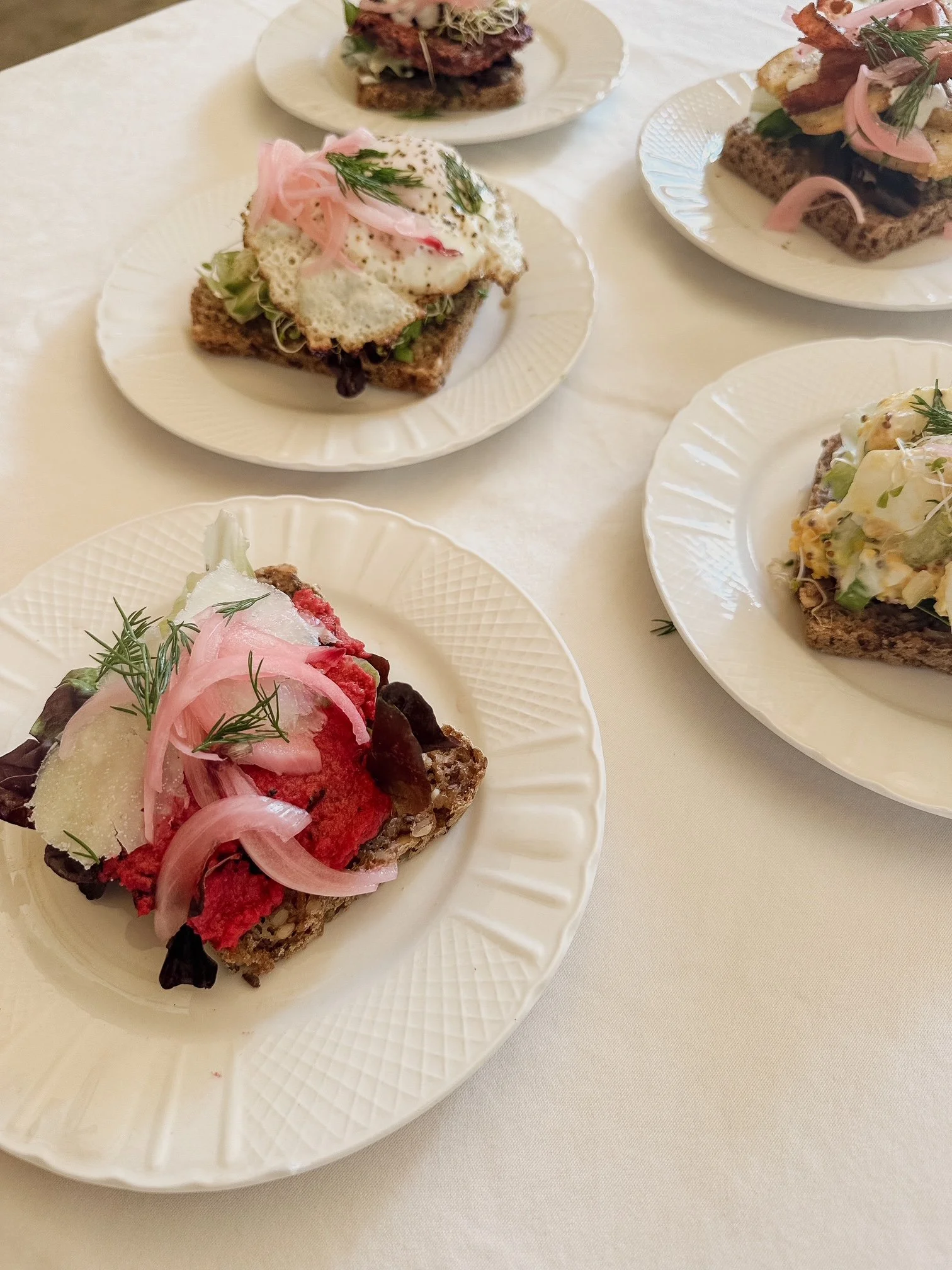
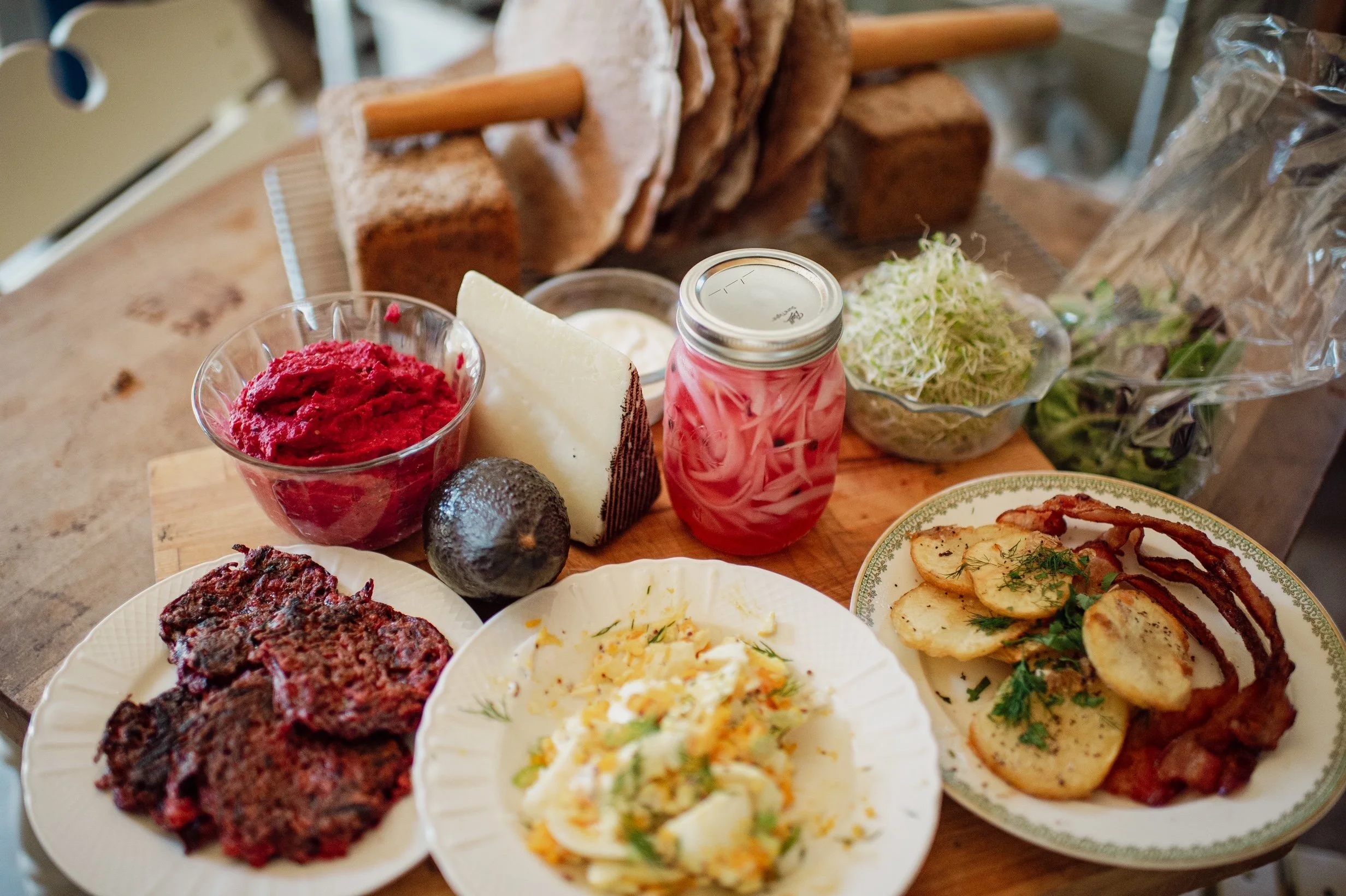
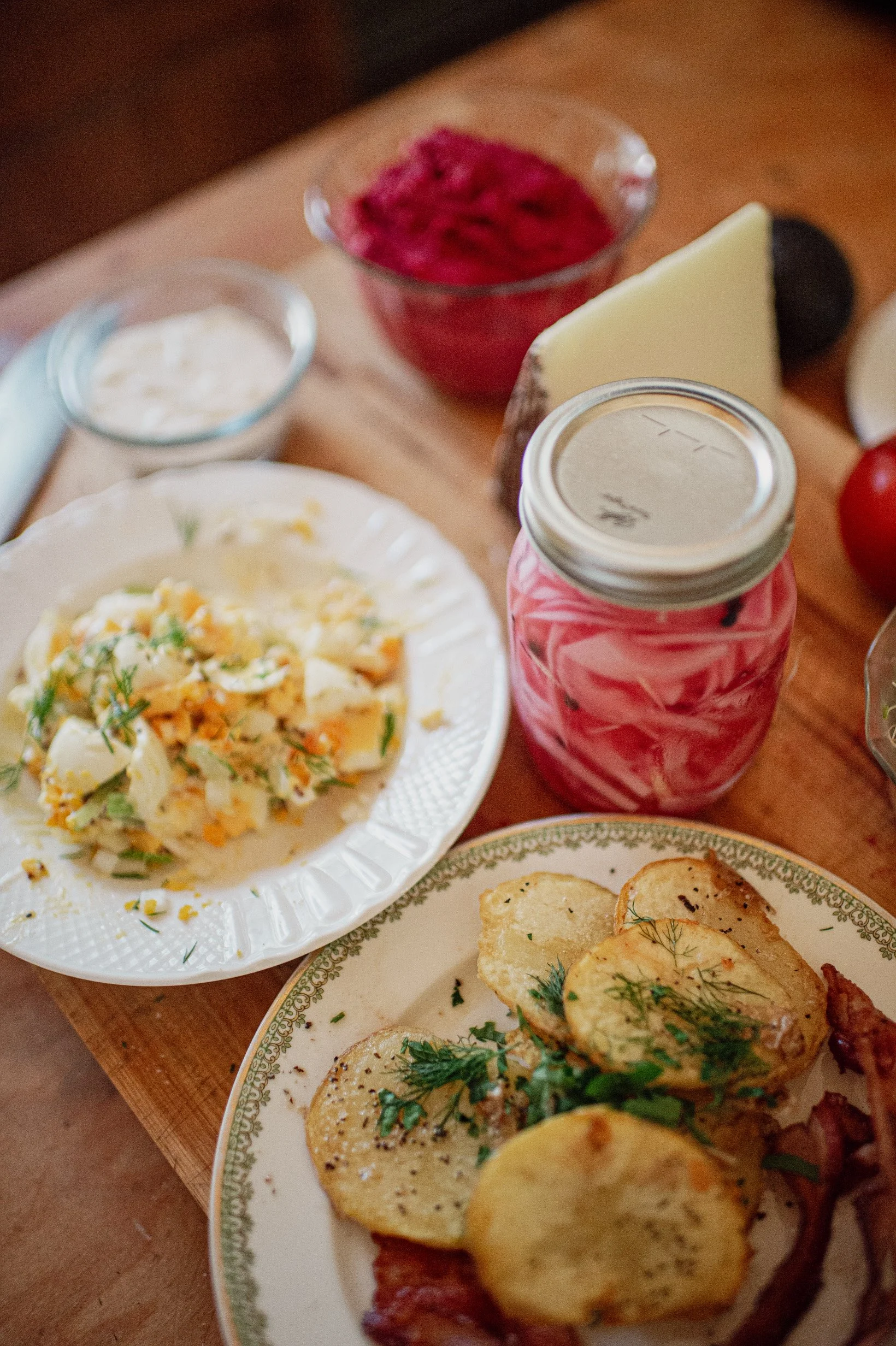
Now that we have our rye bread we can make Smorrebrod, the Danish open faced sandwich. You get to get as creative as you want here. I put together five ideas for inspiration.
They are:
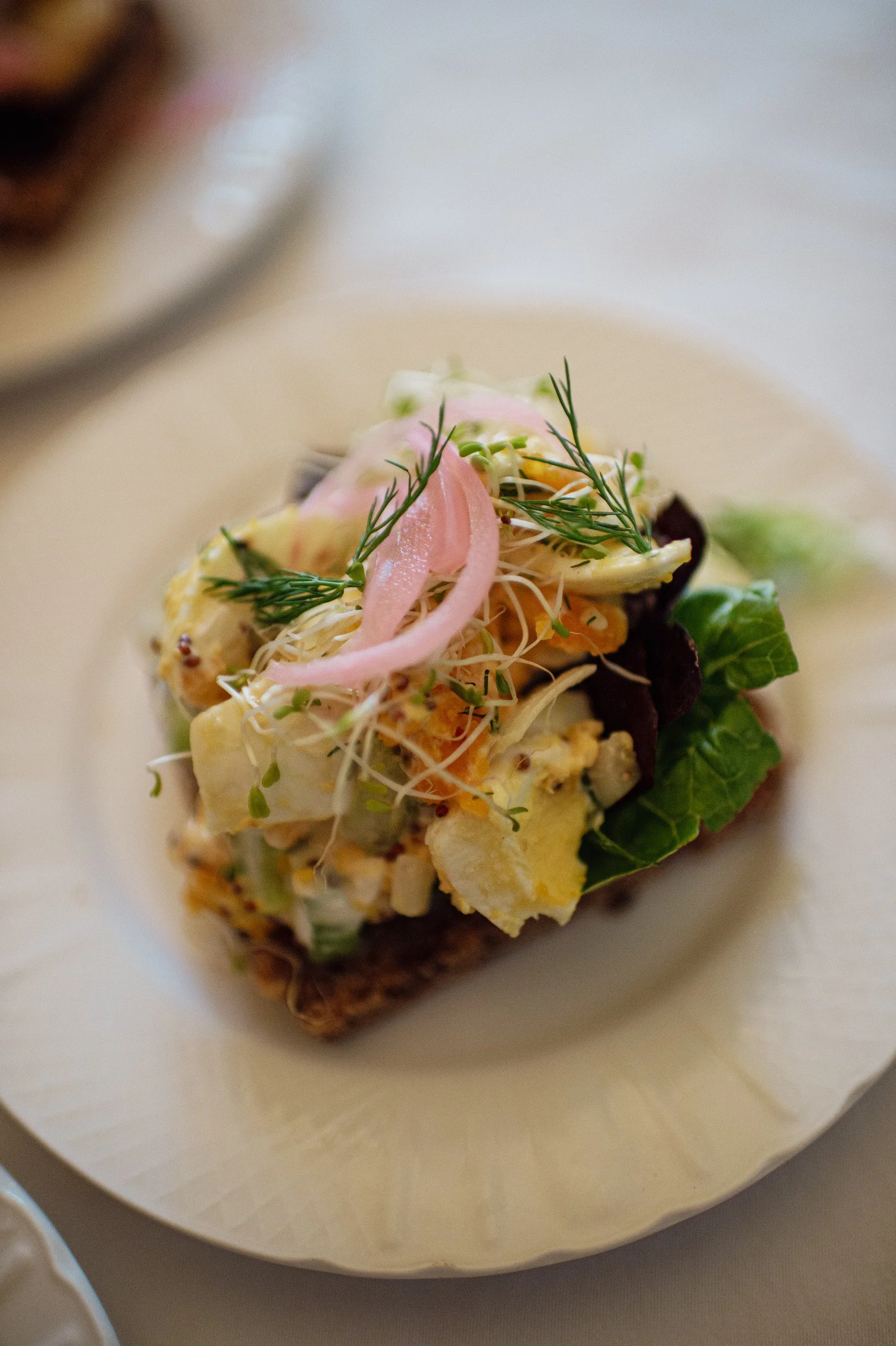
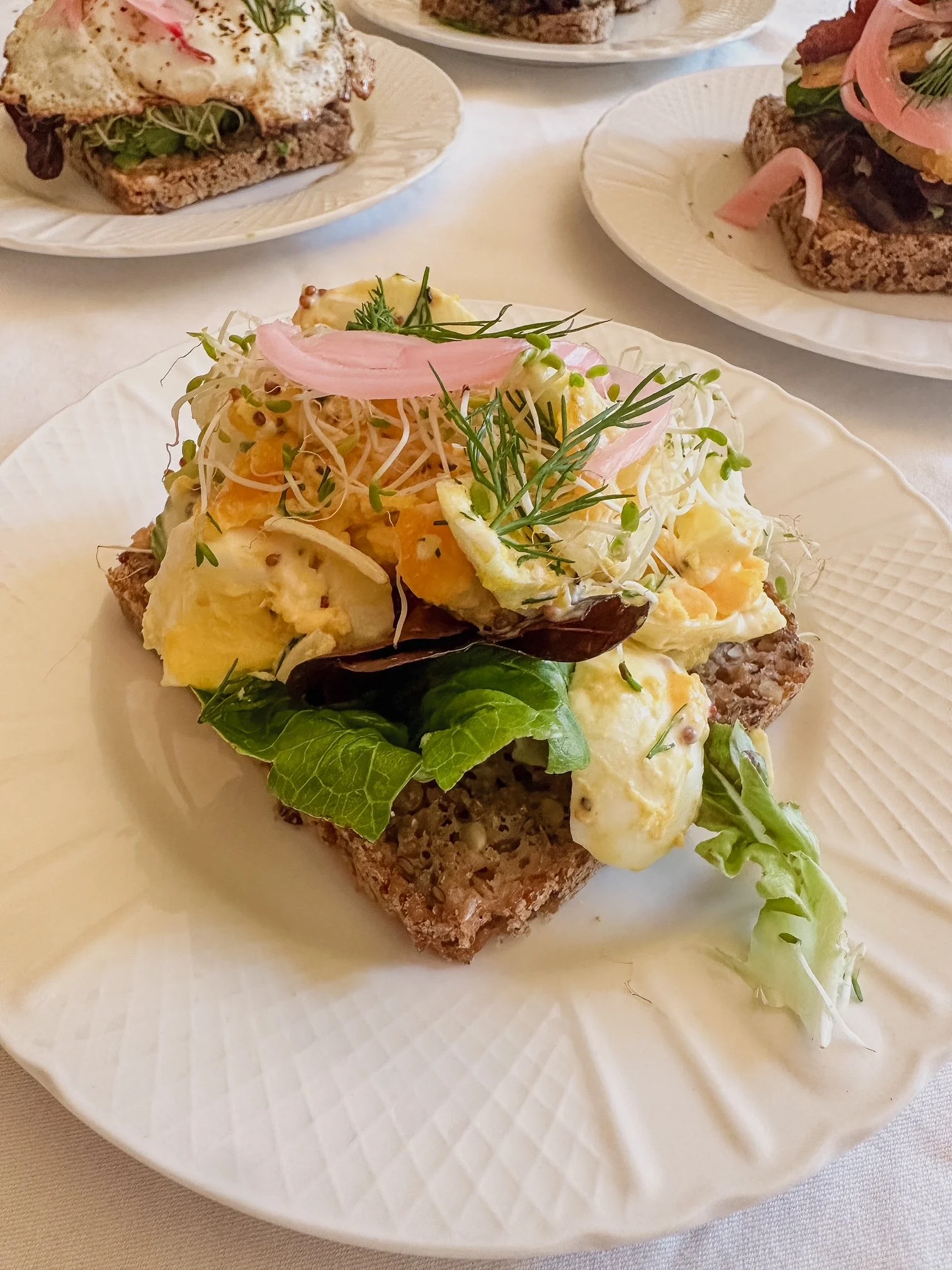
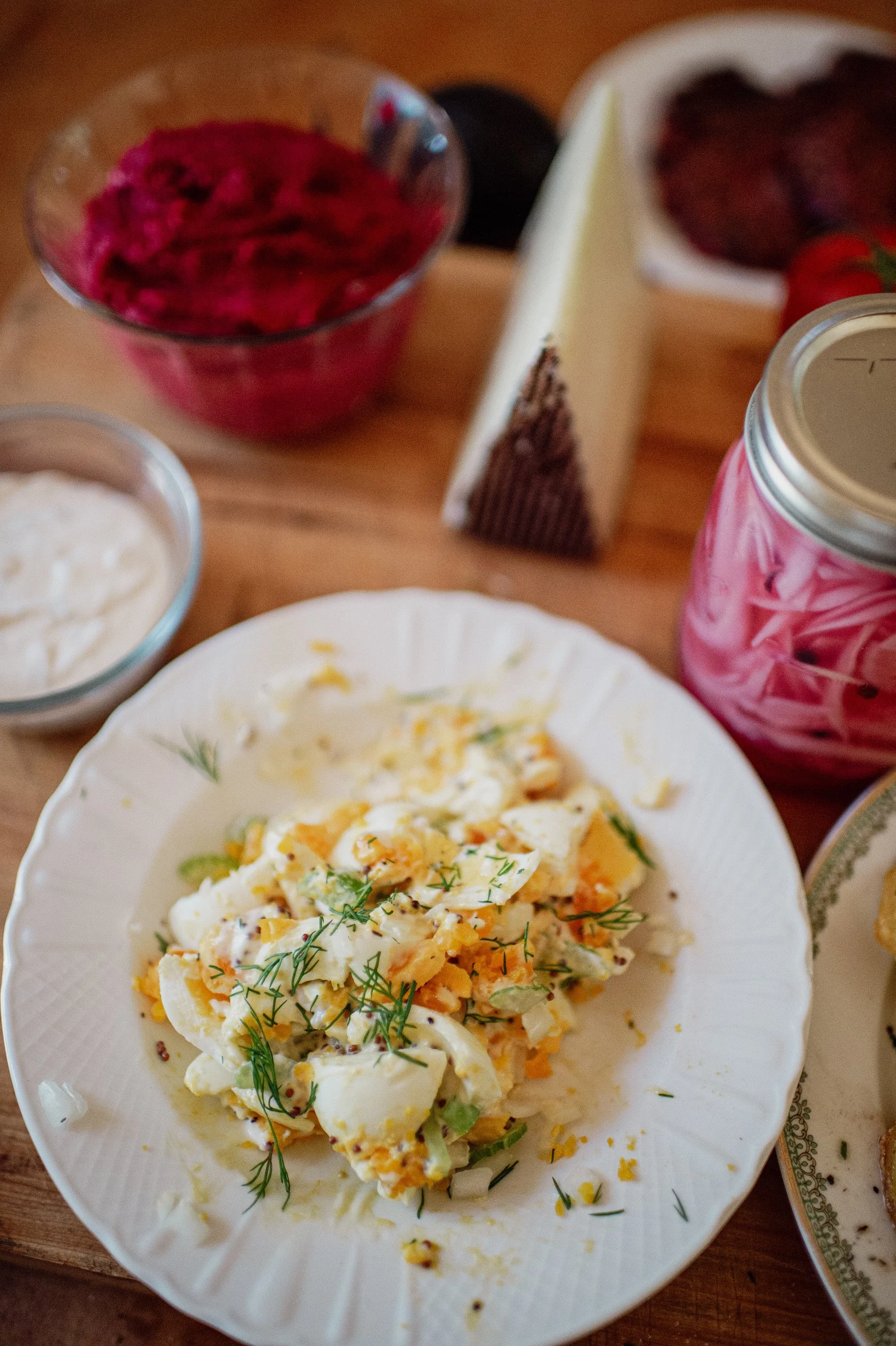
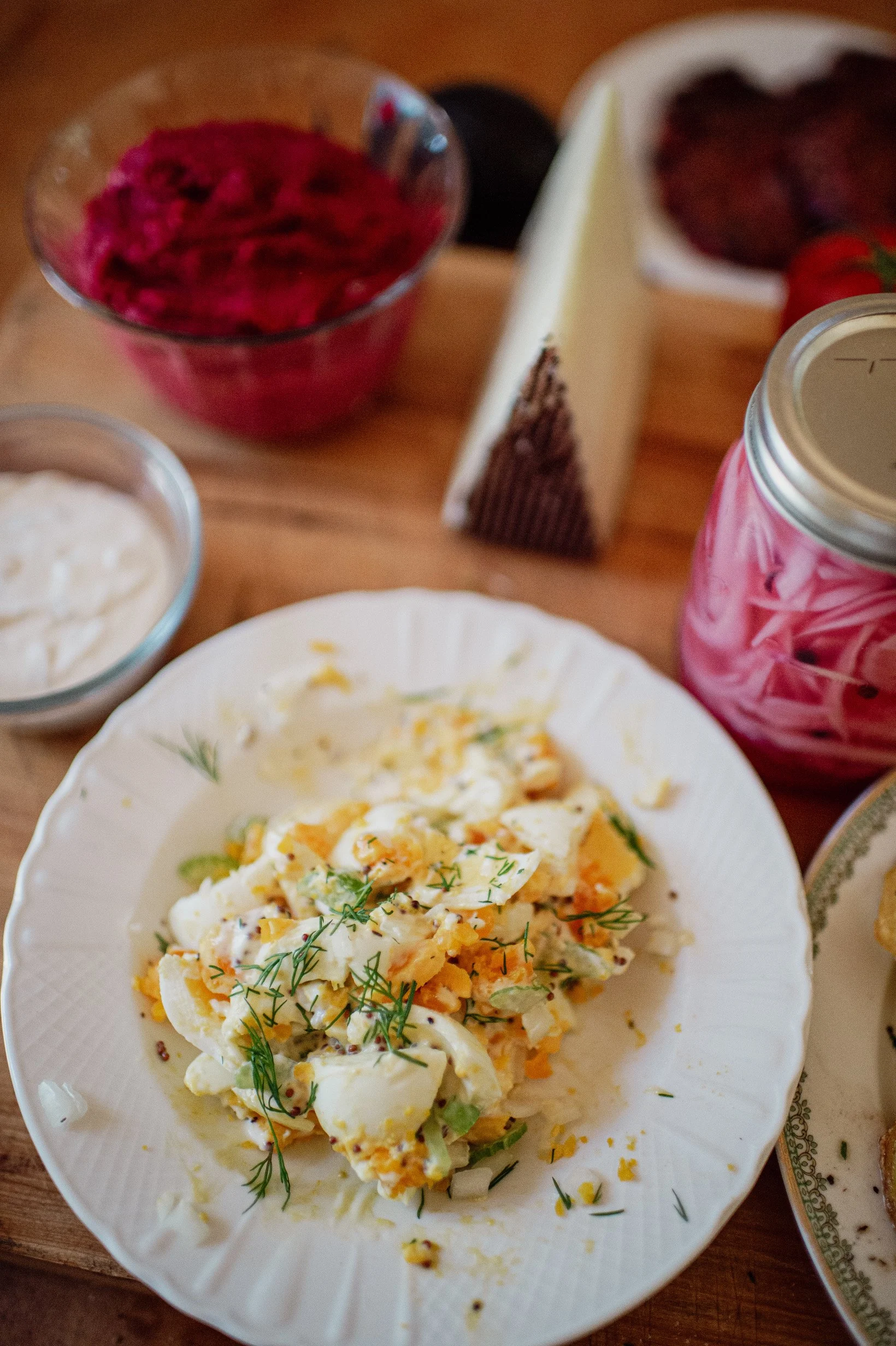
A simple Egg Salad. This is something we have made before and the link is here.
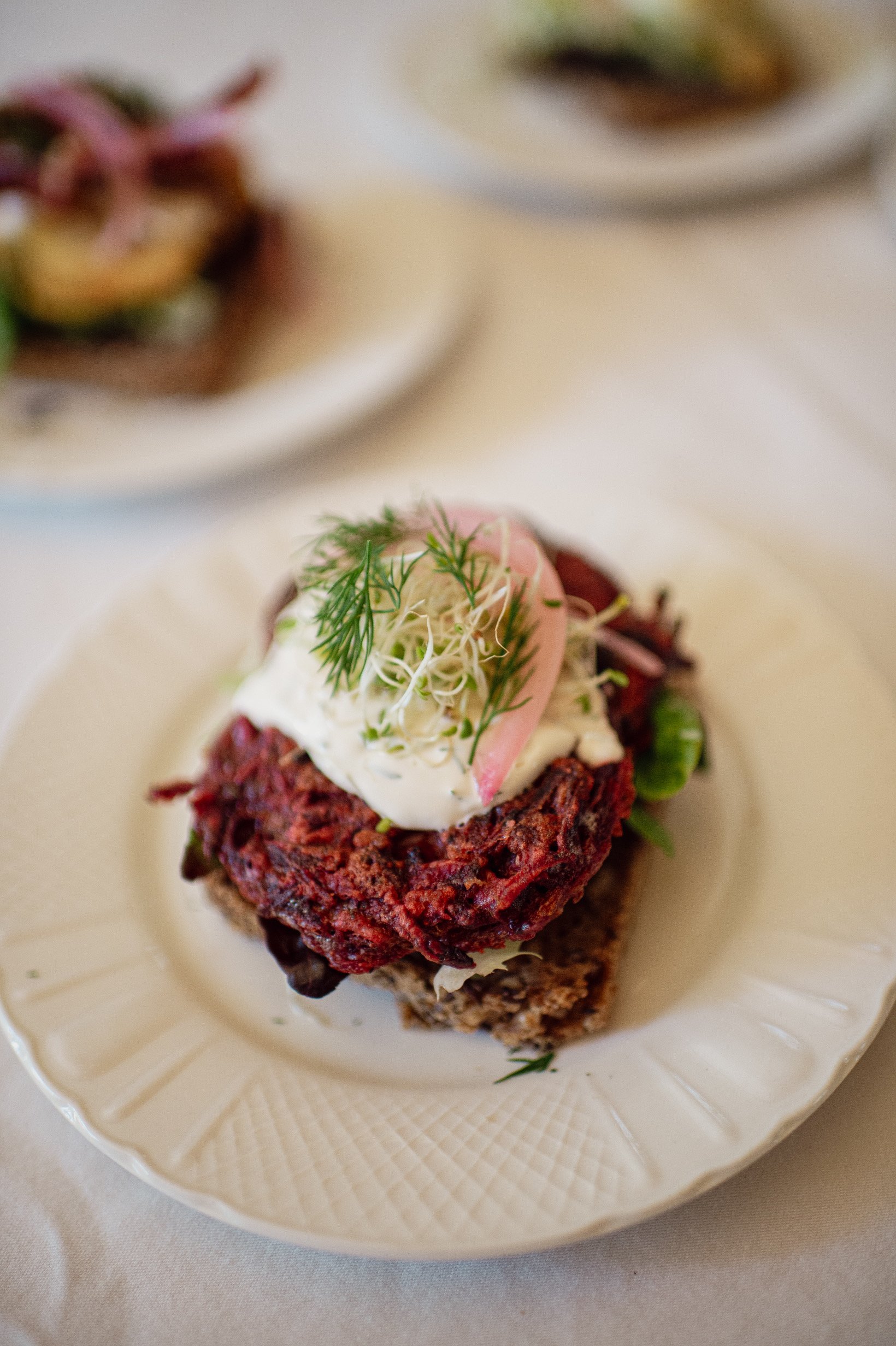
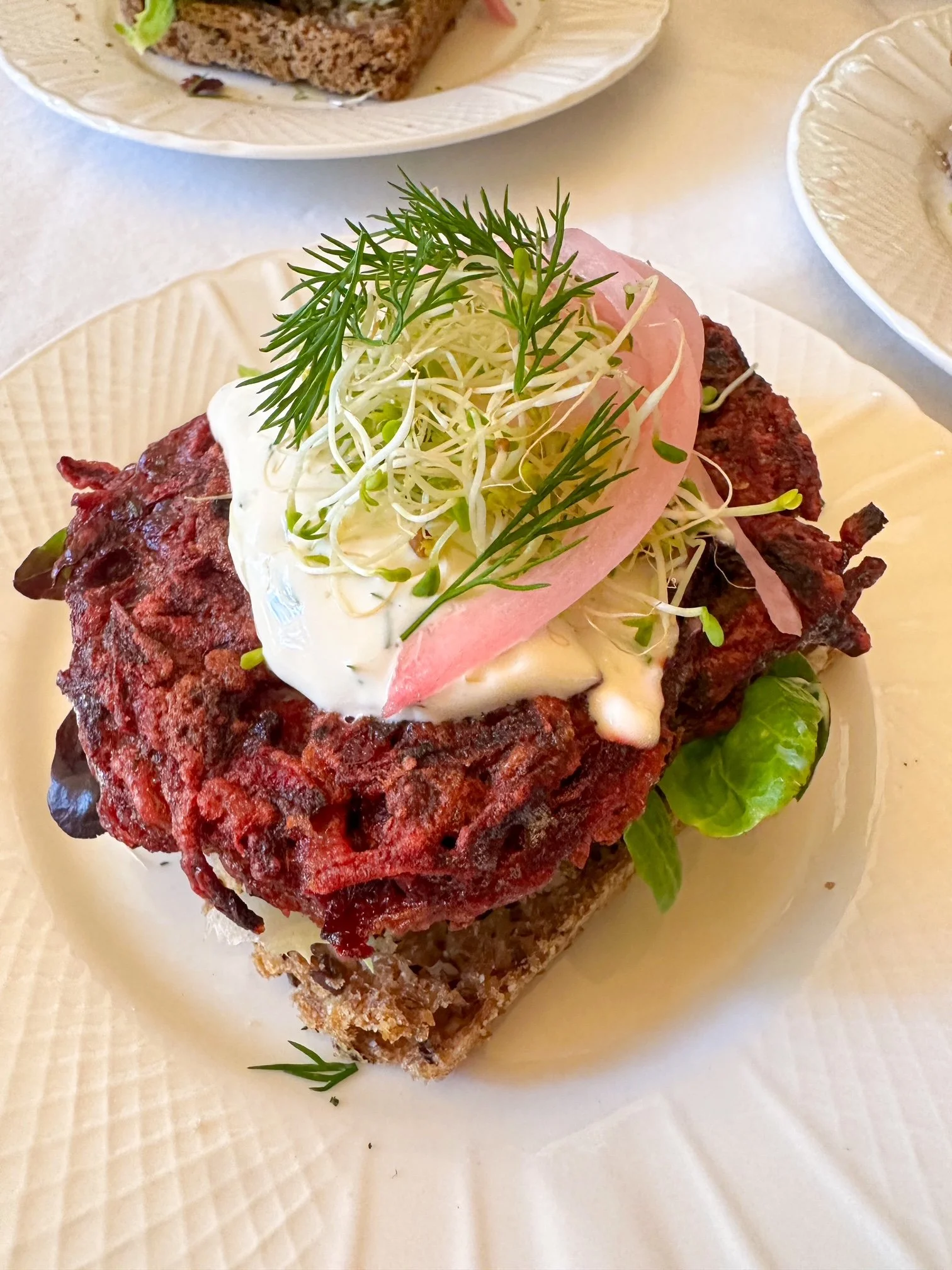
A Beet Pancake with yogurt sauce. I will give you the recipe and process for the beet pancake below. The yogurt sauce recipe can be found on the egg page here. You will have to scroll to find it by the baked egg dish.
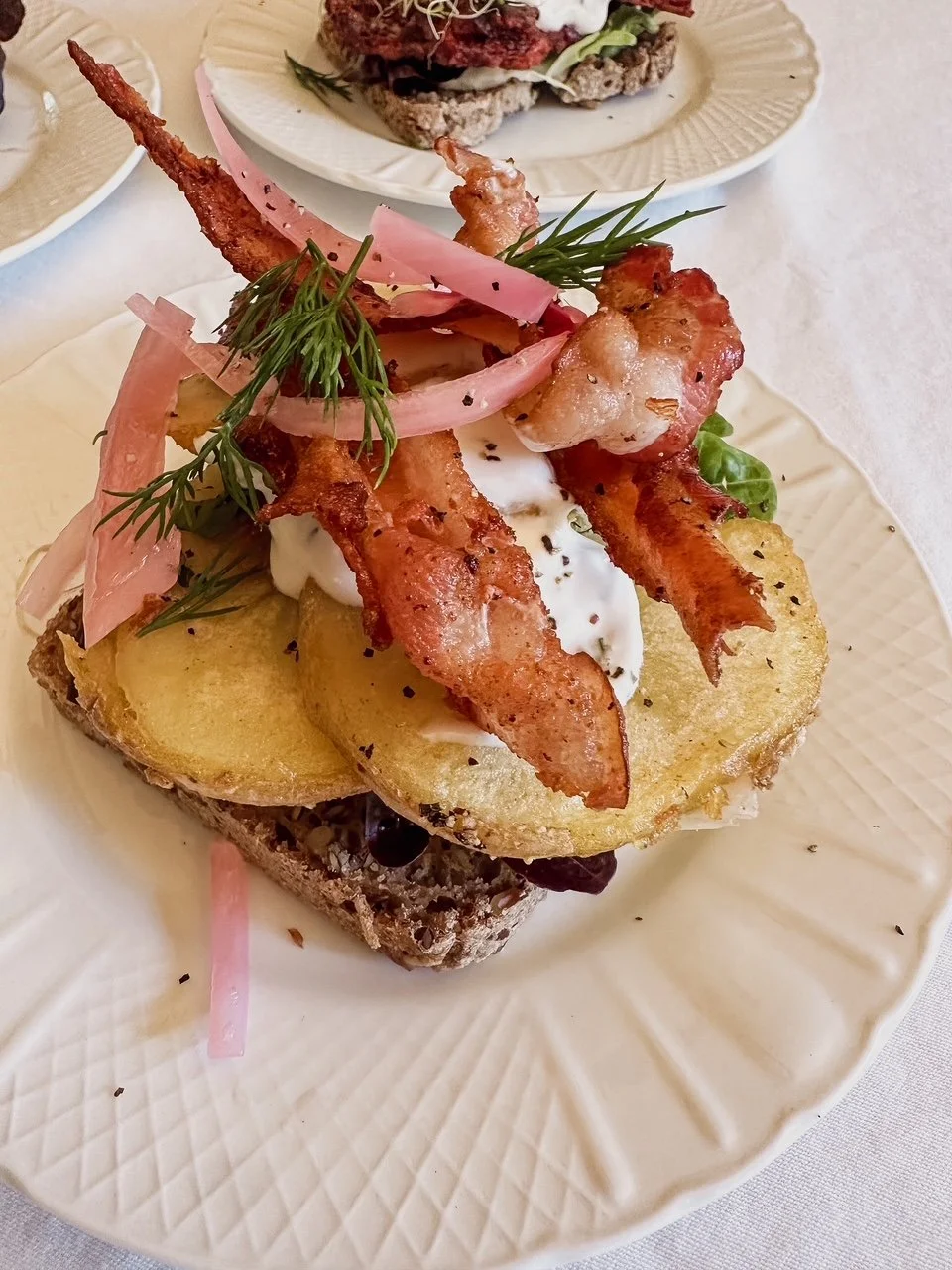
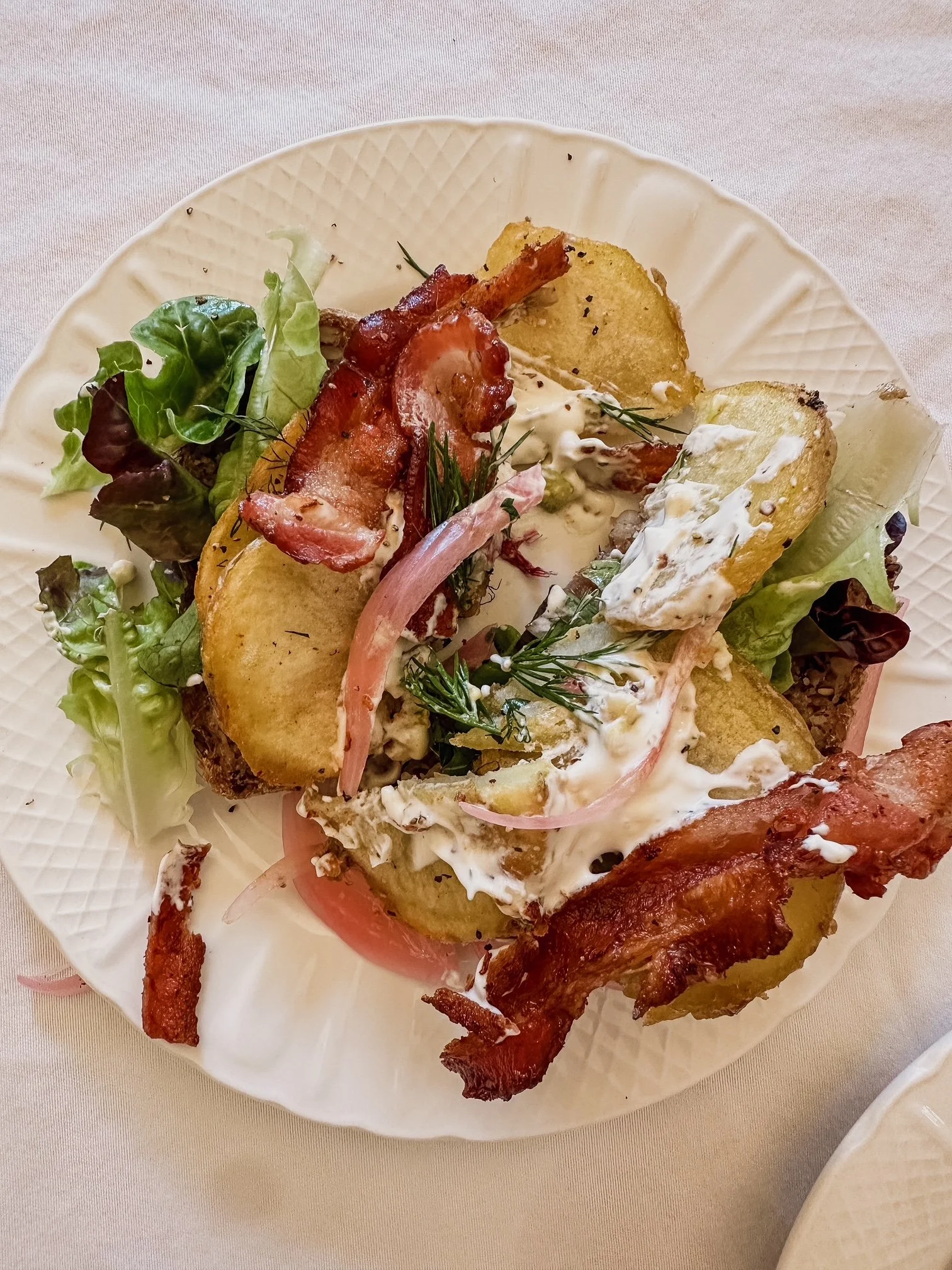
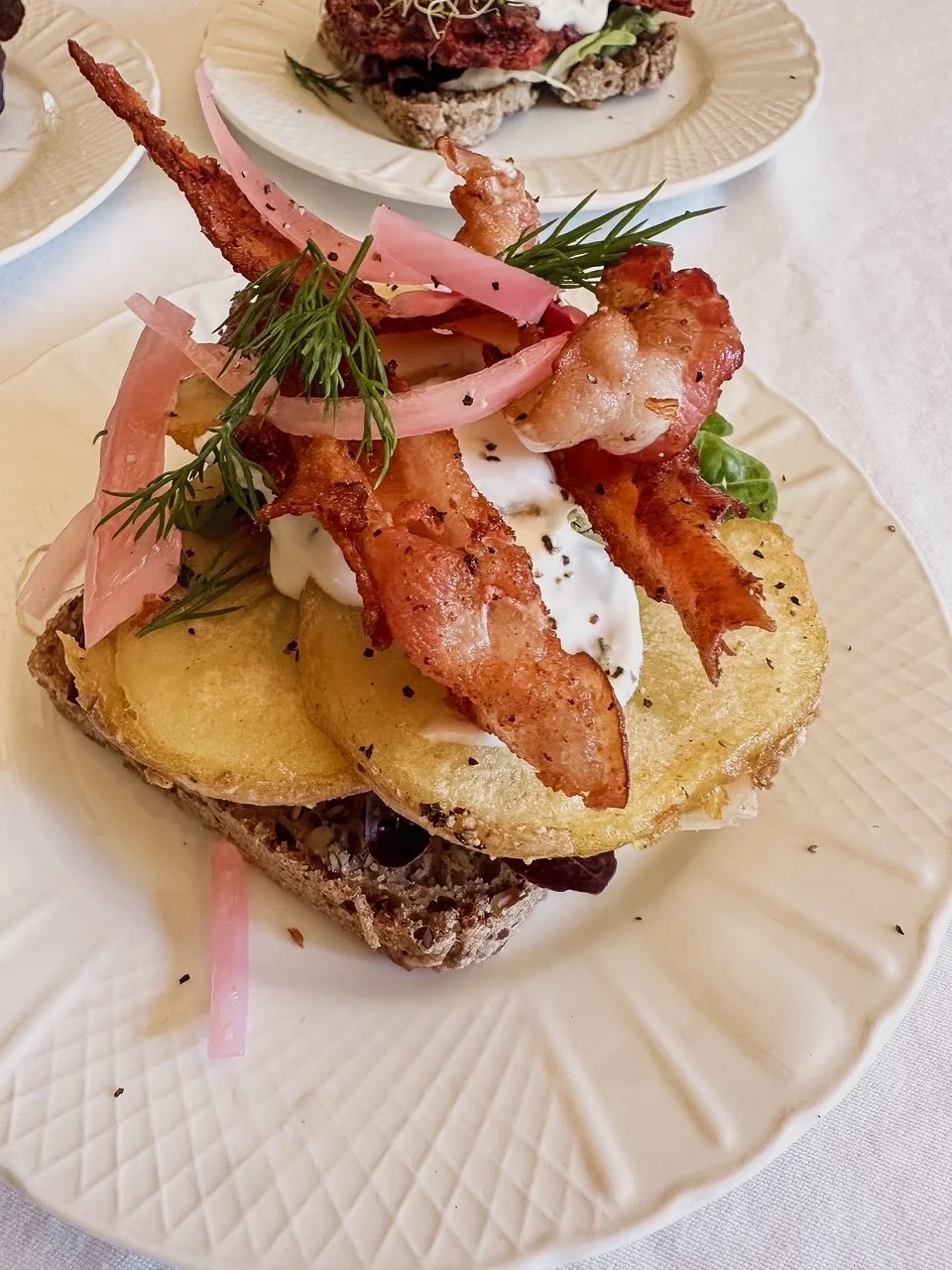
Potato and Bacon with Creamy Garlic Dill Sauce: Dill sauce below
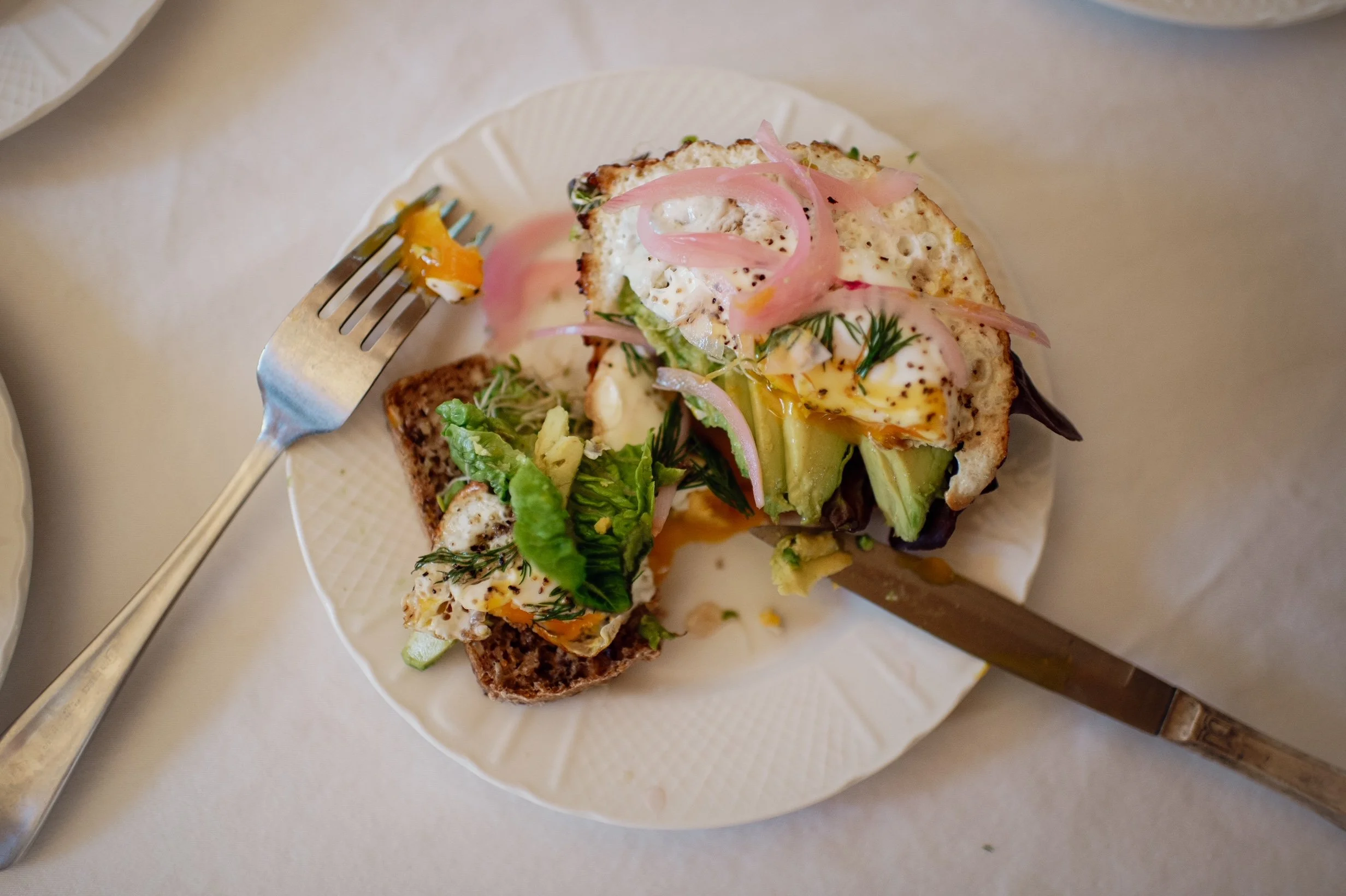
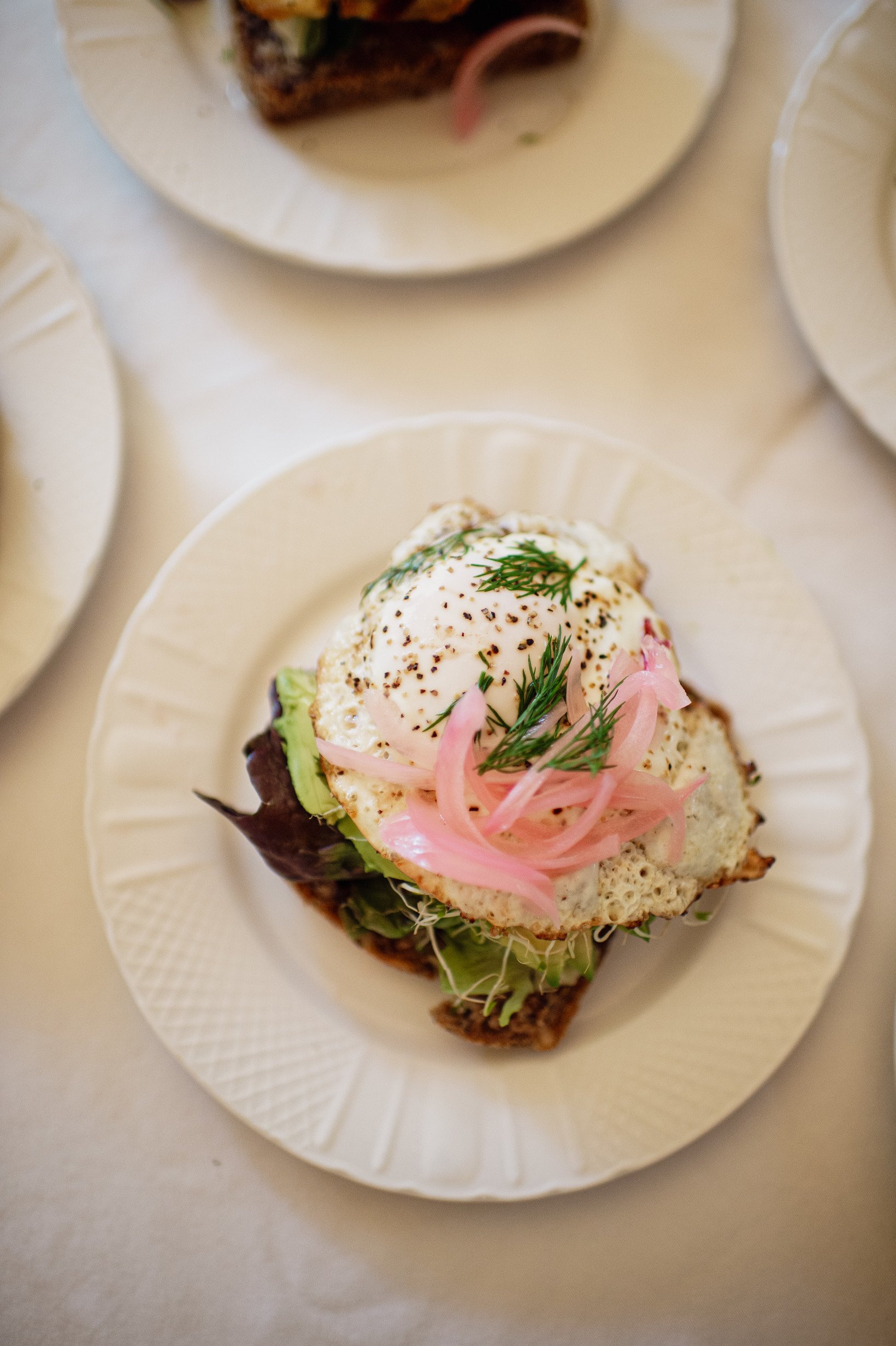
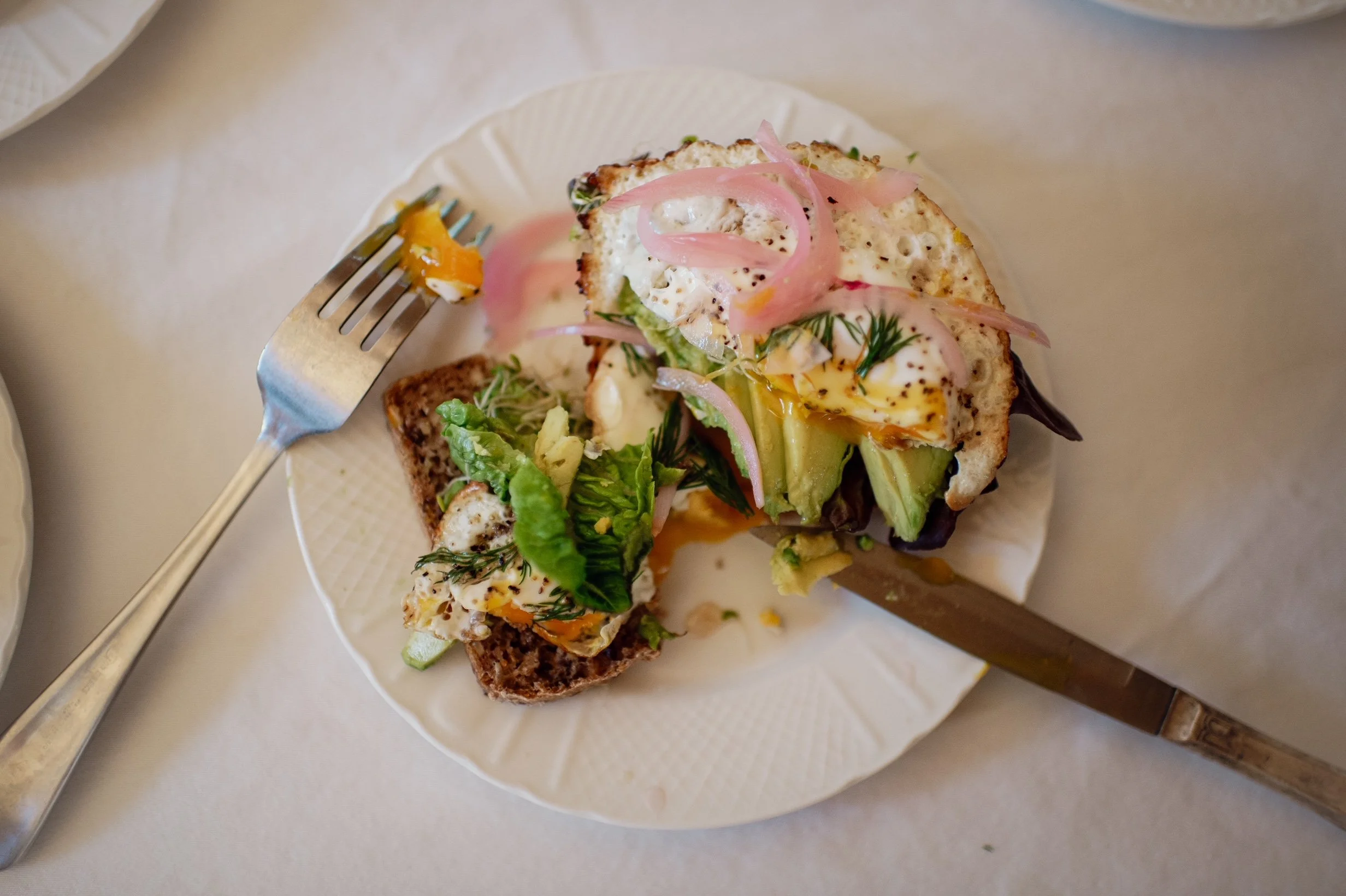
Avocado and Fried or Jammy Egg
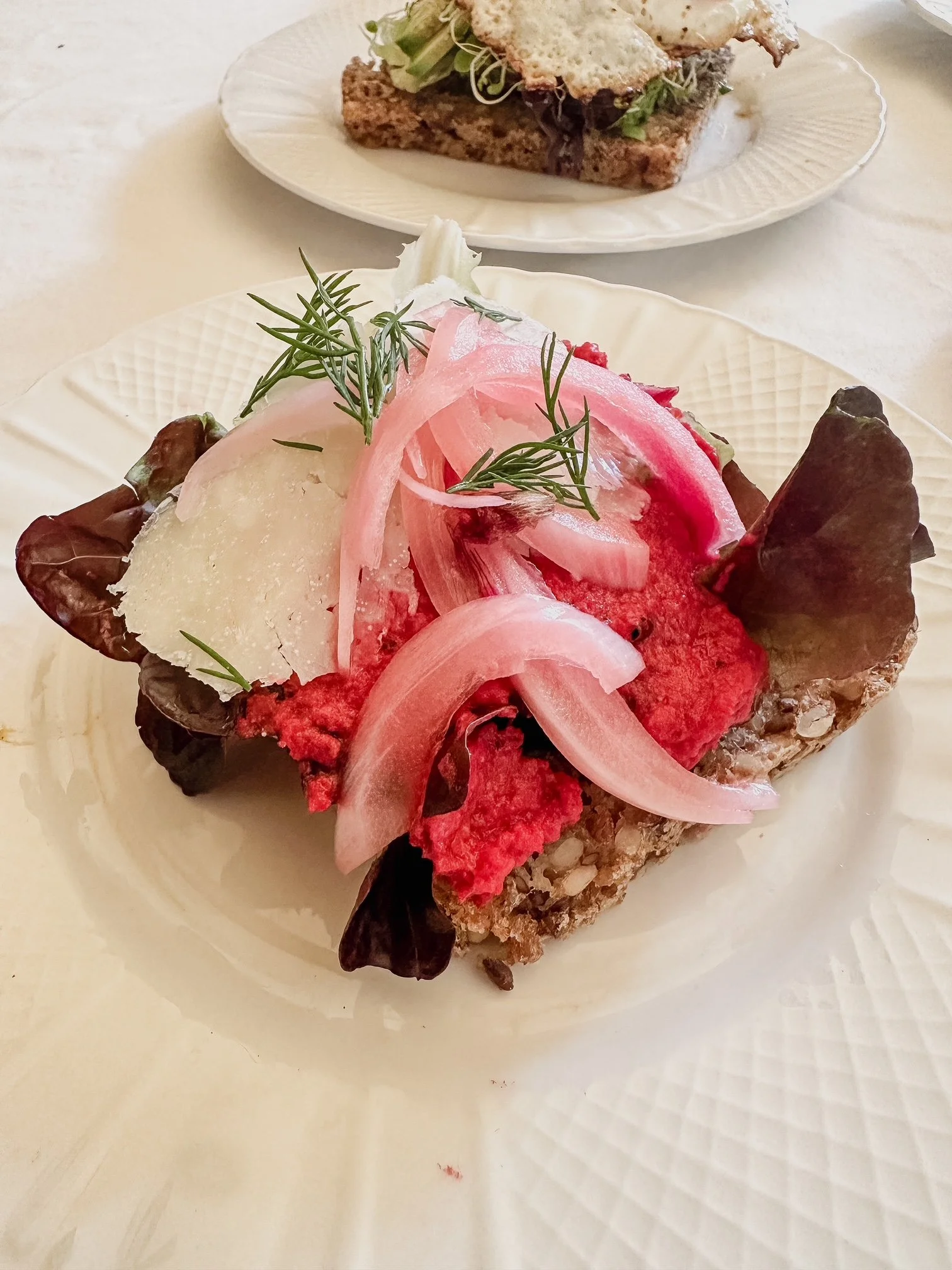
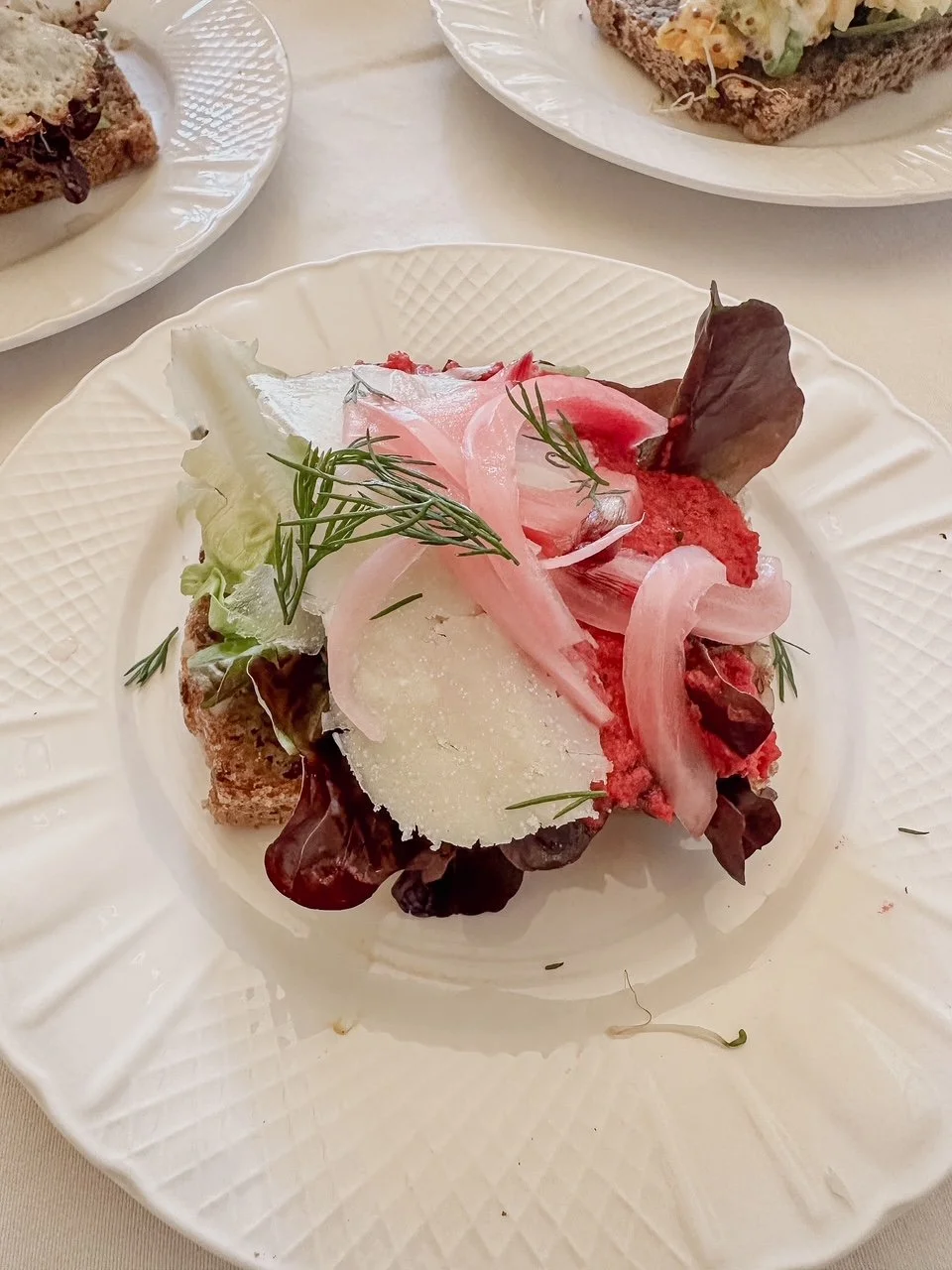
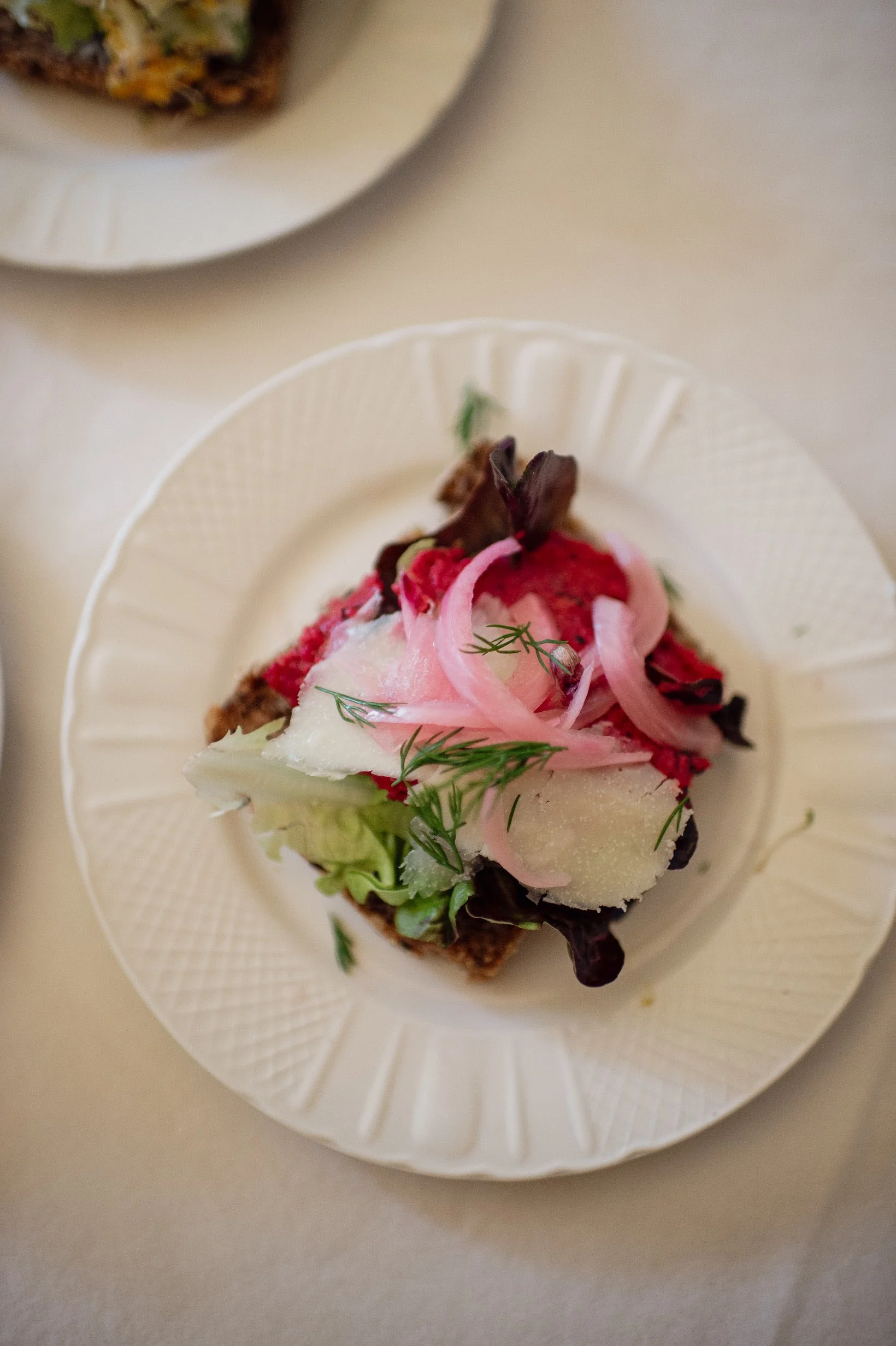
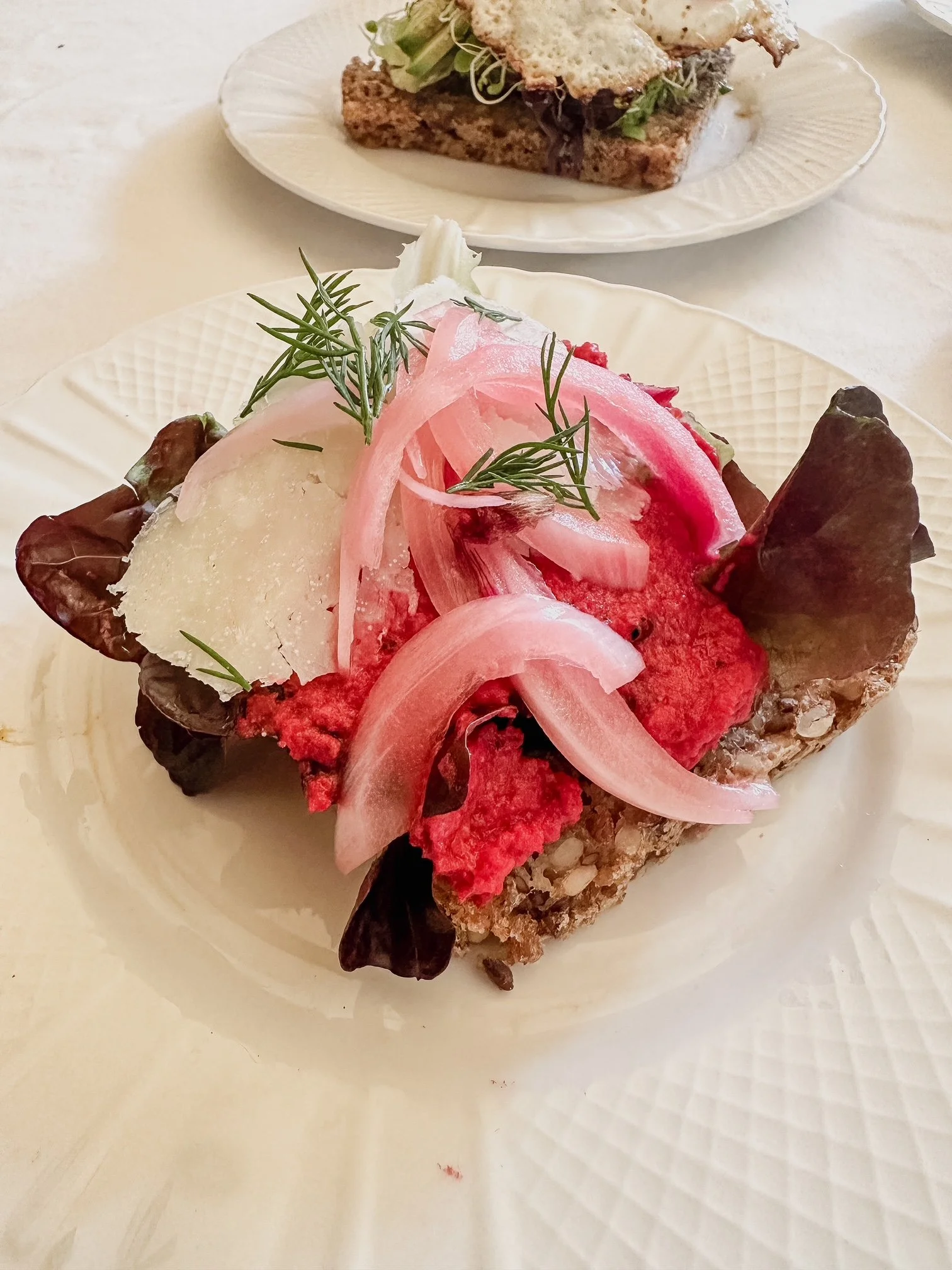
Beet Hummus with Sprouts and Manchego: You can use feta too. Beet Hummus recipe below
NOTE: I have put the pickled onions on top of each and every sandwich. Recipe can be found here. Also, you can fry up some shallots or make a thin sliced version of the buttermilk onion rings to top these open face sandwiches with too. I imagine they would be very tasty on top of the Beet Pancake version or the Potato and Bacon version.
ALSO: Fish is a very common topping: salmon, pickled herring, canned fish.
THE BASIC STACK GOES AS FOLLOWS: TOAST THE RYE BREAD, BUTTER IT, PLACE ON A FEW CRISPY LETTUCE LEAVES, THEN YOUR TOPPINGS, FOLLOWED BY SPROUTS, PICKLED ONIONS AND DILL. SALT AND PEPPER TO TASTE.
〰️
〰️
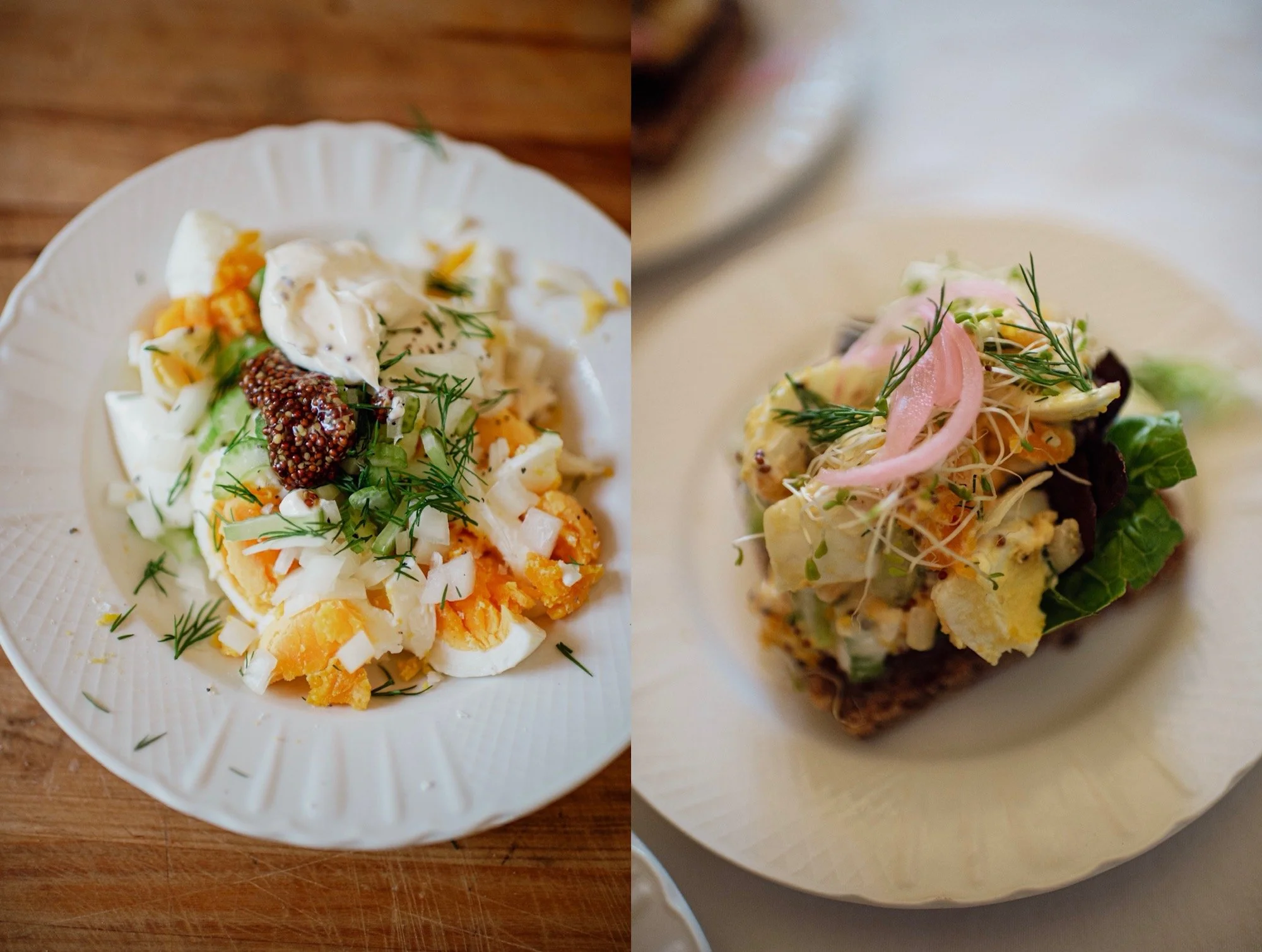
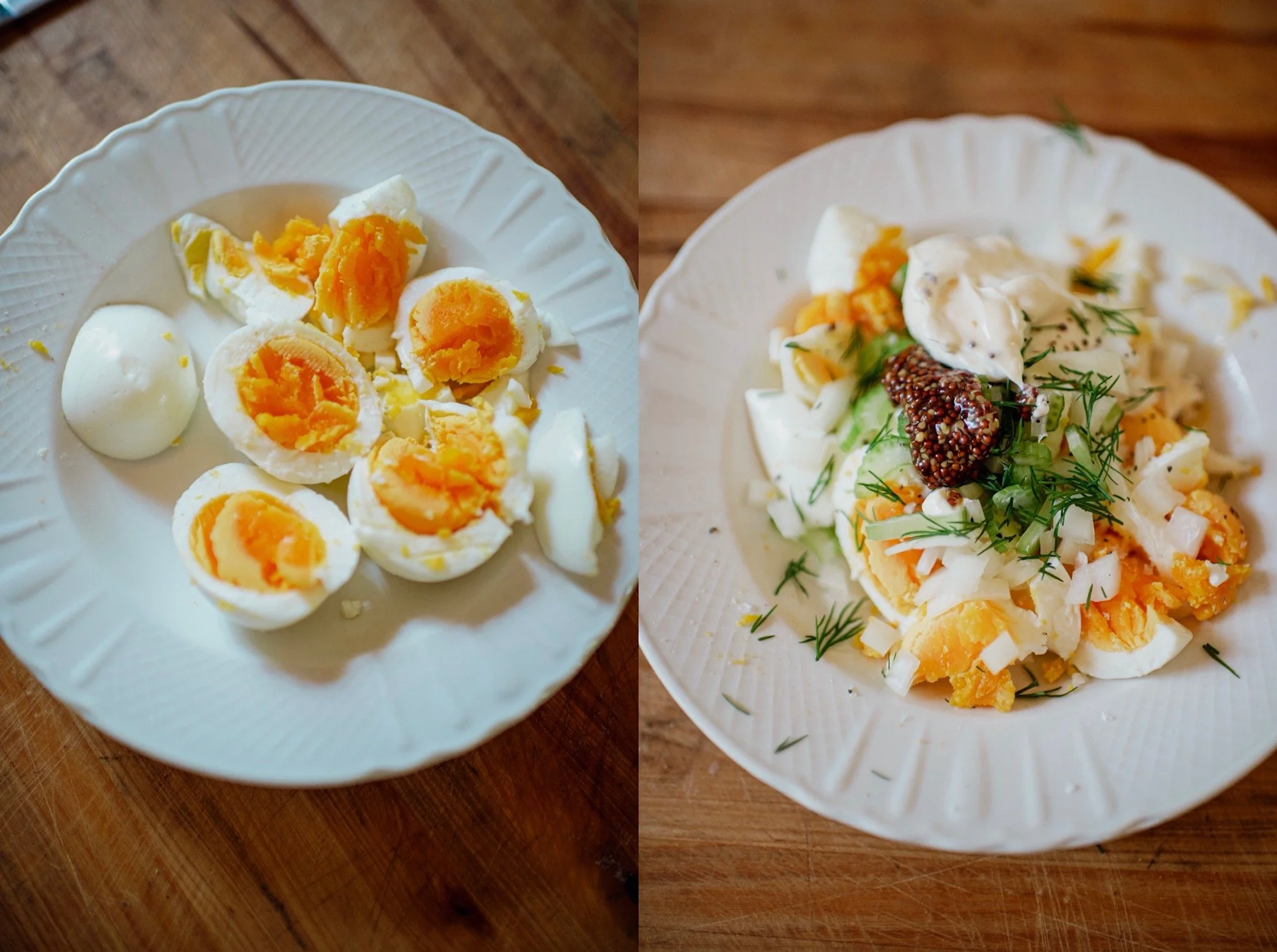
The egg salad is made with hard boiled eggs, a bit of chopped onion and celery, chopped dill and chives, salt and pepper, a dab of mustard, and mayonnaise to desired consistency.
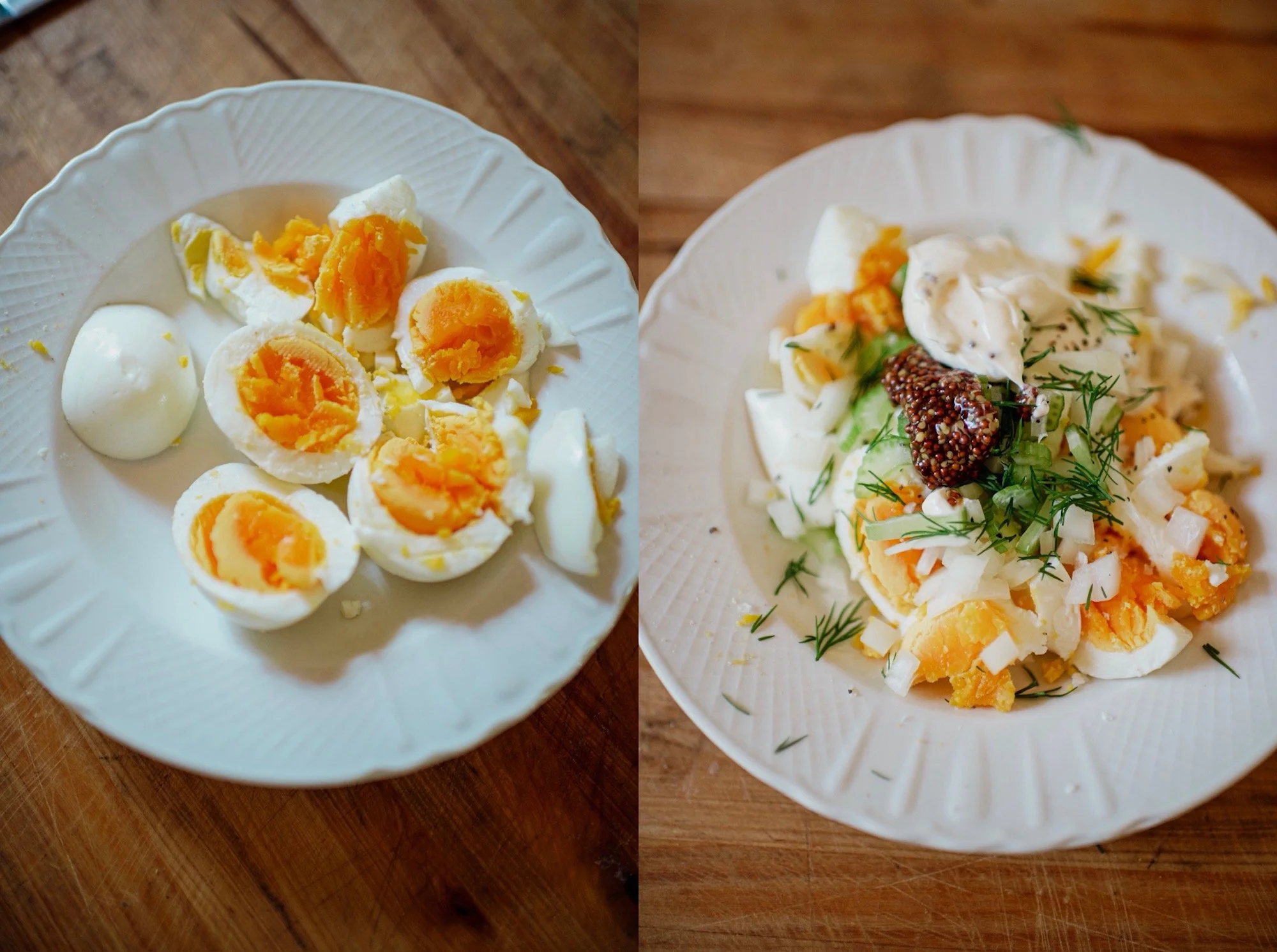
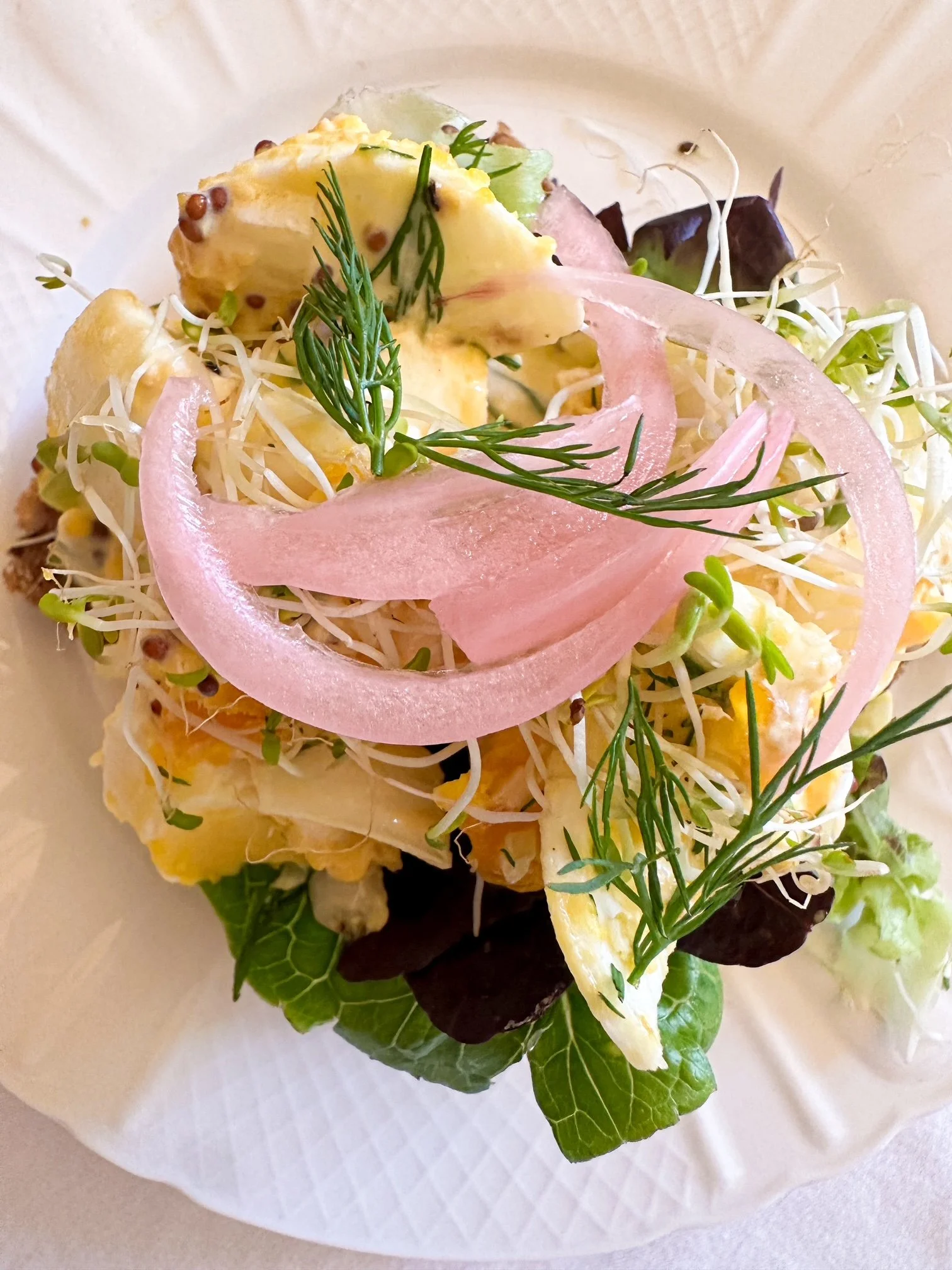
〰️
〰️
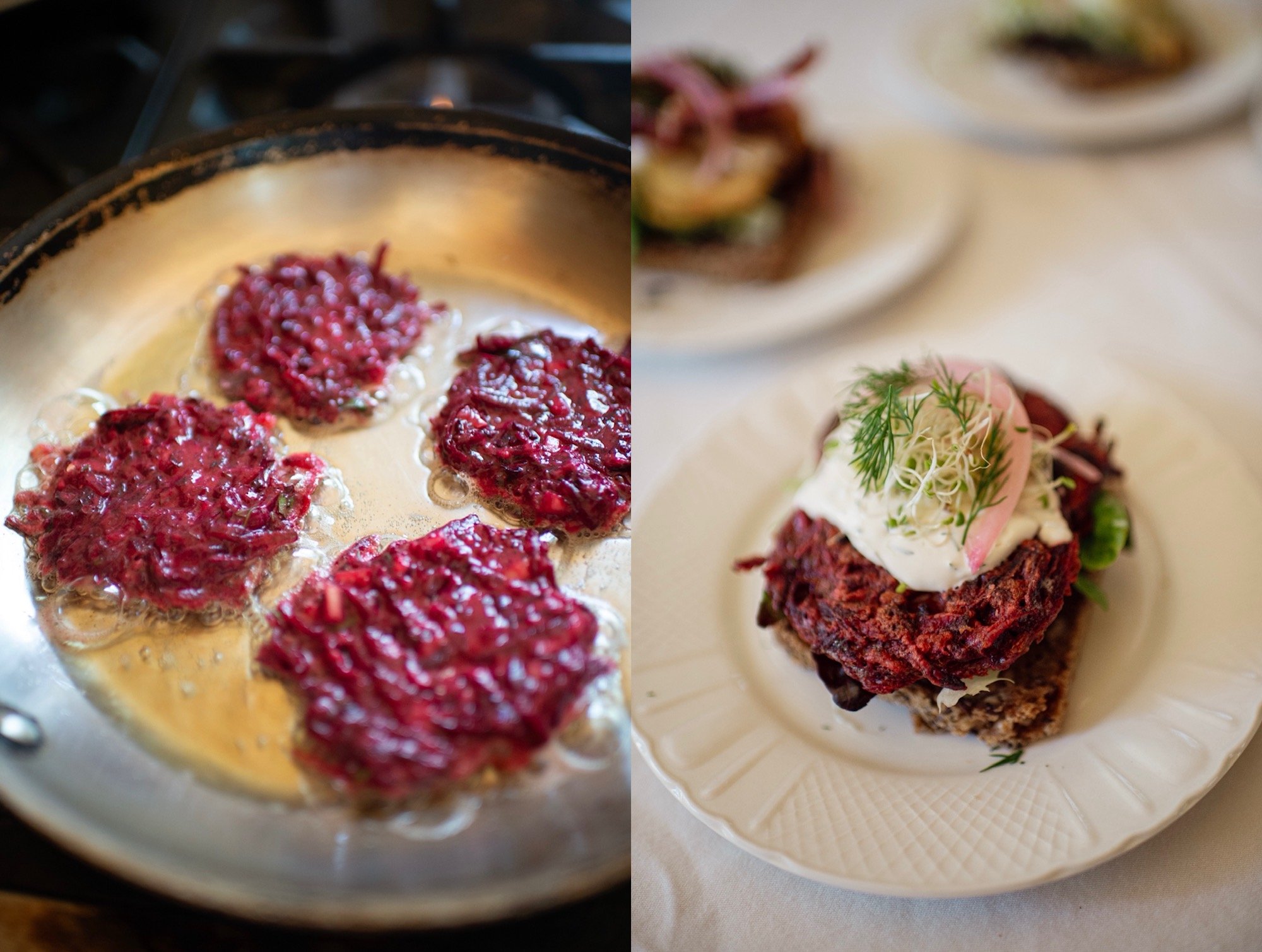
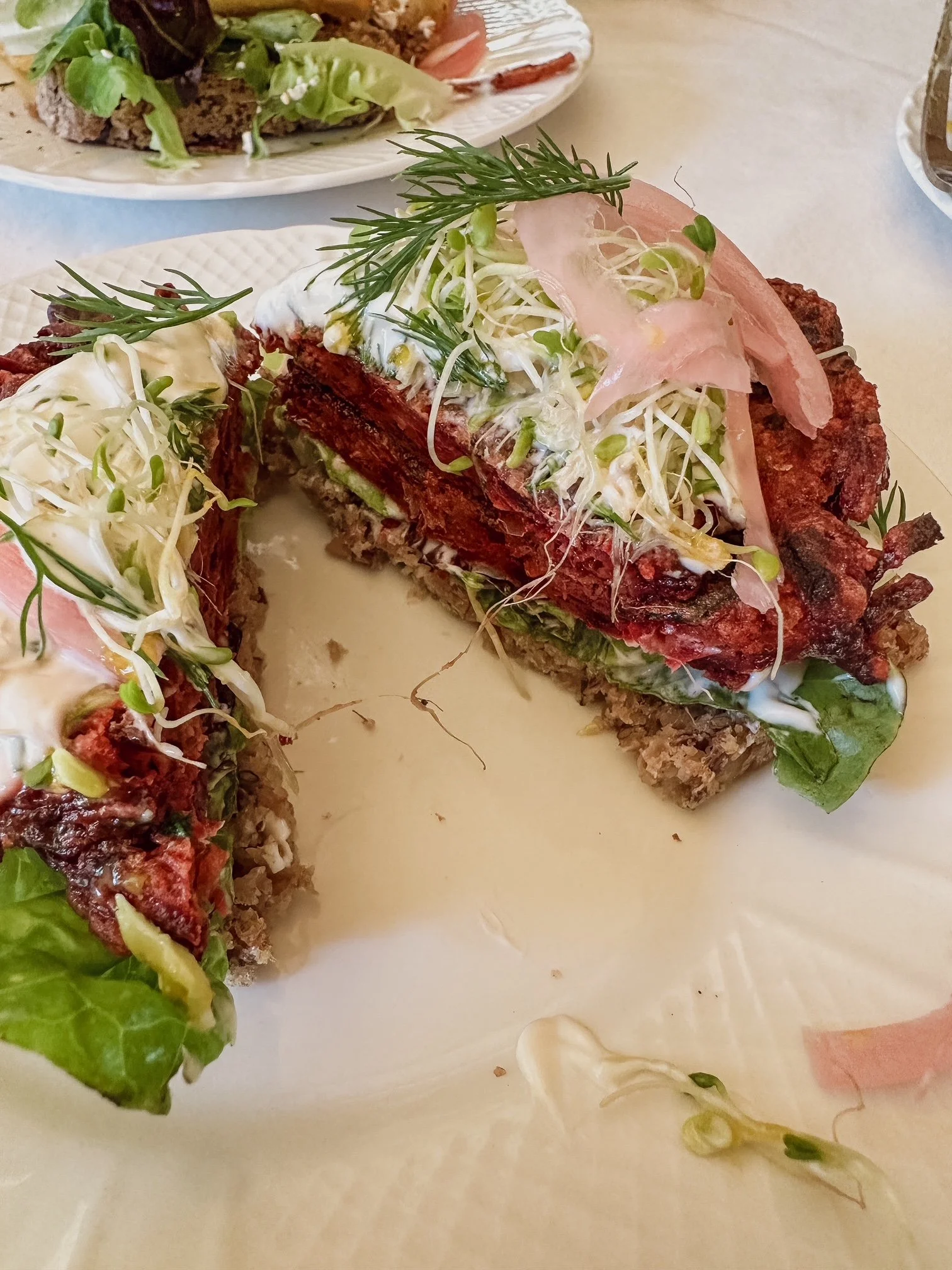
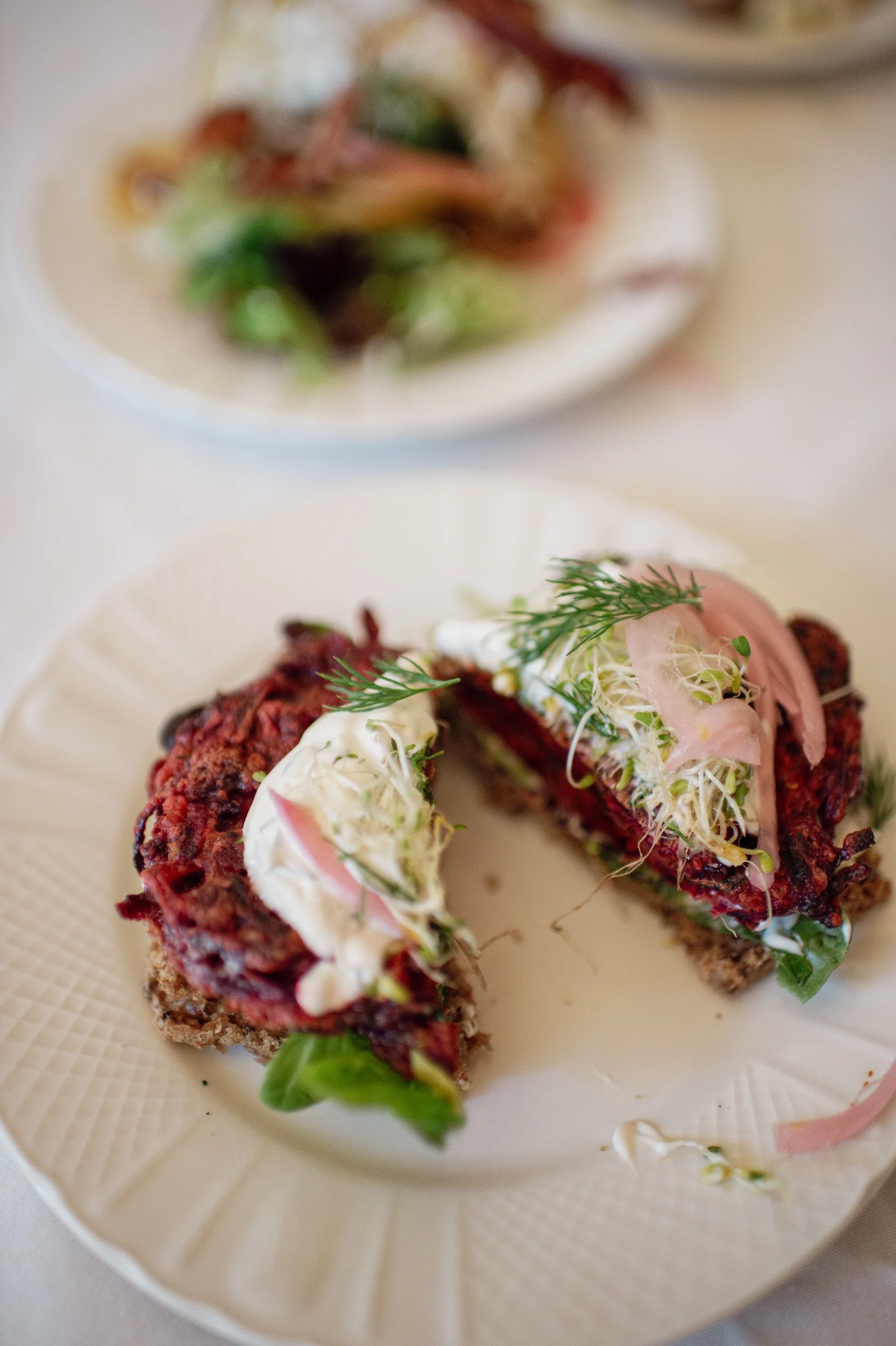
The Beet Pancake with Creamy Garlic Dill Sauce.
Recipe for the Beet Pancakes:
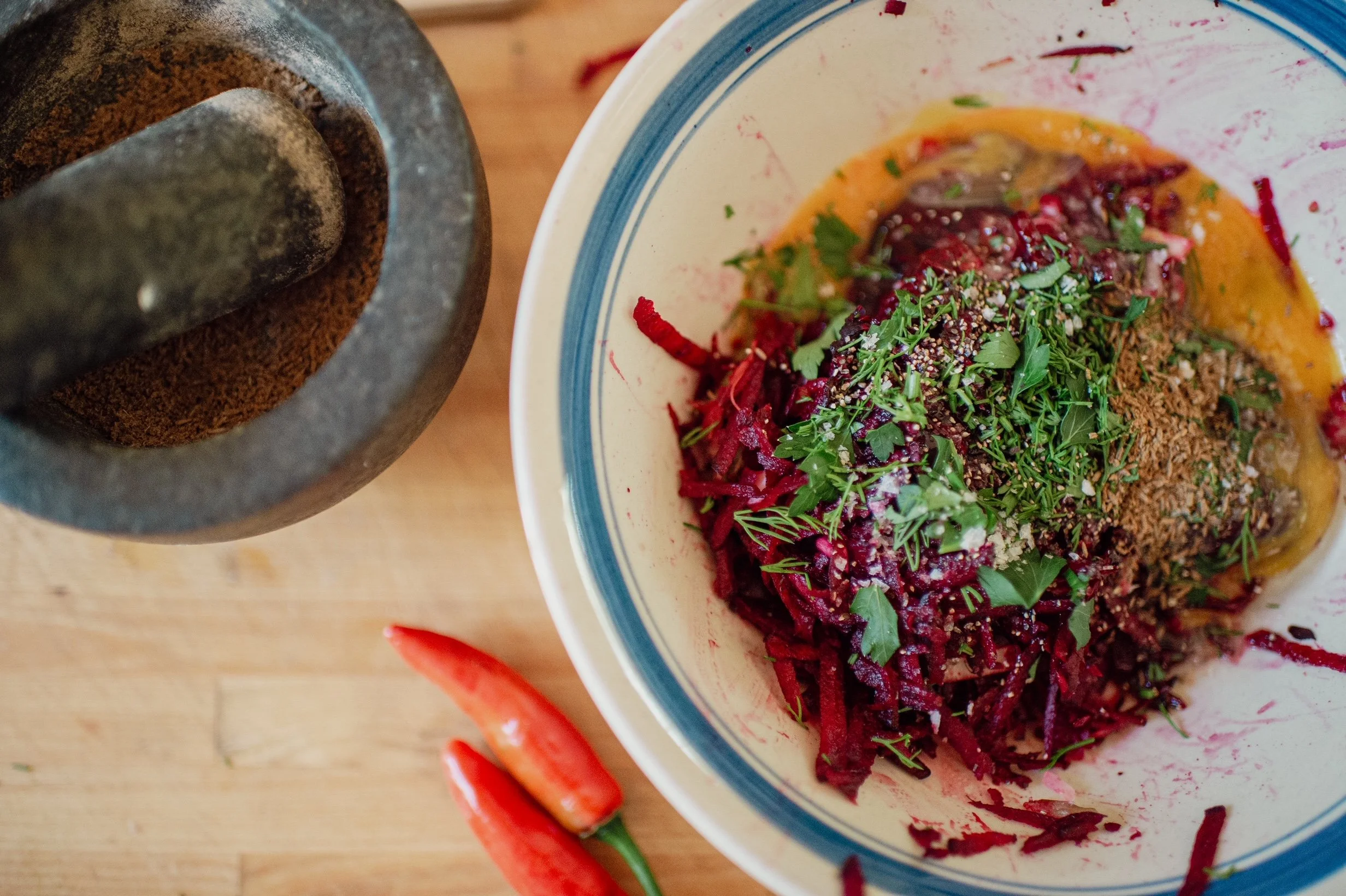
2-3 medium beets cleaned and grated. 1/2 onion diced. 2 eggs. 1/4 cup flour. 1 teaspoon ground cumin. 1 teaspoon salt. pepper to taste. parsley, chives and dill chopped. Olive oil for frying.
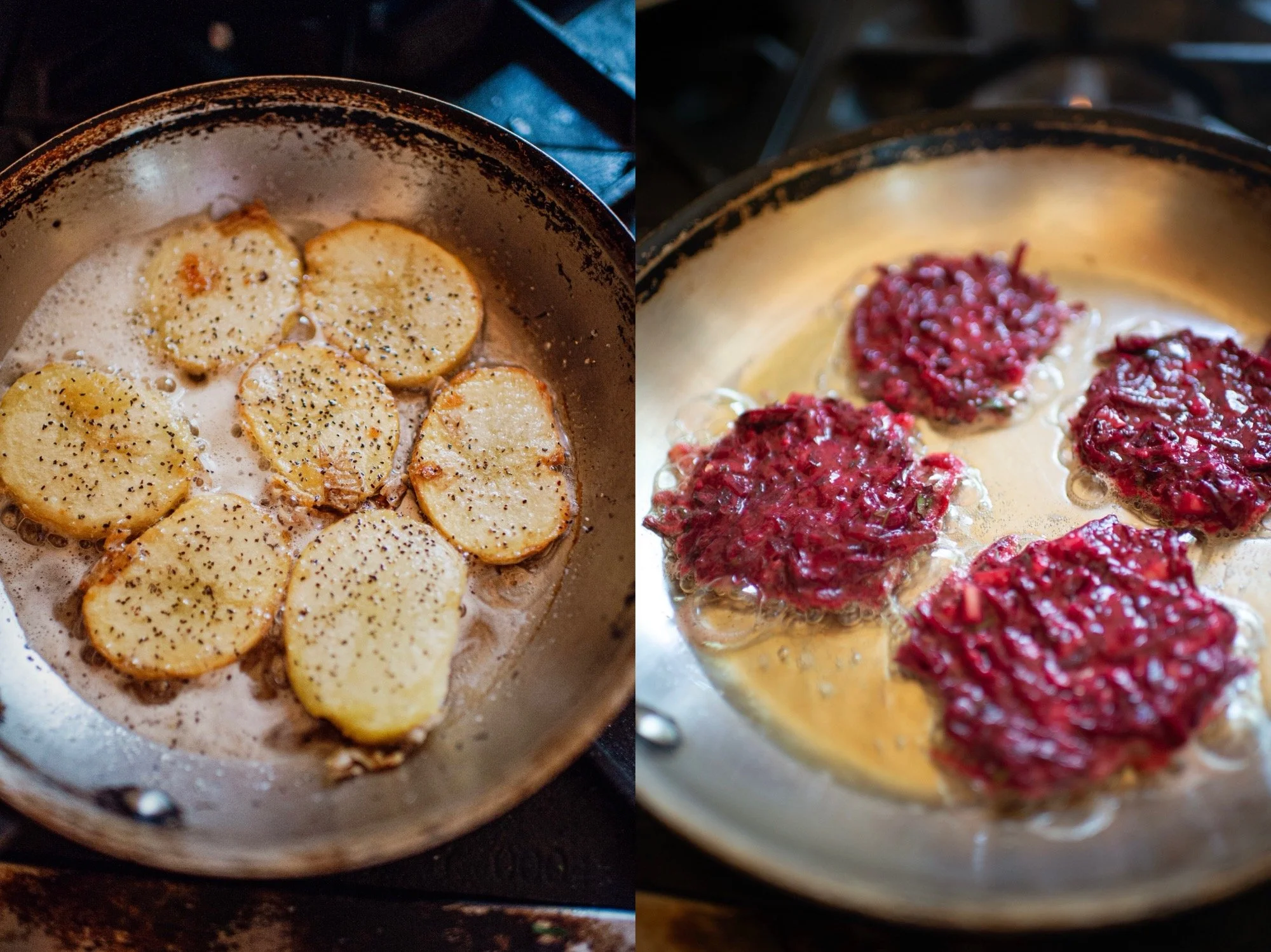
Mix everything together. Shape into patties. Fry in hot oil until browned on each side and cooked through.
You can top this with a Yogurt Sauce or the Creamy Dill Sauce. The yogurt sauce can be as simple as a few scoops of plain yogurt, some chopped garlic, chopped cucumber, lemon juice and salt and pepper to taste.
〰️
〰️
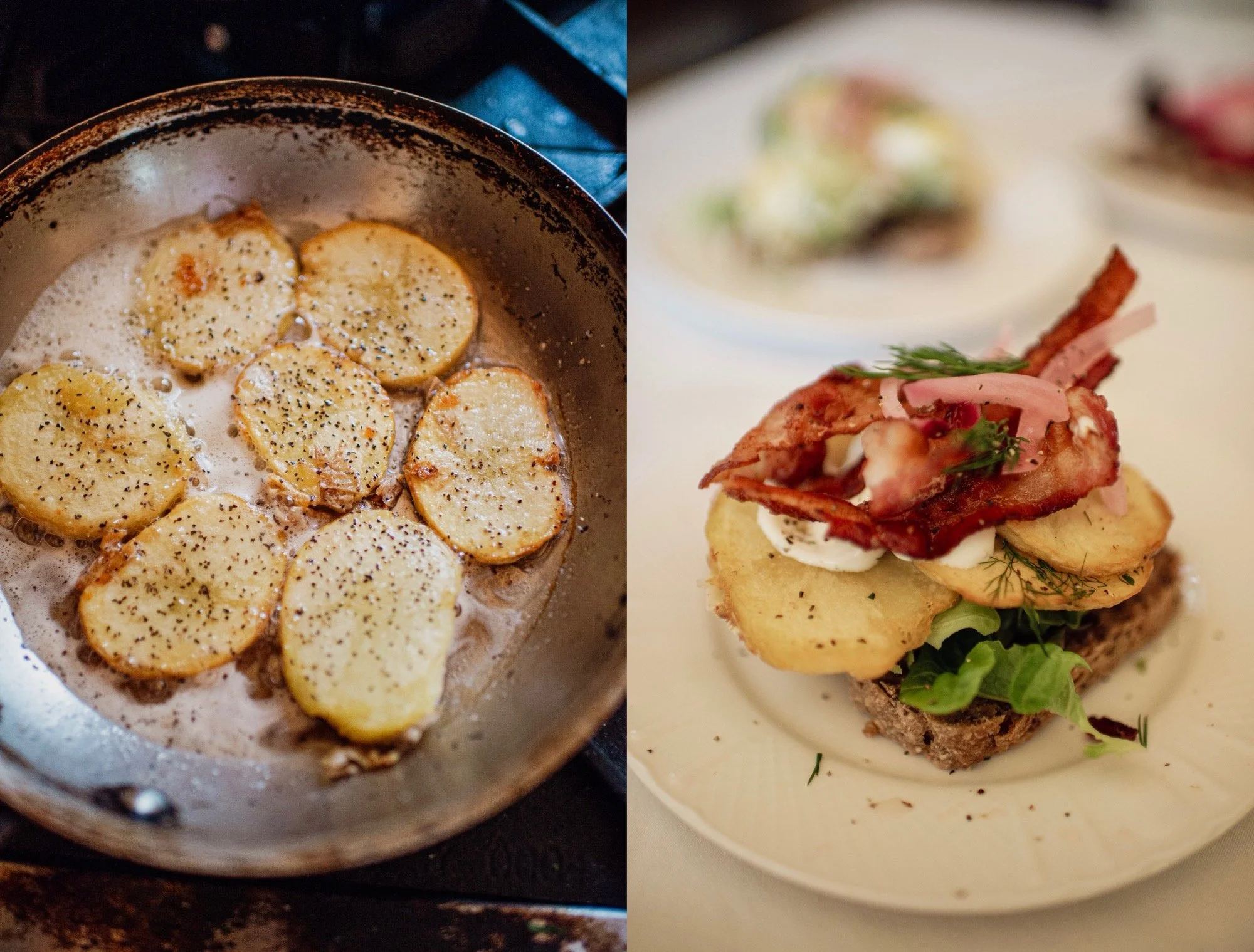
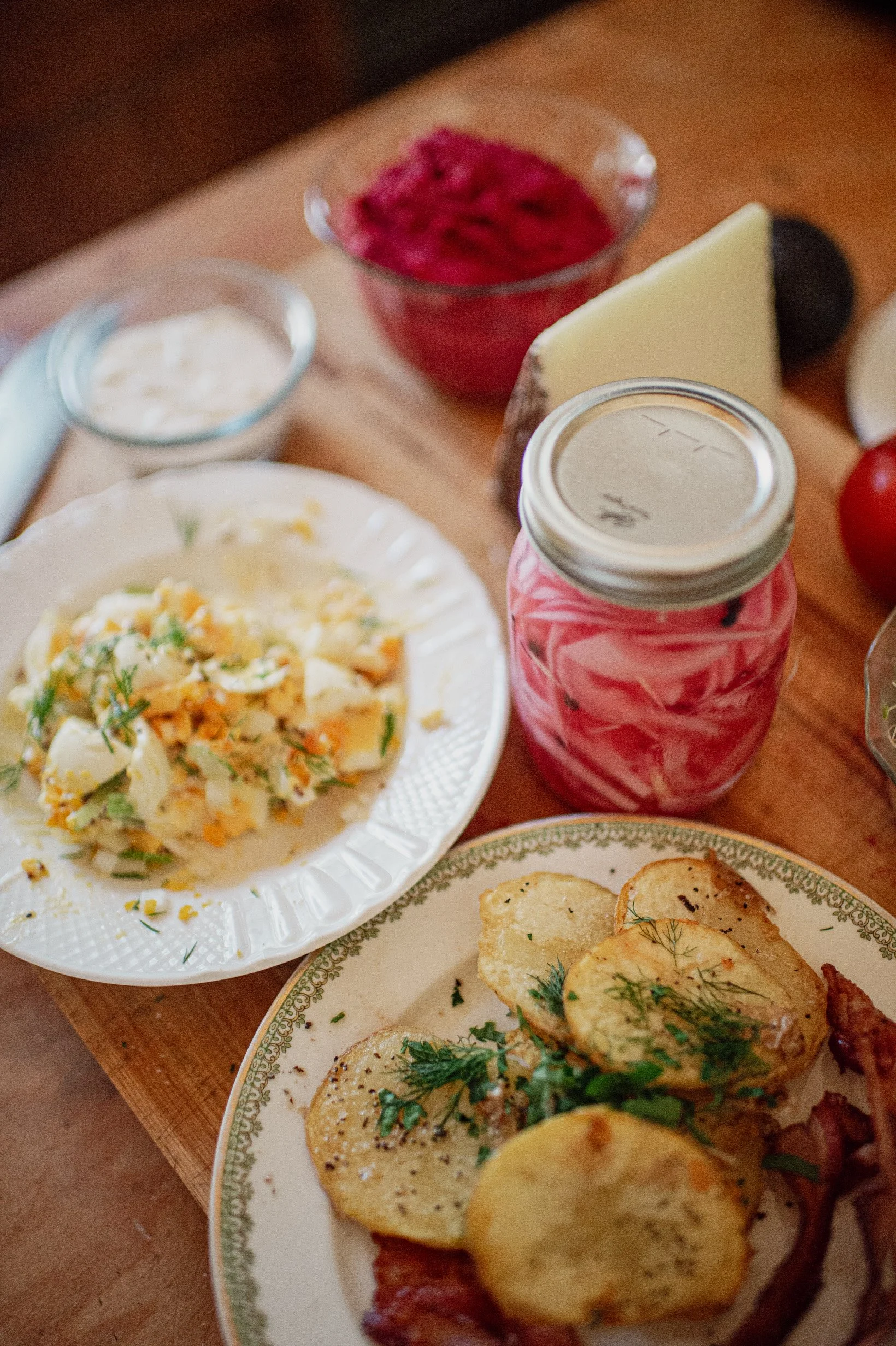
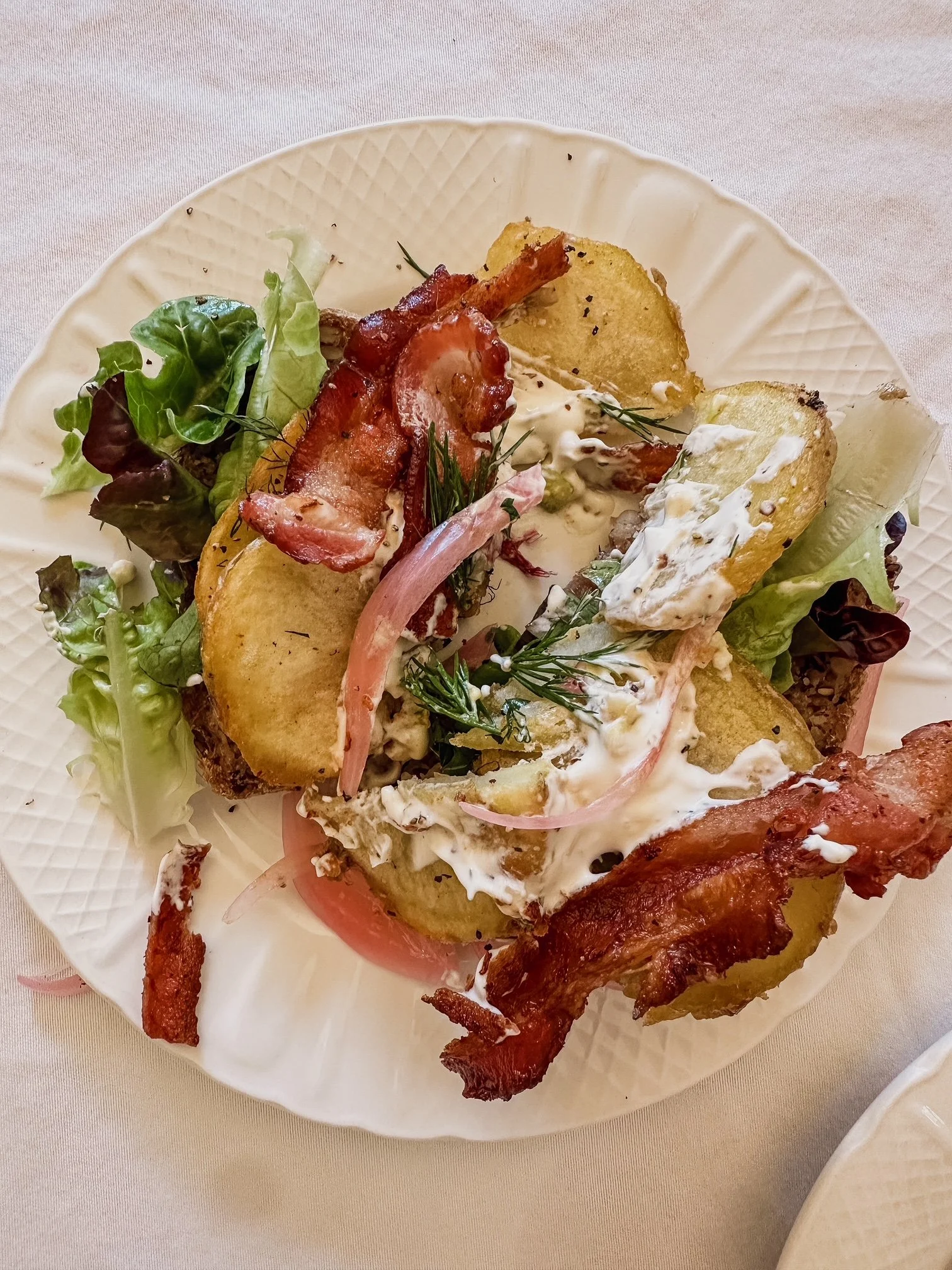
Fried Potatoes with Bacon: You can add the garlic dill sauce with this one too. Boil the potatoes and the fry the off in olive oil or butter. Season with salt and pepper. Fry the bacon into strips or bits. Stack with the garlic sauce and chopped herbs.
Creamy Garlic Dill Sauce: 2 spoonfuls of sour cream. 2 spoonfuls mayonnaise. 2 cloves chopped garlic. A dash of red wine vinegar. Chopped dill. Salt and pepper to taste: Mix together
〰️
〰️
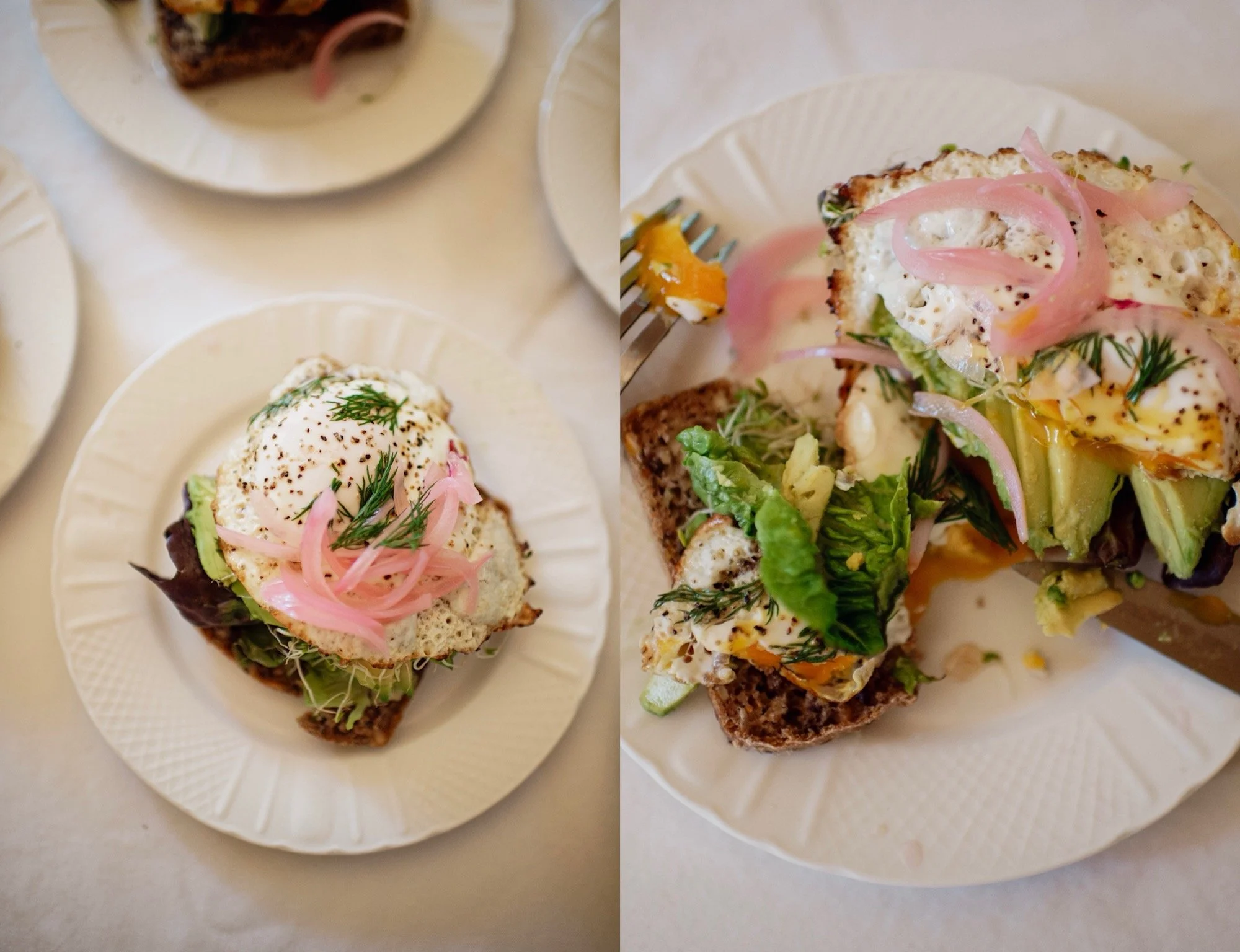
Avocado with Fried or Jammy Egg: This is like the basic break toast we’ve done before but fancied up with the sprouts and herbs and pickled onions. I suggest making your egg runny as it acts as the sauce in this rendition of avocado and egg toast.
〰️
〰️
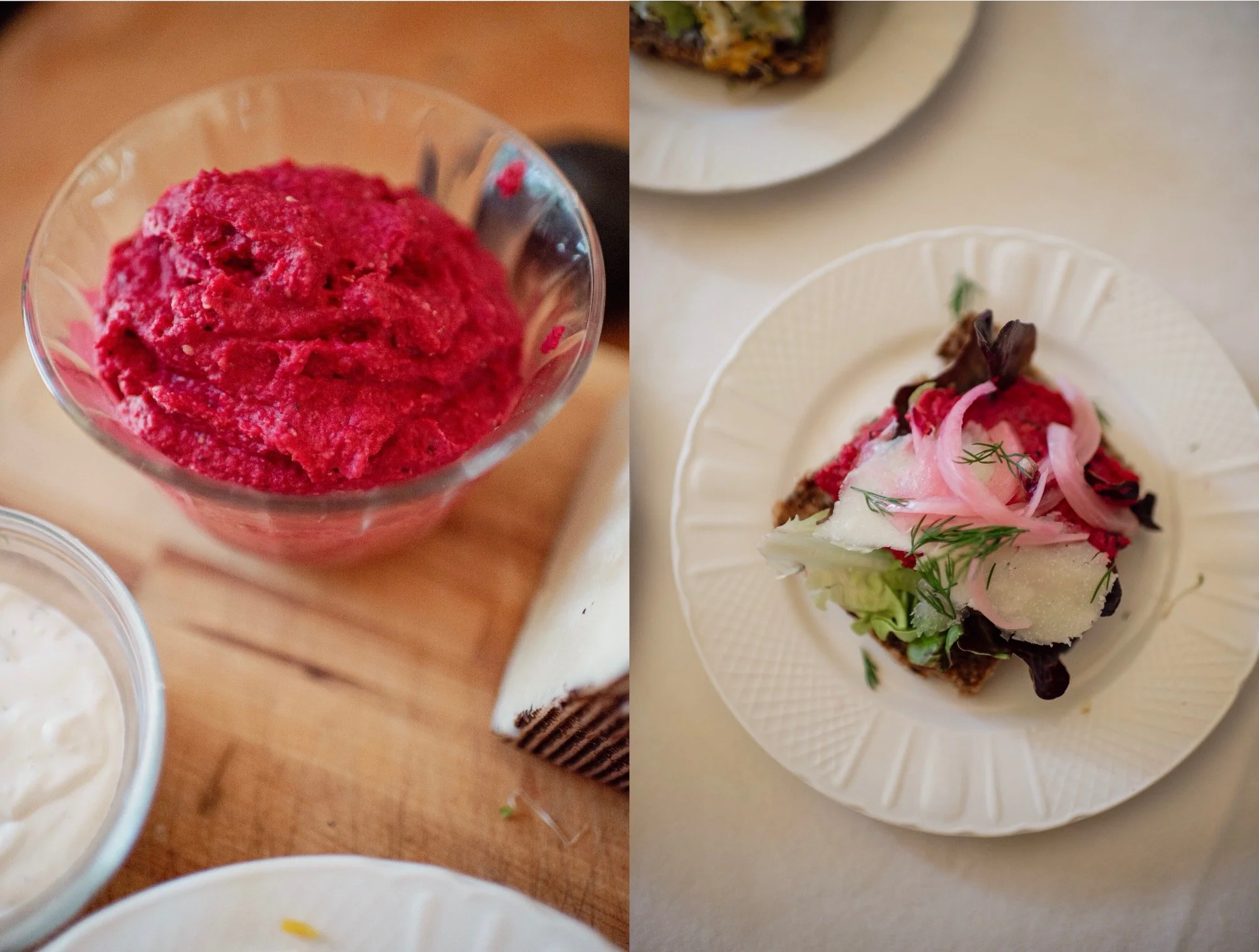
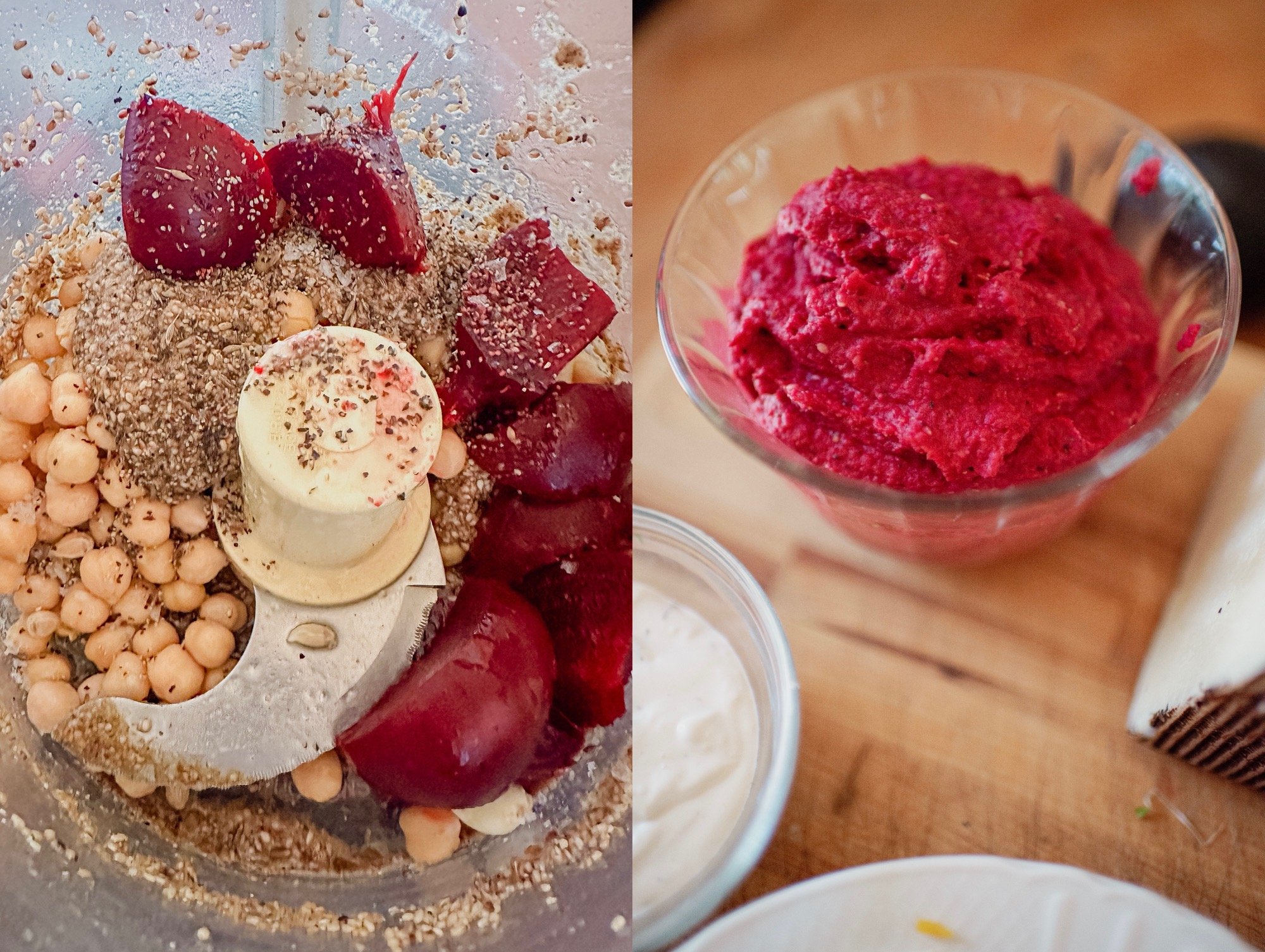
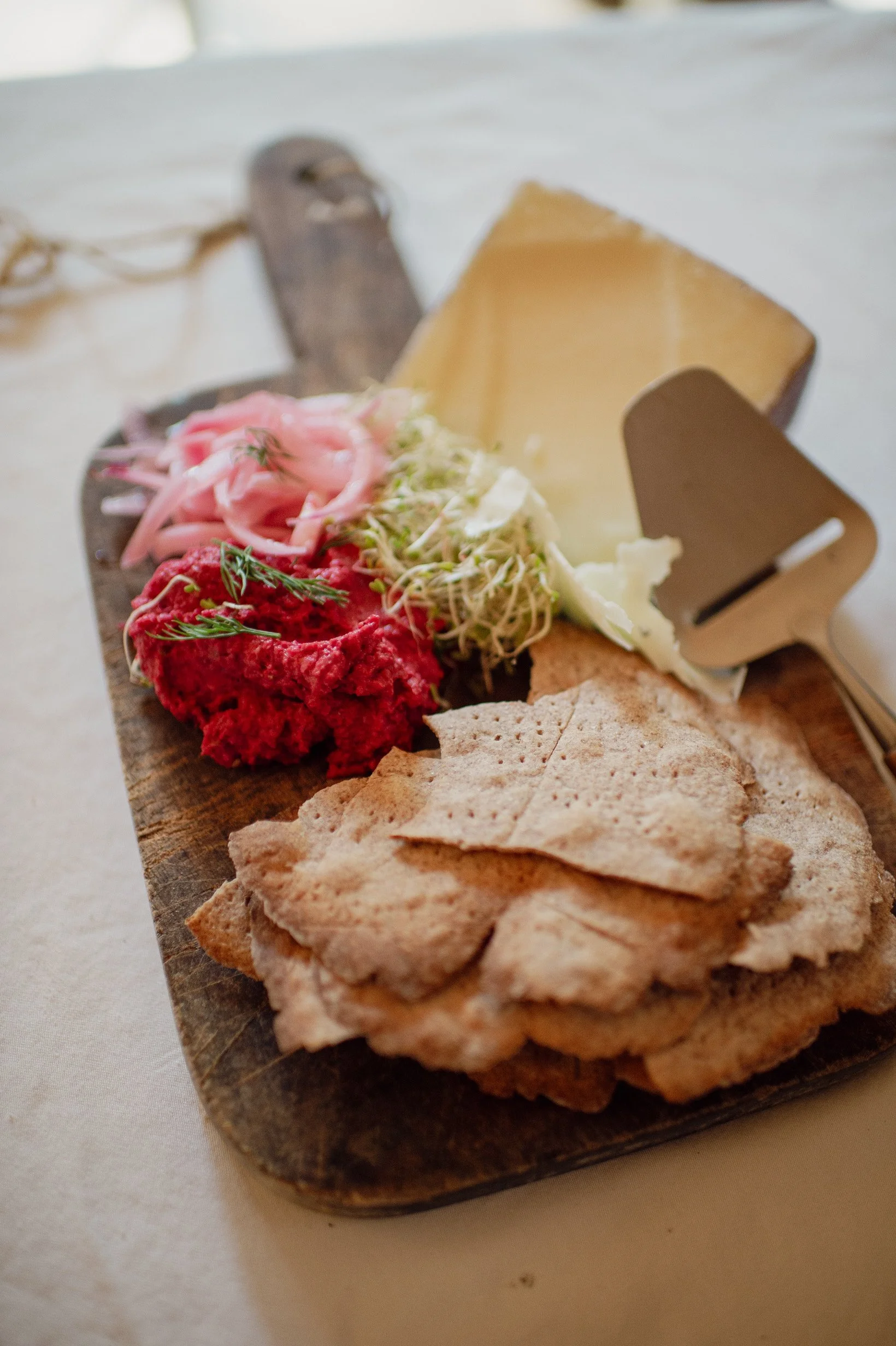
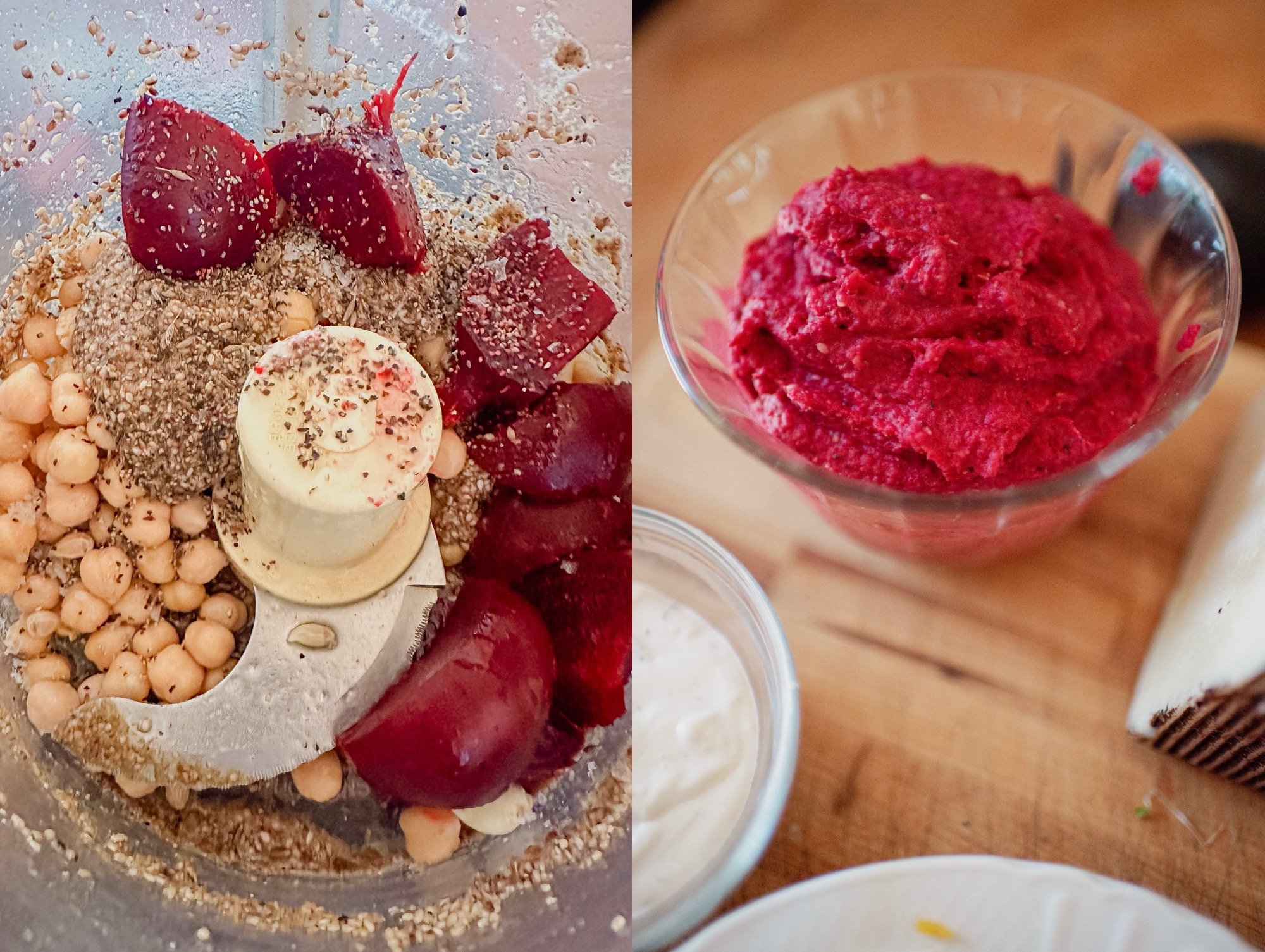
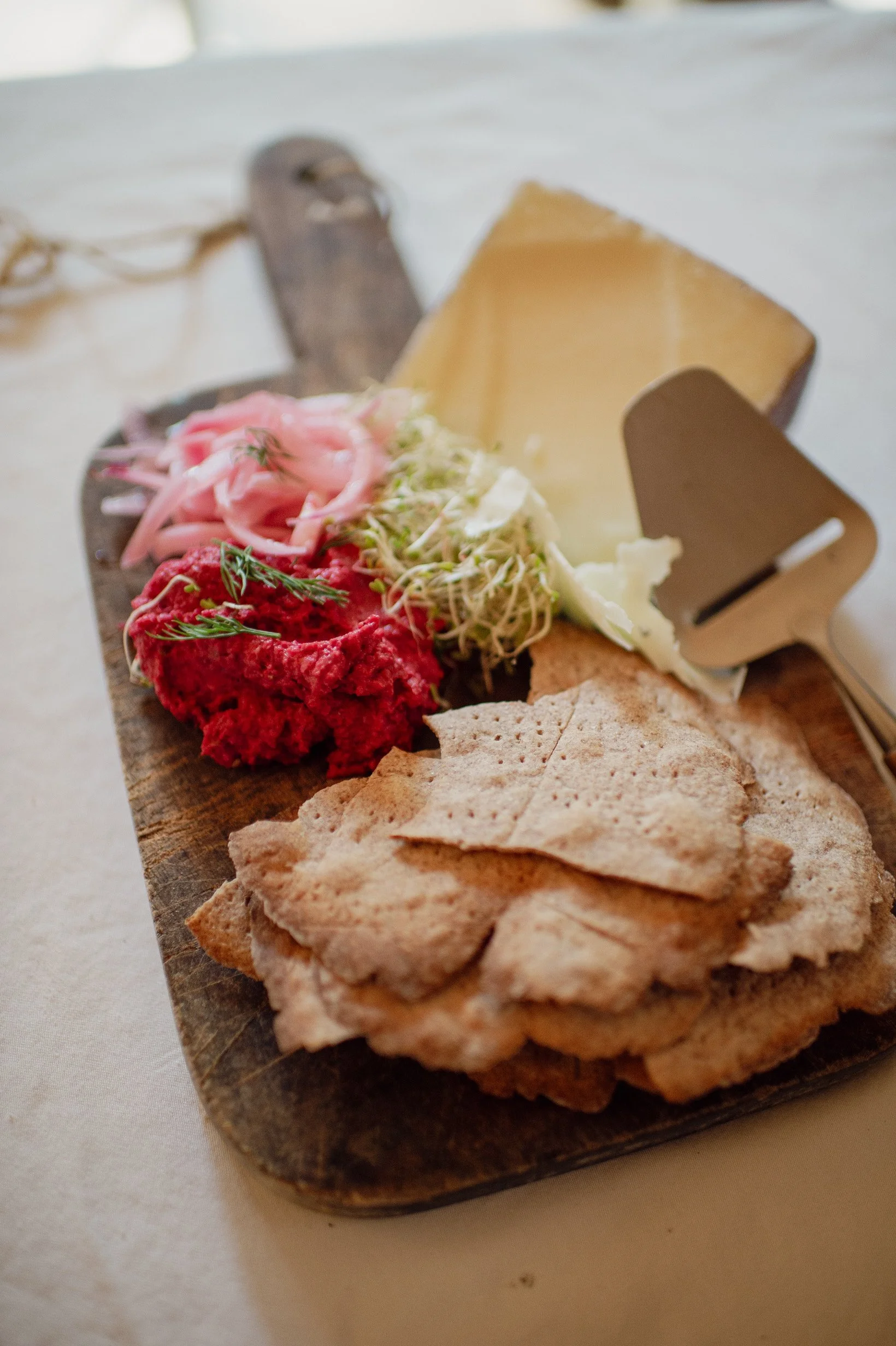
Beet Hummus and Cheese: More a spread on bread then an elaborate topping, but the color makes this one special. You can pick the cheese you like: Here I have used Manchego. Feta could be tasty and maybe add some kalamata olives too.
To make the hummus blend 2 medium boiled and soften beets, 1 can chickpeas (garbonzo beans), 2 garlic cloves, 2 tablespoons tahini, 2 tablespoons lemon juice, a 1/2 teaspoon of cumin, 1 teaspoon salt and enough olive oil to make a smooth blended hummus.
krackebrod: crispbread
〰️
krackebrod: crispbread 〰️
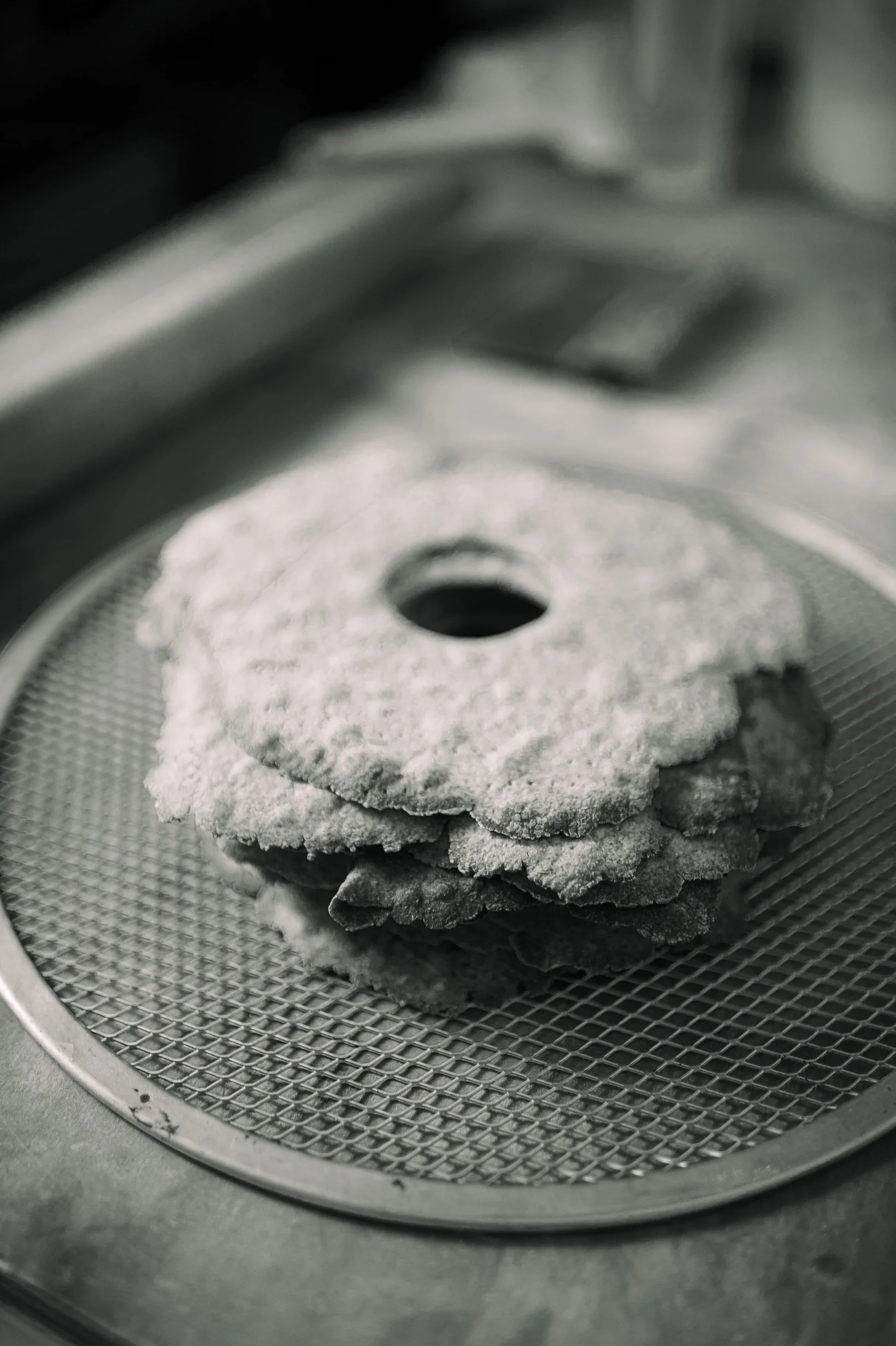
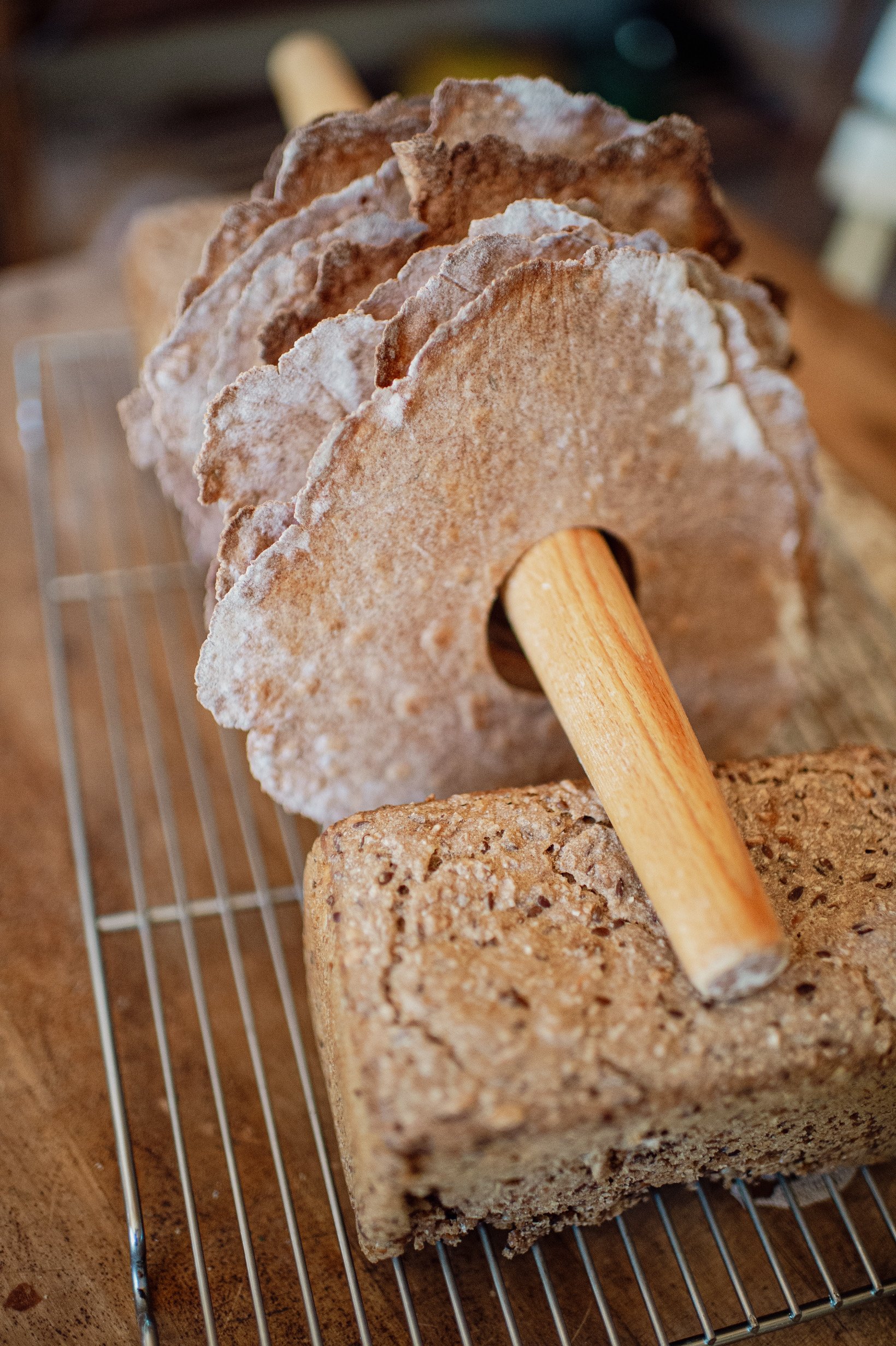
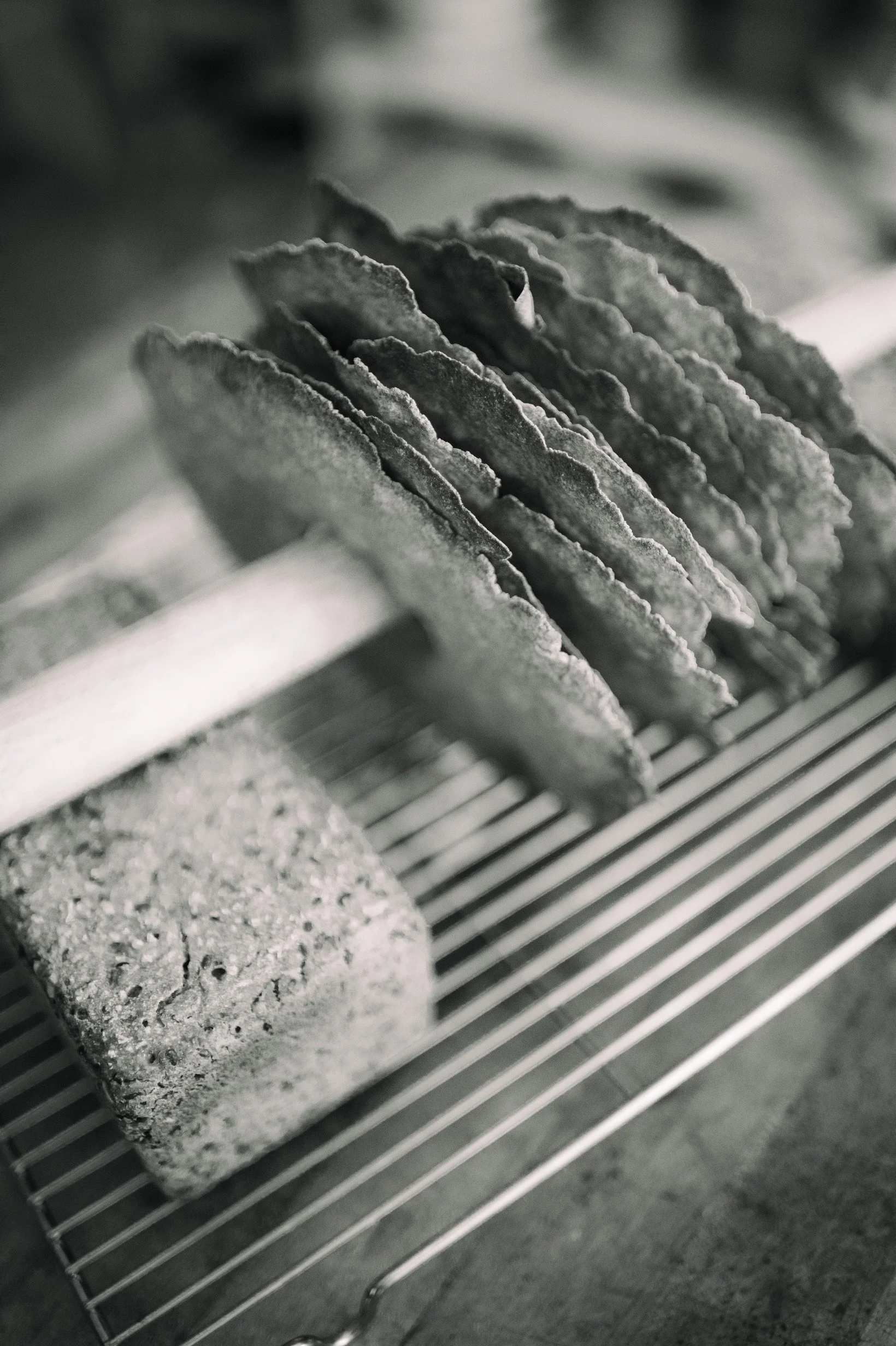
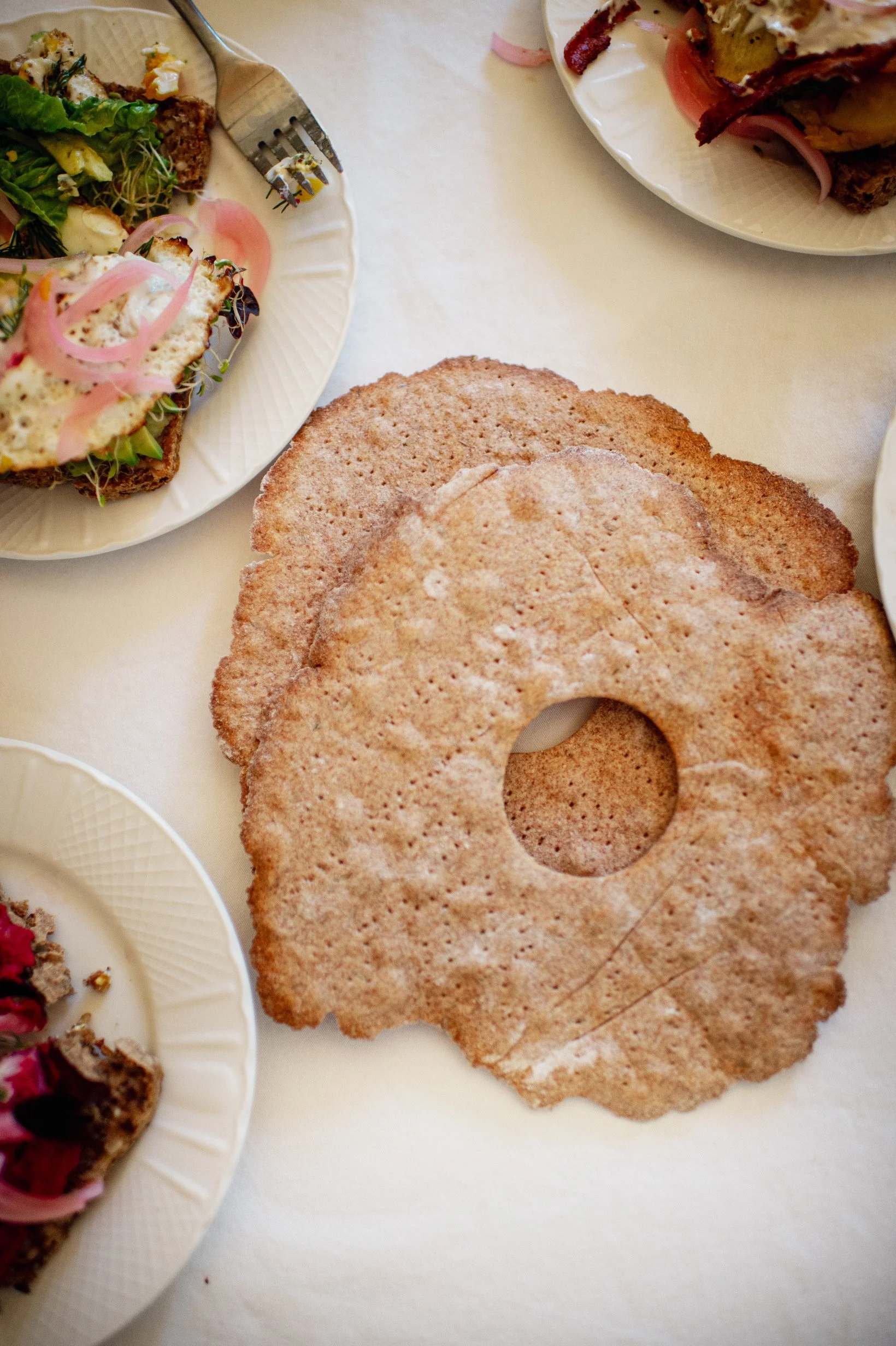
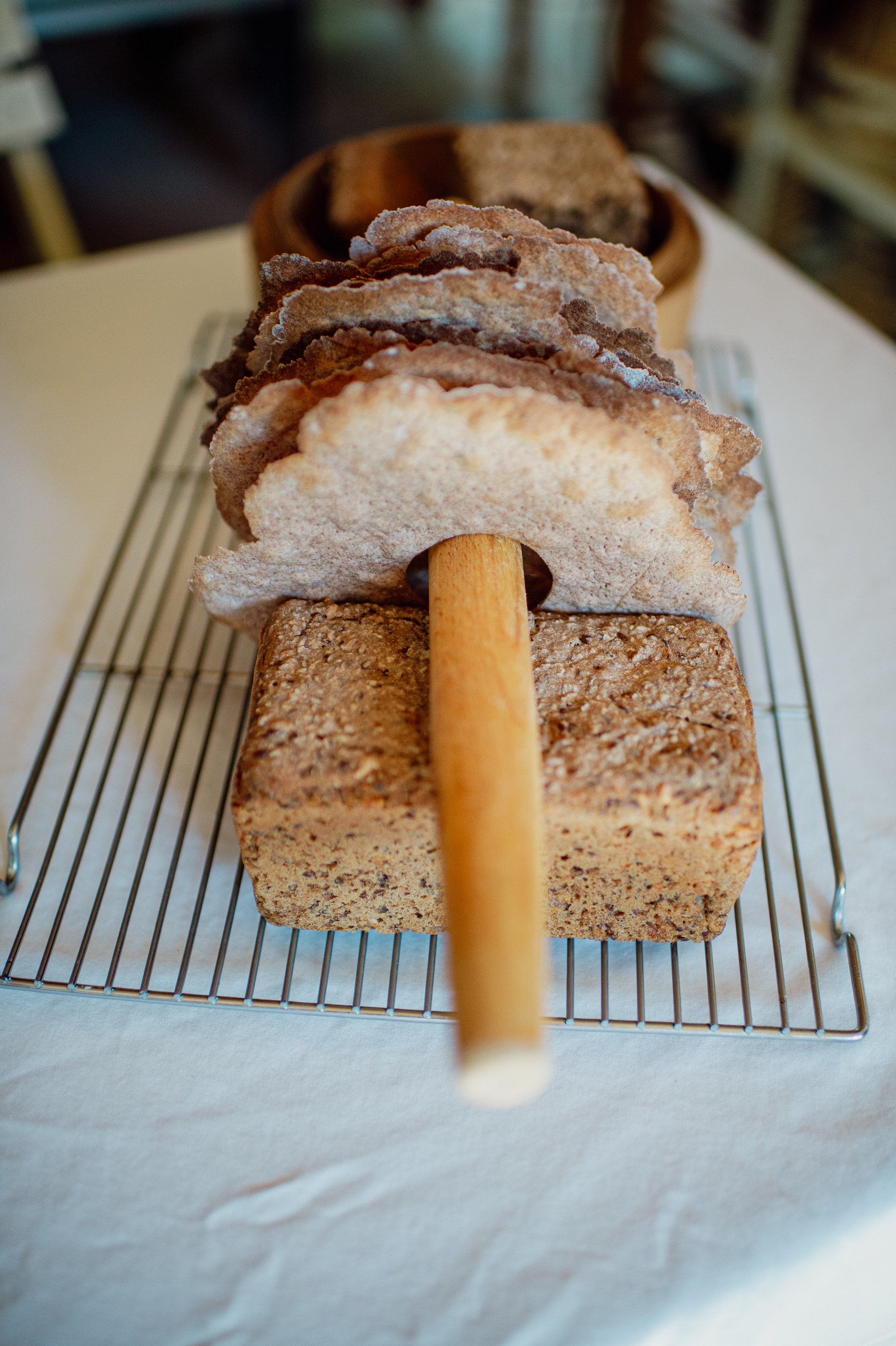
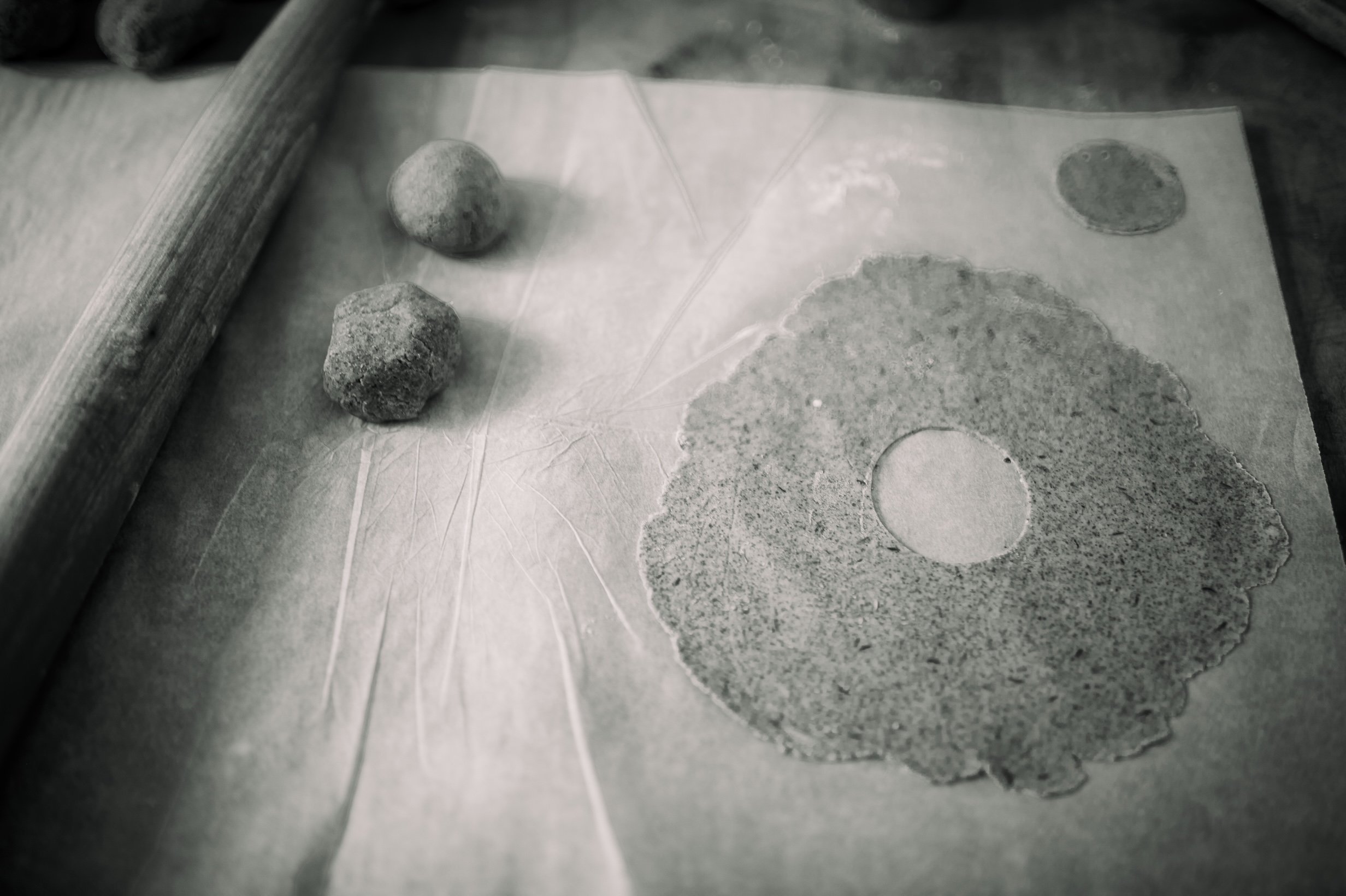
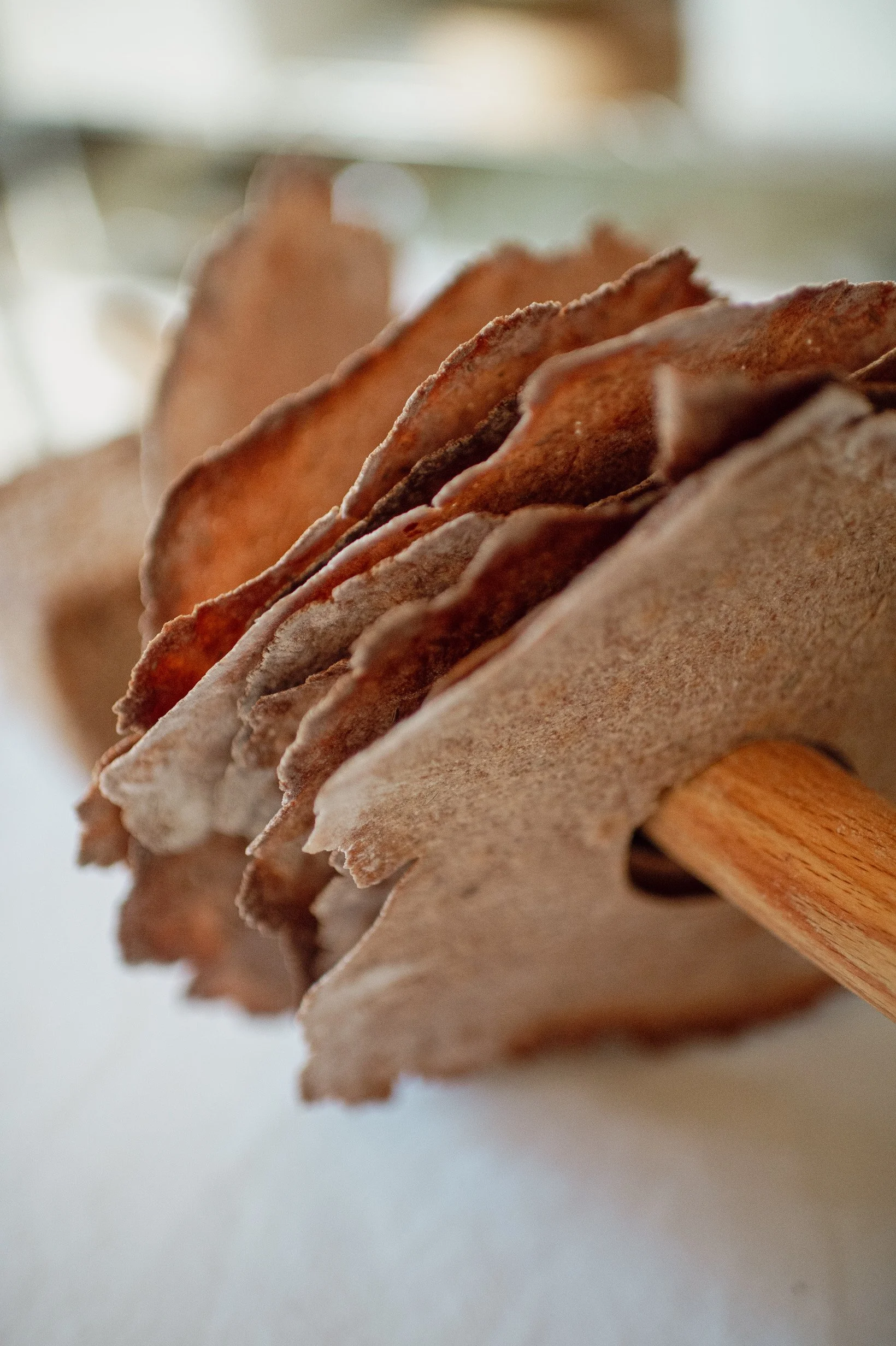
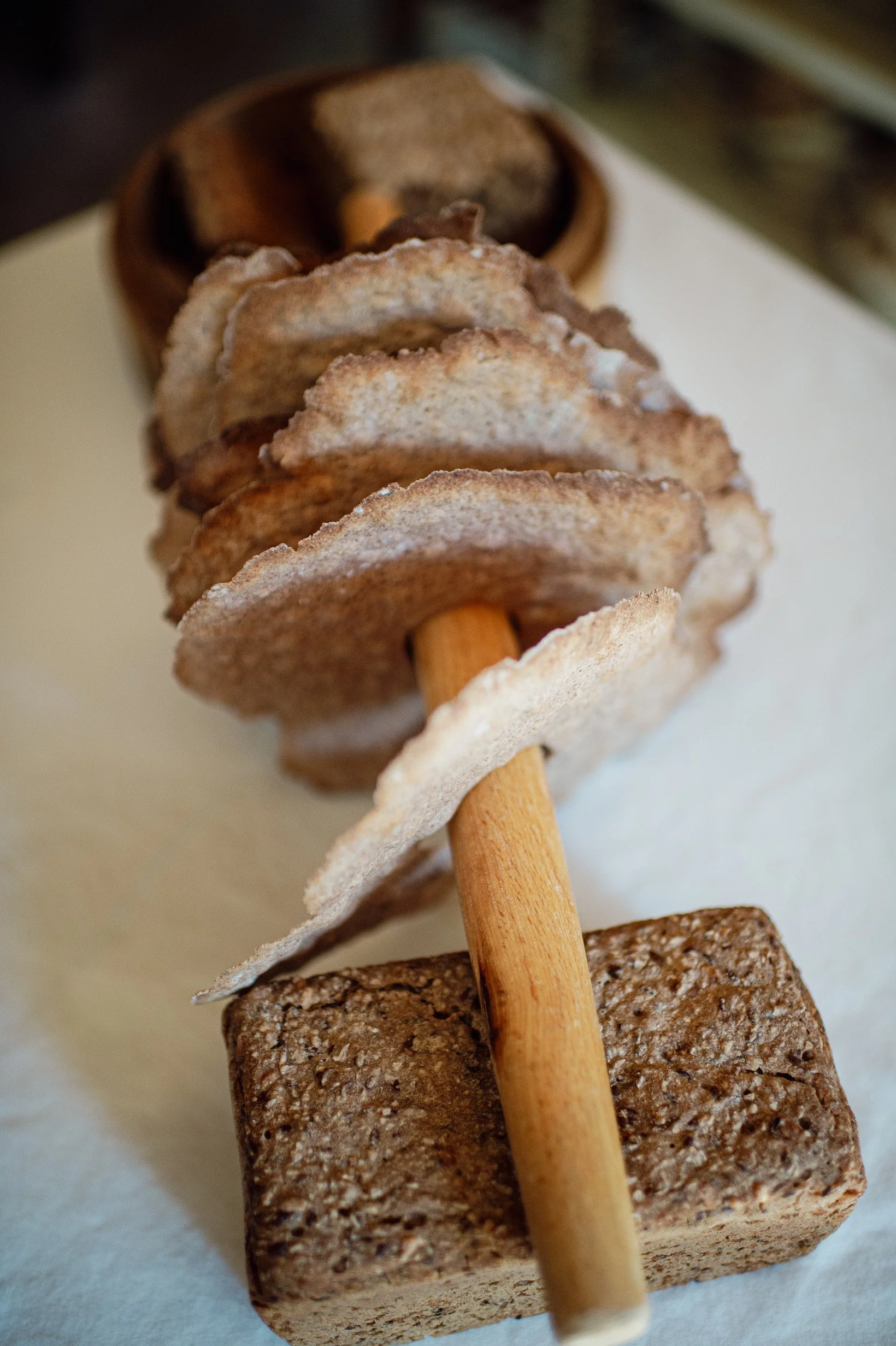
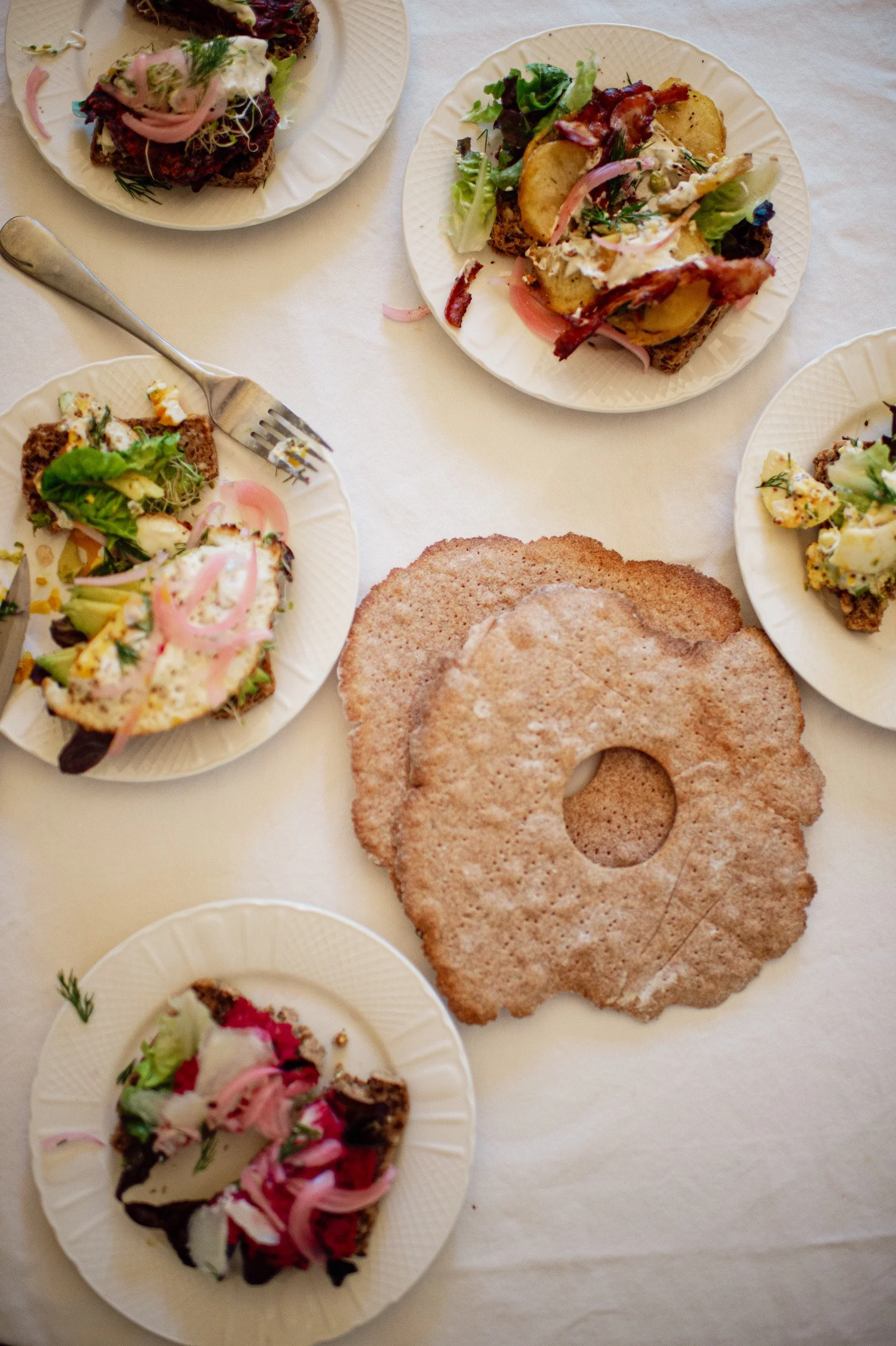
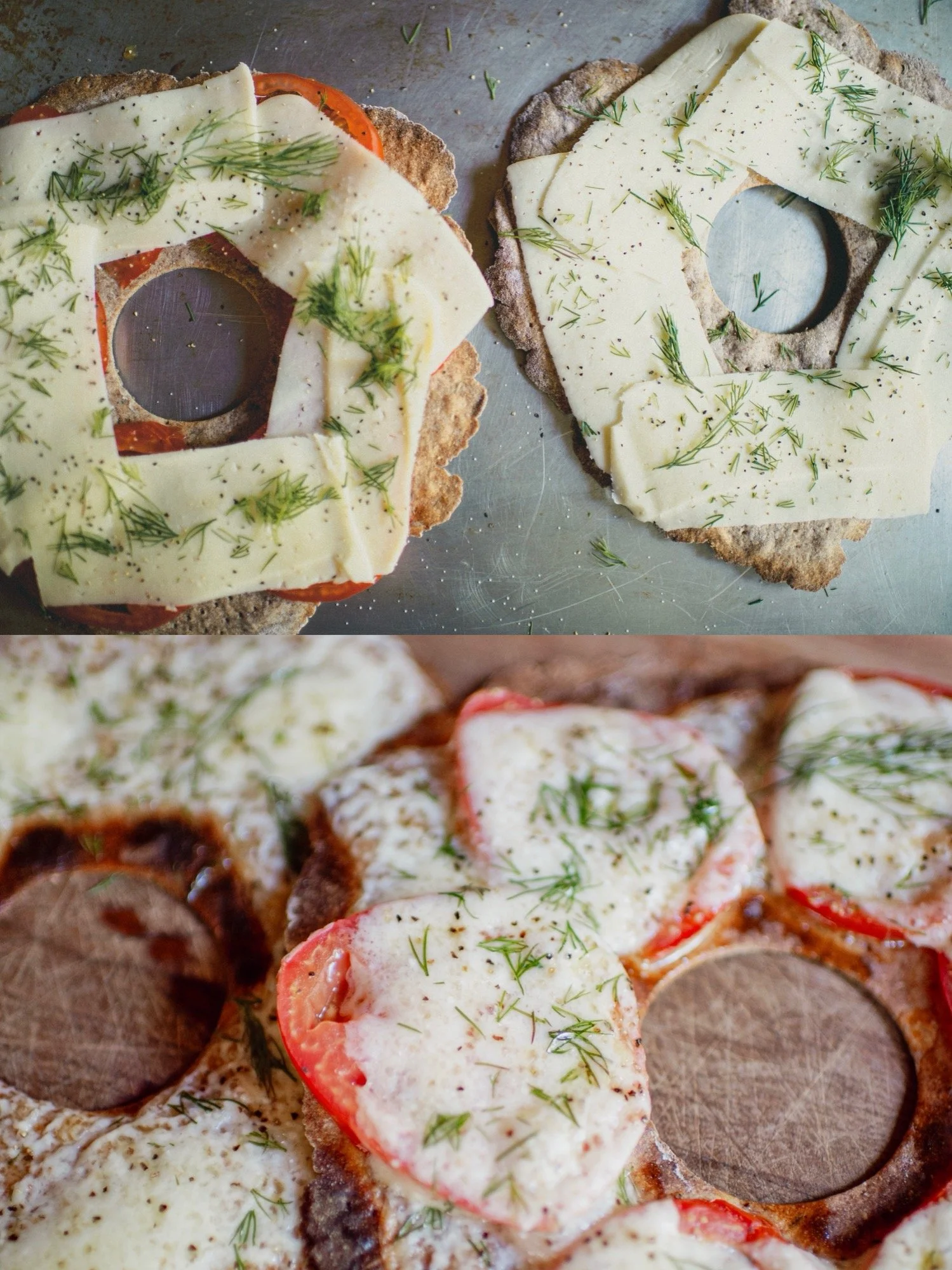
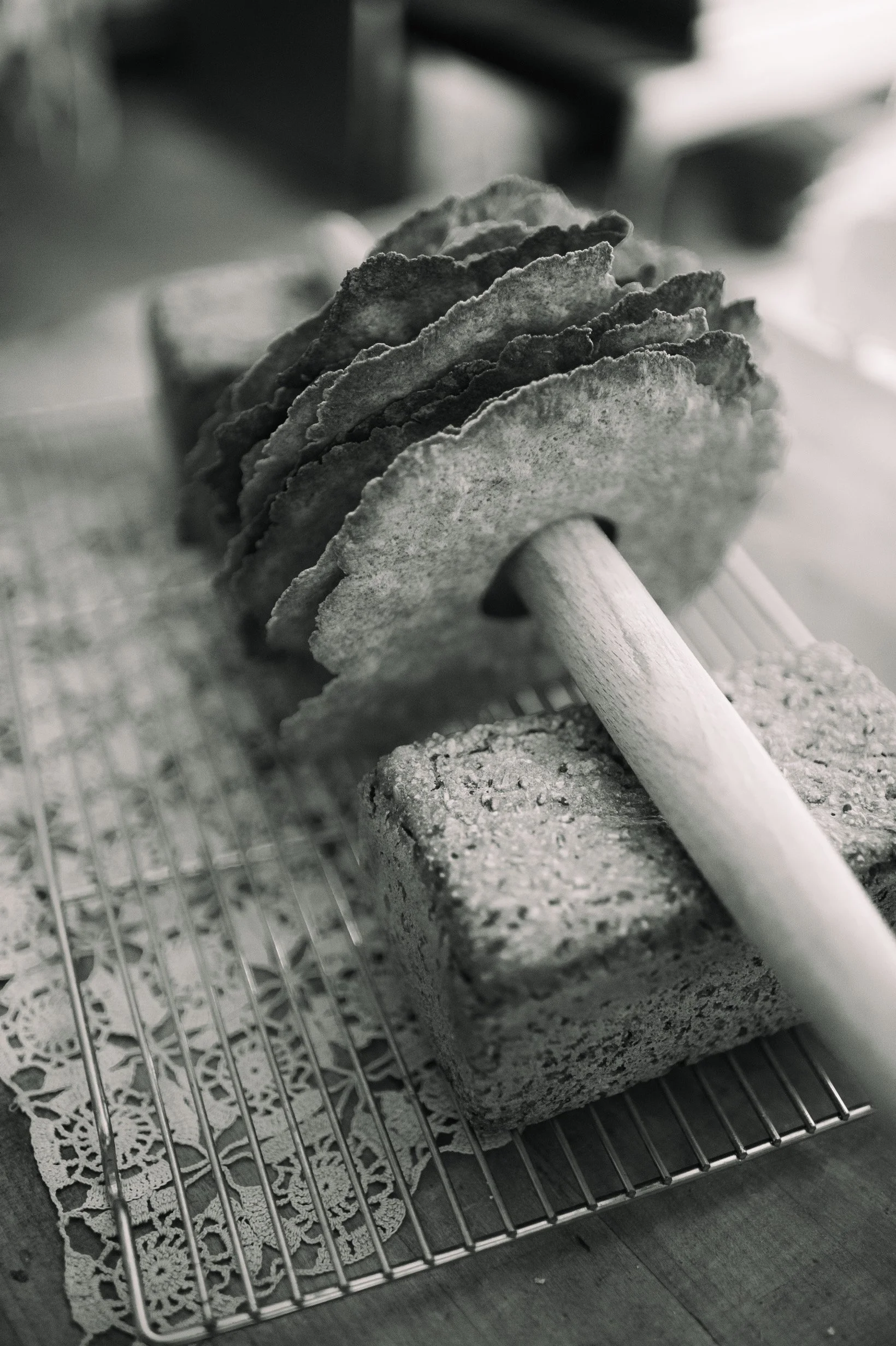
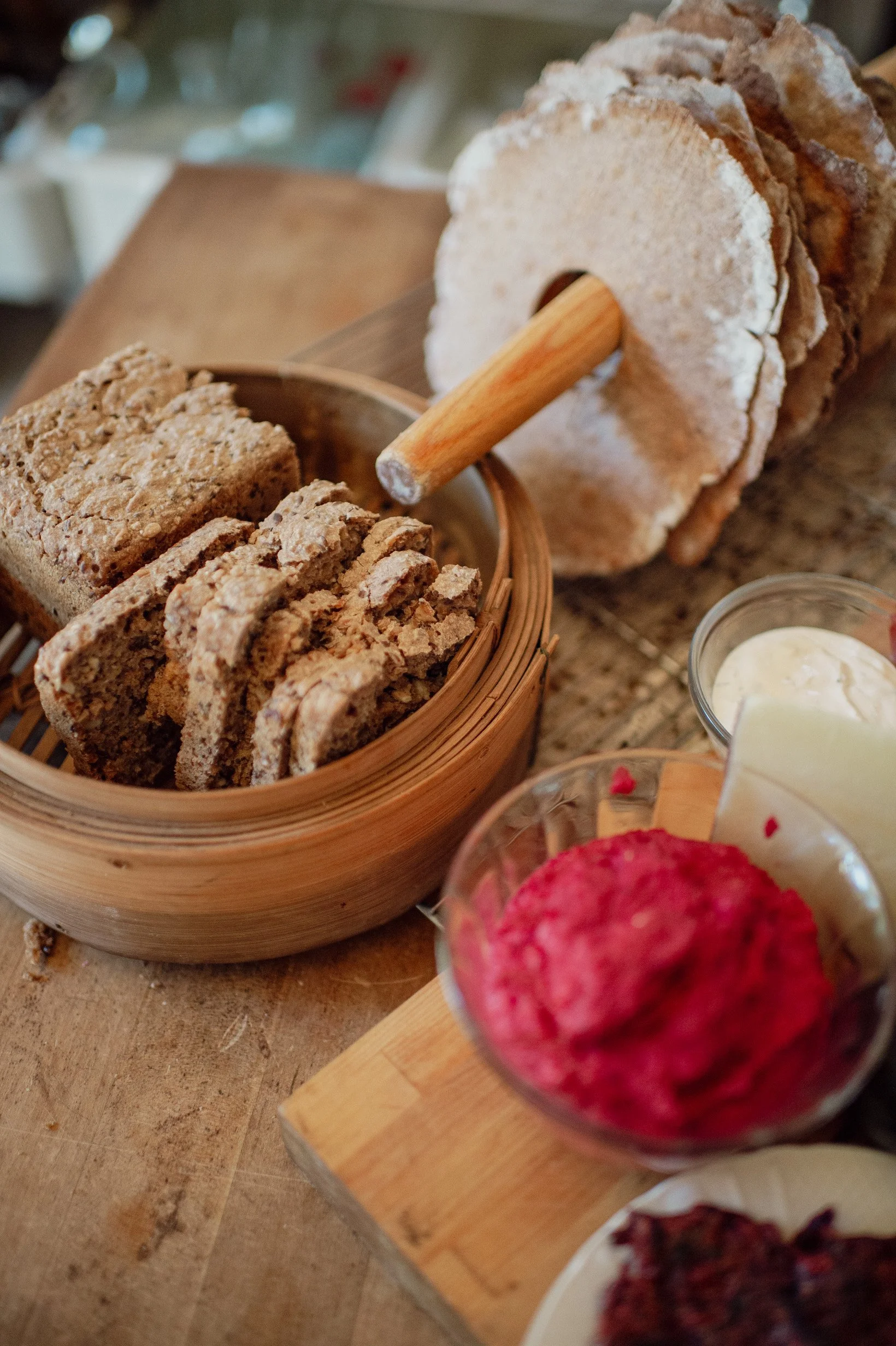
This crisp bread can be made very thin or a little thicker, although the thinner the crispier. It can also be cut or rolled into whatever shape you prefer. The traditional shape is a round disk with a hole in the center, like I mentioned above, but you can also make it into rectangles or squares depending on how and where you will eventually store them and how you will use them.
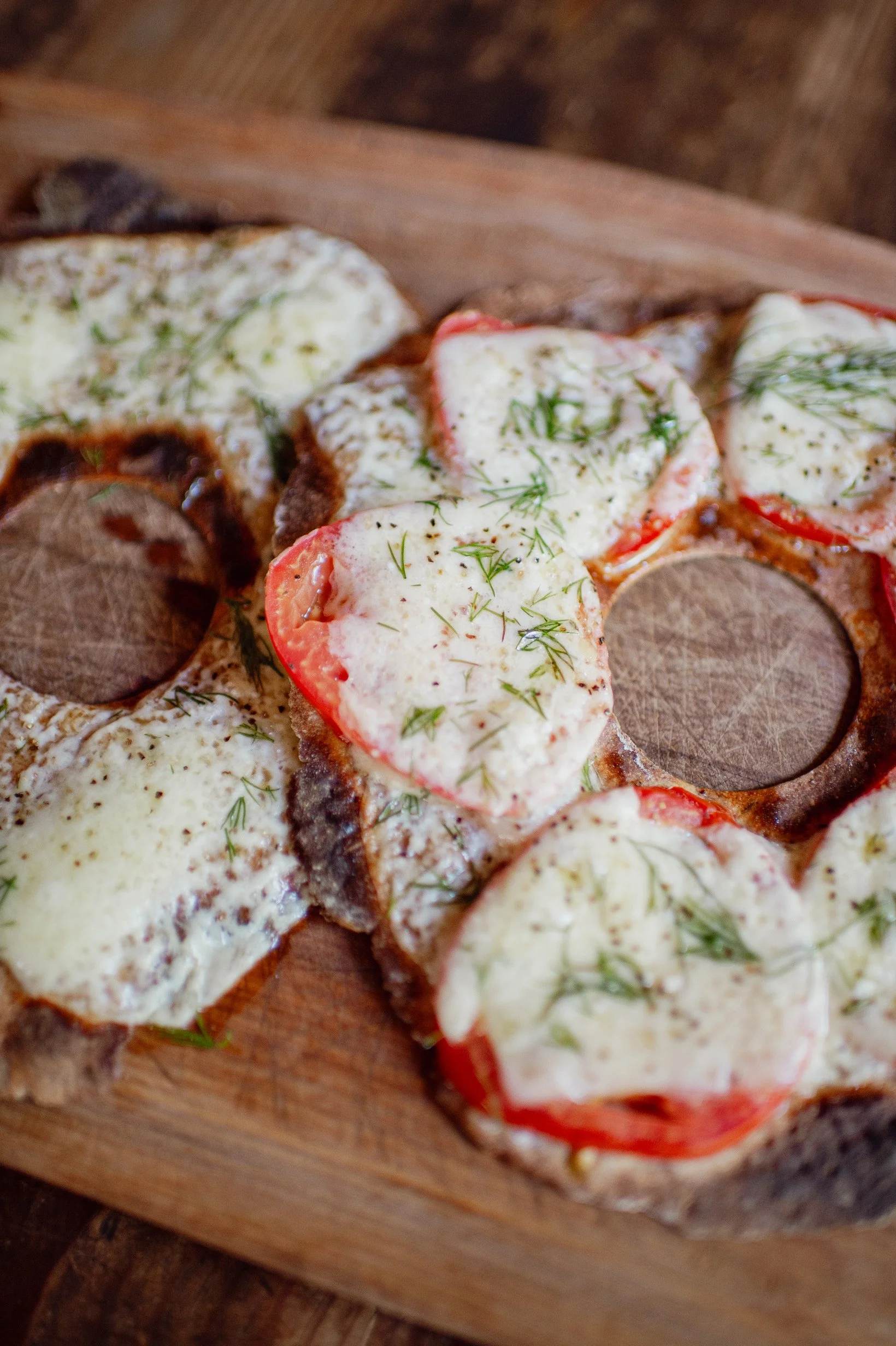
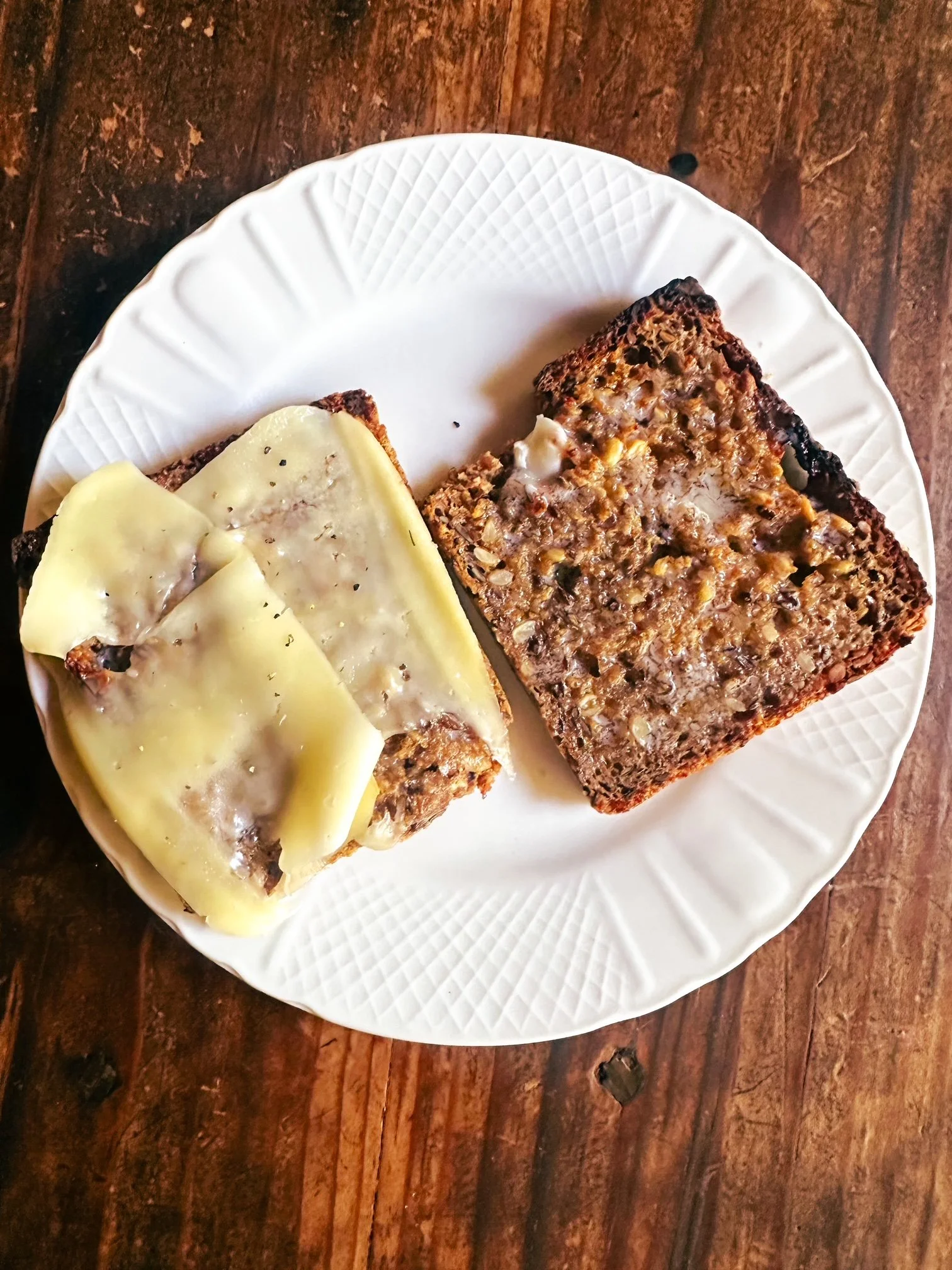
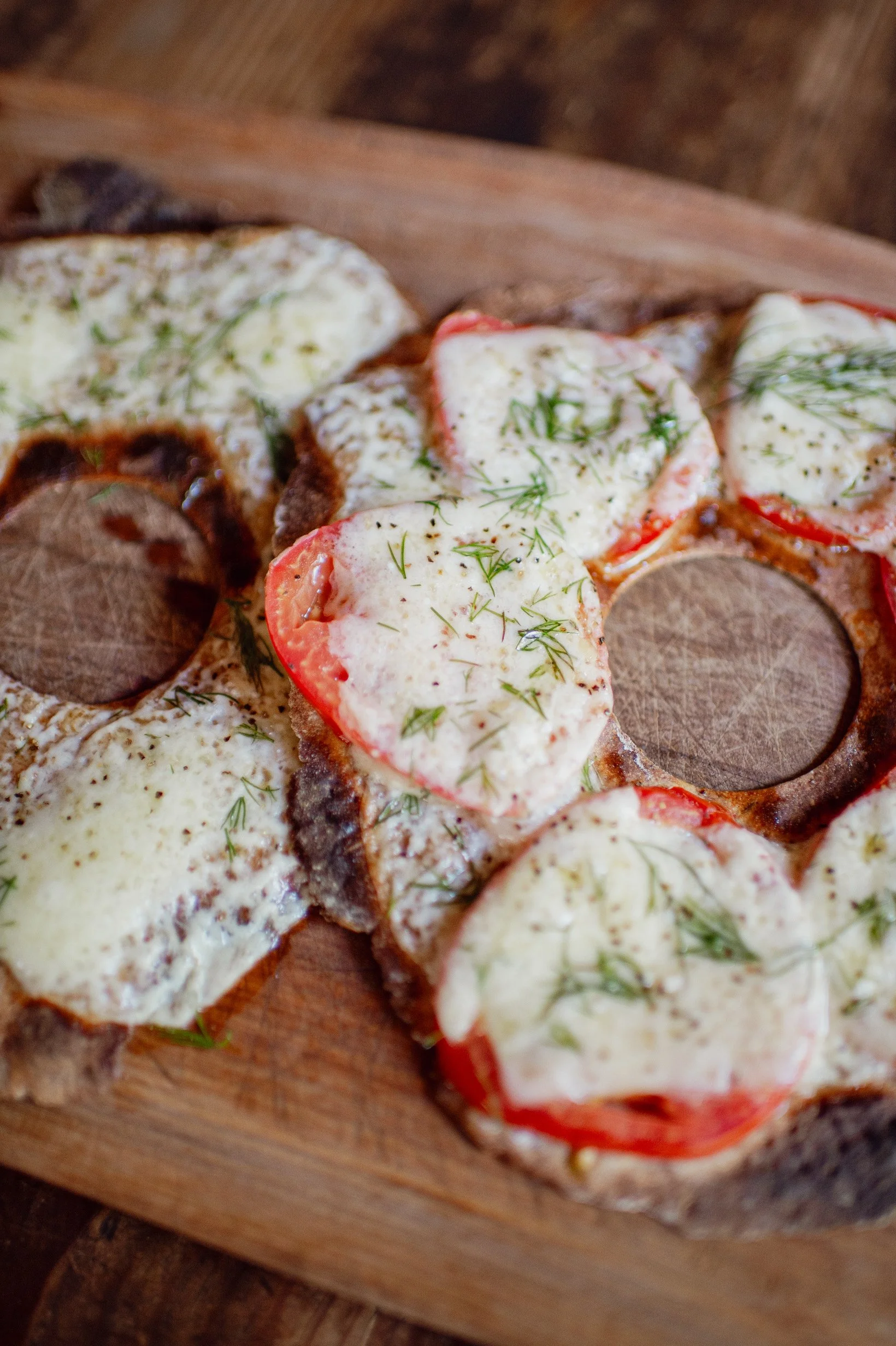
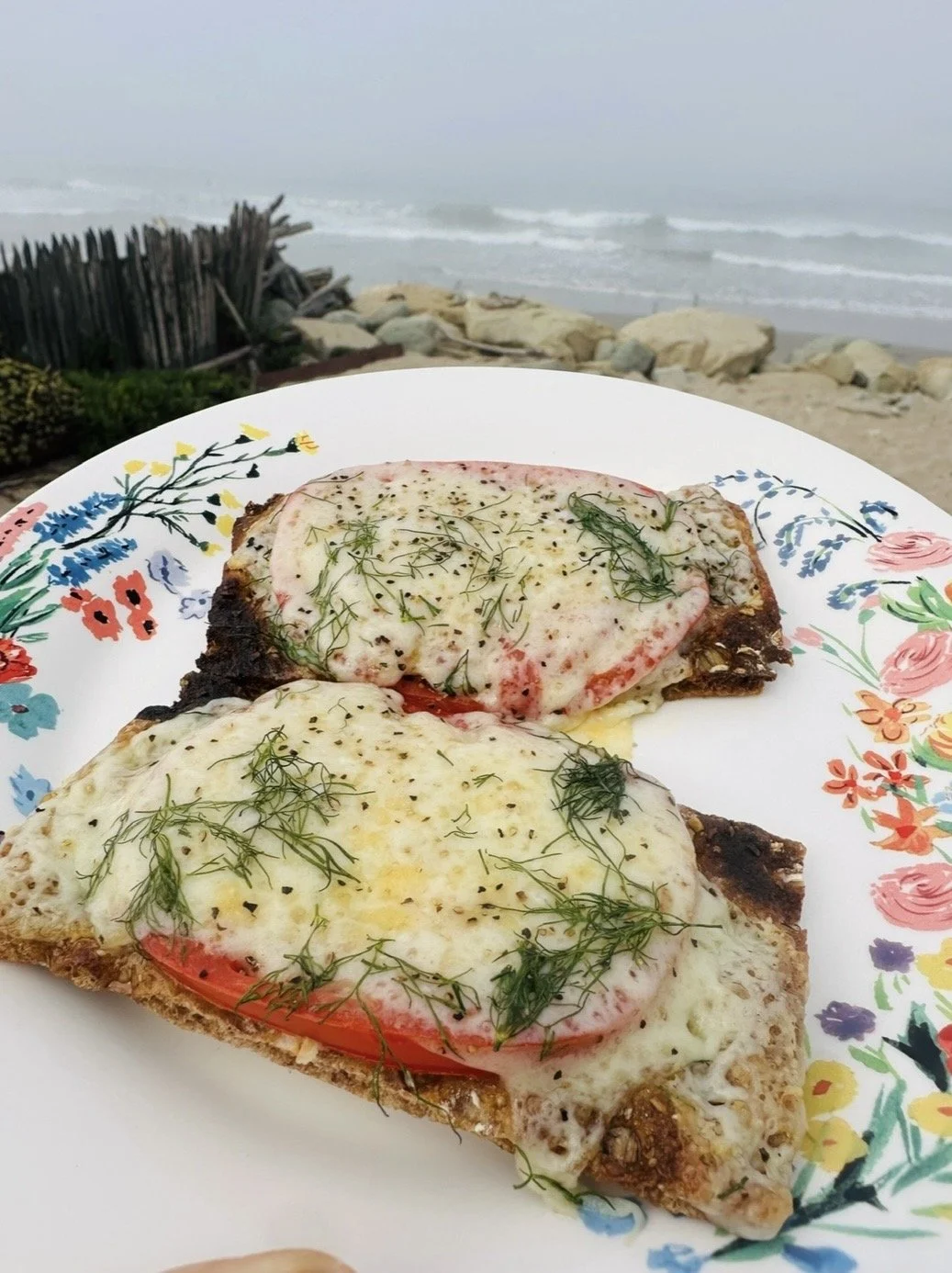
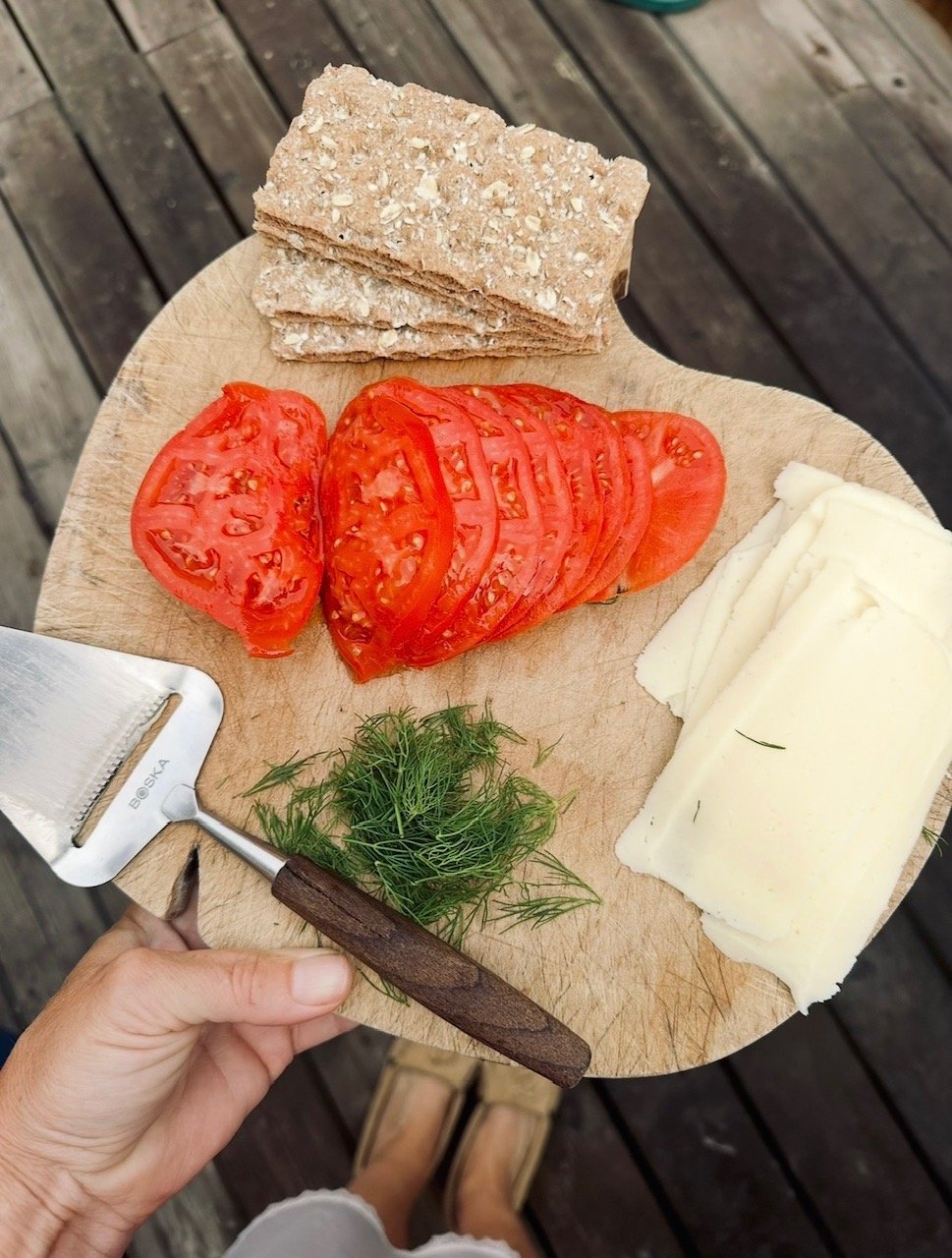
My favorite thing to do with the rye crisps is to top them with tomatoes and havarti cheese, sprinkle with dill, salt and pepper and then melt the cheese under the broiler. We call these Cheese Things. You can go without the tomatoes and just melt cheese and herbs too.
They are also beautiful as crackers served with cheeses and salami. Or dipped in the beet hummus too.
NOTE: You can also buy rye crisp at the store if you don’t have the time to roll your own. Cheese things made with store bought rye crisps are perfectly delicious too. I put some options for store bought at the bottom of the page.
FORMULA AND PROCESS
MIX THE DOUGH THE NIGHT BEFORE BAKING:
200 g milk. 80 g sourdough starter. 1 tablespoon honey. 2 1/2 tablespoons olive oil. 260 g rye flour. 75 g spelt flour. 50 g white flour. 1 teaspoon caraway. 6 g salt.
Mix all the ingredients together and knead until brought together in a stiff dough. Leave in bowl, covered with plastic wrap. Let rest at room temp overnight, for 8 hours.
The next day scale out the dough before baking to 60 g each. Roll out each piece of dough very thin between two pieces of parchment paper. Cut a hole in the center. Puncture holes in the rolled dough with a fork. Lay on a sheet tray and bake in a 350 degree oven for 10 minutes each. You may have to do a few bakes to get through all of the crisp bread. Once they are browned on the edges but not burnt, remove them from the oven. When they have all been baked, turn the oven off and let it cool. Once cool enough, place the crisp breads back in the oven for 20 minutes more to crisp up. You can stack them on the sheet tray on top of one another. Remove when dried and crisp. They are done!
krackebrod shaping tutorial
〰️
krackebrod shaping tutorial 〰️
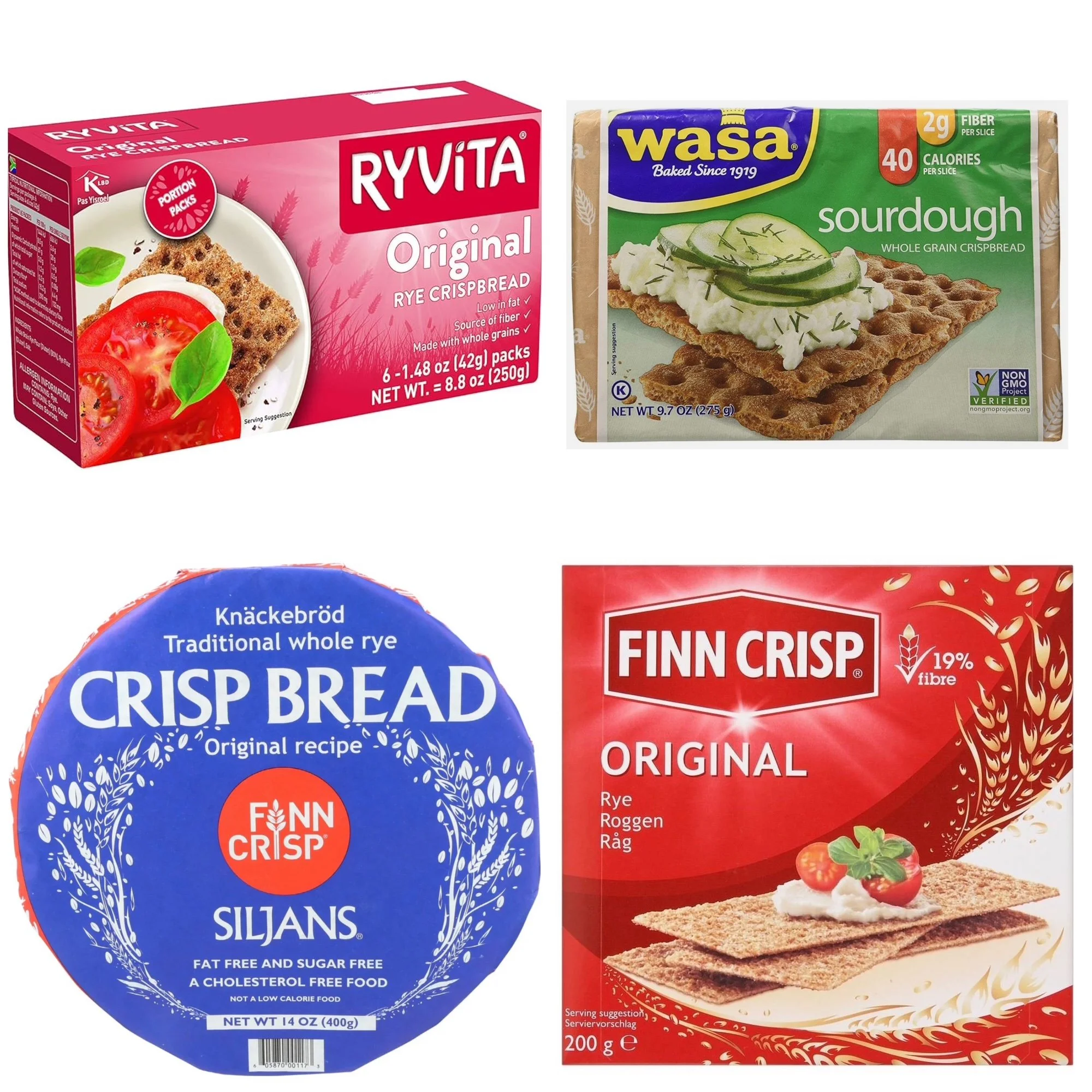
STORE BOUGHT RYE CRISP OPTIONS: